

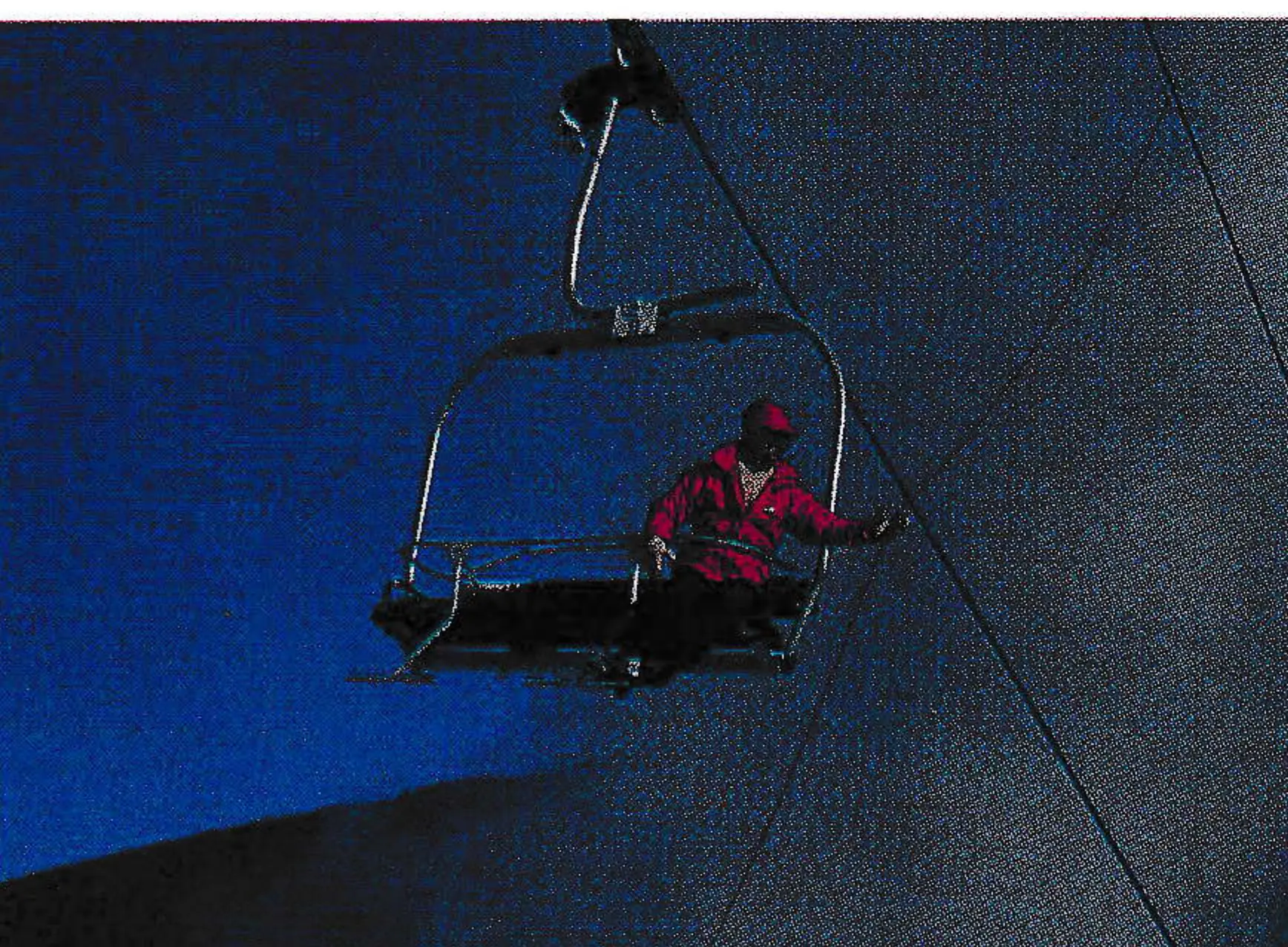
One of the problems with detachable quads is their high passenger capacity. More passengers mean more time is necessary to evacuate them. This increases the chances of cold injury, and therefore, affects the decision of when to begin evacuation after a lift failure.
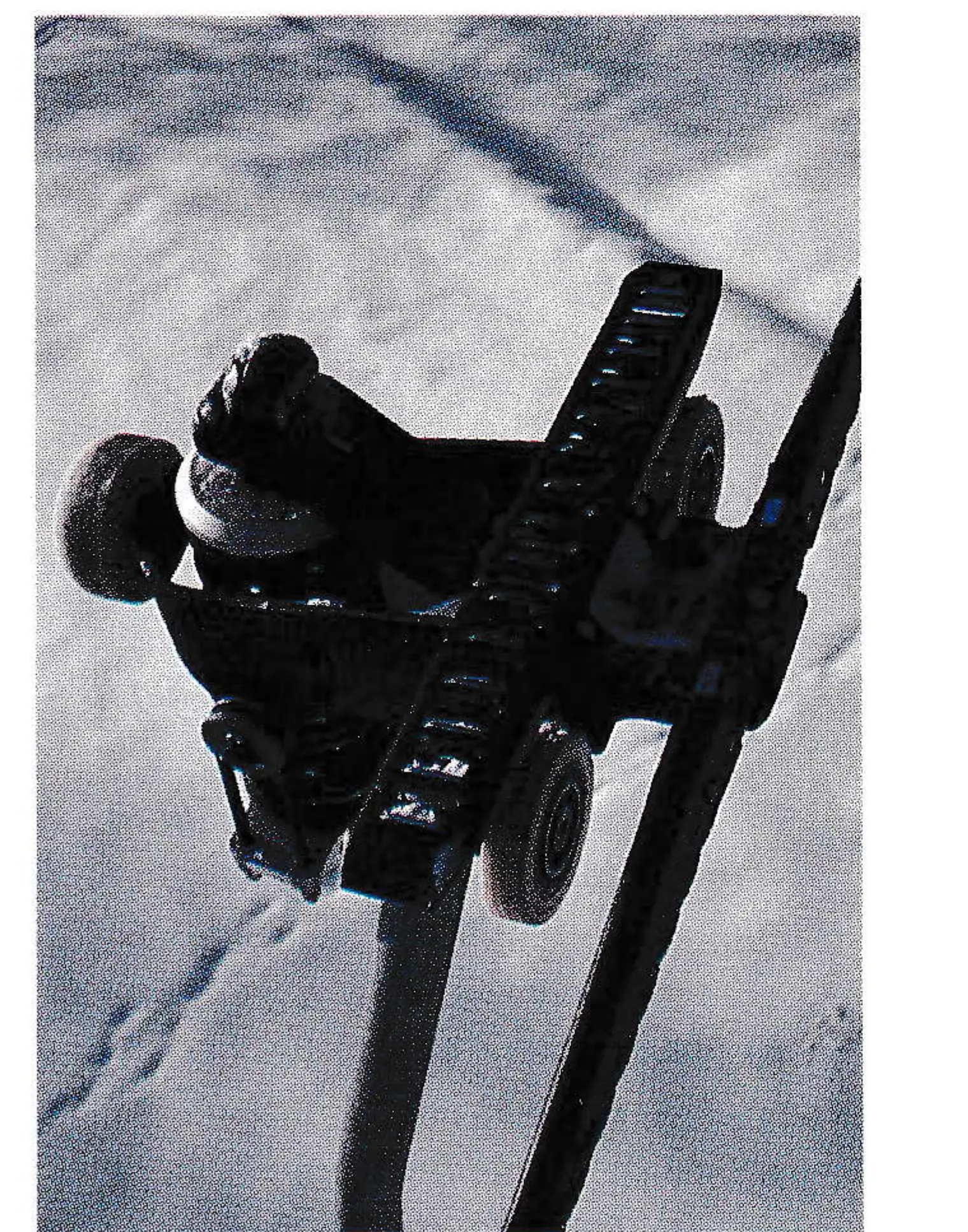
The other major problem with detachable quads is the size of the grip that attaches the chair to the main cable. These grips are very large and have an elevated accessory arm that controls the mechanism for detaching the grip from the main cable, which makes it difficult to pass the evacuation rope over the grip and down to the next chair on the line. The conventional method of bypassing grips is to manually flip the rope over the grip and move it down the cable. This is difficult to impossible with detachable grips, especially at areas where the cable span is high.
Although various cable walking devices have been developed to address this problem (see “Exploring Evacuation Equipment and Procedures,” SAM May 1989), most of them are limited and have disadvantages.
I have recently practiced an evacuation method that utilizes the chairlift’s communications cable as an integral component of the evacuation system. The development of this communication-line system for evacuation of quad chairs provides a simple, efficient and versatile method of accessing and evacuating passengers.
The comm-line system utilizes a normal evacuation “T” and lowering rope and a small diameter (5 to 6mm) line with a large fireman’s carabiner tied to one end. It also requires a minor modification to the chairs.
Using this procedure is quite simple. A rescuer climbs the lift tower with the small line. Once at the top of the tower, he clips the carabiner onto the communication cable, which is a small-diameter wire-rope cable that carries communication transmissions from the bottom to the top of the lift. The wire-rope cable is anchored individually, usually at the top of each lift tower, and because its position is at the top of the lift towers, the communications cable is usually much higher than the main lift cable. The communication cable is also completely clear of obstructions from tower to tower.
Once the carabiner is clipped onto the comm line, it should slide freely and easily along the cable. The small line must be long enough to reach the ground from anywhere along the communication line.
A rescuer on the ground holds onto the end of a rope attached to the carabiner on the communication line and slides the carabiner down to first chair on the line. At this point, the rescuer on the ground pulls the rope out to the side toward the chair until the passenger in the chair can grab hold of it. Because the comm line is much higher than the main cable, this is easy to do, even along narrow lift-line cuts. The rescuer on the ground then ties the small rope to the main lowering rope and the passenger in the chair pulls up the end of the main lowering rope.

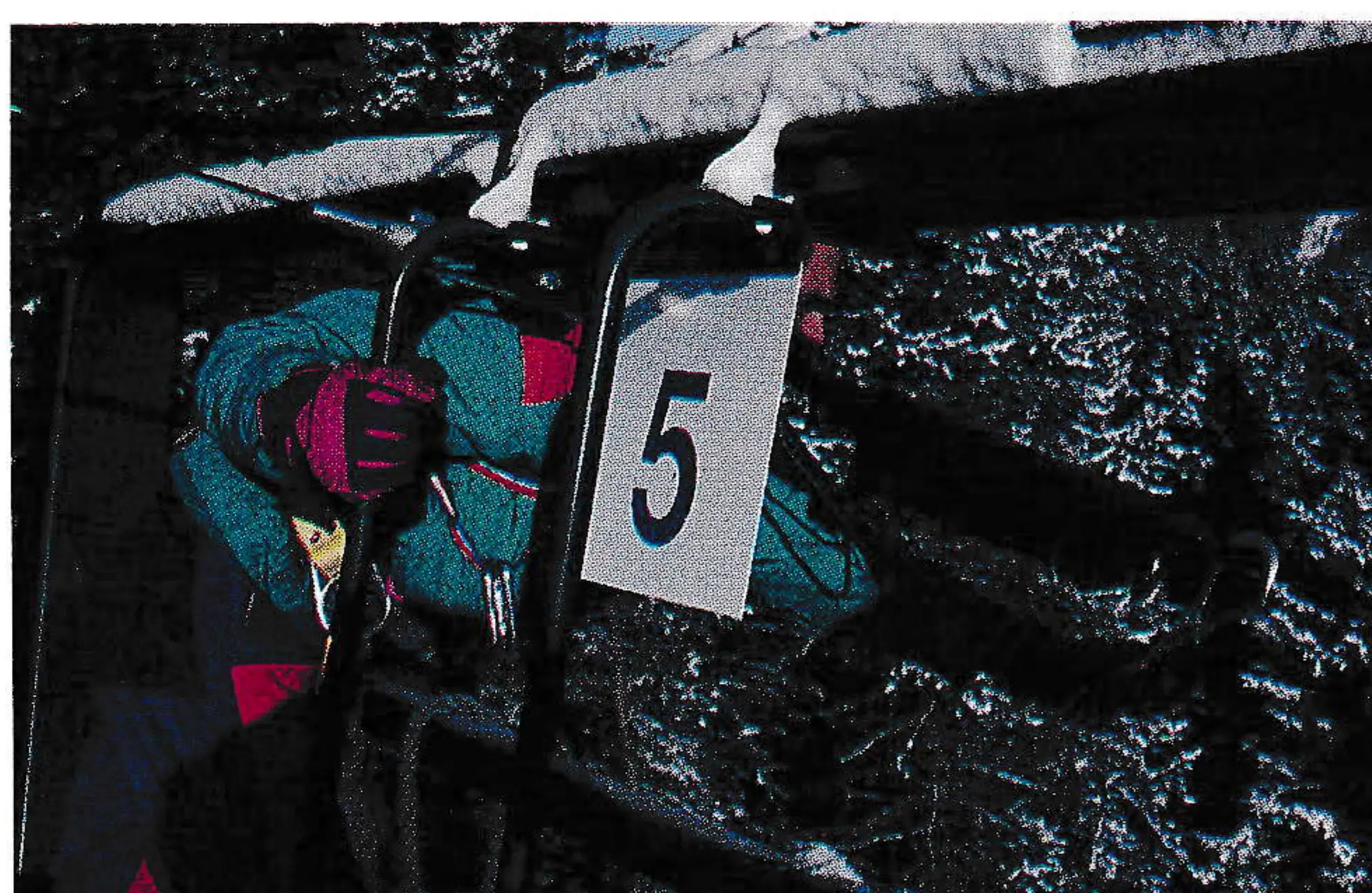
The next part of the procedure requires that the chairs have some kind of ring or loop attached to provide a lowering point for the evacuation rope. This ring can take many forms. It can be welded onto the chair structure itself; however, chair manufacturers become quite concerned when you begin welding on their chair frames, so ask their advice first. It could be a welded steel ring or steel shackle through a hole in the chairframe. It could be as simple as a piece of steel cable crimped into a loop around the chair frame. Whatever method is used, it needs to provide a secure lowering point and it must be within reach of the passenger in the chair.
Once the passenger has pulled up the main lowering rope, he passes it through the ring on the chair and back down to the rescuer on the ground. This procedure should pose no problem as long as the ring is within reach of the passengers. Some ski areas used a wire stiffener taped to the end of the main lowering rope to make it easier for passengers to pass the rope through the ring. Once the rescuers on the ground receive the end of the main lowering rope, the lowering procedure is carried out in the conventional way. The “T” is pulled up, the passenger gets onto it and is lowered to the ground. Once all the passengers in the chair have been lowered to the ground, the main rope is pulled down. The small line, which has remained clipped to the communications line, is allowed to slide down to the next chair and the process is repeated until all the chairs are clear. While this may seem like a complicated system, it is actually quick and efficient.
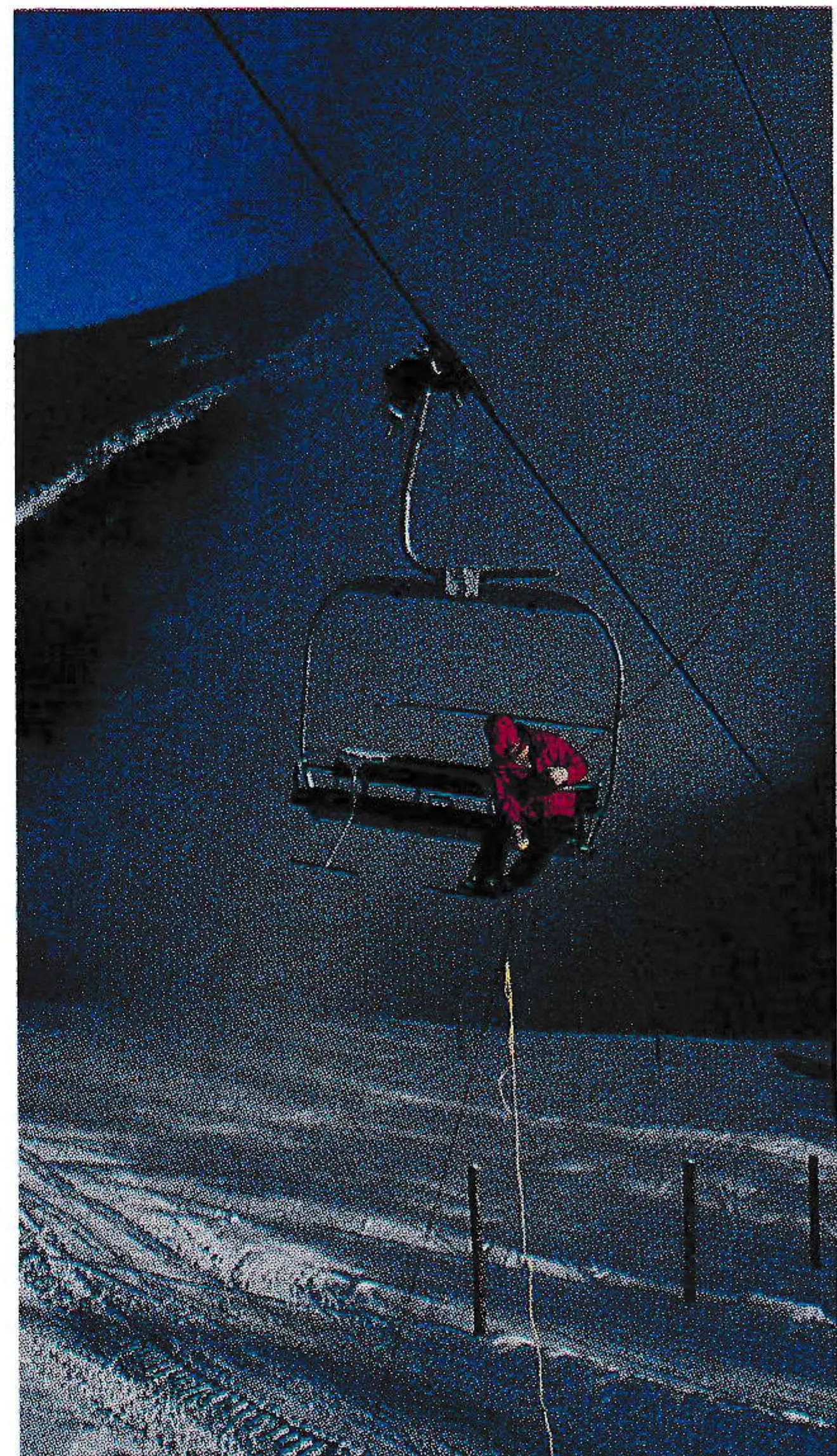
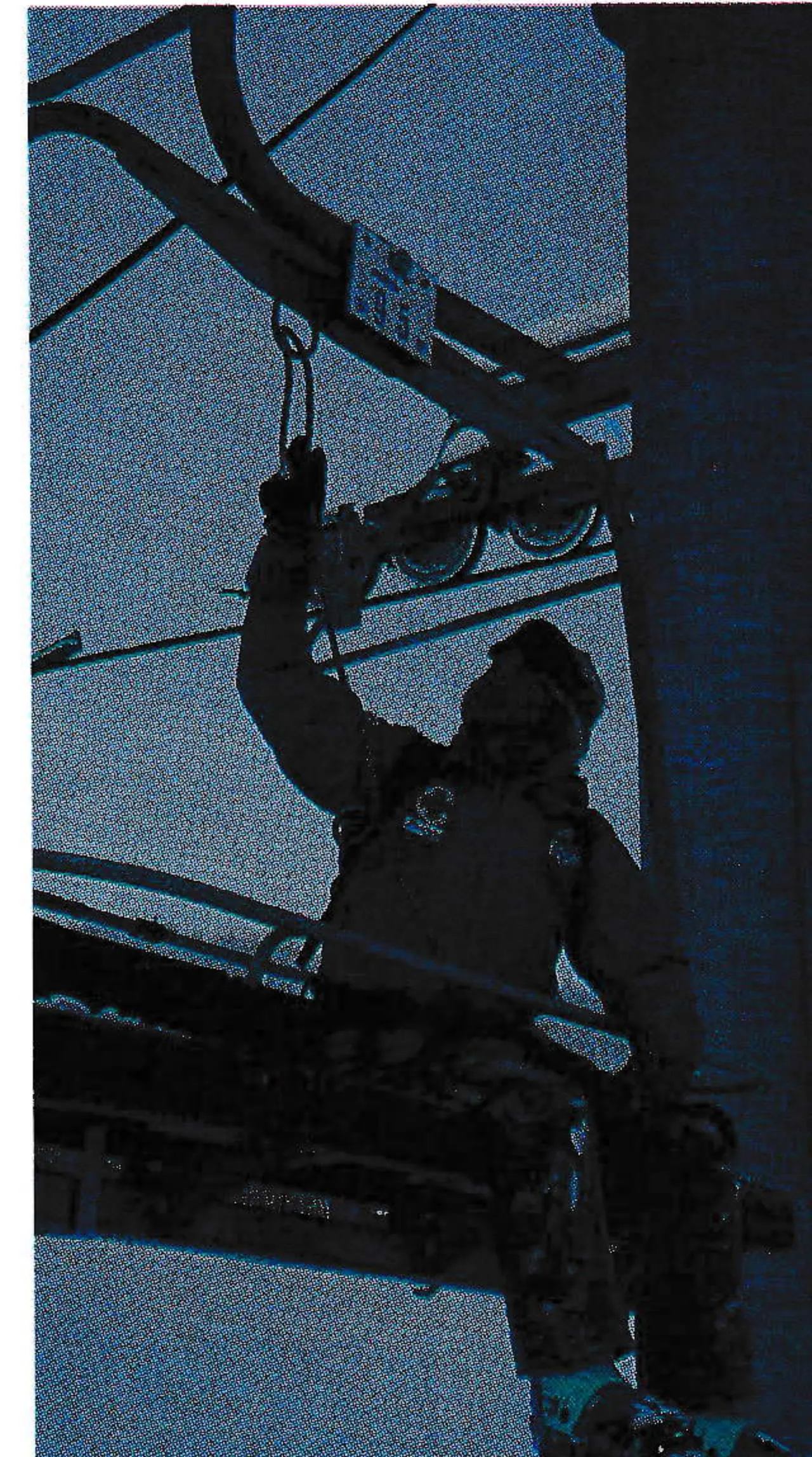
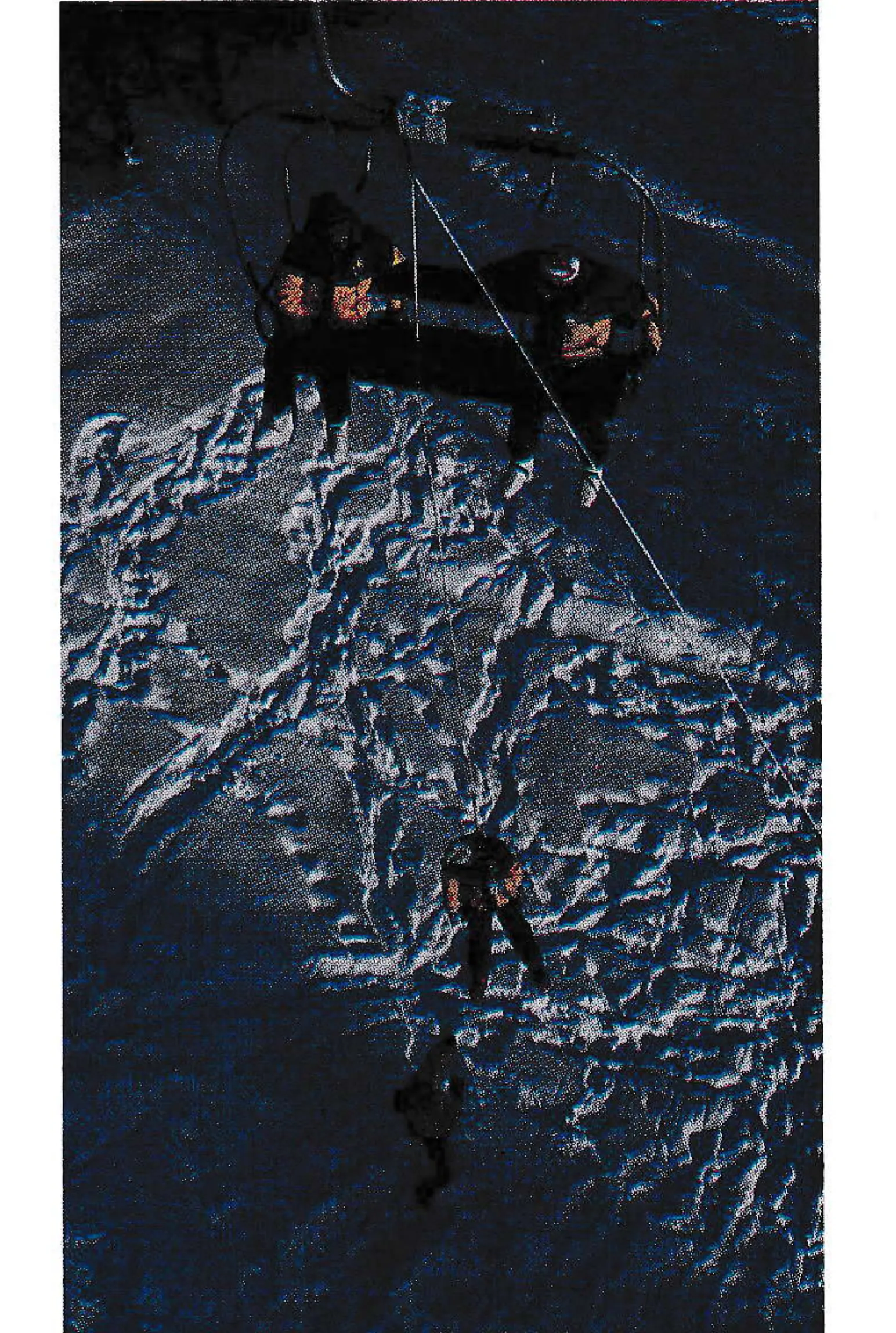
There are, however, disadvantages to this system. One is that it requires modifications to the chairs on the lift, which takes work and money to ensure that all chairs are suitable for the procedure. It is also somewhat more dependent on the passenger in the chair than are the conventional methods. The passenger must be able to pull up the lowering rope and pass it through the chair ring. However, any passenger who is capable of dealing with the evac “T” of a conventional system should be able to follow this procedure.
The versatility of the comm-line system is demonstrated in the advantages it provides over conventional systems:
- It is independent of the main cable, which protects the lowering rope from grease and dirt.
- It is independent of the chair grips, eliminating the need for rope flipping or grip bypass devices. This can greatly increase the speed of the evacuation.
- Because the comm-line rope is independent of the main cable and chair grips, the rescuers can rapidly bypass empty chairs.
- It eliminates the need to climb out to the end of long sheave assemblies to put the rope on the main cable or attach a grip bypass device. It is easier, safer and faster to apply the carabiner to the comm line.
- Rescuers can address the problem of high capacity lifts by evacuating more than one chair at a time on one span. The number of chairs that can be evacuated at once is only limited by the amount of rescue equipment and personnel available.
- If only one or two chairs are loaded at the lower end of a span, the carabiner on the comm line slides freely so it is easy to start at the lower end of the span and work uphill.
- Because this system requires no flipping of the rope over chair grips, it can be used effectively on high spans of cable where rope flipping may be difficult or impossible.
- Because this system is independent of the type of chair grips, the height of the span, the size of the main cable or the length of the sheave assemblies, it can be used on any type of chairlift, not just detachable quads.
The advantages and versatility of this method make it worth testing and consideration at areas with detachable quads.