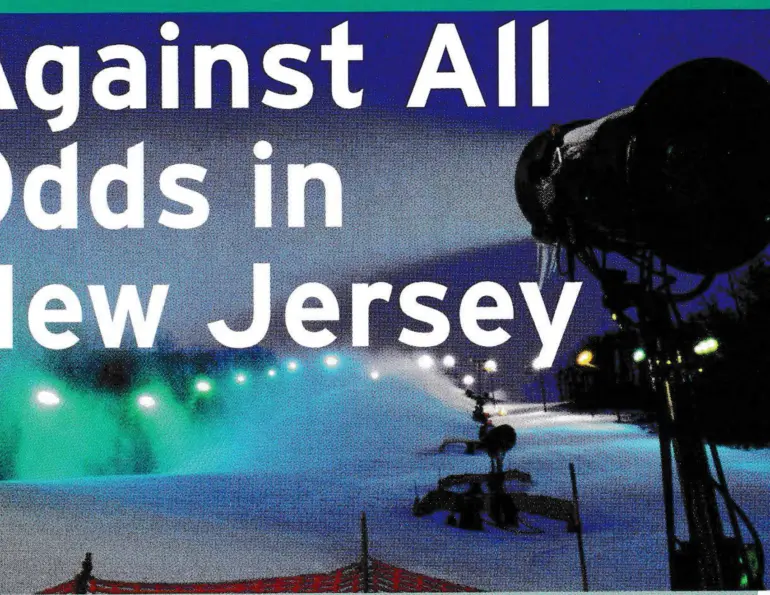
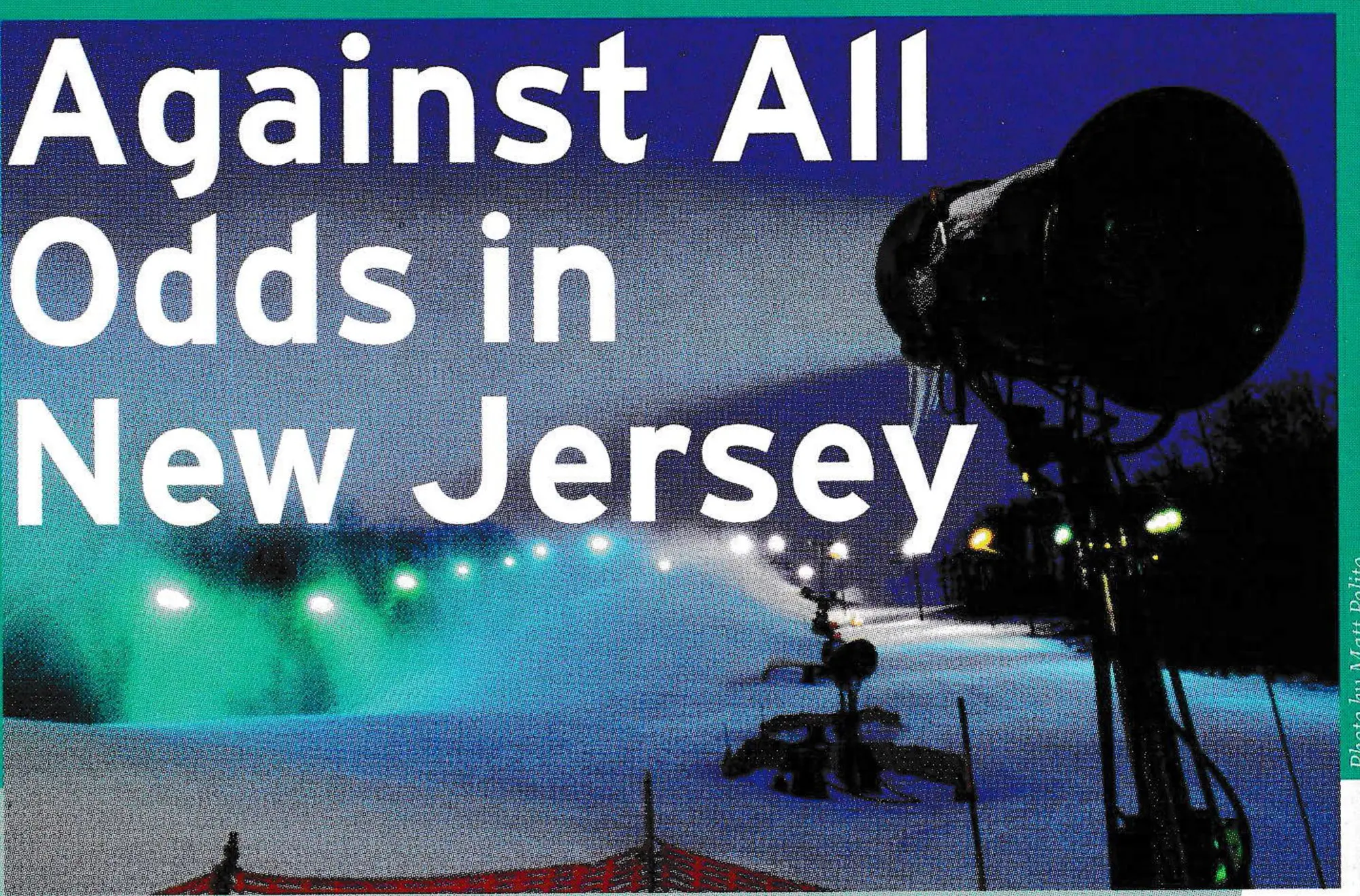
Photo by Matt Polito
When I first walked the trails of the bankrupt Vernon Valley/Great Gorge ski area in Northwestern New Jersey in the late summer of 1997, I felt like Indiana Jones in the Temple of Doom. But, instead of a pit of snakes surrounding archeological treasures, I unearthed a scary combination of spare parts and jury-rigged couplings holding together an intact and unrestored circa 1960 vintage snowmaking system.
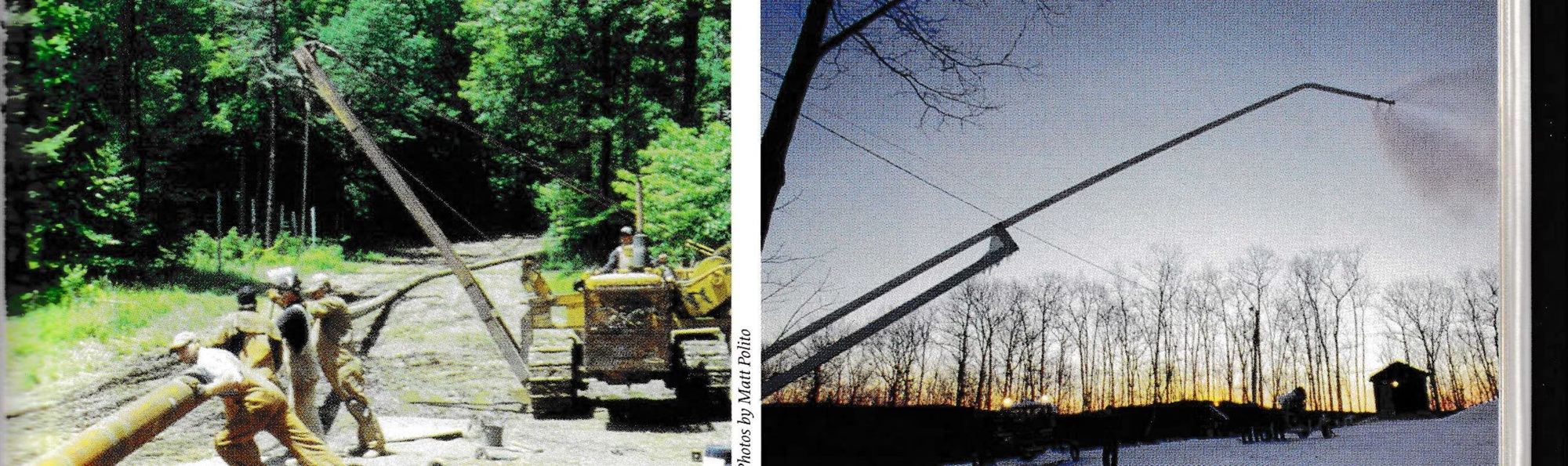
For those who have no recollection of the 1960s, here is a guide to some identifying markings. The “big” pipe was six inches in diameter and mostly connected with vitalic couplings. Some joints had been welded as the coupling failed. Hydrants, as we know them, had not been invented—instead there were small-diameter ball valves or globe-type valves readily available from the local plumbing supply house. Hose was one-inch diameter black or red rubber with an eclectic assortment of couplers so randomly chosen that nothing matched.
Guns were also assorted. Most were common pipe fittings with air and water meeting at a 45-degree angle and exiting through a pipe reducer. In the 60s, there were true airless guns. The 320 SMI dumped raw water on the back of an open wheel fan. Put in too much water— snot comes off. Put in too little water— the blades come off.
Many resorts have pieces and parts that date back to the era of low water pressure, cheap energy and abundant labor, but almost all of them are currently in some phase of evolution/modernization driven by skier/rider demands for quality and quantity. On the operations side, energy cost, the need for automation and the pressures of this decade’s weather vagaries have also driven technological advancements. Vernon Valley, on the other hand, was an evolutionary dead end.
Unfortunately, as the bankruptcy dragged on it became clear that I would have to run the snowmaking system found. Much to my amazement, the crew, most of whom had grown up running this system, were able to make the place white and keep it that way even in a very mild New Jersey winter. Energy cost, labor costs and quality of the product are questions too painful to ask.
In February of 1998 Intrawest saw the incredible potential of a revitalized resort with 1000 feet of vertical just 47 miles from Manhattan. After renaming the resort Mountain Creek, planning for the rebirth of the suburban day/night ski area began with an underlying mantra: “Snow is the common denominator of success.”
The fact that the system had not had any technological upgrades since the 1960s gave us an enviable clean slate. Many rebuilding resorts have had to integrate new technology into existing technology. Most resorts have had too much recent investment in snowmaking to afford the luxury of scrapping it. The system we found owed us nothing. The genie would give us three wishes, with a budget not to exceed $8.2 million in year one. This was a unique opportunity to leap frog to the front of the technological class. I remembered the words the knight gave to Indiana Jones in The Last Crusade: “Choose wisely my son.”
Following Intrawest Standard Operating Procedure, we put the major stakeholders in front of a white board for a SWOT analysis.
Strengths? Water at the top: Mountain Creek had 750 million gallons of snowmaking water at the top of the mountain in five interconnected lakes that miraculously replenished themselves almost as fast as they were consumed by the existing system. Compressed air: 40,000 cfm of permanent centrifical air.
Weaknesses? No distribution system: It took 10,000 cfm just to fill the leaks in the existing pipe and 40 pounds of friction loss to move the air from one end of the resort to the other. Water pressure: The system was gravity fed or minimally pumped. Pressure varied from 40 to 240 pounds. Time and money: Even with $8.2 million, we could not in one summer build a dream system that could cover the whole resort.
Opportunities? Suppliers anxious not only for the business but also for the opportunity to showcase their latest innovations in marginal temperature snowmaking technologies. With a population of 22 million people within 75 miles of Mountain Creek, we were sure that if we could keep it white they would come.
Threats? New Jersey weather: Mild and humid, certainly among the most challenging snowmaking environments on the planet.
The final plan. Snowmaking Supervisors Dale Banks and Al Lazier, Mountain Manager Al “Indian” Paugh and Intrawest Project Manager and resident snowmaking guru Tony Osborne all had input on the plan. What came off the white board were three major requirements:

1) Maximum performance at marginal temperatures (26 degrees Fahrenheit and above). Some resorts are using a strategy where they forego the high cost of making snow at marginal temperatures and bury their resorts with systems that convert huge quantities of water at colder temps. Given the dearth of low-temperature opportunities in New Jersey, Mountain Creek did not have that luxury.
2) Recovery after a thaw as the driving parameter. How quickly we could resurface 47 trails, 265 acres, with eight inches of high-quality snow after the weekly New Jersey rain episode was more important than the ability to dump two feet of base on any trail to open.
3) Operational efficiency. Our system would need to run 400 to 500 guns at one time and we could not procure or afford the huge labor force required to operate a traditional system.
4) Energy efficiency. We believed that a traditional high air pressure/high water pressure system could make snow at the marginal temperatures, but at a price we were unwilling to pay.
What we penciled out was a system that would take 50 miles of pipe, 1600 hydrants and 1,600 guns (90 percent permanent tower mounts) and three years to complete. Our new system would ultimately convert 25,000 gpm into snow at 26 degrees. Most systems are designed to add more and more water to each gun as the temperature drops so a system that has the capacity to pump 15,000 gpm might pump 3,000 at 26 degrees, 10,000 at 18 degrees and max out at 10 degrees. With our system we go to maximum pumping capacity four degrees after we start up at 26 degrees. We have little or no capacity to add more water as the temperatures drop. Our snow just gets drier and drier. While this design might not be optimum in Tremblant or the Upper Peninsula of Michigan, for New Jersey it made sense.
We needed guns that were quick to start and easy to operate but, most importantly, great performers in marginal temperatures. Many resorts have used the HKD tower-style gun because they excel in the first two categories. We had not seen it perform as well as traditional air water guns in temperatures above 24 degrees. We challenged HKD to prove us wrong. In tests done at Stratton, Vt., HKD personnel used a combination of very high water pressures (600 psi), high air pressure (125 psi), Snomax inducer and very conservative jetting (12 to 18 gpm ) on the front nozzles. The system made remarkable quality snow at temps right up to 28 degrees and we became believers. We penciled in 450 HKDs on our narrower trails.
On the wider trails, terrain parks, halfpipe and base areas, we felt we needed a higher concentration of firepower and more throw than the HKDs could offer. Intrawest has had a good working relationship with SMI, but in testing its Wizard gun we found it not to be the best performing fan gun in marginal temperatures. Several of the European guns excelled in temperatures of 26 degrees and more.
SMI took the gun back to the shop and refitted the piston compressor with a cooler running van-type compressor and added a heat exchanger to the discharge air. A higher horsepower main fan was installed as well as a mechanism that oscillated the gun through a 60-degree arc. With these changes, combined with the snow inducer and the higher water pressures, the SMI fan gun, renamed the Super Wizard, became a part of our snowmaking system. We ordered 62.
To complete the project in the summer of 1998 and within our budget, we had to divide the mountain into two
[Editor’s note: The article continues on page 84 of the print issue, which is not included in the archived PDF.]
Photos by Matt Polito