Ascutney Mountain Resort
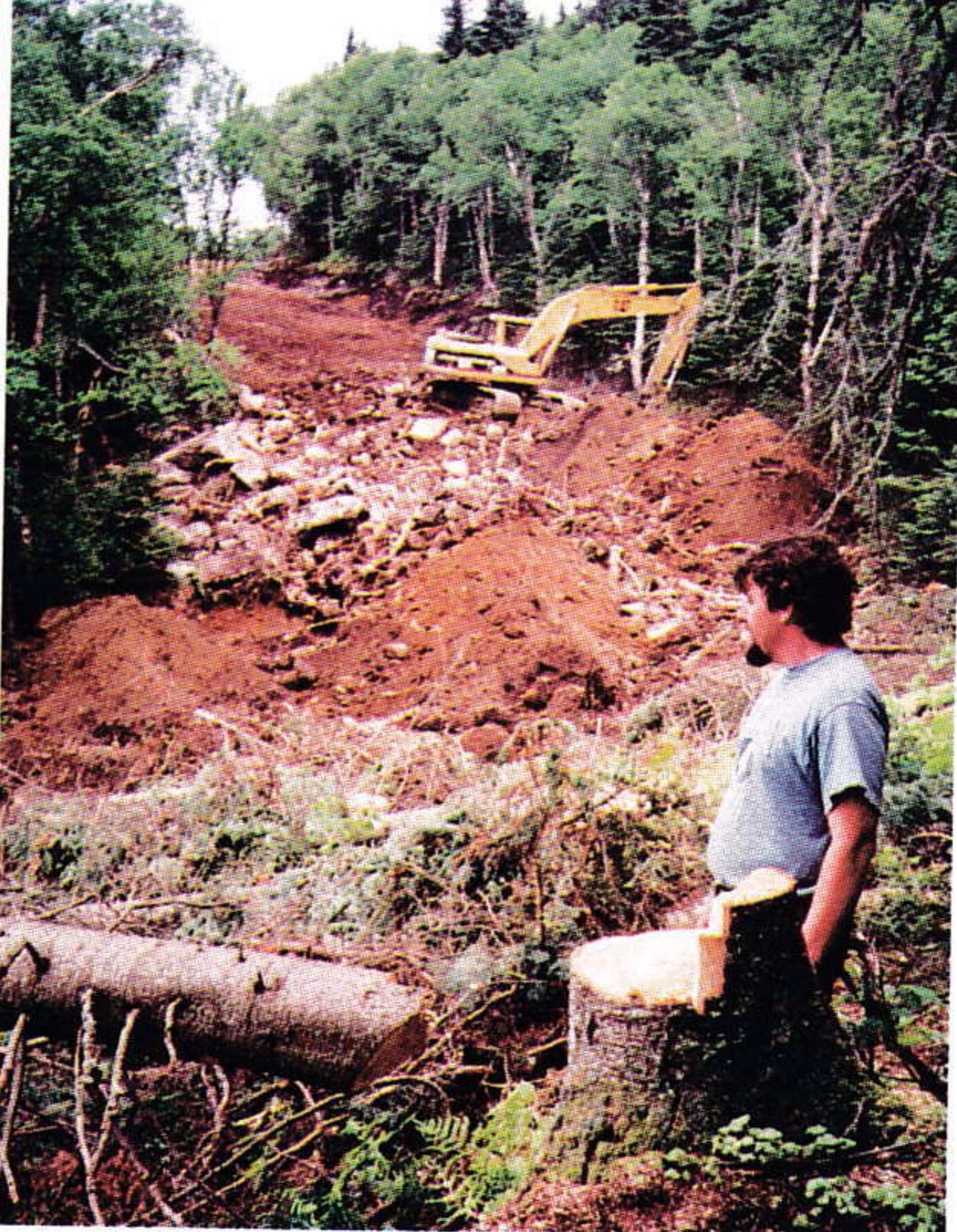
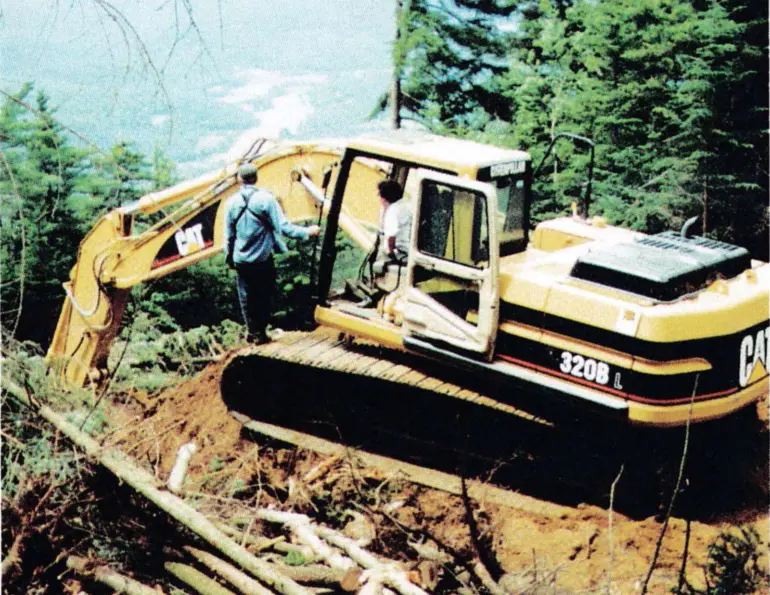
As part of a three-year, $5 million improvement project, last summer, crews at Ascutney Mountain, Vt., cut a new liftline and three new trails on North Peak in anticipation of installing a new $2 million Garaventa CTEC high-speed detachable quad this coming summer. In addition, they installed six HKD and McKinney tower snowmaking guns and about 25 tower units of their own design using Larchmont heads. A new permit allowed crews to up their pumping capacity from 1,600 gpm to 2,400 gpm to blow more snow this season and to accomodate the 5,000 feet of snowmaking pipe that was laid over the summer. The new installations extend snowmaking to two existing trails as well as the three new ones, giving the resort 95 percent coverage. Trail crews also thinned two wooded sections to create gladed slopes on the resort’s western edge. Next season’s new lift will actually extend Ascutney’s vertical by 300 feet as it ends at the top of North Peak just to the northwest of the top terminal of the current summit triple. The lift will cover 5,000 linear feet from a point near the base terminal of the existing triple and will climb 1,650 vertical feet. With a design capacity of 2,400 pph, it is expected to have a VTFH of 3,960 using 95 chairs.
Powder Mountain
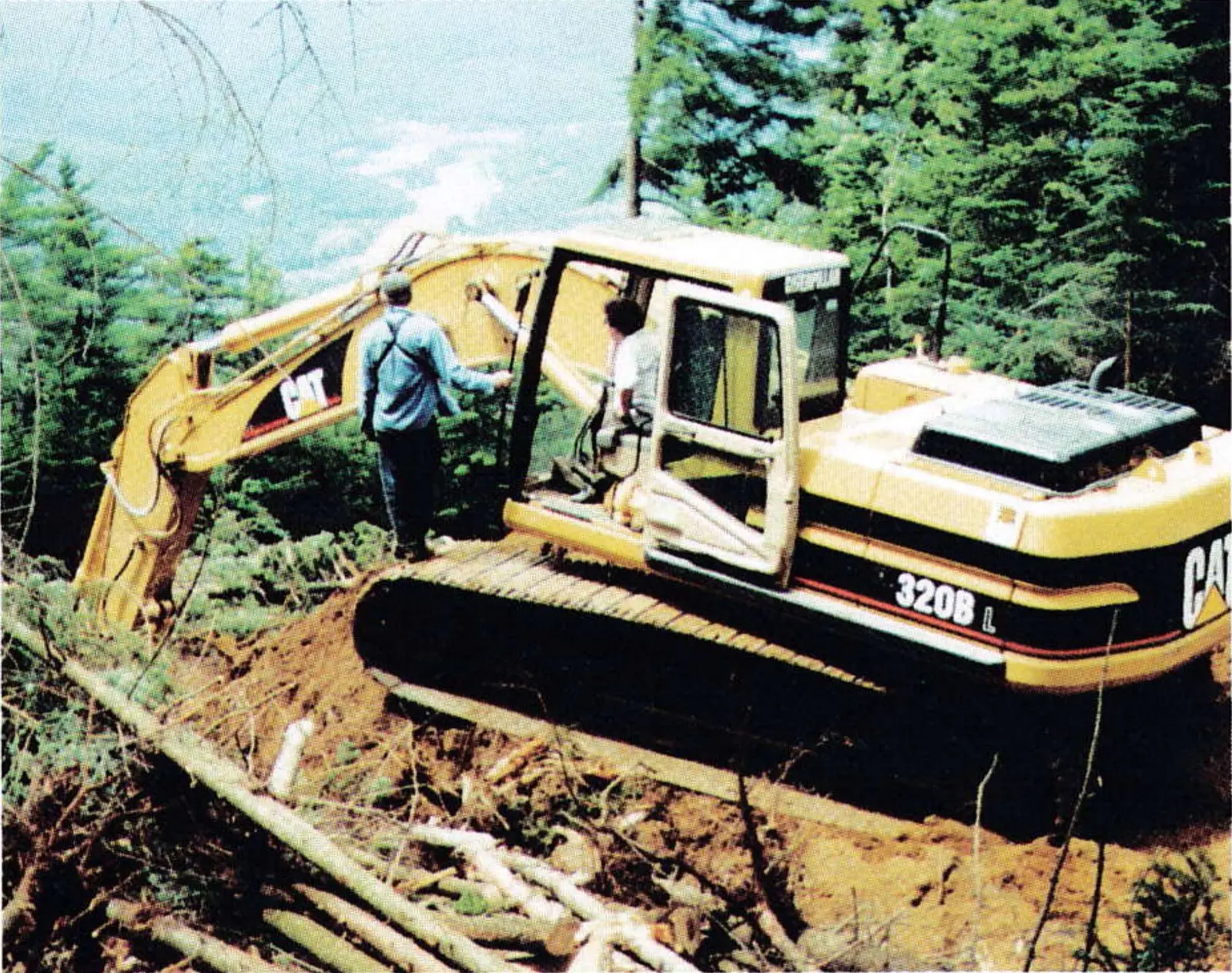
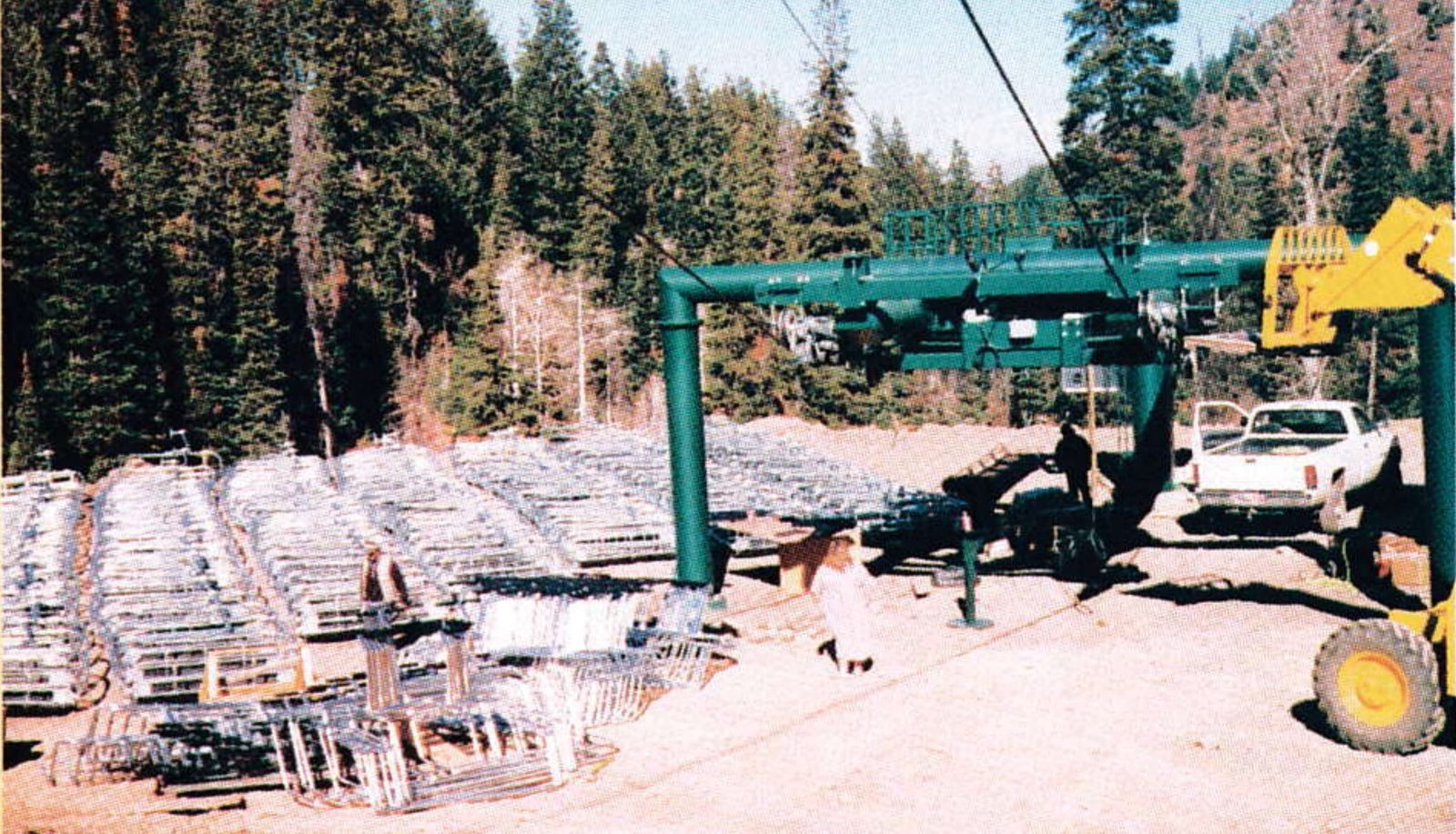
A new Garaventa CTEC fixed-grip quad was installed at Powder Mountain, Utah, last summer to access more than 30 trails for an additional 1,600 acres of ungroomed terrain previously reachable only by snowcat. Opening the Paradise quad has increased lift-accessible skiing by 133 percent to bring the total to 2,800 acres. The new lift climbs 1,605 vertical feet along 5,530 linear feet. It is running at the design capacity of 1,550 pph for a VTFH of 2,488 using 158 chairs. The new lift ties together the entire resort, as all slopes funnel down to the base of Paradise. Because the cat has been freed up by the new lift, management decided to use it to take powderhounds into an additional 700 acres and 2,104 vertical feet to the west off Lightning Ridge and James Peak.
Crested Butte
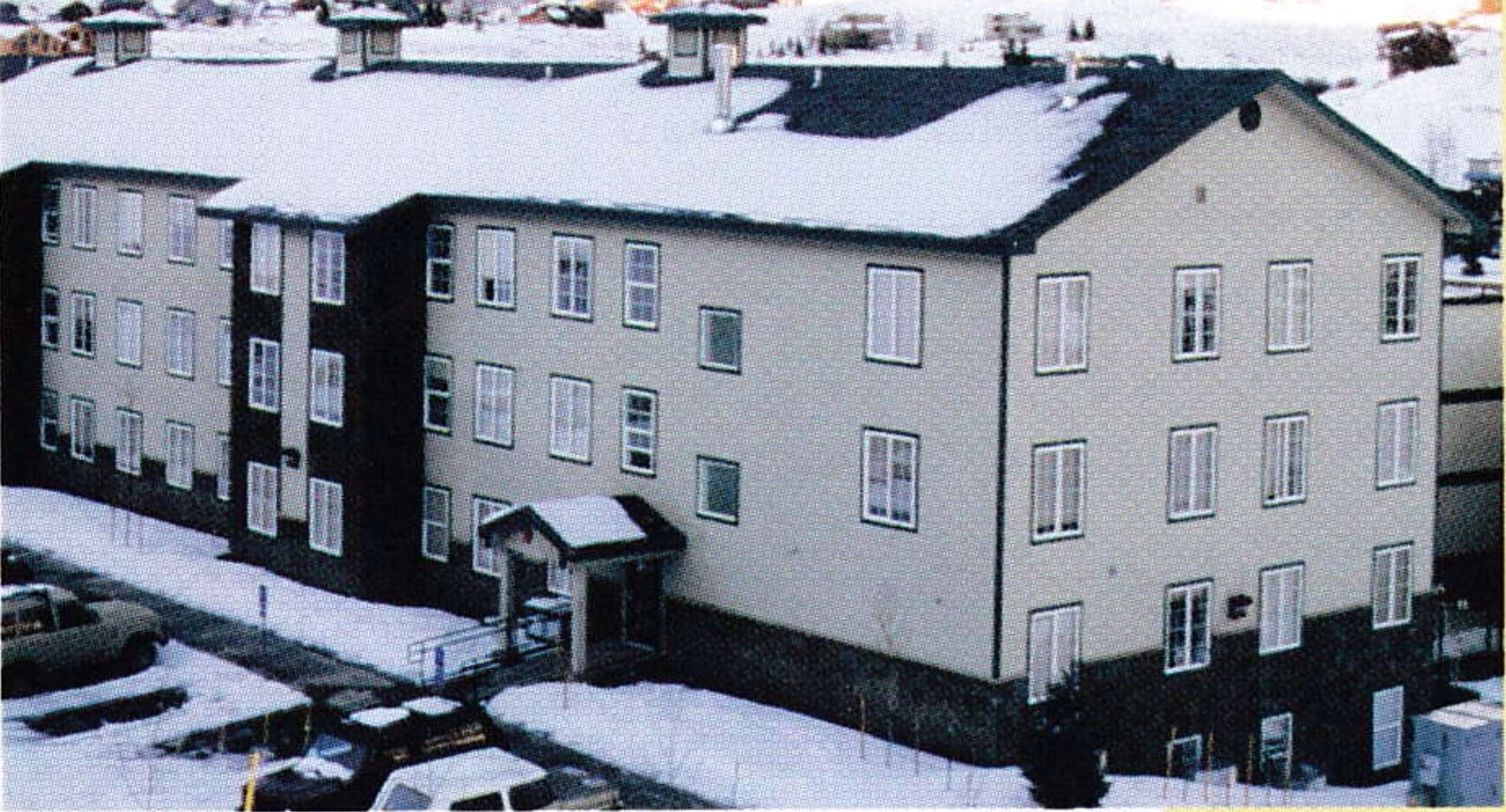
Management at Crested Butte, Colo., spent an estimated $4 million over the summer building housing for the area’s seasonal workforce. The federally-insured Marcellina Apartments have a capacity to house 122 employees in 43 two- and three-bedroom units. The project reflects a long-term goal for the resort. In order to help finance the project, Crested Butte applied for a Housing and Urban Development-insured mortgage totalling $3.37 million last April. Contractors broke ground on May 24 and laid the last piece of carpet as employees began moving in on December 10. The resort hosted focus groups last season to find out what its seasonal workers felt was important in such housing, working on the assumption that by offering a nice place to live, Crested Butte would be able to woo workers, keep them happy and, thereby, provide better service to guests. As a result, the four-story housing complex is within easy walking distance of the ski area’s base complex and has completely-furnished apartments. Average rent is $350 per bedroom per month, which includes all utilities and cable television.
Schweitzer
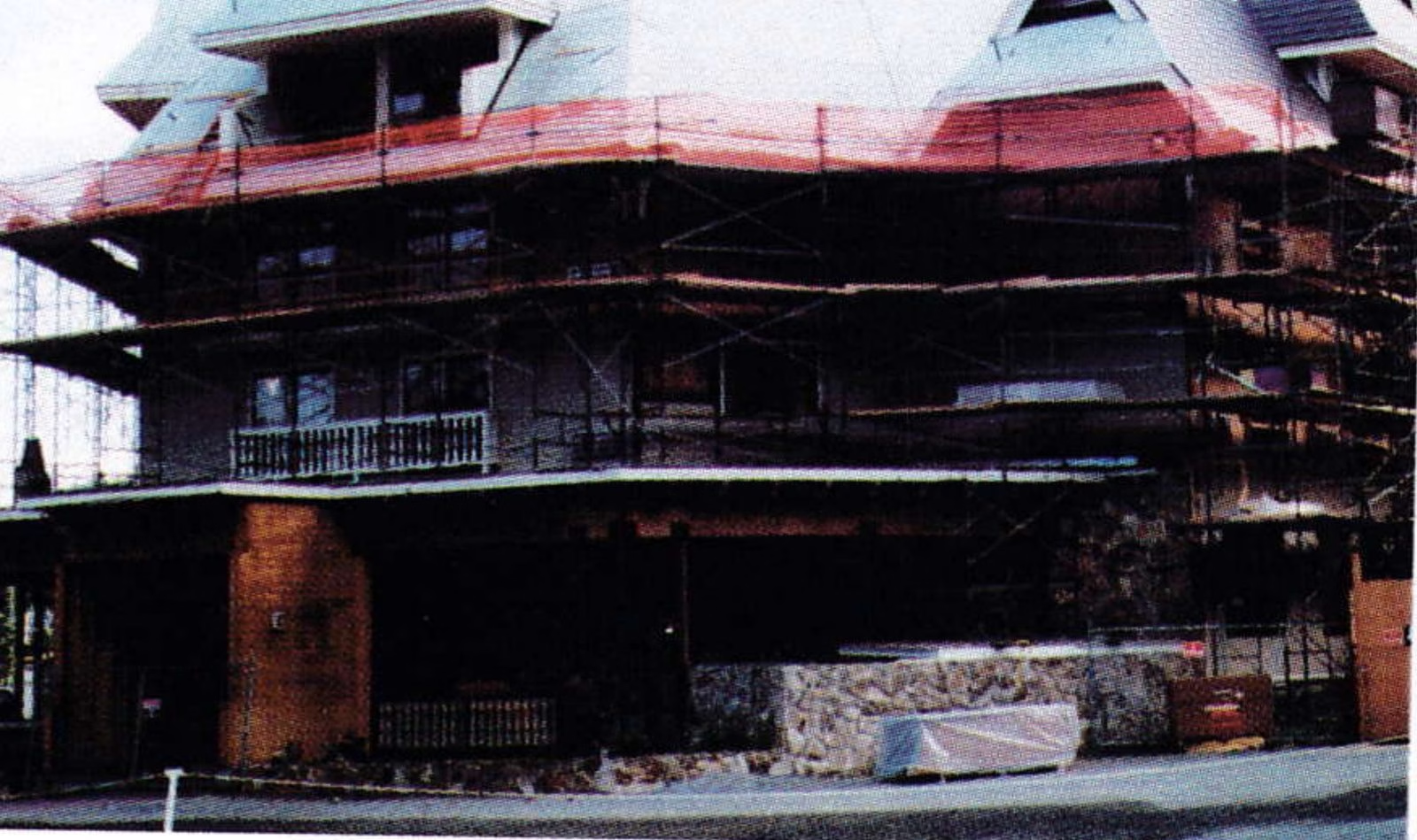
The first steps in a 10-year redevelopment plan for Schweitzer Mountain Resort, Idaho, were taken last summer to the tune of $7.2 million. Crews worked on expanding beginner terrain, adding night skiing and renovating base-area buildings—most notably the former Green Gables Hotel. Now known as the Selkirk Lodge, the old hotel was transformed from an 82-room hotel to a 41-unit condominium. The $4 million renovation included reframing sections of the roof, blocking it to provide better circulation and adding a powerful exhaust system to remove warm air, all for the purpose of preventing ice dams at the eaves. The roof was then covered with snow-shedding interlocking metal panels. Entrance walkways and the lodge’s sundeck were outfitted with radiant hot-water heating systems to melt snow, and the exterior walls were completely re-sided using paintable cement-based planking.
Jack Frost Mountain
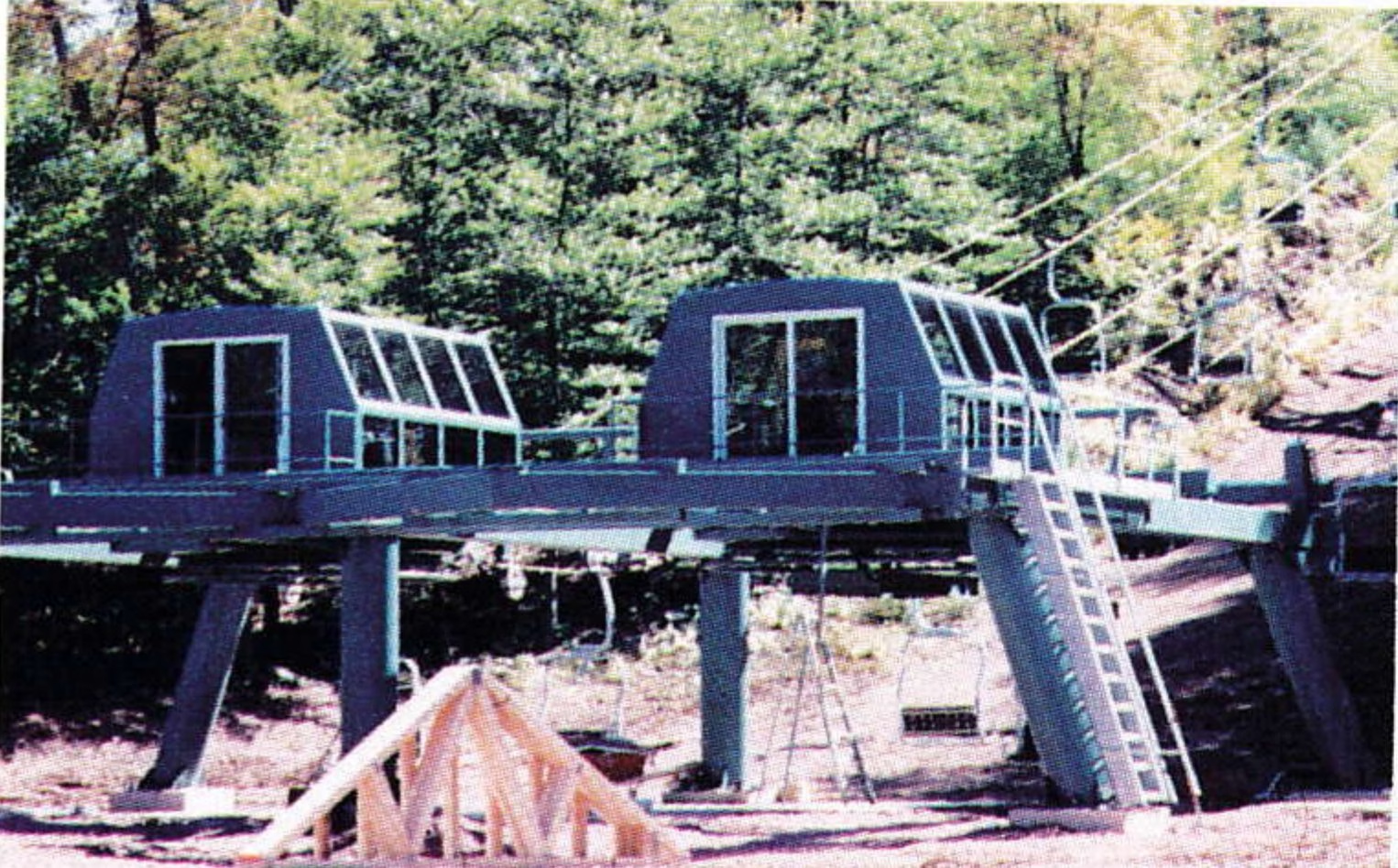
Managers at Jack Frost Mountain, Pa., decided that their East Mountain lift, which had originally been designed as a dual lift but operated as a single since it was built in 1981, should at last be strung with its second cable. They called in a crew from Partek Enterprises to revamp and bring the lift up to its design capacity of 2,400 pph. Summer work consisted of tearing out and rebuilding the original bottom terminal, replacing the old return station and drive platform, installing a new cable on one side, hanging new chairs on both sides and adding walkways to all the towers. The lift climbs 530 vertical feet along 2,707 linear feet. It has a VTFH of 1,272 using a total of 240 chairs (120 per side). Part of the rebuilding of the bottom terminal included converting the mechanical cable tensioners to a hydraulic system, creating additional space in the loading area for an easier-to-negotiate lift maze.
Nub’s Nob
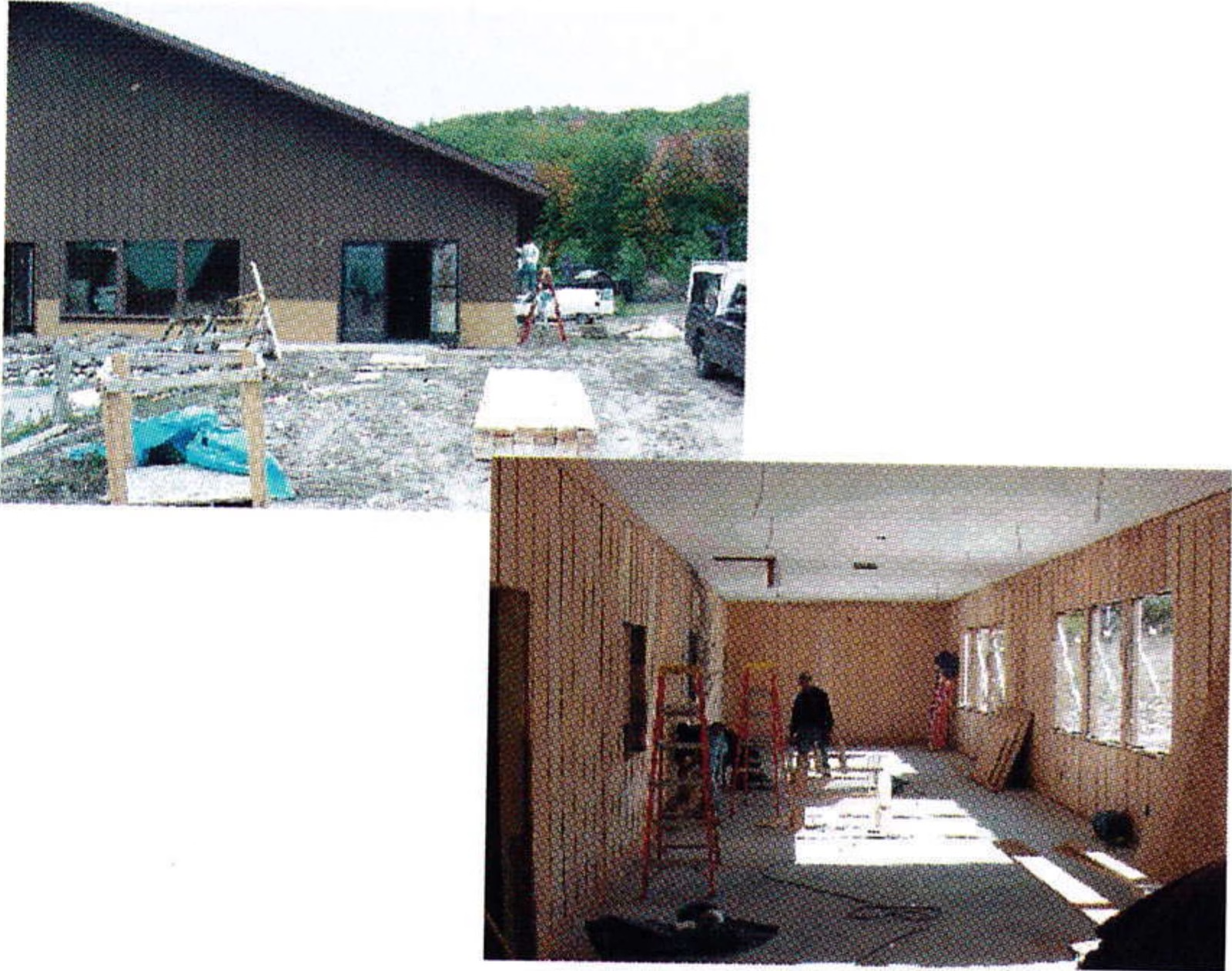
Construction crews at Nub’s Nob, Mich., last June razed the old roof beams of the existing rental building and replaced them with new trusses, thereby increasing the peak of the roof, and added 16-foot extensions to either side. The result is the ski area’s new guest services building. Located in the revamped structure is the resort’s Technology Center, which houses a rental shop twice the size of the previous one, a demo area of about 500 square feet and a showcase backshop of 1,100 square feet that is visible to guests through a glass wall placed slopeside. The backshop will maintain the resort’s new demo and rental fleets and houses six new Wintersteiger tuning, waxing and binding-testing machines purchased by the resort last March. Management decided to make the Technology Center accessible to guests and give them a view into the ski and snowboard tuning process so they would realize that the technology is there to enhance their experience.
Tremblant
Work crews at Tremblant, Que., were busy last summer installing a new Flowtronex-designed snowmaking system, cutting trails and building a new Doppelmayr high-speed quad to access 100 acres of new terrain. The $10 million project, called Le Versant Soleil (The Sunny Side), has expanded skiing and riding terrain at Tremblant by 20 percent. The expansion uses 2,500 feet of pipe and 75 new HKD WaterStick tower guns to cover 15 new trails (40 acres of the expansion). The remaining 60 acres is gladed. Crews left the new face’s contours untouched, resulting in 67 percent of the new terrain being classified as advanced and expert. Tremblant broke from traditional practice by not removing any timber during cutting: Instead, trees were cut into 8-foot lengths and buried with brush and stumps to reinforce the subgrade against soil erosion. The local environment authority agreed to the process because the new area sits between two main waterways. So far, say Tremblant’s managers, the area has not seen any soil erosion. The new quad, dubbed Le Soleil, climbs 1,906 vertical feet over a line length of 7,357 feet. The lift has a design capacity of 2,800 pph but is currently running at 2,200 pph because managers want to avoid traffic jams at the relatively tight summit space where three other chairs and an eight-passenger gondola unload within 400 feet of each other. Le Soleil has a VTFH 4,193 with 142 chairs.