

Grand celebrations and industry kudos marked the opening last winter of two new on-mountain facilities in Colorado: Vail’s Two Elk restaurant, a 500-seat structure astride the ridge above the area’s expansive China Bowl, and the Outpost, a 700-seat cluster of indoor and outdoor dining spaces adjacent to the Outback, Keystone Resort’s newest ski terrain.
Dramatically sited and exquisitely crafted, both buildings seem to suggest that a new, far higher level of quality and expense is now de rigueur to stay competitive. Inevitably, the resounding success of these two facilities and the scheduled opening this winter of the equally upscale Sunspot mountaintop restaurant at Winter Park, Colo., suggest the questions: Will operators everywhere have to spend $5 to $7 million for high-end dining to keep skiers happy? Can there ever be a financial payback on such expensive facilities?
As is so often the case, the answer is, it depends. Like other decisions made by ski area managers about the future development of their ski operations, this one depends on practical considerations, such as balancing the capacity of lifts with on-mountain facilities and the infrastructure to support multiple uses. It also depends on a variety of marketing conditions, such as desired image, competition and the characteristics and expectations of the area’s particular segment of the skier (and summer tourist) market.
The best course of action at Vail or Keystone may not be the right one at another ski area different in size, location and/or target market. Common to all good planning, the criteria for decision-making are both functional and market-driven.
Even projects as grand as Vail’s and Keystone’s began with a basic functional assessment of on-mountain capacity and needs. At both Keystone and Vail, it was clear that additional on-mountain food service was a pressing need. In its annual skier surveys, Vail had begun to get negative comments about crowding and the quality of food service in its two existing on-mountain facilities. At Keystone, where lift capacity has doubled in the past two years, additional ski terrain and facilities were necessities. Winter Park, lacking a base village to provide extensive skier services, also needed more seating and, like the others, desired a greater variety of dining choices, especially a fine dining experience with table service.
For Vail Associates, concerned with expanded food service capacity, kitchen layout was as important as aesthetics in the program for the building. Two Elk’s kitchen, the conceptual plan of which was done internally by Vail Associates staff, is considered to be at the cutting edge of high-volume restaurant design and layout. Food service modules in the scramble — a grill, beverage line, pasta, pizza and salad stations — serve an innovative menu to an estimated 2,500 people on an average day. In its first season of operation, Two Elk achieved double the volume the area’s mid-Vail facilities ever reached despite the latter’s larger seating capacity. In the process, lunchtime congestion at mid-Vail was greatly relieved.
Another logistical consideration is summer accessibility. Both Keystone and Winter Park expect summer use to be an important revenue generator and, while Two Elk at Vail is not presently accessible in summer, future expansion of the lift system will probably make it so within the next few years. The larger issue here is the potential for multiple use: summer as well as winter, dinner as well as lunch, meetings and conferences as well as skier services.
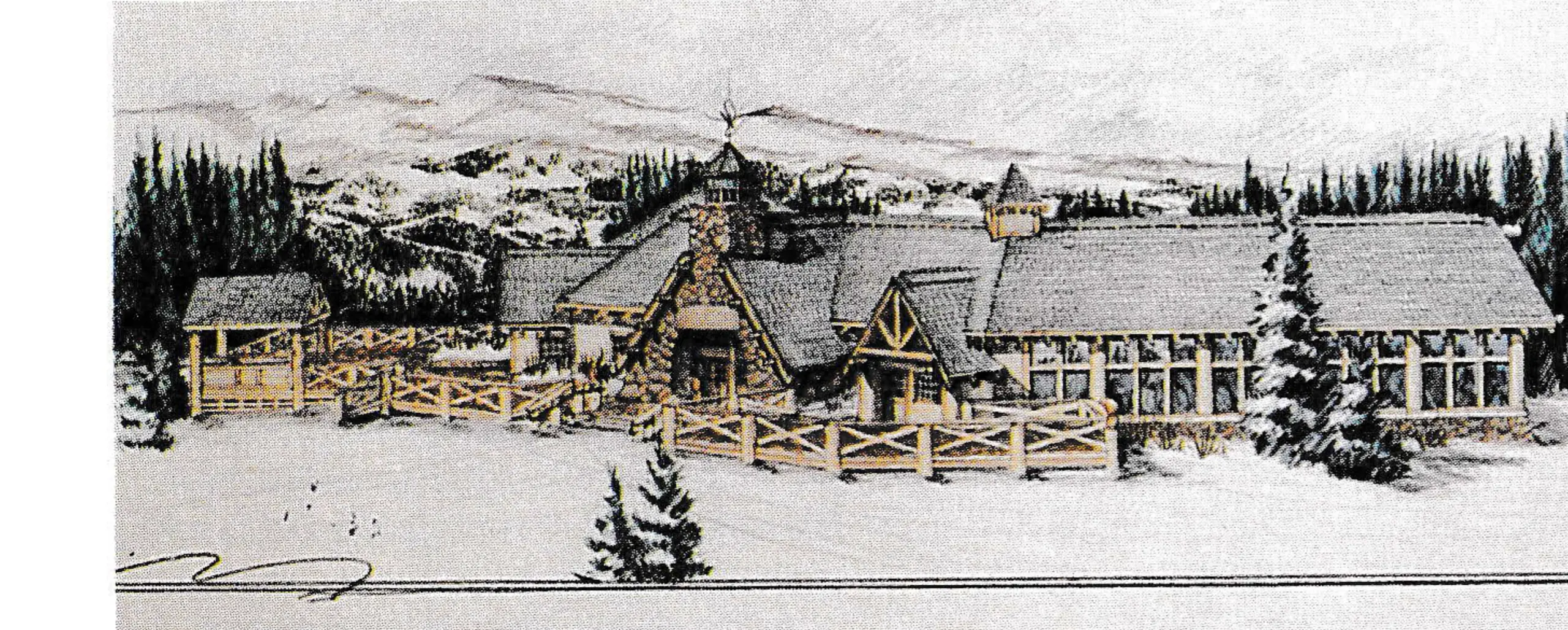
| Detail | Value |
|---|---|
| Floor Elevation | 10,700 feet |
| Lounge | 800 square feet for 50 people |
| Sunspot Dining Room | 2,400 square feet for 140 people |
| Provisioner | 4,000 square feet for 240 people |
| Kitchens | 5,000 square feet |
| Total Cost | $5.6 million |
Keystone’s Outpost, for example, makes more sense when viewed in the context of the resort’s existing infrastructure. Convenient transportation by gondola, and the fact that Keystone offers night skiing, make night-time dining a dramatic reality. And the resort’s strong conference business made it practical to program the structure for other kinds of uses.
In the drama of their siting, both Two Elk and the Outpost are exceptional. But even site selection was first of all a functional decision, both sites having been selected to balance expansion of the lift and slope network into new terrain. A new facility, no matter how striking, is unlikely to meet projections if it is not sited where the lift system will naturally concentrate both skiers and summer visitors.
In buildings of the quality of Two Elk and the Outpost, functional criteria, although essential, obviously were not the only rationale. Nor was financial return the primary objective. While the resorts express confidence that their new facilities will eventually achieve a positive return on investment, it is clear from interviews with officers at each resort that image and market position were at least equal in priority. Says Winter Park’s planning director, Bob Woodbury: “The intangibles are as important as the financial payback.” This, of course, is no surprise.
What is relevant for other ski area owners is the observation that the marketing objectives for all three projects were based on careful analysis of target markets specific to each resort. It’s the old maxim revisited: Know thy customer.
Two Elk is a good case in point. Vail’s target market has from the beginning been upper-income destination skiers, particularly families. Market surveys conducted for Vail Associates revealed a perception that Vail’s food service was not up to par with the world-class quality of the ski mountain. In order to keep pace with other destination resorts that compete for the same market, the company’s management thought it critical to counter the negative perception with an exceptional project.
In this somewhat rarified market, reports VA’s managing director of food service, Paul Golden, restaurant industry wisdom says that great food alone will not suffice; memorable themes are also essential.

Two Elk is a grand thematic accomplishment. Its decor, menu, wall-mounted displays of artifacts, even the western merchandise in its small retail shop, are built upon a Ute Indian motif, in honor of the Native American tribe that prevailed in western Colorado. Its color palate is that of an authentic tribal rug: red, black, grey, and white. Its standard lunchtime fare includes wild game and Indian pies. “There has been a sense that the theme is genuine and appropriate for Vail,” says Golden. “The symbolism has caught people’s imagination.” Focus groups conducted for VA during the winter confirmed the positive public response to the architecture, siting and theme, and suggested that people were willing to pay more for a unique, high-quality experience.
Keystone, too, was intent on giving people a memorable experience, not just feeding them. Appealing to a broad family market, explains operations chief John Rutter, the resort sought to achieve a comfortable building, subservient to the natural environment, consistent with the cultural history of the area and nostalgically cozy and warm. The result is a classic western mountain structure, timeless and unobtrusive in its forested mountaintop setting.
Say Keystone’s PR director, Jim Felton: “Keystone has spent $50 million in on-mountain improvements since 1984 and millions more to protect its natural environment. It would have been incongruous to have opted for lower quality in this facility.”
In sum, while $6 million restaurants may not be an obligatory item for every ski area (to many ski area manager’s relief, I’m sure), these projects suggest trends and lessons that apply to all.
First, as high-speed quads give people more skiing in less time, there is a greater inclination to linger over lunch and a growing demand for upscale sit-down dining on the mountain.
Second, this level of food service will not appeal to all segments of the skier market. Advises Keystone’s Felton, “Ski areas must look at any way possible to provide more dining options and therefore more value to their customers.”
Third, even under the best of conditions, it may take a long time to achieve a decent return on the investment in expensive structures. Emulating Two Elk or the Outpost may not be the wisest course unless a project can be sited and designed for maximum versatility in use, unless the area’s market perceives (and appreciates) higher value in exchange for higher prices and unless the area has specific marketing objectives that can be furthered by the additional press, promotion and positive public response which such undertakings generally receive. It’s hard to overestimate the importance of understanding a ski resort’s particular market segment and planning development strategies that play up the unique qualities of the ski area.
Fourth, there appears to be a growing intolerance of poor quality development in cherished natural landscapes, especially on public lands. Special places deserve sensitive treatment, which to the public may mean undestructive site development; locally appropriate, historically evocative themes; indigenous and durable natural materials; rustic, understated architectural forms; and good craftsmanship.
And finally, the most successful ski areas define their business in broader terms. They are not simply operators of ski lifts and fast food lines for hungry skiers; they are resorts whose success derives from multiple opportunities for year-round recreation and whose longevity depends on giving customers a memorable experience. A restaurant can be one piece of a whole picture.