Photographs by Lewis C. Cuyler and Channing Murdock
If he’s not there, Murdock may be in a contractor’s yard intently studying the possibilities of a crane that has obviously seen better days. But if he should be at his home base, the Butternut Basin ski area in Great Barrington, Mass., be prepared not to recognize Murdock behind the welder’s mask. Instead admire his skill with a torch as he fashions a piece for a lift. If he’s not in the shop, he may be at his desk, poring over the latest listing of used equipment in the Knapp Associates newsletter, or on the telephone working out a swap with another ski area operator: one used Hedco snow cannon for a set of grooming vehicle tracks, for instance.
The result of this behavior is not at all apparent to the customers of Butternut, a medium size area known for the quality of its environment. They see the obvious: an impeccably maintained lodge, inviting mountains, well-groomed trails and bright, shiny machinery and lifts that look factory new. They would be surprised if anyone told them that much of the mechanized equipment working the trails and three of the seven lifts had seen initial service at other places before being abandoned.
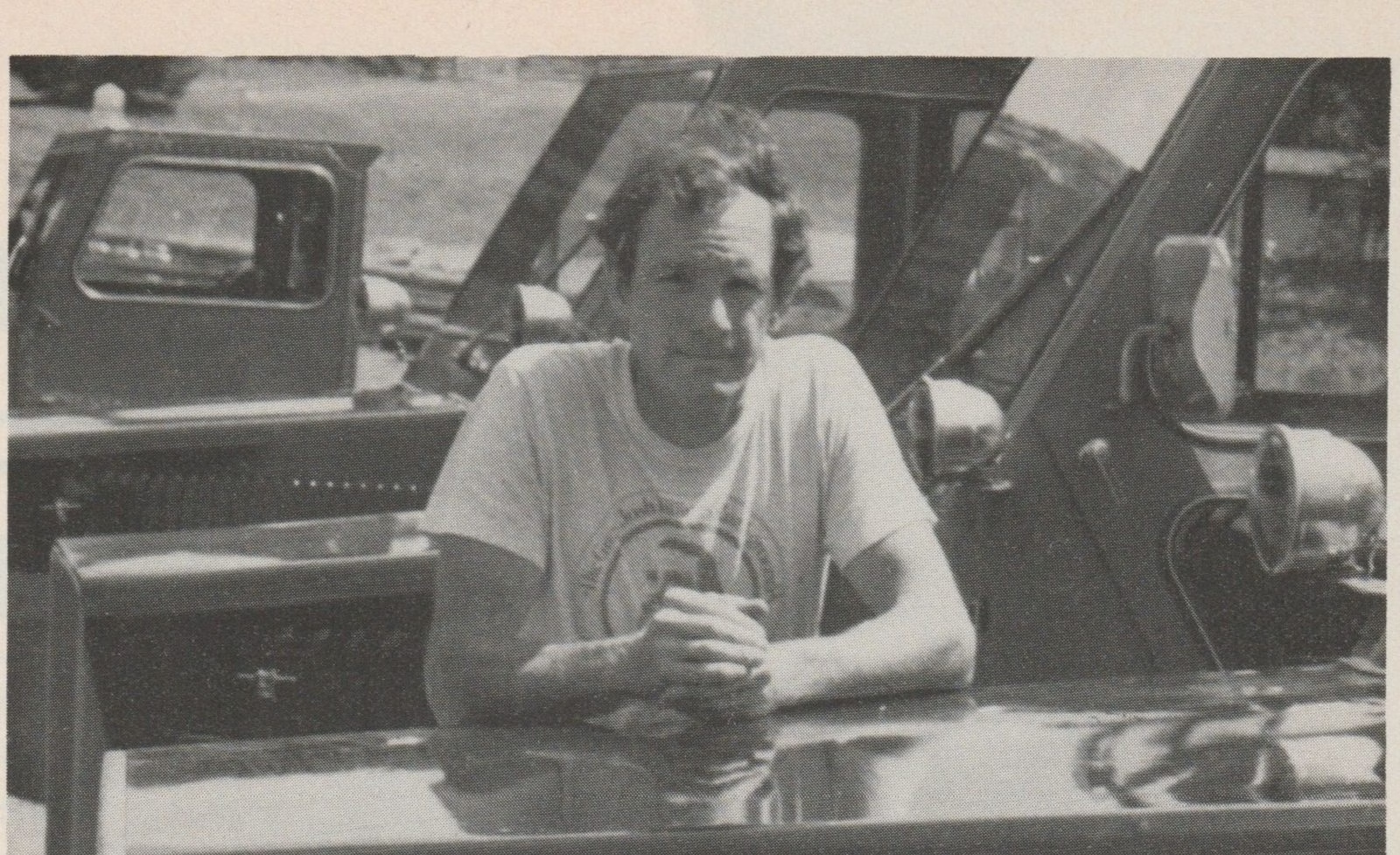
Murdock, Butternut’s president, makes no secret of the fact that he loves the hunt for used machinery and the challenge of restoring it to first-class working order, often improving on the original in the process. He can’t even estimate how much he has saved over the years by not buying new, but can give a few startling examples that indicate savings in the 80 percent neighborhood.
For instance:—A 500-foot Carlevaro-Savio double chairlift for beginners, that handles a 50-foot vertical and can move 1,200 skiers per hour was purchased for $5,000 from a ski area in New York state. It was trucked to Butternut where another $5,000 was spent to put it back into shape, a job that included manufacturing three towers. The total cost for the lift was $10,000. Murdock estimates it would have cost him $50,000 new.—A 2,500-foot Mueller double chairlift, that handles a 450-foot vertical and can move 1,100 people per hour, was purchased from another New York state ski area for $20,000 and installed last season, after another $45,000 was spent in fixing it up, a total outlay of $65,000. The lift would have cost an estimated $215,000 if purchased new.—A 1,200-foot F-10 Poma lift, that handles a 200-foot vertical, was discovered almost by accident at a nearby inn-resort. Murdock was attending a concert at Tanglewood, an outdoor facility, when he spotted the glint from a piece of machinery in the woods on one of the surrounding mountains. On the hunch that it might be an old lift, he investigated, discovering to his delight that he was right, and that the lift had been abandoned. He bought it for $500, then spent about $8,000 fixing it up. A new lift would have cost him $50,000.
Then there’s the DMC Model 3700 tracked snow grooming vehicle that he bought from a large Vermont area two years ago for $22,000, minus its power tiller. That cost him $5,000 to re-build, giving him a machine that is the equivalent of the new model with its price-tag in the $100,000 area. Murdock quickly hedges on this one, however, noting that last year he had to put new tracks on the vehicle at a cost of $15,000.
Better than New
Murdock not only believes in the value of re-building used rolling stock, he is also convinced that when his crew of mechanics complete the restoration, the machines are better than when they came off the assembly line.
“The reason is, these machines actually break from the tough use they get,” he explains. “All of that plowing, leveling, grooming, produces metal fatigue and after awhile supporting members of the chassis develop weak points or just plain come apart.”
When a machine is pulled into Butternut’s maintenance building after the season, it is completely taken apart and the frame and other components are subjected to a searching examination for wear as the parts are cleaned. If there’s a place that shows the effects of stress, the immediate area is repaired or braced, but then the Butternut mechanics go beyond the problem. As a matter of routine they attempt to determine what provoked the stress and then try to distribute the pressure better so that the stress point is relieved.
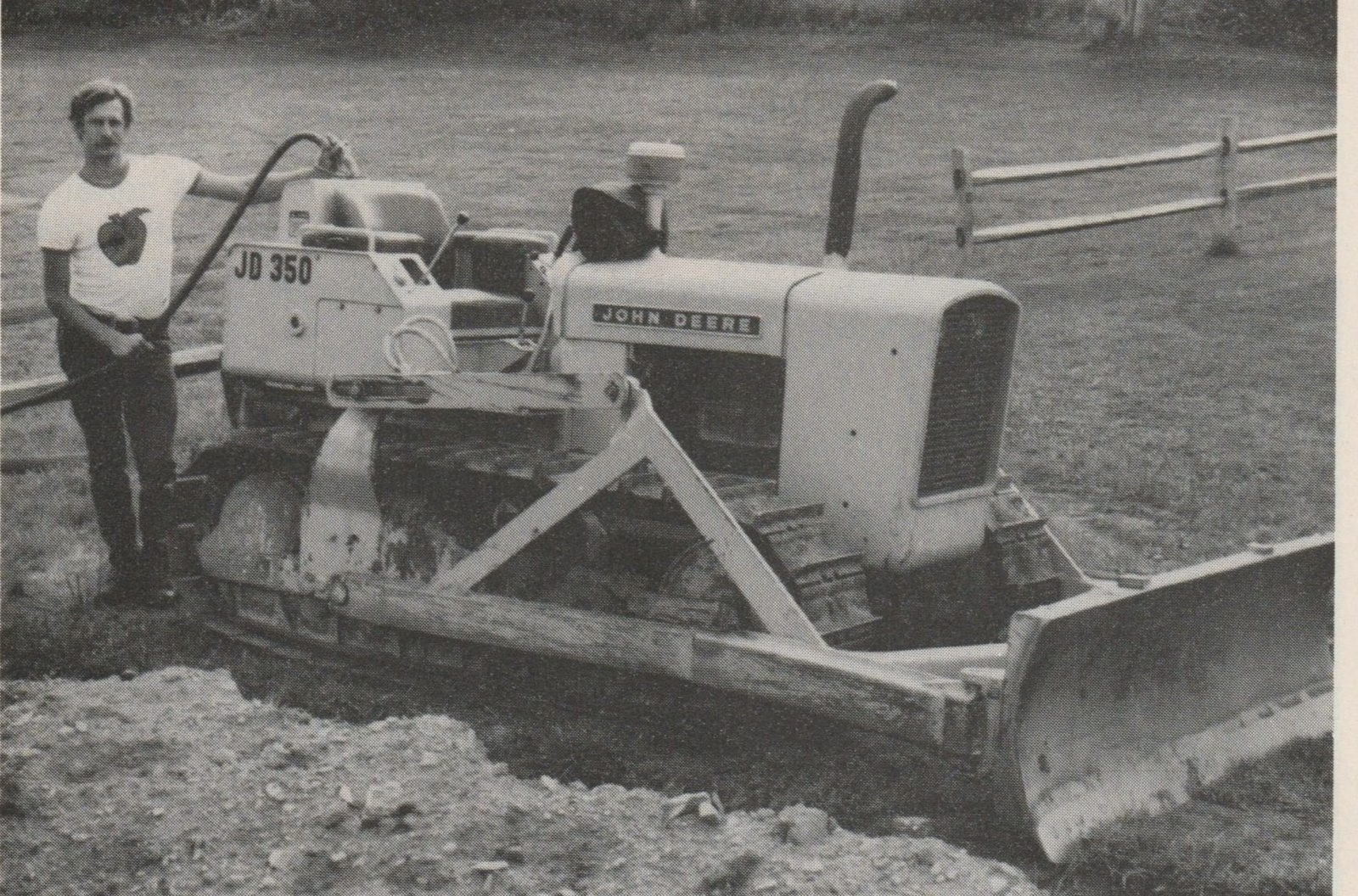
As if to prove the point, Murdock compared two DMC 3700s, parked side by side, one purchased new, the second, the one purchased for $22,000. He pointed out that a brace Butternut personnel had fabricated for the underpinnings of the older machine was approximately the same kind of brace on the chassis of the machine purchased new.
“The company is finding out the same kinds of things that we are,” he comments.
That same searching look is given all of the components of the rolling stock: hydraulics, glass, upholstery, electrical system and the hundreds of parts. If there’s a sign of wear, they are replaced. During the process the engines are removed from the vehicles and cleaned. If they need any major internal work, they are sent back to the factory.
How often is this done?
“An experienced person can just tell when motors must be re-built,” says Murdock. “We try to have them re-built before we get into serious trouble.”
The savings that Murdock has accomplished at Butternut by rescuing old equipment are so pronounced that it is somewhat surprising that more ski area operators aren’t doing the same thing.
To an extent they are. Hugh Knapp, whose business, Knapp Associates, publishes a newsletter eight times a year listing used equipment of various kinds, says that many operators shop around and buy used goods for one-time use. However, he says, only about a half-dozen operators do it on the same scale as Murdock, with a continuing, programmed operation.
Murdock says that to make a success of fixing up used equipment “you have to be interested in it, and most people just aren’t.”
“I love old lifts,” he says, “and if I can find a ‘buy’ on one, I’ll get it, even if I then have to think of building a trail to go with it. People come to ski areas to go uphill and we should provide the facilities so that they don’t have to wait.”
Murdock points out, however, that the game of recovering equipment is far more risky than it was 15 years ago when he began by acquiring a used Spryte. In those days, he recalls, no one was very systematic about placing a value on used track vehicles or lifts so that you could often “get a steal,” particularly in cases where a bank might have taken over a ski area and was disposing of its equipment. In the past few years, however, experience has produced far more sophisticated sellers, making it much more difficult to obtain a good buy.
What It Takes
While Murdock maintains that having an interest in restoring old equipment is essential, he also cautions that interest alone is not enough. The key ingredients, he emphasizes, are the mechanics who must share the interest in restoration and enjoy the challenge that it involves.

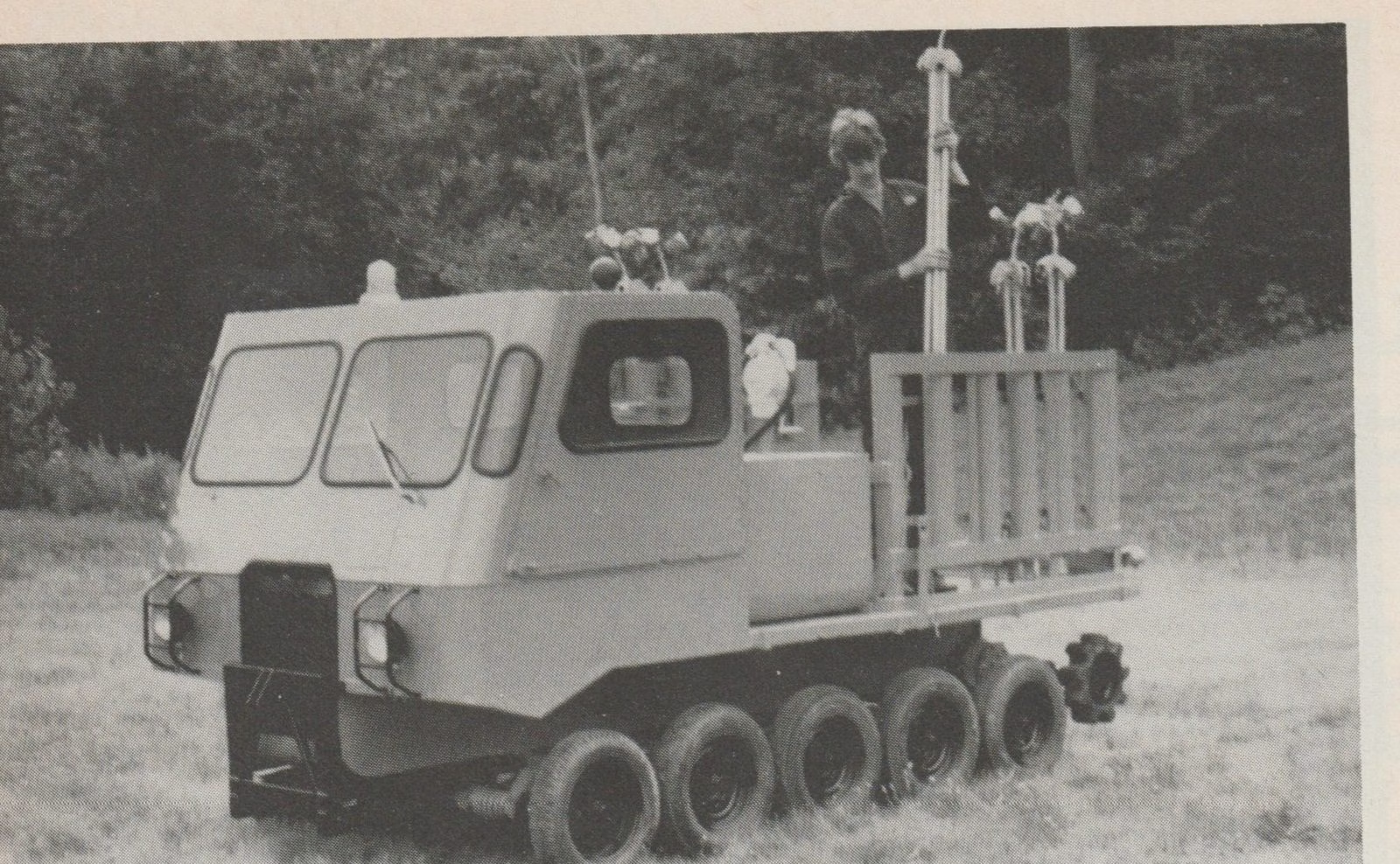
“And it is a challenge,” Murdock observes, “because when you take something apart you are always in for more than you think you will be.” He takes enormous pride in his crew of mechanics, four for the rolling stock and four for the lifts. In fact, he says, Peter Prelli, his chief mechanic, is regularly consulted by manufacturers of equipment who seek his solutions to problems that develop under heavy usage.
Mechanics must also have the nuts and bolts to do their job, Murdock points out, and in Butternut’s case that means maintaining a substantial inventory of spare parts.
“If you are working with older equipment, you always need spare parts,” Murdock comments. “Tires always blow out; new cleats are always needed. The idea is to have the equipment operating again as soon as possbile.”
In fact, Murdock is so convinced of the need for having spare parts as insurance, that he has equipped each of Butternut’s lifts with a full capacity gasoline engine, in the event the electric motors fail. Normally, lifts are required by law to have auxiliary power units that will move them sufficiently to unload skiers in the event of trouble, but are not strong enough to operate a lift at normal speed. Butternut has gone beyond that requirement so that each lift can operate normally, even if its main source of power fails. And if the auxiliary sources fail, there are spare engines tucked away in the maintenance building.
Murdock’s enthusiasm for giving old lifts new life stops short of such major installations as Butternut’s 3,300-foot long triple chair. Murdock says he doesn’t think it is cost effective to buy used lifts for the larger verticals—the time consumed offsets the savings.
Yet despite those reservations, such larger lifts are on the market and sold. Hugh Knapp says he sells “three or four a year” in the 4,000 foot range, but acknowledges there are many factors that must be figured into an installation of that size before knowing whether it will be cost-effective.
No matter what the size of the installation, a critical factor is how much of the work involved can be done on the premises with the ski area’s own personnel and how much has to be jobbed out. The more work that has to be handled on the outside, the less cost-effective the job. Murdock says that in the case of lifts, he can accomplish substantial savings by performing the engineering—a job that involves hundreds of calculations—himself, but then arranging for a professional to check his work, changing it if necessary.
In general, Knapp observes, ski area operators have to know what they are doing if they are to benefit substantially from buying used equipment. He describes Channing Murdock as a prime example of the kind of manager who can best take advantage of such a market.
“In my opinion, Channing has the single best medium size ski area operation in the country,” he says. “Channing does well with used equipment because he is an owner-operator who is free to move quickly when the price is right and has the knowledge that comes from building up his own area. Part of that knowledge is his ‘hands-on’ feel for machinery.”
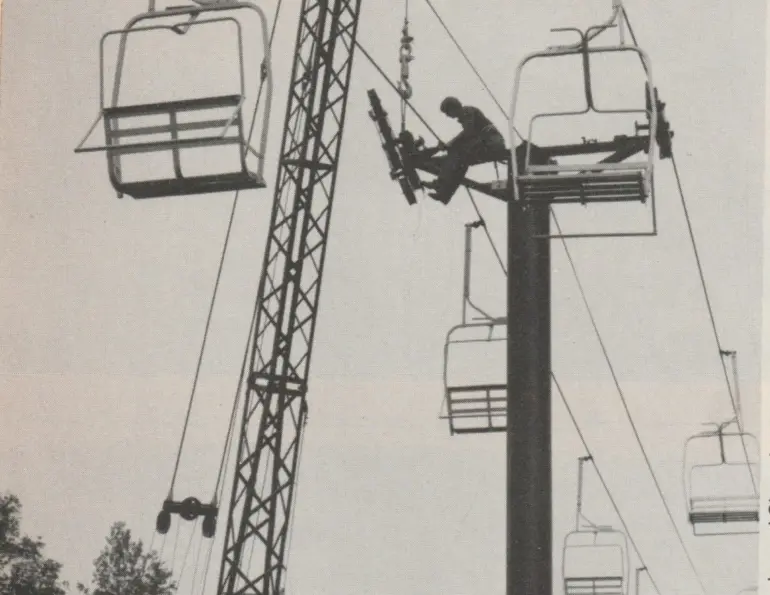
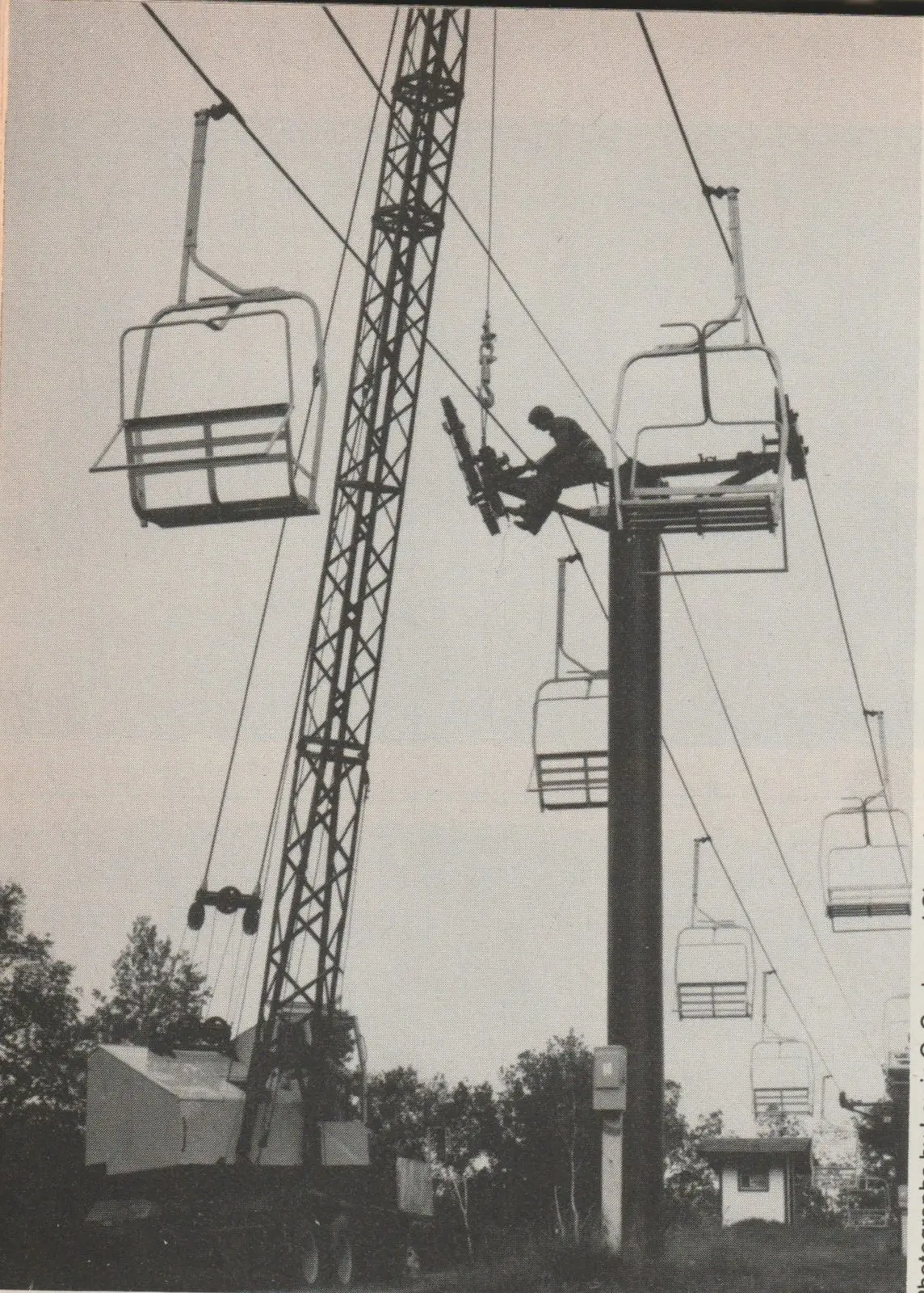
Earlier this year, Murdock branched out from his usual acquisitions of rolling stock and lifts by purchasing a crane, an item with a 45-foot boom and a “jib” that can extend it to 60 feet.
“It was sitting in a yard in Great Barrington,” he says, “and I bought it almost on the spot for $6,000.” By mid-summer, and $5,000 worth of work later, it was ready for action. Murdock plans to use it for lift maintenance instead of renting a crane as he has done previously. He says he’s not sure how soon there will be a pay-back, but does know that it will make life a lot more convenient for his lift crews and that it will probably save him “about $1,000 a year.”
Although Murdock does not have an overall figure on what he has saved by shopping around and restoring, it is obvious that the amount is considerable. In addition, for a few years in the early 1970s, he was acquiring equipment that he couldn’t use, then fixing it up and selling it at a profit. He no longer does so, he says, because he prefers to focus his efforts on the area itself instead of on side businesses.
So while other ski area owners or managers undertake various off-season ventures to make full use of their facilities, Channing Murdock continues to scout around for used equipment. In the process he achieves savings that may well be equivalent to the income generated had he decided to turn Butternut into a full-scale summer resort.
As for his customers who think that Butternut’s equipment really is all new . . . well, that’s the way Murdock likes them to think and he’s certainly not going to tell them differently.