

Much time is spent mowing tall grass on ski slopes every fall. Mowing is not necessary to keep the grass healthy, but it is often desirable to keep the grass below the snow level for early skiing. Slopes with tall grass and weeds look bare when they have a thin snow cover. The potential skier may not venture past the parking lot when he sees his favorite slopes showing that brown color. This vegetation offers an unpleasant obstacle to the early bird skier and makes turning difficult if he attempts it.
Snow-conditioning devices like snow rollers, or even side-stepping, are not effective in light snow. The grass tends to snap back up again and is not covered until new snow comes.
Mowing grass on excessively steep or rocky slopes is hazardous to both men and machinery and nearly every ski area has slopes that cannot be machine mowed. Hand mowing is slow and tedious and men who can operate the old hand scythe are usually too old to negotiate a steep ski slope.
Last fall, Thunder Mountain in Charlemont, Massachusetts, was behind in their mowing program and an early snow made continued mowing impossible. Men on skis packed some of the snow and grass on excessively sleep slopes, but cost of this kind of operation was prohibitive. A Flexipacker snow roller was employed but the grass snapped back up in the light snow. It did stay down later when warm weather made the snow damp and heavy. It broke off after a subsequent freezing rain when the Flexipacker was used. On sleep slopes excessive dead heading on access roads was required to get to the top of the slopes so that the rolling could be done down hill. Hazard to men and equipment was high because the snow cover was thin and some of the slopes were excessively steep.
In searching for a suitable technique to remove this grass, we fell upon the idea of burning it off at snow level while there was a thin cover of snow on the ground. Fire would not carry far in the grass because of the snow. Without snow on the ground, the fire may prove hot enough to damage valuable grass roots. At any rate, much of the valuable humus layer near the ground which acts as a mat between the skier and bare soil or rock would be consumed in the fire if it is not protected by snow. There is also danger of the fire getting away and running into the forest at the trail edges if burning is done without snow cover.
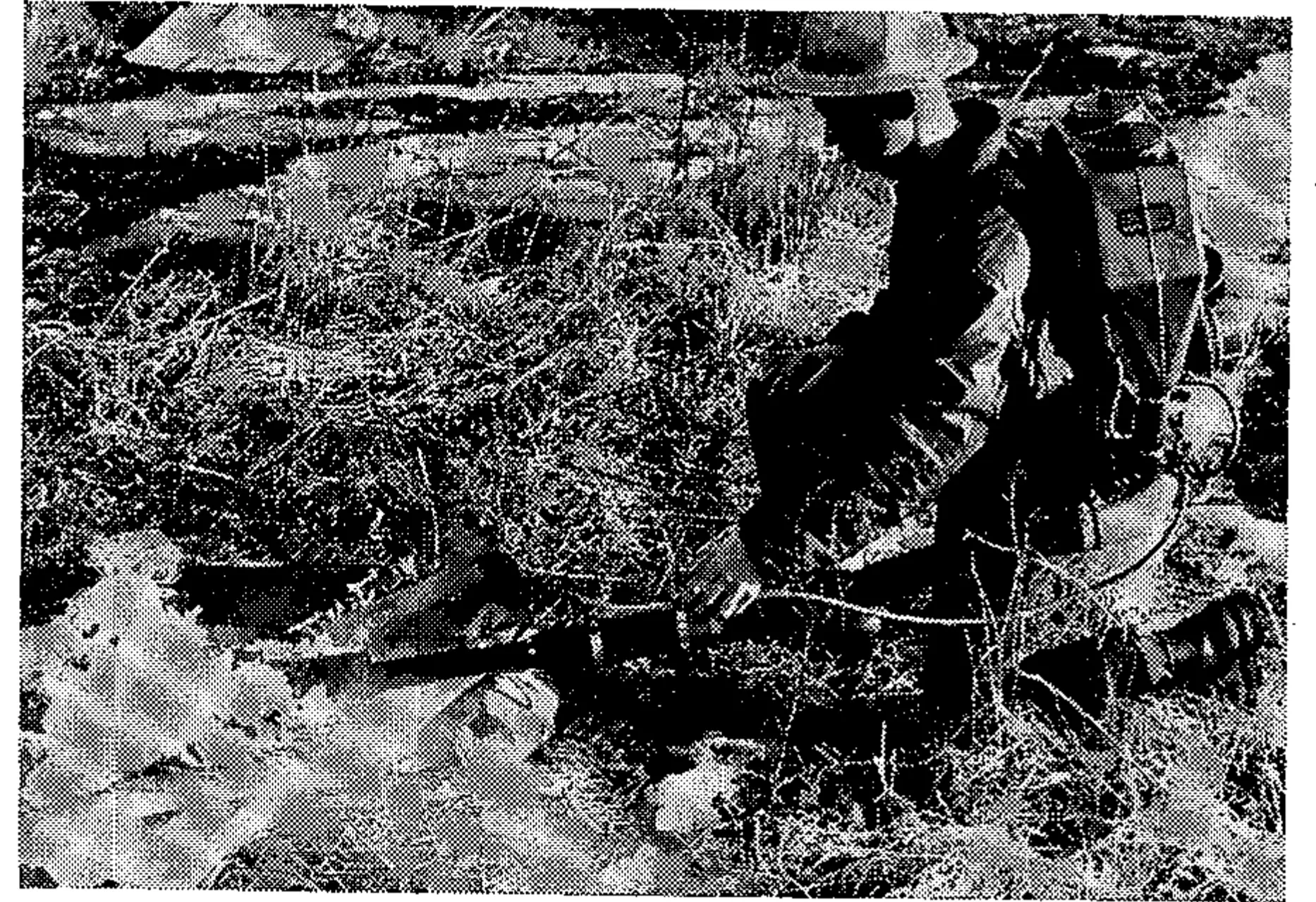
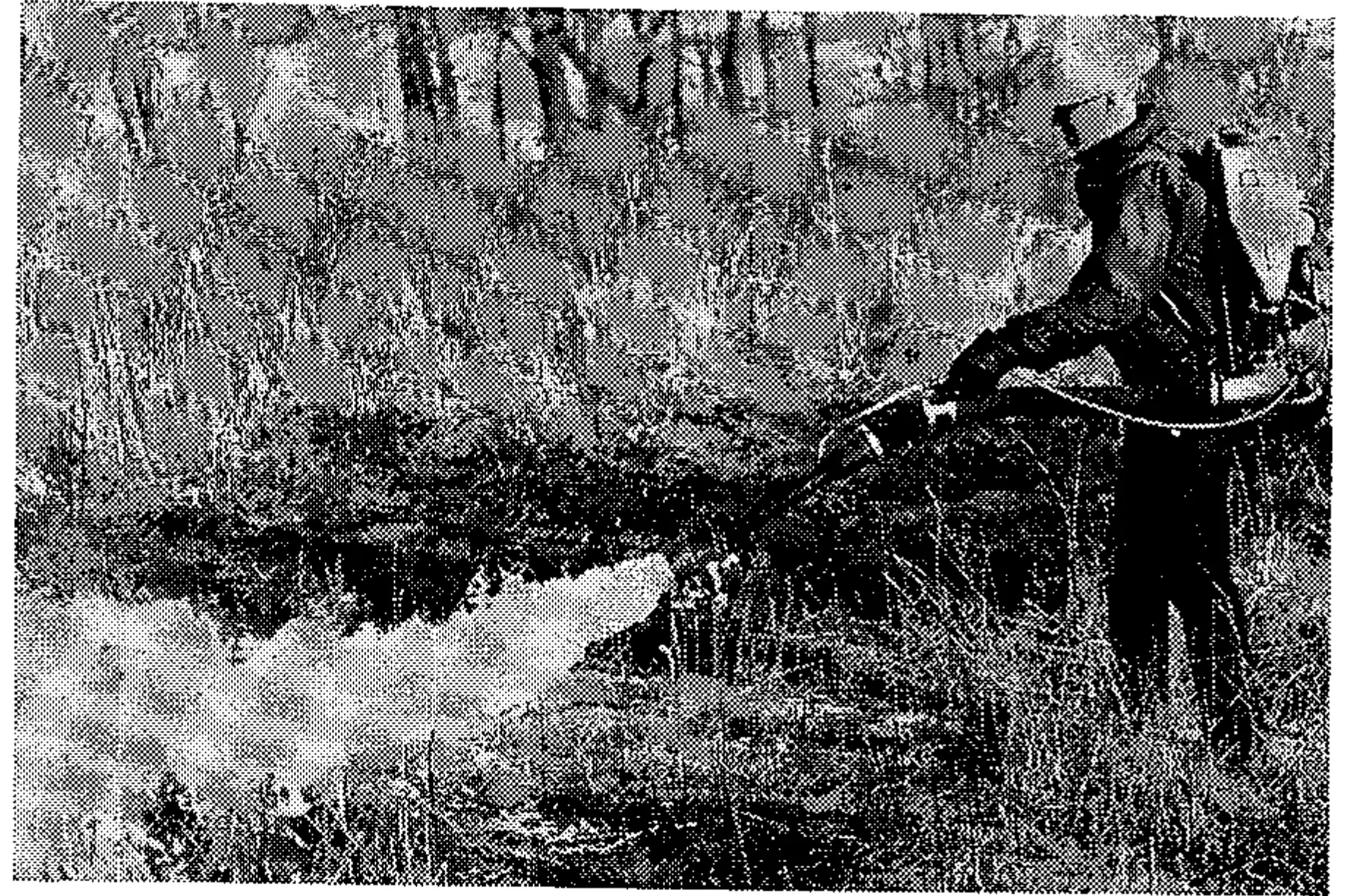
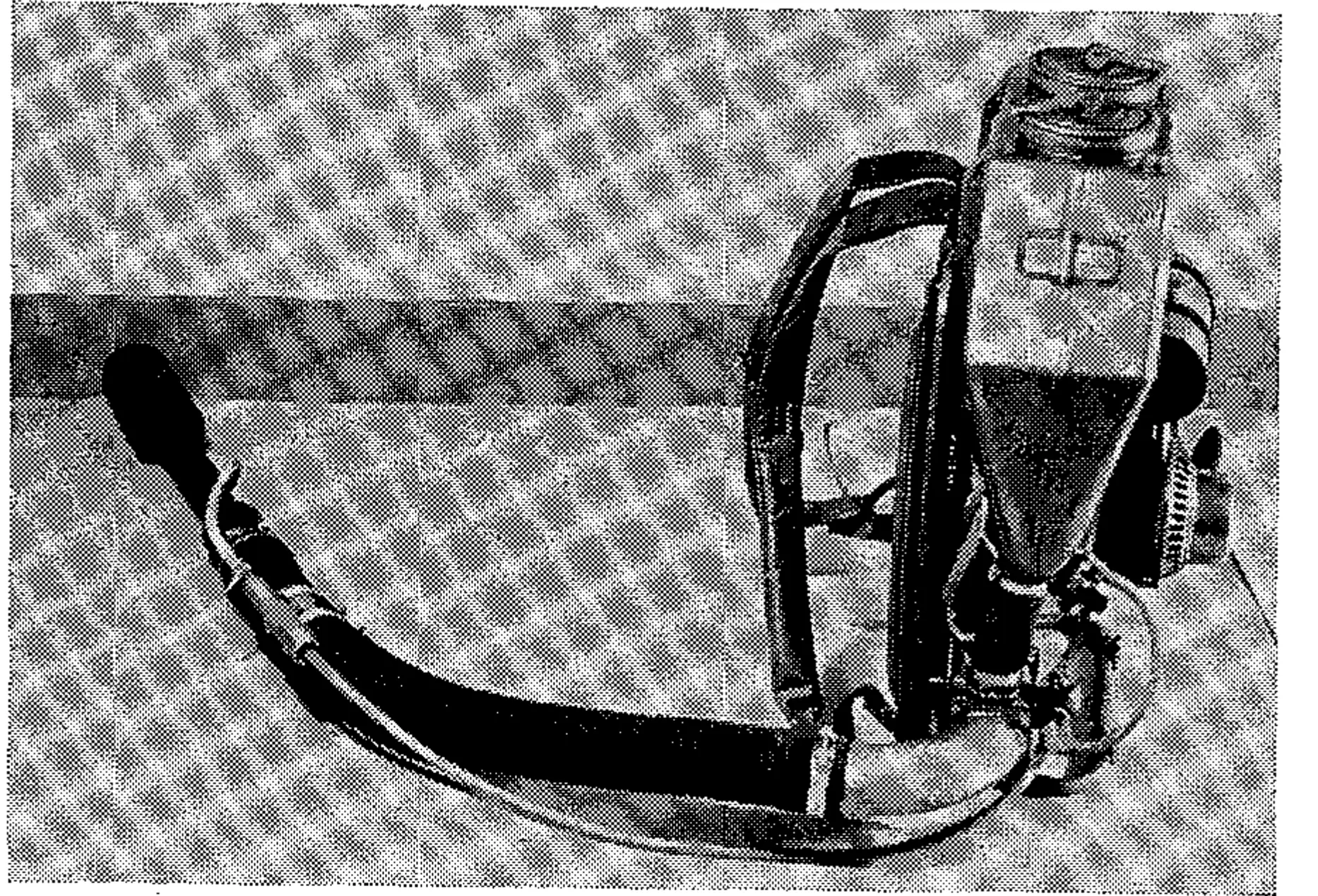
With the help of a flame thrower the grass burned well. We used a flame thrower attachment on a shoulder-mounted mist blower and found we got a larger, hotter flame for our purposes with the oil spray jet removed. The nozzle required pre-heating which was accomplished with oil-soaked rags or newspaper. With the spray jets removed we got a hot flame up to five or six feet in length which consumed the grass well. Woody growth was not very much affected by the flame and was left after the grass and weeds were consumed by fire. Operators need to wear crampons in order to keep their feet in this operation on steep snow-covered slopes.
We tested eight fuels in the flame thrower to determine the best for this purpose. The fuels tested are listed in order of their preference for performance without regard to cost or safety. (1) No. 2 fuel oil straight; (2) Three gallons No. 2 fuel oil—1 gallon gasoline—1 gallon No. 30 motor oil; (3) Two gallons No. 2 fuel oil—2 gallons gasoline—1 gallon No. 30 motor oil; (4) Four gallons No. 2 fuel oil—1 gallon gasoline; (5) Kerosene straight; (6) Four gallons kerosene—1 gallon gasoline; (7) Three gallons kerosene—2 gallons gasoline; (8) Gasoline straight.

We tested gasoline in spite of the risk involved because we wanted to get the best possible flame regardless of cost or risk. Gasoline is too hot for easy use and it is extremely dangerous. We used motor oil in some mixtures to get a slower-burning flame and it did improve the more volatile fuels like gasoline and kerosene. No. 2 fuel oil is heavy and proved the best fuel for the purpose while having the lowest cost and lowest risk to use.
About 1/3 of an acre of grass can be burned in twenty to thirty minutes using 2½ gallons of fuel. The flame always burns up hill but the work requires much less exertion if operators begin on top of the mountain and work down. Relatively new, snug-fitting clothing which is not frayed should be worn by the opeartors so that they do not catch on fire.
This operation can be accomplished for about $15.00 per acre. It should be employed only where mowing is mandatory and cannot be accomplished by the usual equipment. There is some discoloration of the snow in this operation so it should be done after the first light snowfall.
The flame-throwing attachment is a useful addition to a shoulder-mounted mist blower. The mist blower can also be used to eliminate unwanted hardwoods growing on ski slopes, and in spraying for insects which bother trees and other plants as well as in mosquito control work.
William MacConnell is professor of Forestry and ski coach at the University of Massachusetts and Robert Prescott is a graduate assistant and ski patrolman.