
His outburst was greeted more with surprised amusement than with annoyance by his three ad hoc companions, who were more aware of the incongruity than was he. There he sat, being pulled up the mountain in totally enclosed comfort, wearing $180 competition boots and owning about $300 worth of ski-and-binding in the saddle outside, and he was saying . . . what?
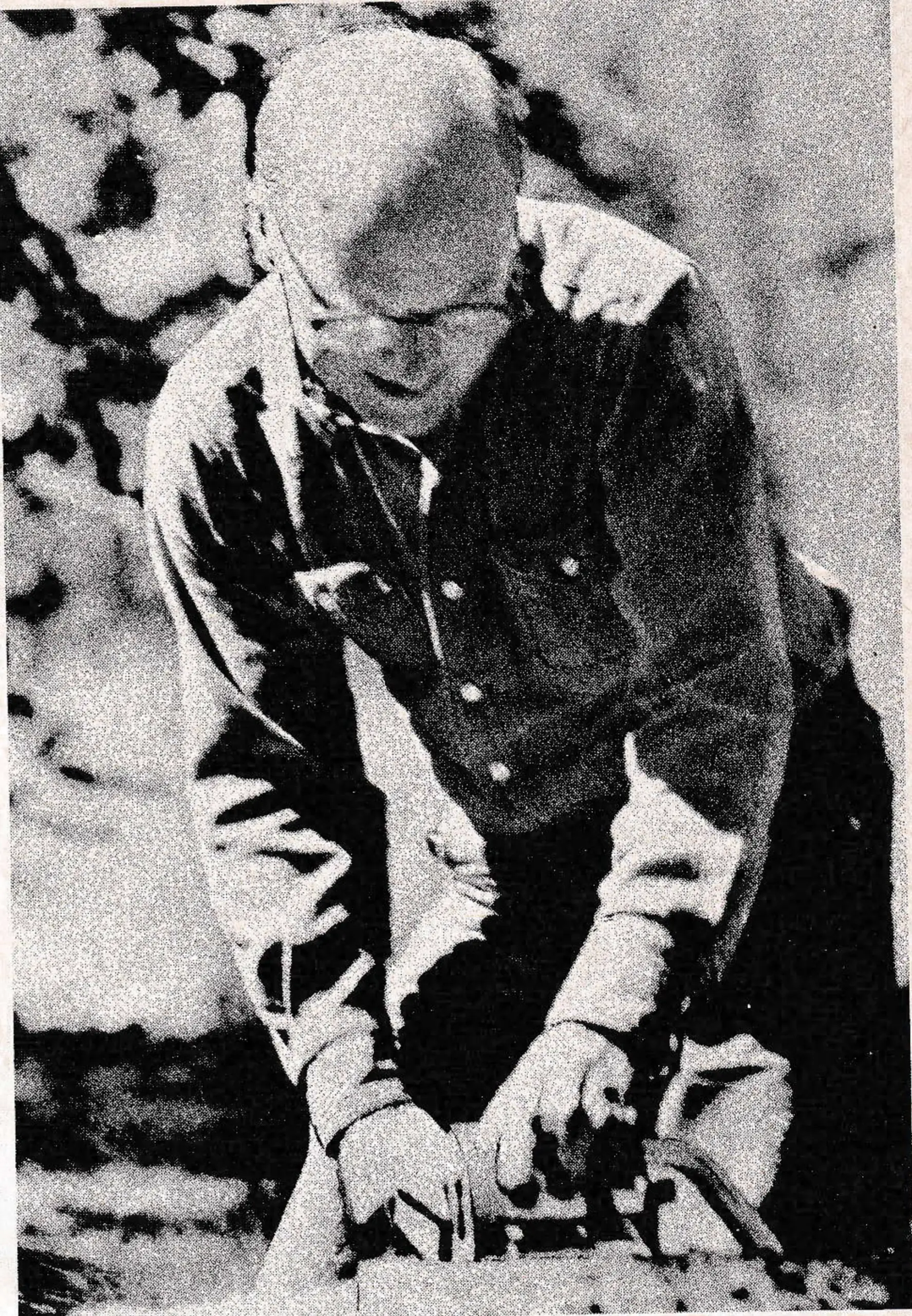
“He was talking nonsense,” said Max Dercum a week later when the episode was repeated to him in his office at Keystone. “That kind of thinking just tells me he knows nothing about forests. These kids suddenly discover the word ‘ecology’ . . . something a lot of us have been working with for 30, 40 years now . . . and they seem to think that no one else ever heard of it before. I just . . .” and then he lapsed off slowly into a most uncharacteristic silence.
Max’s angry retort was a paradox, a striking contradiction to his own recent work at Keystone. That’s the kind of retort you’d expect from a man who develops a mountain with a bulldozer and a shoestring, not from the creator of one of the most expensively executed ski areas in the country. But then, Max Dercum is a parodox, embodying many of the conflecting ideas so typical of the skiing scene in the eighth decade of the 20th century.
He is part forester and part conservationist, part ski instructor and part ski-area designer, part land-developer and part hotelman—and full-time, he is Max Dercum. In not only an industry but an area increasingly dominated by youth—general manager Clay Simon is 34 and overall planner Lawrence Halonen is 26—how does Max Dercum survive? In his late 50s, he should be in a rocking chair, not rocketing down his own mountain or planning his own condominium complex or designing and walking the entire trail complex at a major, massive mountain of his own. Yet, this is Max, right in tune.
Skiing with him down Keystone’s Wild Irishman, you stay with him only because he is, after all, director of the ski school and it would not do to lose you on the hill. He has got you into his mountain, and he is watching you. He shakes his head gently. “Forget that down-up-down silliness,” he says. “You must learn compression. Now, watch . . .” and off he goes, demonstrating in slowest motion on top of a pitch that looks like Niagara Falls, the intricacies and subtleties of the jet turn.
Riding the chair with him later that day, the dialogue shifts: it is Max Dercum, the man who taught forestry at Penn State until 1942, who is talking now:
“There is no such thing as a crime in cutting a tree. We have to use the ax like a hoe in the garden, to create a healthier and more esthetically pleasing forest. You have to pick the best methods—clear-cutting, selective tree-cutting, whatever—always with the long-range point of view: How can I help the forest produce a better final crop?
“When you develop a ski area prop-