


In the January issue I wrote an editorial entitled, “Ski Equipment: Barrier to Market Growth?” In it I expressed the opinion that ski equipment had become so performance-oriented and complicated to use (especially boots, with all their micro-adjustment devices) that perhaps consumer bewilderment was translating into turn-off. From an industry perspective, I wondered, are we perhaps unwittingly erecting barriers to the growth of the sport? Were we mis-reading our public by assuming everyone was a potential equipment junkie, eager to join the cult and learn the secrets of tuning skis, when all that person might want to do was go out and have fun in the snow. I wondered about a sport where the equipment needed to be lengthily interpreted for skiers by platoons of ski publication equipment testers. I made the comparison with other sports equipment where ordinary participants had less intimidating choices to make (tennis racquets and snorkeling flippers, for instance) and pointed to the high-tech point-and-shoot cameras which had combined idiot-proof ease of use with high levels of performance in a way that had not been achieved with ski equipment.
While acknowledging that great technological advances had, indeed, been made in the last 25 years in design and construction of ski equipment that made the sport easier and more fun to learn, I wondered whether we had, perhaps, “crossed over the line some time ago to what appears to be an inevitable tendency to complicate fun with gear and technical gadgetry.”
I then circulated the editorial to six thoughtful and knowledgeable individuals, each an authentic “expert” on the subject, chosen to provide the varied perspectives of those in equipment testing, manufacturing, marketing, research, designing and retailing. The results are fascinating. Each acknowledges a problem exists, but each sees the problem through a different prism, pointing different fingers at different root causes, suggesting different remedies. — David Rowan, Editor
Bill Tanler: long-time ski editor and publisher, who says, “I started Ski Tech [because] I was convinced that the average skier going into a ski shop didn’t want to deal with the problem of making a decision . . . and that it was more important to provide ski shop sales people with product information than the consumer.”
I have been writing about skiing for almost 30 years now. I’ve toured ski factories in five different countries. I’m convinced that if I were handed the right parts, I could, somehow, put a ski together that would fit into a mold.
That said, I have often wondered what must go through the minds of beginning or casual skiers entering a ski shop anxious to buy, but looking at a wall of skis, boots growing on trees and an assortment of bindings with different names and numbers. The reason I have pondered this is that after writing about skiing for as long as I have, I am still bewildered at the variety and complexity of the products on display. Unaided, I’m no more confident I would be making the right buying decision than any other skier.
One of the biggest problems we have in the ski industry is that we lack the ability to understand what it is like to be in the shoes of the average skier. Most people in the business know too much about skiing and ski equipment to identify with the average skier.
What’s unfortunate about the complexity of ski equipment isn’t that the products aren’t good, they’re fantastic. It’s that competition in the market place (and necessity of always having something new to sell every year) has helped produce a bewildering alphabet of names, numbers and jargon that no skier can relate to. The reality is that the average person who is interested in skiing simply doesn’t want to devote free time to becoming an equipment expert. This individual just wants to be able to go into a ski shop and have some confidence that the salesperson will offer accurate and reasonable advice. The customer wants to be told what to buy.

Jim Spring: As originator of SMART, he has the long-term overview of having quantified ski equipment and clothing sales over the years. He is now researching the leisure market with his Leisure Trends/Gallup service (see also Page 47).
First reaction to your editorial comment is to agree. “Who needs all this?” Next reaction I have is “How come?”
Perhaps in boots there is a constant desire among manufacturers to truly combine performance and comfort. Since this was approximated with rear-entry boots, the push has been to combine the comfort and ease of rear-entry with the performance of a more rigid boot, and so we have the mid-entry boot and all kinds of screws and nuts and bolts to create the perfect fit. In the history of the world no one has designed the perfect shoe. Feet are marvelous when left unshod; terrible creatures to shoe.
In skis, all are very much alike. In a crowded and shrinking ski market manufacturers are seeking differentiation. Since no fundamental and/or understandable except-to-the-experts distinction exists, the easiest thing for market leaders to do is confuse. The other part of the equation is that prices for low-end skis have been driven so low, and costs driven higher because the economies of scale which existed when the U.S. market sold 1.2 to 1.4 million pairs of skis four years ago don’t exist; that the guilt-ridden manufacturer has to compose reasons to justify the higher prices, similar to a politician composing rhymes about the national debt.
That’s the good news. The bad news and the real reasons I think that ski and boot manufacturers create confusion, price their goods too high and therefore reduce sales and perhaps the number of skiers is that if they are not talking to themselves they are talking to ski retailers. If there is a group in the United States which has proven that they do not know who their customer is, it is the retailer. Since the manufacturer (supplier) considers selling the retailer as his first sale, he is jerked around from the start.
The manufacturer has got to get in touch with the final customer who parts with the money which allows the retailer to pay his/her bills. As a new seller of consumer research, I can vouch for the fact that while ski areas are very concerned about the consumer, the manufacturer is living in the dark ages — with one or two exceptions. It is interesting you mention bindings because Salomon, which for years set the standard in bindings, pays attention to the consumer. Others imitated.
Today, consumers are voicing their opinions at the cash register by buying far less than they did as few as four years ago. So your editorial has a lot of merit, considering the evidence. Whether the complications and prices of equipment are keeping new entrants away from the sport is another matter. At least I have no evidence to support it.
Some wise person told me several years ago there are four ways of doing things: We can: a) do the right things right; b) do the right things wrong; c) do the wrong things right; d) do the wrong things wrong.
In the ski supplier business, where product is king, the retailer queen and the consumer the peasant, we do the wrong things right. This is because the most vital part of the selling and servicing equation is left out: the user of the product.
Jackson Hogen: Outspoken, articulate and influential ski equipment editor of Snow Country, his background includes being product manager of Salomon. Active in ASTM.
Is the whole conundrum of ski equipment a barrier to market growth? Absolutely. Is it the only barrier? Far from it. But I’ll keep my focus on the issue at hand.
The biggest single problem isn’t the complexity of the stuff. After all, most ski equipment can be bought in virtually ready-made packages, and technical mumbo-jumbo can be kept to a minimum and sales will still occur. The biggest barrier represented by equipment is the classic bug-bear, price. Recently I visited three specialty shops. Not one had a boot for sale below $350, despite the availability of excellent boots that can be sold profitably below $200. The ski racks looked almost identical, with barely a single, discounted, close-out model in sight, despite a flood of such products available at wholesale. It’s time to stop focusing so much on image and begin to communicate value, or we are doomed to end up talking only to ourselves, and we aren’t buyers.
The second biggest problem is ancillary to the first: as an industry (boy, do I hate that word!) we communicate about the most recherche, high-end, probably inappropriate equipment we make. We attach no cachet to the low- and mid-level products that most consumers might be able to afford, despite the fact that this segment now consists largely of excellent products. Why throw a blanket over it? Where we have value — and we have a lot of it — why don’t we promote it?
The bottom line on stratospheric equipment prices — $700 skis, $500 boots and $300 bindings — is that the consumer we need to rely on for growth just won’t stand for it. Caught in the middle is the retailer, who must discount the stuff the day after Christmas just to move it out the door, and with a profitable selling season of only a few weeks is left unable to pay his bills. As things look today, it is hard to imagine retail as we know it surviving.
The resolution of this mess — and it’s not the one most of us who grew up in the sport would care to see — is catalog sales by large, well-organized warehouses, like those that currently vend computer goods, coupled with area shops that will be the last bastion of service-intensive retail. This may not be where we want to go, but right now it’s where I think we are heading.
Seth Masia: Technical editor of Ski Magazine and Ski Business since 1974, author of books on skiing, including two consumer guides on ski maintenance and tuning, and with two to be published this year.”
Your premise is amusing, but I don’t agree that the complexity of ski equipment is any sort of barrier to market growth.
First of all, there’s plenty of dead-simple stuff available; in fact, some of the best-selling high performance gear is intuitively purposeful, like the point-and-shoot cameras you’re so intrigued with. What could be simpler than a torsion-box slalom ski like any of the K2, Pre, Olin, Dynamic or Volkl products? What could be more accessible than a four-buckle overlap ski boot, the mainstay of the top-selling Tecnica and Lange lines (not to mention Koflach, Dachstein and Munari)? The best example I can name is the Nordica GP, essentially unchanged since I worked in a retail shop twenty years ago. These same simple designs are available at all price points, down to the under-$200 level for skis and boots, if retailers choose to stock them.

Where manufacturers have clotted the market with over-engineered products, it’s because the hardgoods business has been overproducing since the 1973 oil embargo, creating a price-driven market in which consumers can always get a bargain. In the face of shrinking margins, factories have sought to distinguish themselves from the competition through “convenience” or “damping” features that bear little relationship to the actual skiability of the product. A hardgoods marketing brain looks at a Japanese camera or car and discovers that these microchip-equipped products can take most of the detail work out of simple tasks. The message the marketing brain absorbs is “consumers don’t want to work hard to get into ski boots.” The result: a horrifying nest of cables and screws hidden in a foot-shaped plastic box, or a ski festooned with external “features and benefits,” or a binding that claims somehow to improve a ski’s flex pattern.
The sophisticated skier sees through the crap and buys equipment no more complex than a tennis racquet. He understands, as the non-skiing ski marketer does not, that the goal of the purchase is not convenience but thrill. He wants to feel the ski flexing in response to centrifugal loads, and is willing to spend days, months or years to acquire the skill to use a Warm Springs Run or Face of Bell the way God intended. Compared to this kind of commitment, an extra hour to get a good boot fit, or an extra 30 seconds each morning to buckle the boots properly, is petty stuff. The skier also understands that if you drag a precision implement over the landscape for several miles it’s likely to need some repair work — after all, he gets his tennis racquet restrung with gut every year.
Committed new skiers will continue to come from where they’ve always come from: from among outdoorsy, athletic teenagers and young adults, and from among the children of the previous generation of outdoorsy, athletic young adults. Money spent marketing to anyone else inevitably will be money wasted. Skiing is not a convenience — it is a sport, demanding the same level of commitment as any other sport. Products designed to any other purpose are doomed to go out the door at 60 percent off.
Finally, I believe that jargon is good for you. Whether you like it or not, it is the language of sport and to a certain type of playful mind, fun to learn. Some skiers do need the jargon translated; that’s one function of the ski magazines. Hence the “celebrity tester” with no product to sell other than his own objectivity.
John Douglas: Marketing director of Olin Skis, previously same position with Rossignol. Active on industry marketing councils.
You have isolated an interesting issue. Technology is a part of everyday life. No matter what the category, it can be proven that new technology almost always stimulates that given market. Obviously we saw this situation evolve in our industry as well. During the boom years of the ’60s and ’70s, while the industry was growing annually by 15-20 percent, we saw tremendous improvements in all ski equipment that fundamentally made skiing easier, safer and more appealing to an ever-broadening skiing public.
The new technology was not only in lock step with this dramatic growth, but seemed to be a logical, seductive marketing strategy for reaching the gadget-obsessed American consumer.
With this new, improved, seemingly never-ending product evolution, coupled with parallel advancements in ski area technology (lifts, snowmaking, grooming, etc.), our industry successfully drove the market to the 50+ million annual skier visit level. All appeared “well and good.”
What then, I guess you ask, … went wrong??!!! In a very simplistic sense we may have taken this technology agenda to a plateau the consumer no longer identifies with. They may be telling us that they don’t need yet another lighter, narrower, softer, faster ski, or yet another anatomically correct gadget-ridden high-tech, NASA-looking boot. Particularly when this late-breaking technology comes with its current price levels. During this four-year market contraction, as we see volume decreasing dramatically, we also notice average price per pair of skis and boots rising. Does this suggest that only the technology-crazed customer is still with us?
If we look at other markets to tell us if we are heading in the proper direction or not, I think the automobile scene is rather interesting. Once again, I think we can learn a lesson from the Japanese. I feel they said to themselves during their early push in the U.S. that technology can actually be used as a tool to develop a product that costs less. In reviewing their 25-year run in this market, one can quickly conclude that the “down market” technology thrust has been highly successful. The Honda Civic and a host of Toyotas and Nissans have captured a very healthy share of the low end market. Not satisfied, they recently have used a technology story to attack the high end and are now giving the Germans fits in that segment as well.
I cite this example because I feel our industry has only used its technology to attack the high end of the market. We as an industry are much like the aging Detroit infrastructure, largely using the same production methods that were in place over twenty years ago. These labor-intensive methods keep unit costs high. Current technology such as cap ski design, rim process, sublimated graphics, etc. can and should be utilized to lower production costs.
Having said all of this, I must say that basic economic laws of supply and demand have been at work during this downturn which have certainly been advantageous for the consumer. Over-supply alone has been enough to keep consumer prices at very reasonable levels in a relative sense.
What the industry has lacked, I guess, is a major manufacturer focusing on the low end with a radically new approach that would totally change the “dimension of the playing field.” As a layman and ski marketeer, I have long pushed the R&D group to keep the new stuff coming. Maybe now is the time to focus our efforts on down-market strategies and improved economies of scale. It has certainly worked in other industries.
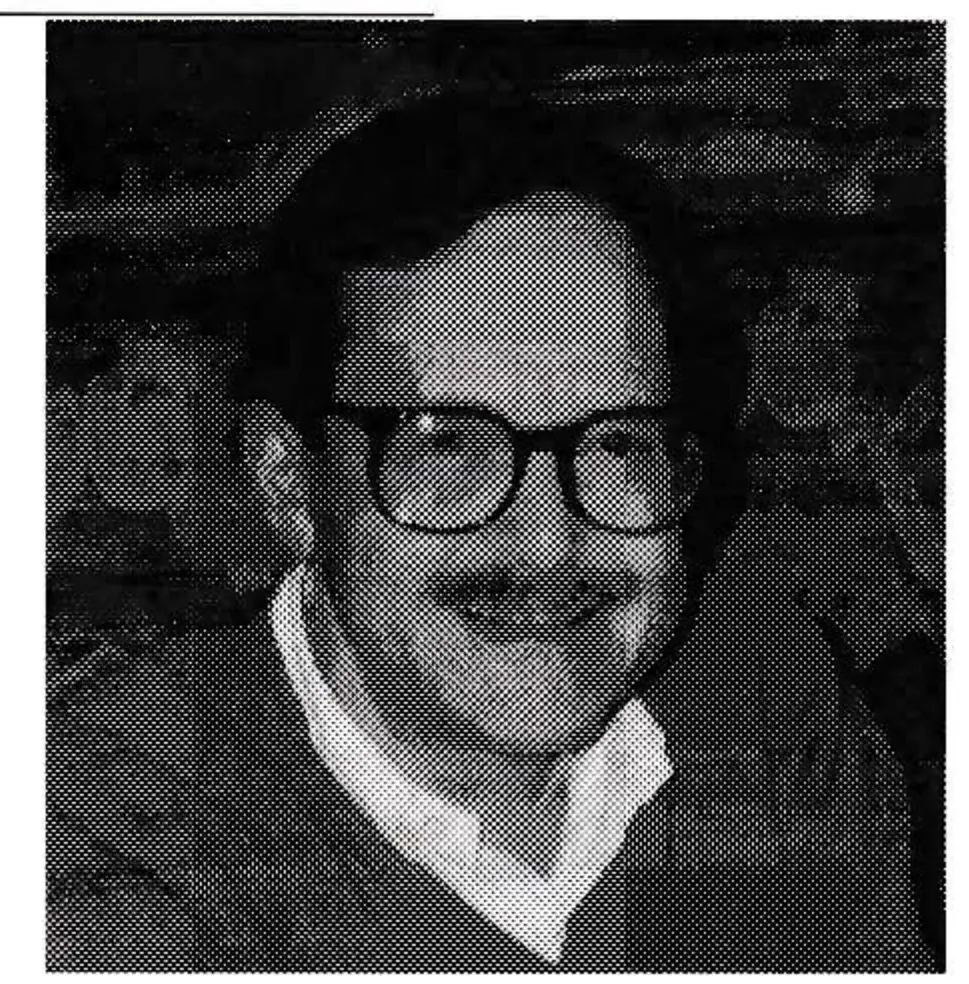
Richard Bohr: Owner of The Ski & Sport Haus, with two stores in the Cleveland area; early VP at Vail and influential ski retailer on the national scene.
I think your observations are more true than we’d like to admit. In asking myself how we got here, several things come to mind. After the great snowfalls of the late ’70s, the ’80s brought us fewer teenagers, greater competition from other sports activities, a snow drought for much of the country. It was a maturing ski market, with too many importers, distributors and retailers and too many products, shorter product lifecycles and too many models.
Within this environment, the commercial response was differentiation of product and service by the manufacturer and specialty retailer (and to a certain extent among the chain sporting goods people).
Perhaps you remember when the focus was GLM? We were one of the stores and ski school combinations that ran a GLM program for as many years as it was commercially feasible. Operating at a local area, we introduced a lot of young adults to the fun of skiing. It started out as a Ski Magazine/Head Ski program. Perhaps some of the industry leaders could think about doing a ’90s version of Headway.
When Norm Johnson developed a reverse camber ski, which Fischer made (“The Pines”), we believed in it and sold it. When the manufacturing rights went to Kneissl we sold their “OP.” We made a lot of nervous skiers comfortable! These products worked well for people who were getting started or were social skiers or nervous spouses.
Has the industry spent so much time promoting today’s billboard for the sport, the extreme skier, that it can’t focus on the other end of the scale? Products like the OP are probably not cool enough for many in the industry, I’m afraid.
We’ve got to do a much better job of focusing on the never-ever, the novice and low intermediate. Whether it is when teaching on the slopes (where the instructor has been indoctrinated with so many technical details in order to get certification), or in the ski shop (where the salesperson has had to absorb a whole lot of technical stuff about a whole lot of new equipment), we’ve got to get back to serving the needs of these people and showing them how they can have fun rather than delivering them a technical dissertation that neither helps nor interests them.