

Skiers visiting Winter Park this winter will find a new lift — well, it’s actually rather an old lift, and one with quite a history. But it’s more than just a relocation. In an age of high-speed quads, it’s a double; in an age of cost efficiency, it has a predicted down-time of over 50 percent; in an age of machines, many of the footings were dug by hand; and in an age of speed, Winter Park took two years to install it.
In short, Winter Park’s new Timberline Lift serving Parsenn Bowl is an example of a high-think lift, where sensitivity to the environment and to matching capacity with terrain meant doing things a bit differently.
The travels of Timberline lift are somewhat unique. It started life at the Stagecoach ski area in the Yampa Valley near Steamboat and the proposed Lake Catamount ski area. Originally installed in about 1974, it ran very little, as Stagecoach went from bad to worse when the Stagecoach real estate development failed and the ski area did not operate. The lift sat idle for many years and was left to rust and rot.
In 1987, the owners of the Summit at SilverCreek condominium complex decided they were tired of walking several hundred yards to SilverCreek’s lifts and arranged to have a California leasing company buy the old Stagecoach lift. It was reinstalled near the condos to eliminate the walk. Unfortunately, they covered the initial capital cost but could not cover the ongoing operating and maintenance costs, and soon the leasing company was looking for a buyer. In 1990, they contacted Gary McGraw and Tim Coultas at Winter Park Resort, who saw some possibilities; following rather protracted negotiations the lift was purchased.
Winter Park was required to remove the lift from its SilverCreek home. Our lift crew, led by Bill Chambers, relocated the pieces to the nearby Linke Ranch, where it was to remain for a year. Some of the lift components, like the auxiliary and electrical drive components and gear box, were brought to the ski area to be stored inside. After a year, the decision was made to install the lift into Parsenn Bowl, and the travels of the old Stagecoach double chair ended.
Winter Park’s decision to use the lift in Parsenn Bowl gave it a new name — the Timberline Lift, a name selected through a contest among Winter Park employees. Along with its new name, the lift got a new configuration from Boulder-based JennLynn International, which redesigned the lift for its new location. What had been a bottom vault drive, top tension lift became a bottom overhead drive, bottom tension lift. Thus, the old has become new.
The lift’s installation required some unusual techniques as it is located in an environmentally sensitive area above timberline and in the tundra. The conversion to a bottom drive, bottom tension was dictated by the fact that no road and therefore no power would go to the top. The design of the lift was modified to accommodate the need to be sensitive to the environment.
Construction began in the summer of 1991 on a ski complex that would normally be built in one season. The trails were initially cut narrower than they will be at opening in order to preserve the pristine area. The lower tower holes were dug and poured last summer to facilitate completion this summer. No road was constructed to the top. The upper terminal, bull wheel, communication line, and some 1,500 feet of snow fence necessary to protect the upper terminal were transported over the snow by snow cats at the end of the 91-92 ski season.

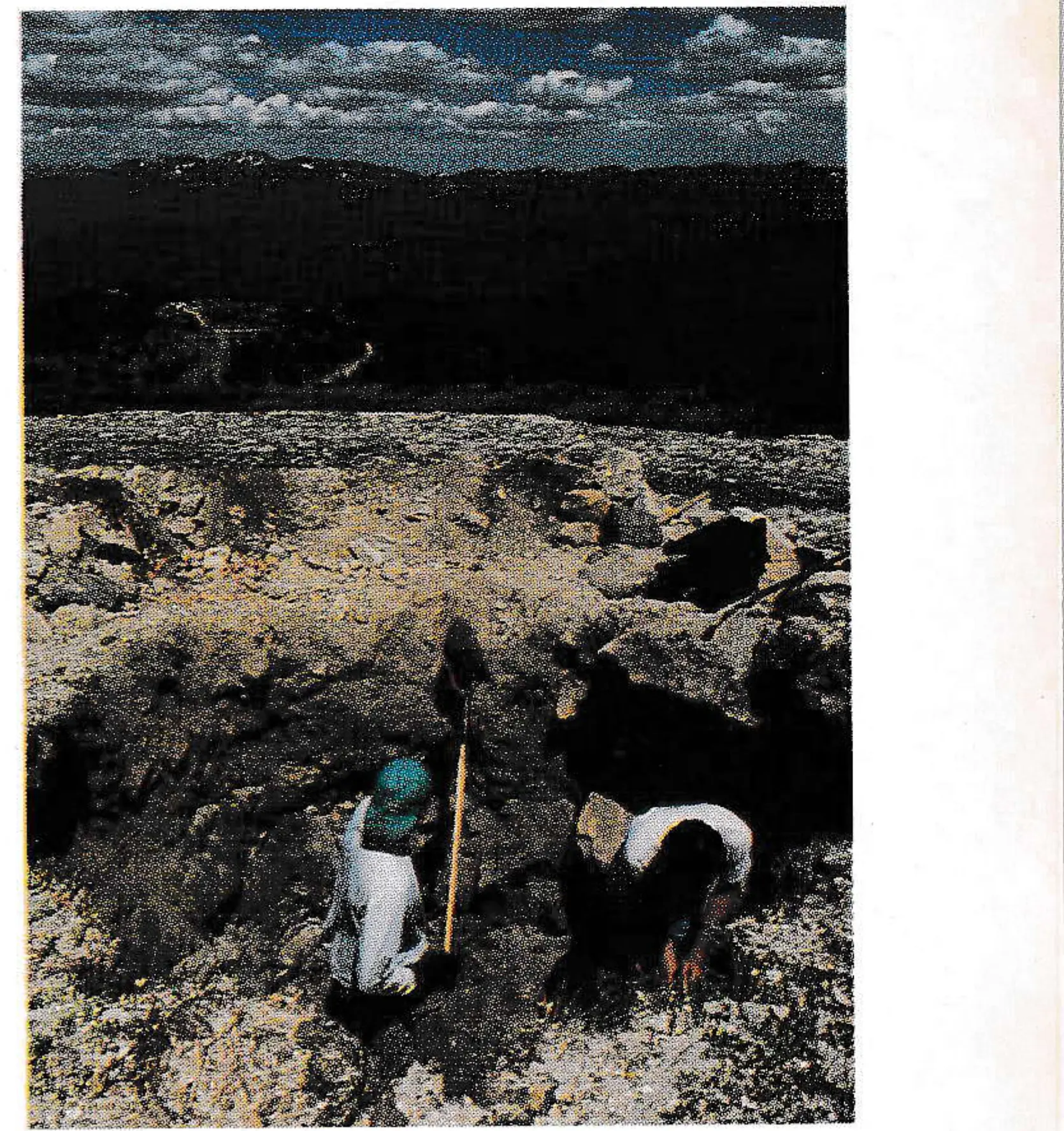
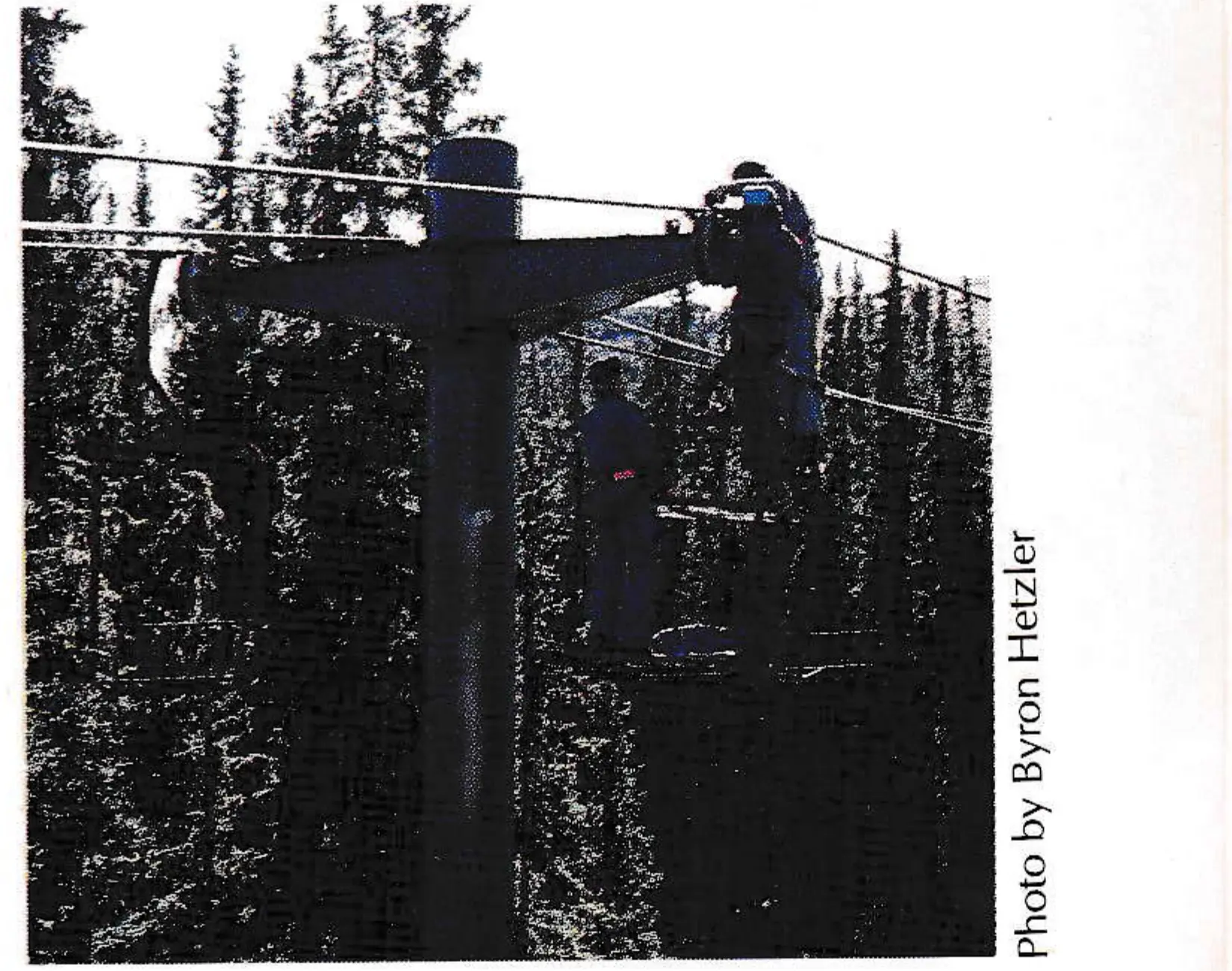
The second state of construction was completed this past summer. The top terminal and the upper tower holes were dug by a small tracked backhoe. Five holes were dug by hand because the crews did not want to risk scarring the environment with the backhoe and all the rest of the work was done by helicopter. Each morning the Winter Park crews who built the lift climbed as much as 1,000 feet to the location where they were working since the work road only goes to the lower terminal.
The lower terminal had to be modified, and again the ingenuity of the lift crew came into play. They found an old lift terminal in a defunct ski area near LaVeta Pass that would work, negotiated a deal, and hauled it home to be rebuilt last winter in the Mary Jane shop.
The Timberline lift has undergone the same rigorous engineering, inspection, and review as any other lift that Winter Park has ever installed. When the area purchased it, the lift had about 1,000 hours of operation on it, about the equivalent of one year’s operation for a Winter Park lift.
Winter Park opted to install a double chair for two reasons: Even though it will be “too small” on good days, there will be some days when it will be “too big.” Weather information tells us that we will only operate about 40 to 50 percent of the time. In addition, a larger lift would put so many people in Parsenn Bowl that there would be a real potential of over-crowding. Winter Park has always tried to make sure that lift capacity is balanced with the amount of terrain to be served by a lift. We did it when we installed our quads and we will continue to be sensitive to the finite capacity of our mountain.
The Timberline brings a new dimension to Winter Park and it brings with it an interesting history of its own. It has finally found its home high in Parsenn Bowl where it is destined to provide many guests with a true high-quality mountain recreation experience.
And don’t be surprised if you see the manufacturer of this lift shown as “Stricklin/Chamberski,” in recognition of the time, effort and ingenuity that Dan Stricklin, Bill Chambers, and the rest of the Winter Park crew put into this venture.