


It was October, 1990, the weekend of Ski Patrol Refresher Course at Sugarloaf/ USA, Me., and I was thinking about skier safety. Sugarloaf is a big mountain with a lot of challenging terrain. There also are accidents. I wondered if some of those accidents could be prevented. Were skiers paying attention to rules of ski safety? Did they even know them? Were they aware that at times they put themselves in danger?
The Sugarloaf Ski Patrol was skilled in responding to accidents, but Stub Taylor, the mountain ski patrol director, had also wondered if there might be a way to prevent them. He had talked of the need to warn skiers about the dangers of skiing too fast or skiing above one’s ability and by Carla D. Marcus Safety Services Manager, Sugarloaf, Maine with Nancy Marshall and Greg Gatlin said that even brief reminders might help prevent accidents.
Out of my thinking that day at the refresher course in October, I concocted a plan to educate skiers. I presented the plan to Sugarloaf’s management and received a go-ahead to make it work. The idea was to create a safety program that actively promotes skier safety through education and awareness, beginning the moment skiers arrive in the parking lots … and sometimes before that.
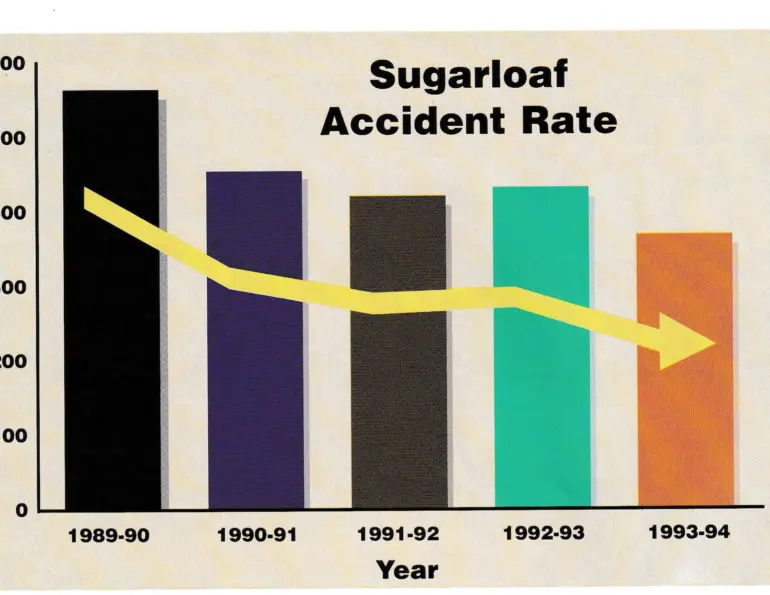
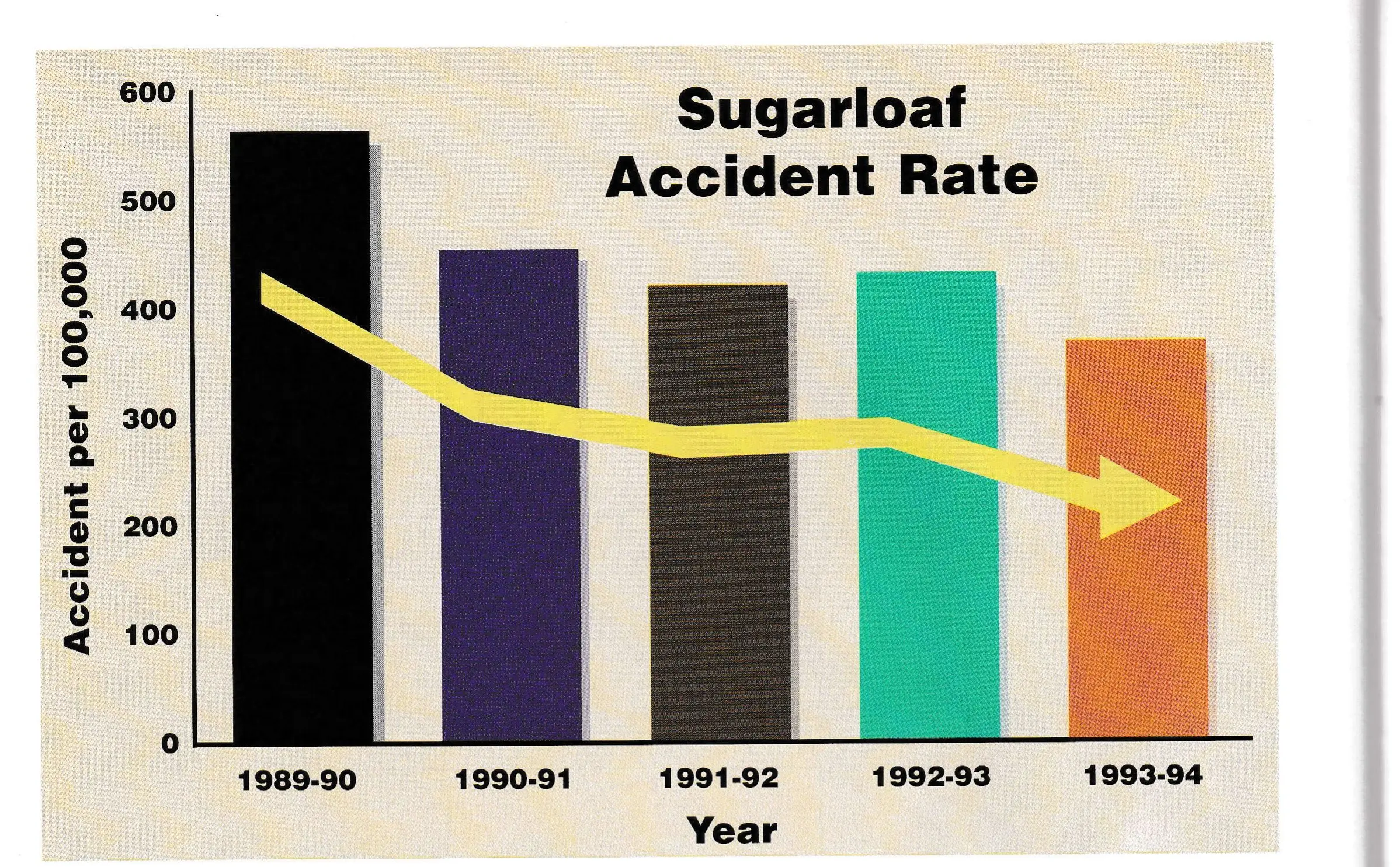
Since the inception of the Safety Program four years ago, Sugarloaf’s accident rate has decreased by a dramatic 35 percent and during that period, skier visits increased by 25.3 percent — from 280,000 to 351,000. In 1989, the year before the Safety Program was implemented, the accident rate was 562 per 100,000 skier visits, or one-half of one percent. By the end of the 1993-1994 season, the accident rate had dropped to 364.5 per 100,000 skier visits, or onethird of one percent. “The Safety Program has more than paid for itself in reduced claims and insurance premiums,” says Robert Turner, vice president of finance for the resort.
How It Works
The Safety Program is made up of five arenas where skiers and snowboarders come in direct contact with safety patrol members. They are: Bus Talks, Fast and Reckless Skier Program, Safety Table, Lift-Line Reviews and Off-Mountain Talks.
Bus Talks — Each parking lot shuttle and tour bus is met by a safety patroller who rides the bus, greets the skiers, offers weather and trail information and, most importantly, presents a brief safety talk. Safety patrol members inform skiers of Sugarloaf’s Fast Skiing Policy and remind them to ski slowly on family-skiing slopes.
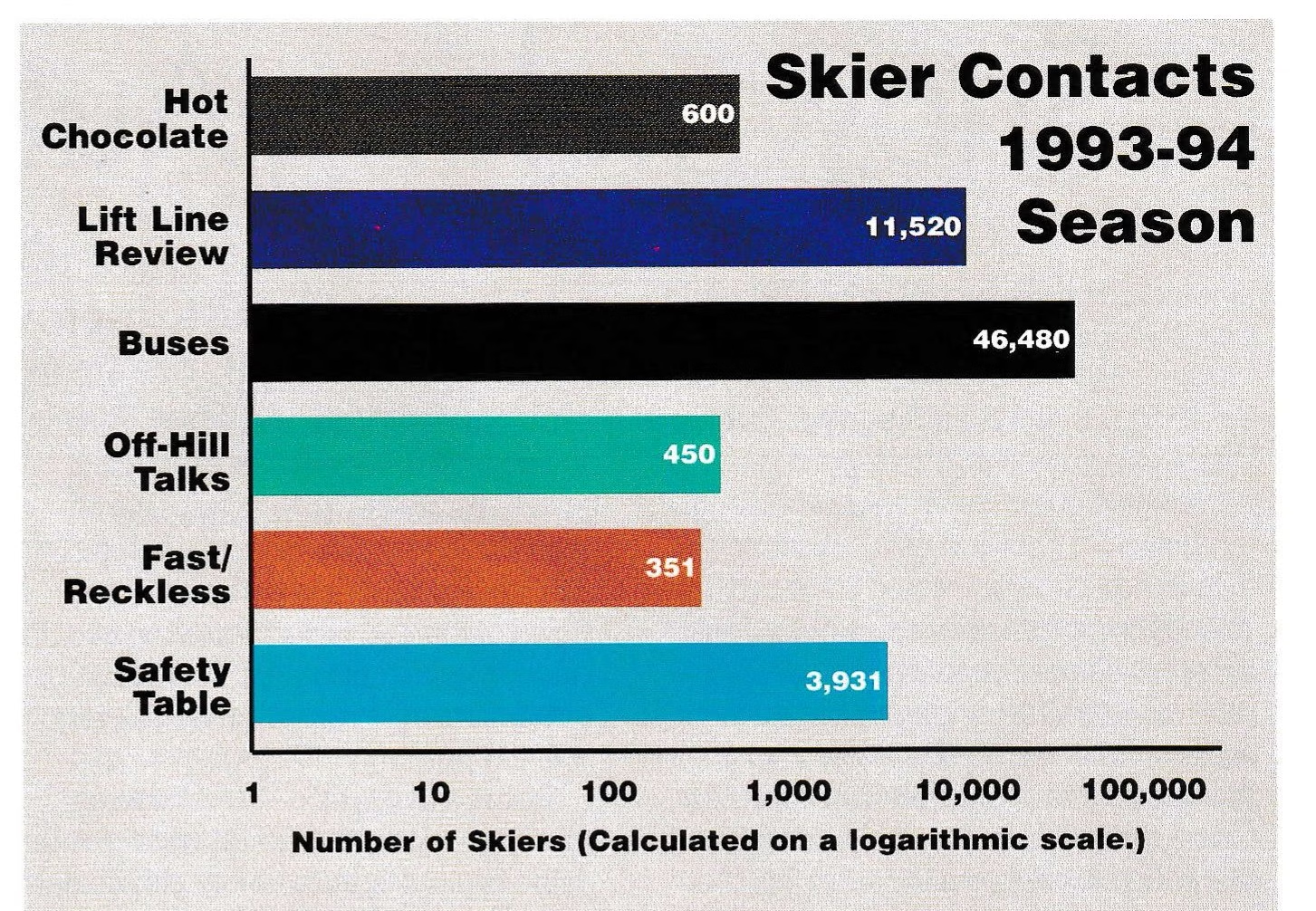
Fast and Reckless Skier Program — On the mountain, skiers and snowboarders are stopped by patrollers either for skiing recklessly — or for skiing particularly safely. Patrollers thank safe skiers, explain why Sugarloaf is concerned about safety and give them coupons for hot chocolate. A skier moving too fast on a designated slow-skiing trail or skiing recklessly anywhere on the mountain, however, is stopped, told why such skiing is dangerous and has his or her lift ticket marked, suspending lift privileges. First-time offenders may regain lift access by viewing a safety movie —“Tony’s Flight” or “Flight Log” at the SafeSkier Theater in the base area, talking with a patroller and passing a written safety test. The whole process takes about 25 minutes. Computer records are kept, making it easy to determine if the skier is a first-time offender and letters are sent to the parents of skiers under 18 years of age.
The Fast and Reckless Skier Program has proved both positive and educational with minimal penalties and complaints from skiers. Best of all, slow-skiing areas are no longer threatened by menacing schussers.
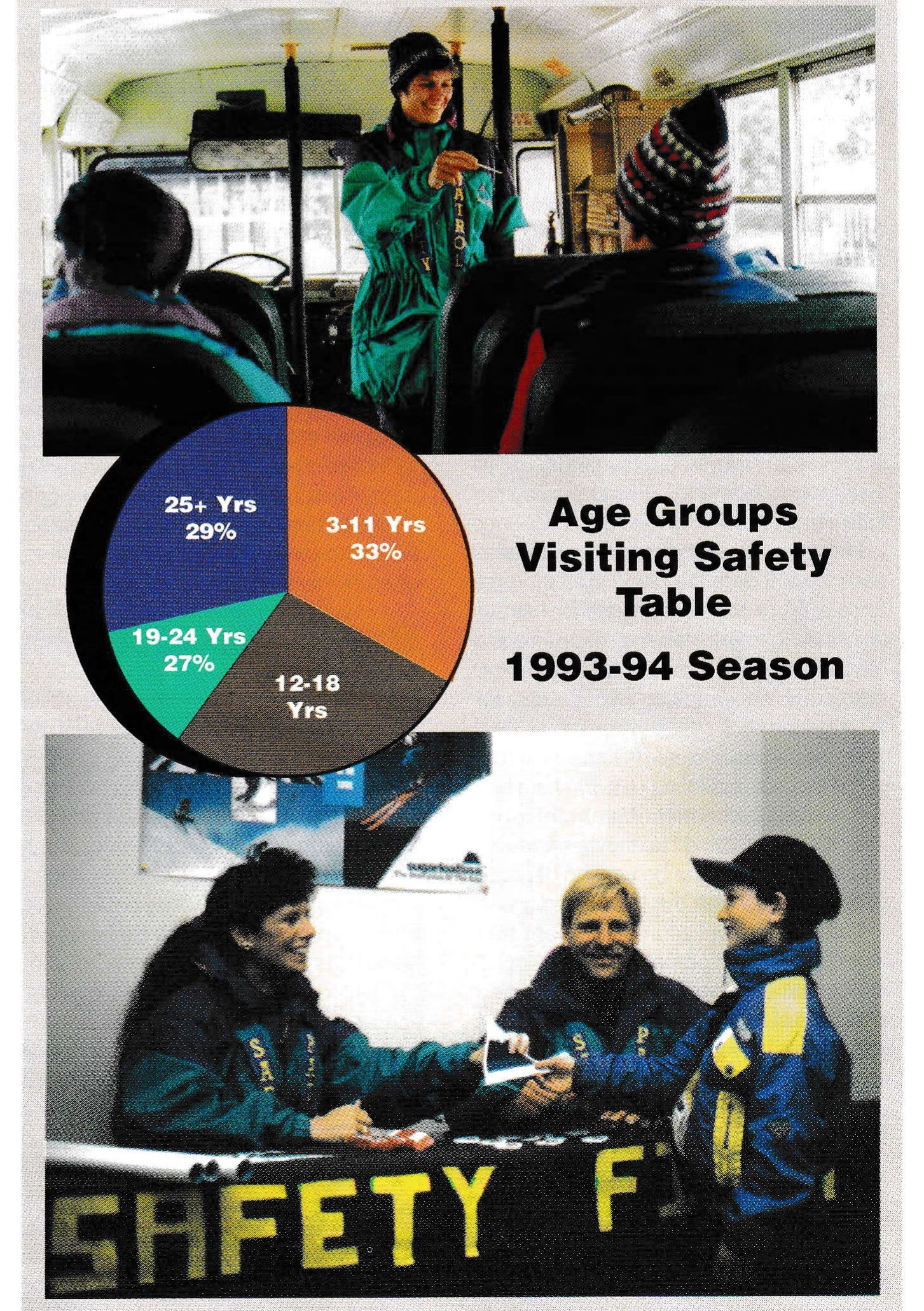
Safety Table — Located in the base lodge, the Safety Table provides skiers and patrollers with an opportunity to discuss skiing safety on a one-to-one basis. Skiers describe their skiing habits, promise to ski more safely and then are given gifts — stickers, pins, posters, pencils — as an incentive and a thank you. Skiers also are urged to spread the safeskiing message.
Lift-Line Review — Safety patrollers take advantage of the captive lift-line audience by leading trivia-style safety quizzes or presenting humorous safety skits. Topics covered include safe skier etiquette and proper clothing for the day’s weather conditions. Candy bars or Sugarloaf Safe Skiing buttons are given as prizes. The benefits are mutual: skiers seem to enjoy the entertainment and Sugarloaf gets another opportunity to pass along the safety message.

Off-Mountain Talks — Safety patrollers, wearing their uniforms, visit schools, ski clubs and fund-raising events to present safety programs that include films, talks with question and answer sessions and giveaways. This program is valuable in reaching people who may otherwise not have an opportunity to think about skiing safety.
Selecting and Training Patrollers
Three key elements have ensured the success of the Safety Program: patroller selection, training and organization. Candidates are usually recruited through word of mouth or they apply after seeing the program in action. Because safety patrollers maintain a high degree of visibility, they need to have good communication skills and a positive, upbeat attitude. Potential candidates go through a rigorous procedure that includes interviews, job shadowing, a two-day training session held in early October and a 21- day supervised evaluation period. With the increase in the popularity of snowboarding, several snowboarding safety patrollers have joined the program and more are expected in the future.
Though safety patrollers are volunteers, Sugarloaf offers a generous benefit package. All patrollers receive full-mountain season passes for themselves, spouses and dependent children as well as day passes to give to friends, a ski touring center season pass and health-club membership. Discounts at local restaurants, stores and other facilities are included in the package along with a free uniform.
Training, which stresses a positive approach to ski safety education, consists of lectures, films, demonstrations and role-playing sessions. I conduct most of the 24 hours of training with assistance from the ski patrol director and veteran safety patrollers. CPR and National Ski Patrol winter first aid courses also are required for Sugarloaf safety patrollers. Additional training and ongoing evaluations take place throughout the season, including Sunday morning tutorials, in which patrollers research topics and give ten-minute presentations.
Following the training sessions, each safety patroller must work a minimum of 28 days during the season. Beginning at 8 a.m., there is a brief patrol meeting when the patrollers select their day’s activities. The mountain is divided into three sections, each covered by a rotating hill chief responsible for the patrollers on his or her team. Hill chiefs and other selected patrollers carry radios, ensuring quick response time.
In terms of the overall success of the program, perhaps nothing speaks more loudly than the numbers. A 35 percent reduction in the accident rate since 1989 with 71,000 more skiers on the slopes is proof positive. In the 1993-94 season, Sugarloaf safety patrollers thanked approximately 600 skiers for skiing safely, giving each skier a coupon for hot chocolate. The patrol suspended lift privileges of 351 skiers and about 340 were reinstated after attending the Safe-Skier Theater. Approximately 62,000 skiers and snowboarders were contacted directly through the safety table, bus talks, lift line and off-mountain programs.
Most aspects of the program cost very little money, with the major expense being patrollers’ Sierra Sport uniforms, which wholesale for about $130 each. Sponsoring companies — including M&M Mars, Sensormatic Electronics Corp. and Kraft General Foods — have been willing to donate many materials used in the program. Finance VP Robert Turner estimates annual out-of-pocket expense for the program is about $3,000. A larger hidden cost for Sugarloaf comes from patroller benefits such as season’s passes and health club memberships.
Whatever the cost, the net benefit is a big reduction in accidents to skiers. Says Ski Patrol Director Stub Taylor: “It certainly makes my job easier.”
