


Management
Dispute at Squaw: Are the chairlifts in adequate shape?
The dispute started after the Emigrant chairlift collapsed February 5 injuring eight skiers and Burkhart felt that the repairs had not been properly done. “I wanted it done right,” he said after resigning February 28, “or, I said, I would have nothing to do with it. The Emigrant lift collapsed because it was designed all wrong.”
At a March 10 press conference in San Francisco, Cushing replied: “Everything he said is nonsense. The official investigation showed that the accident was caused by the structural failure of four bolts. No reasonable inspection could have given notice of the impending failure. A state inspector inspected this lift just three weeks before the accident and found nothing wrong. No negligence on the part of any Squaw Valley personnel was uncovered.”
California’s Division of Industrial Safety, elevator section, backs Cushing up. The division’s inspectors are responsible for ski-lift inspections. The elevator section’s supervising engineer is Raymond J. Rodriquez. Reached in his San Francisco office by telephone from New York, he confirmed Cushing’s statement about the investigation and confirmed that a state inspector had been at Squaw three weeks prior to the accident. The accident report appeared over Rodriquez’s name.
The rebuilt lift, Rodriquez said, has also been approved and inspected by the state.
But Burkhart’s charges go beyond the Emigrant lift. “Everyone knows the lifts there are pieces of junk,” Burkhart said. “They’re all falling apart, and there’s no money available for improvements.”
Cushing again calls the charges “nonsense. He was about to be fired. And we intend to bring legal action against him for slander and conversion of equipment and funds.”
Cushing has filed the suit for conversion. However, “we’re not sure about” the slander suit, Cushing said when reached by phone from New York. “That is probably futile. He probably doesn’t have much money.”
The conversion suit, though, is still in the works. Cushing is seeking $1,400 for a surveyor’s transit that Burkhart wants to keep and $4,000 which Cushing has “information and belief” to have been taken by Burkhart. So says the suit as filed in the Superior Court in Auburn, county seat of Placer County in which Squaw Valley is located. What this means is that Cushing has received and believes to be true information saying that Burkhart took some money. Cushing will, however, have to amend the suit when he can substantiate the charge. “The auditors are going over the books right now,” Cushing said, “to see how much is missing.”
Burkhart’s lawyer, Paul Minasian, has denied that Burkhart took any money. But, he said, “He still owes the company $1,400 for a surveyor’s transit, which he bought through the books and wants to keep. This is common practice. He purchased several other items the same way and has paid for all of them except this one.”
When Cushing was asked by phone if Burkhart had bought other equipment through the books, he said, “Yes, he did, of course. But you don’t buy things through the books.”
Only the courts will be able to decide who is doing what. For his part, Burkhart is initiating a counter-suit against Cushing for slander. As far as the Emigrant lift is concerned, and perhaps, the condition of more of the lifts, the full story there will only be heard in court actions arising from the Emigrant accident.
“Burkhart isn’t saying the lifts are unsafe,” Minasian said in a recent telephone interview. (Burkhart himself was unavailable for comment because he is vacationing in Europe with his family.) “But what he is saying,” the lawyer continued, “is that the lifts have a high probability of failure and require high maintenance. As to their condition and usefulness they are as though they are 40 years old.”
Cushing, however, refuted the charge, pointing out that “21 of the 26 lifts are less than seven years old, and they’re all made by recognized companies . . .”
Minasian doesn’t quarrel with the actual age. “Cushing is correct,” he said. Cushing, also, insists that his lifts are in top condition. When asked in mid-March if his lifts met the lift Safety Code of the American National Standards Institute, he replied, “Yes, they do. We’re also in the process of having the NSAA inspector come down. We expect him momentarily.”
Yet, according to Graham Anderson of Pettit Morry Co. of Seattle, the agent until last December for Squaw’s lift liability insurance, “Squaw Valley elected to move their insurance elsewhere after they were unable to meet the engineering requirements of the NSAA.”
That, Cushing has said, is not true. “We switched companies,” Cushing said by phone, “because we got a better deal. We have a policy that gives us a big reward for safety.”
In fact, Cushing said, Squaw canceled its insurance December 4, 1970, before the NSAA inspector arrived for his final inspection of the work that Squaw had done to meet the new requirements of the code, which had been modified last year.
Burkhart, who supervised construction of Cushing’s Garaventa-built tramway in 1968, assumed responsibility of all the lifts in late October 1969. “When I took over,” Burkhart said, “Mr. Cushing promised me a half-million dollars to make badly-needed improvements. Instead I got only $60,000. I had a three-year master plan that would have cost $1.2 million and included overhaul of all the lifts plus some slope work.” Burkhart also had a $600,000 plus budget for last May to November.
But Cushing said on the phone, “I don’t know if he asked me for it.” Did Burkhart have a master plan? “We talked about lots of things we might do over a course of years,” Cushing said. But he doesn’t remember seeing any detailed plan, either for last year or three years. In fact, Cushing said, “I had no idea of how much money he was spending,” and he didn’t know until his “auditors found” that Burkhart had spent $636,093.68 during his 11 months as mountain manager. Why didn’t Cushing know? “I gave him a free hand,” Cushing said.
The Burkhart situation is only one of Cushing’s problems.
On February 27, he was charged by the Placer County District Attorney’s office with operating the Gold Coast lift without an emergency brake and that he tore off a state notice warning of the condition.
Cushing called the incident a “misunderstanding,” and added, “I have never operated a lift except within the condition of maximum safety.”
Burkhart’s lawyer Minasian points to this, the Emigrant accident and the accident last year when the Headwall lift ran backwards as indicative of the conditions at Squaw. However, he would not specify other lifts. “It gets a little touchy,” he said.
Cushing, however, points out that on the Headwall lift the manufacturer had installed the wrong gear box. It was a sealed box, Cushing noted, and hence couldn’t be inspected. The manufacturer, he said, had mislabeled the box and given it a higher rating than it should have had.
At the moment, that is where the dispute stands. After checking and rechecking, SKI AREA MANAGEMENT can only throw up its hands and say, let the courts decide.
Study shows brownbaggers rampant at ski areas
A survey to determine the habits of the skiing brownbagger is being carried out at several eastern ski areas this winter by Skier Feeding Inc., Profits Inc., and SKI AREA MANAGEMENT.
Final results have yet to be tabulated, but preliminary reports have uncovered some interesting trends. Firstly, the brownbagger population is large—every area sampled had a brownbagger population of over 20 per cent of its skiers. Of skiers who were on their first ski trip of the season, seven per cent brought their own lunch. In other words, they had not even given the area cafeteria a try. By lift ticket classification, the largest brownbagger population was found in season ticket holders.
Richard McHugh, of Skier Feeding, and Phil Camp, of Profits Inc., are preparing final results of the survey to be published in the June issue of SKI AREA MANAGEMENT.
Pleasant Mountain target of ticket manipulation plan
Pleasant Mountain ski area in Bridgton, Me., almost found itself out about $2,000 recently when two college students tried to sell 300 one-day lifts tickets at the area.
Fortunately, the area had been tipped off by the printer who had printed the tickets, and area security personnel nabbed the two in the act. Both received $50 fines for ticket manipulation.
Meetings
Slope maintenance meeting held by NSAA; 42 ski areas send representatives
Ninety-one persons from 42 ski areas across the country watched or participated in contests, seminars and demonstrations at the First Annual Slope Maintenance Conference held Jan. 11-13 at Winter Park, Colo., sponsored by the National Ski Areas Assn.
Also attending, in addition to ski area personnel, were 20 representatives from five companies exhibiting equipment and 37 representatives from 17 other companies and agencies.
The purpose of the conference was to bring together leading authorities on slope maintenance and feature the newest equipment designed by top manufacturers.
C. B. Jensen, Winter Park slope maintenance director, termed the conference “a success” and said comments were favorable.
The highlight of the conference, Jensen said, was four on-the-hill contests featuring five different types of “snow-cats” exhibited by the companies. The contests included mogul cutting, hill climbing, slope preparation and drawbar pulling.
Companies entering machines were Thiokol Chemical Co., Tucker Sno-Cat, Bombardier, Prinoth and Cushman Trackster.
After the events five experts judged the skiability of the slopes, Jensen said. The judges were Gordon Wren, manager, Ski Steamboat; Jim Adams, director, personnel services, Aspen Skiing Corp.; Walt Werner, U. S. Forest Service; and Dewey Wilderman and Bill Yager, supervisors, Winter Park Ski School.
Placing first for overall performance was the Thiokol 2100 wide-track packmaster. Each track, Jensen said, is five feet wide with 2½ feet between tracks.
In second place was the Tucker 542-A machine followed by a Thiokol 2100 with an automatic transmission. Jensen said the automatic transmission is the “coming thing” in slope maintenance.
The contests were followed by demonstrations of the various machines. These included grading techniques with 12 different ways of grading moguls shown. The side hilling ability, climbing ability and speed of the machines on the slopes also were demonstrated.
Six seminars at the High Country Inn near the town of Winter Park centered on slope maintenance costs, purchasing equipment, the future of slope maintenance, snow physics, the legality and liability of slope safety and what a skier expects at an area.

Dr. Peter Martinelli, Dr. Dick Sommerfield and R. A. Schmidt, all representing the Front Range Experimental Station in Fort Collins, Colo., participated in the snow physics seminar. They discussed the physical properties of snow, how it compacts and what happens when a heavy machine runs over it.
The legal seminar, moderated by Dick McLein, a Denver attorney, included such topics as who is responsible when a skier runs into a machine maintaining the slopes or is injured as a result of poor slope upkeep.
Also participating in that seminar were Otto Werlin, manager of Loveland Ski Area, Colo., and Larry Jump, manager, Arapahoe Basin Ski Area, Colo.
In the cost seminar, it was estimated that one $15,000 machine could maintain an area of 130 acres. Most areas, Jensen said, have more than one machine.
Conference participants also touched on the future of slope maintenance. Steve Bradley, Winter Park executive director, told the group the U. S. Forest Service might, in the future, require trails to be cut at ski areas with an ecological design in mind. This would mean breaking up the sides of the trails into irregular lines. Then an area, he explained, wouldn’t look like “one big white patch,” but would maintain its esthetic beauty.
Slim Davis, U. S. Forest Service, then presented a picture of Winter Park as the area would have looked had the trees been cut with ecology in mind. The new Keystone area in Colorado, he said, is the only one in the state to follow an ecological design.
A few tips on what to look for in a maintenance machine also were given participants. Rider comfort and selecting a machine suitable for the individual ski area were mentioned as most important.
Jensen said there are many new types of machines on the market—many designed specifically for ski areas. In the past, he said, ski areas used equipment originally intended for the Army or other uses. Now manufacturers are beginning to specialize and design machines for ski area use and the industry has been moving ahead rapidly in the last three years.
People
Victor E. Hall named ‘Engineer of the Year’ by professional society
Victor E. Hall, founder and owner of Hall Ski-Lift, has been named New York’s “Engineer of the Year.”
The announcement was made by Kenneth R. Brown, president of the New York State Society of Professional Engineers.
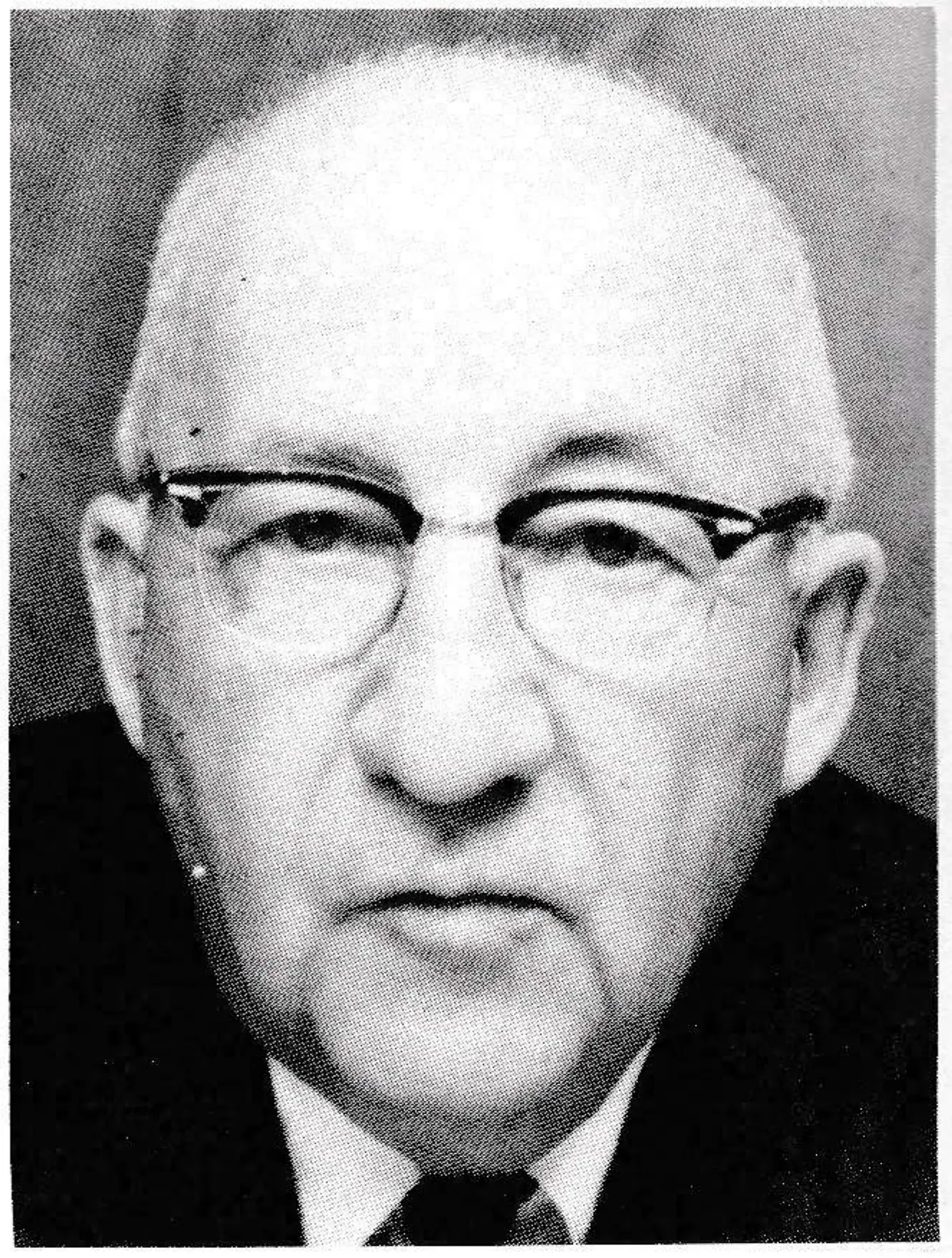
Hall became interested in ski lifts in 1945 when he became involved in the construction of a rope tow for a client. He designed the first preassembled rope tow drive. In 1954 he designed and built two T-bar type ski lifts.
At first, Hall sublet the construction of the lifts, but he became convinced that he would have to control manufacture himself if he was to maintain quality control. In 1955 he rented a small shop and obtained the services of Clarence Curtis, described by some as a mechanical genius.
The lift business has since grown by leaps and bounds. Today, the operation utilizes 60,000 sq. ft. of building space and two acres of storage space, all located in Watertown, N.Y.
Hall was born in West Colesville, New York, in 1904. Self-educated, he began his career as a radio-service man.
John Clair, ski official, dies in Spain
John J. Clair, Jr., a prominent skiing official, was killed Wednesday, February 24 in an automobile accident on a mountain road in Granada, Spain. He was 62 years old.
Mr. Clair was the president of an electronics firm, Component Cable Corp. in New York City.
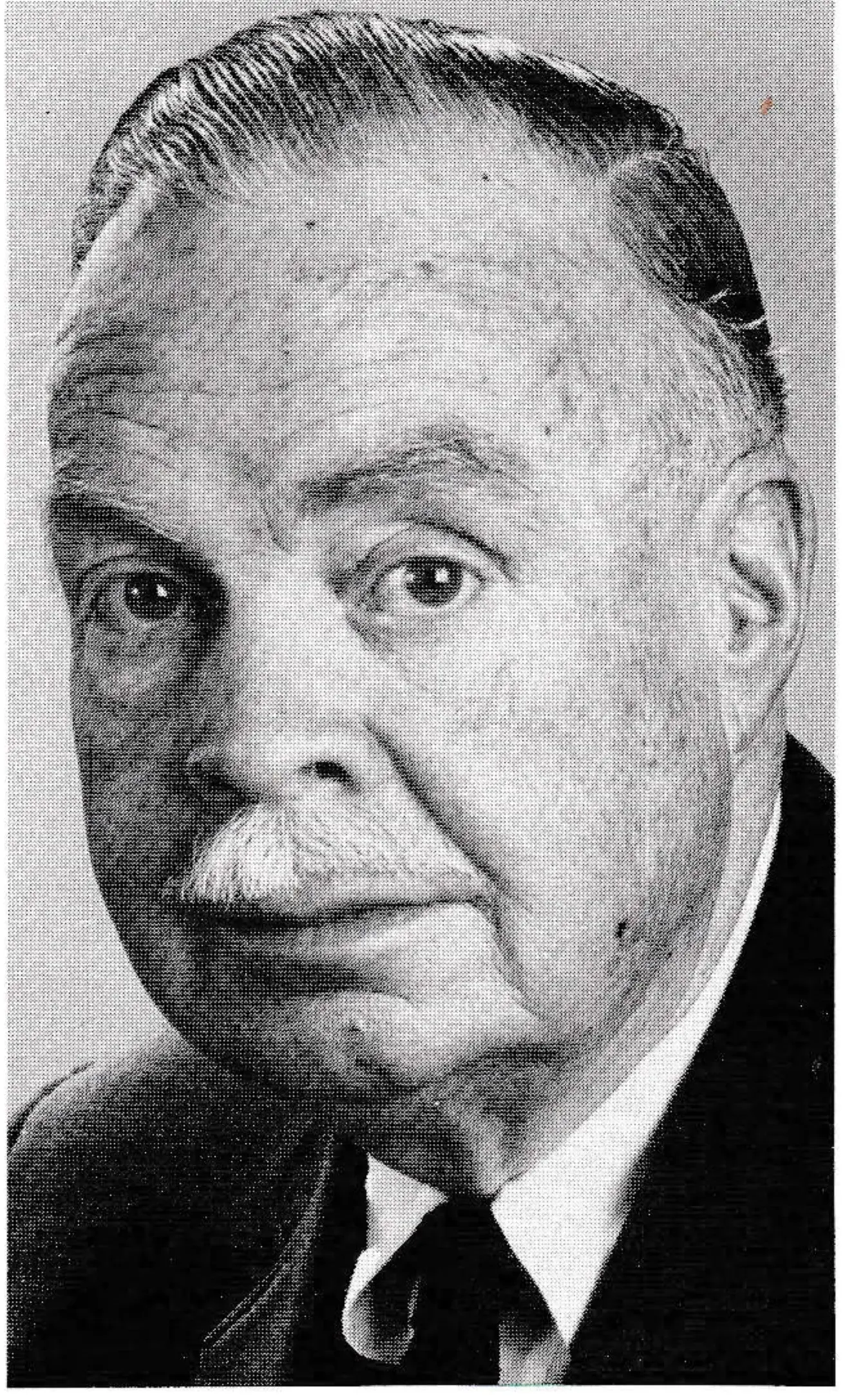
A graduate of Columbia University, Mr. Clair became interested in skiing as a 16-year-old boy. He developed a lifelong interest in the sport culminating in his election to the Ski Hall of Fame in 1969.
His appointment in no way diminished his activity in, and on behalf of skiing. At the time of Mr. Clair’s death, he was actively involved in many areas of the sport. He was:
A member of Governor Rockefeller’s Committee to Study Skiing in New York State; Assistant to the Chairman and a member of the Executive Committee, and Board, of the New York Committee for the U.S. Ski Team Fund and Chairman of its Raffle Committee; an Alpine Official for the USSA and World Cup Races; and also Vice Chairman of USSA Ski Touring, Mountaineering and Hut Committee.
Other current activities and appointments included important posts with the National Ski Association of America; the United States Eastern Amateur Ski Association; and the National Ski Patrol Systems.
Mr. Clair was a member of the U.S. Olympic Committee had been for years; he was President of the New York State Winter Sports Council, had been a Director since 1952; he was a founder of the Long Island Ski Patrol and the Long Island Ski Club; and Chairman of the U.S. Olympic Archives.
Clair had also been a member of the U.S. delegation to FIS Congresses; a member of the Mayor’s Committee for Winter Olympics; he chaired the Metropolitan N.Y. Ski Council with thirty-five clubs; he was a member of the first Eastern Area Ski Operator’s Safety and Area Evaluation Committee (with Charley Lord and Hannes Schneider); and a member of the Executive Commitees of the Ski Touring Council.
John Clair leaves his wife Janet; two sons, John J. III and Jerome J., and a daughter, Mrs. Worth Mickle.
- Andrea Mead Lawrence, Olympic Alpine Gold Medalist for the U.S., has joined the staff of June Mountain ski area in California. She will direct the area’s cross-country ski course which will be completed next season.
- Keith Shepherd, who quit the Canadian National Ski Team last January, has been appointed promotions manager for Lake Louise Lifts, Ltd. Shepherd, 23, skied for Canada for seven years, but found his lack of steady income incompatible with his recent marriage.
- Anne Janss, wife of Sun Valley owner Bill Janss, probably holds the long-distance commuting record for students. Each Monday she leaves Sun Valley, Idaho, by plane to attend classes in political psychology at the University of California at Los Angeles.
- The U.S. Forest Service has hired the first person with a degree in landscape architecture, Jim Hagemeier. Hagemeier played a key role in planning and developing Colorado’s Keystone ski area. Hagemeier will be stationed in Dillon, Colorado, and his duties will include developing a comprehensive plan for the Dillon valley which will evaluate how many ski areas should be allowed to develop there.
- Hugo Bohm has been named Manager of Resort Operations at Timber Lee Hills in Traverse City, Michigan. In his new position, Bohm will be in charge of running the ski area, beach club, tennis and the ever growing housing facilities. Bohm was formerly Midwestern sales representative for Wolverine World Wide.
- William A. Palumbo, general manager of the Haystack ski area in Wilmington, Vt., is resigning after five years to devote full time to his American distributorship business for Mueller Lifts.
Technology
Waterville Co. to handle Stadeli in United States
Walter Stadeli, the Swiss lift manufacturer, has awarded U.S. representation of his lifts to Waterville Co. Inc., which operates Waterville Valley in N. H.
Stadeli Maschinenfabrik AG, located near Zurich, Switzerland, manufactures high quality chairlifts, T-bars and Pony lifts, the last a small wire rope lift designed to replace rope tows. This year Stadeli is introducing an economical jigback tramway of new design to its line of lifts.
Lift inquiries should be directed to Stadeli-Waterville, Inc., Waterville Valley, New Hampshire 03223, or to Fritz Schmutz, Western Sales Representative, 4997 Kelso Road, Boulder, Colorado 80301.
Hay used to protect race course
During the Bank of Montreal International ski races at Mont Ste. Anne ski area, contestants and spectators probably noticed the 90,000 bales of hay spread six to 10 inches deep over various spots in the course. The idea was to protect spots in the course from wear for the World Cup races that were being held at Mont Ste. Anne later.
While the main idea was to preserve the course, there was also a long-term reason for the hay. “Don’t forget the hay seeds,” said an area official. “In years to come there will be a heavy growth of grass in the area covered by the hay.”
Finance
Treasure Mountain takes over operation of Park City Resort
Treasure Mountain Resort Company assumed operation in February of Park City Resort, 27 miles east of Salt Lake City, Utah. TMRC exercised its option to purchase and lease the properties and facilities of United Park City Mines Company’s resort division. UPCM has retained an option to purchase up to 42.5 per cent of the common stock of TMRC over a three-year period.
Purchase price for the approximately 4,200 acres of property and resort facilities is in excess of $5.5 million. The purchase was the result of over two years of feasibility studies and negotiations between the two companies. TMRC also holds leases on another 6,100 acres. In addition to the UPCM properties, Treasure Mountain exercised its options about 1,000 acres for development.
Development plans for the resort call for an expenditure of more than $100 million over the next 10 years. Included in the construction plans are new lifts, overnight accommodations, private homesites, condominiums, residential and commercial villages, an 18-hole championship golf course, and equestrian center and boating facilities on the proposed Jordanelle Reservoir.
Development
Gunstock installs new lift in Pistol area
Gunstock ski area in New Hampshire opened its new lift serving the Pistol Area, a complex of four trails. The lift was supposed to have opened at the end of December but didn’t because crucial parts were delayed during shipping.
The new trails served by the lift cover 60 acres and are serviced by snowmaking equipment. The chair is 2,300 feet long.