

Patrol designs rescue cannon
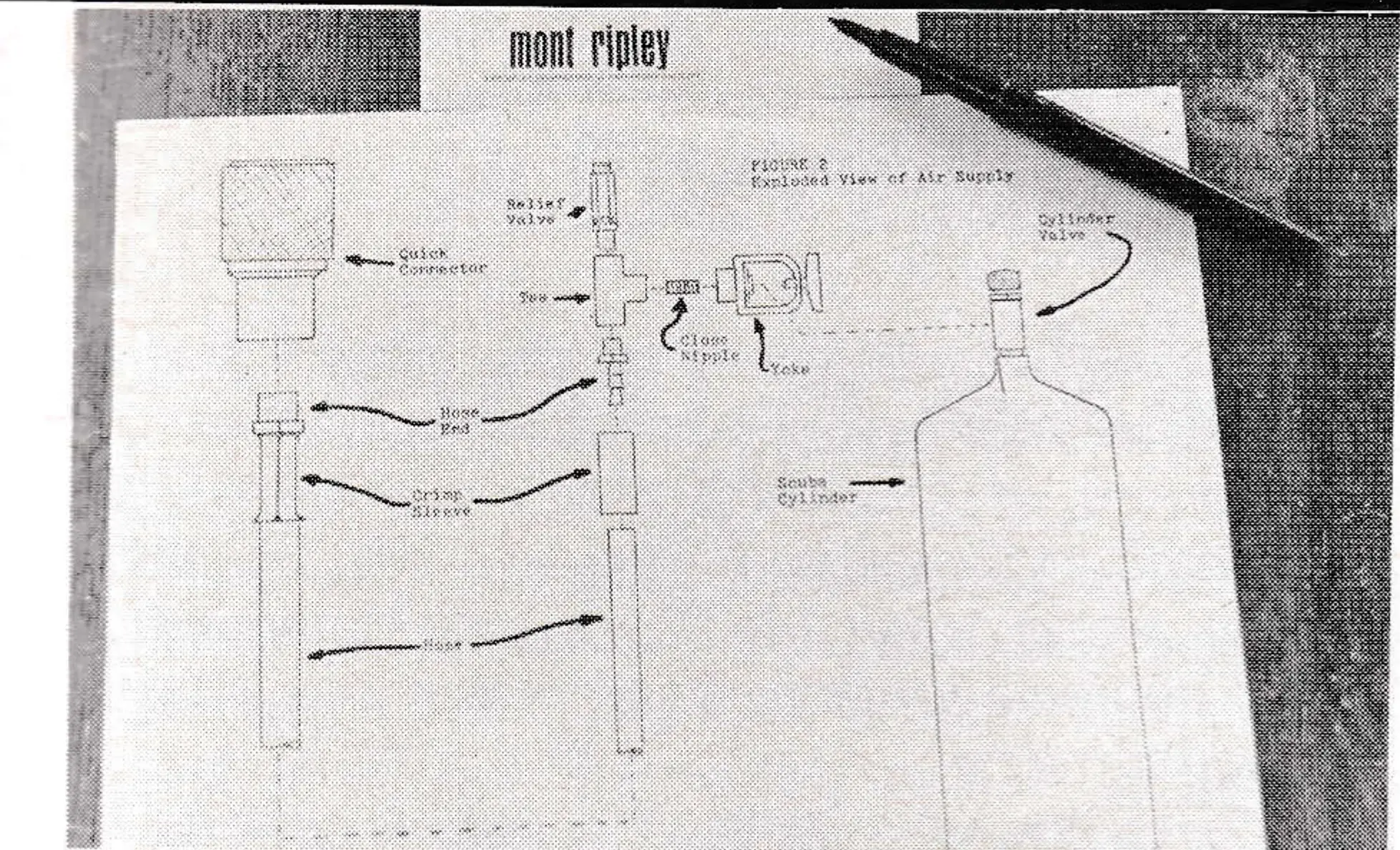
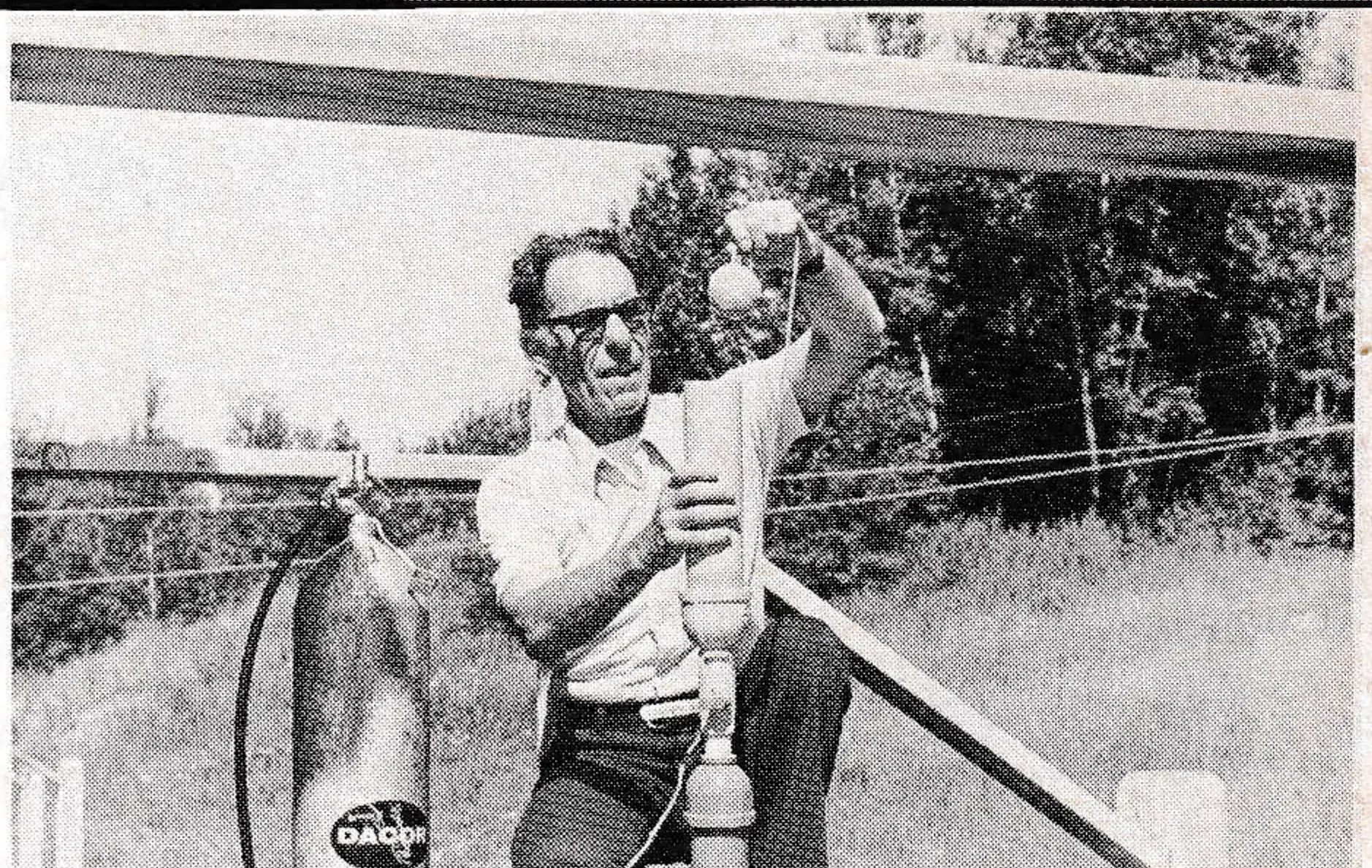
Mt. Ripley is an athletic facility of Michigan Technological University and the ski patrol is made up primarily of Michigan Tech students, most of whom are in an engineering curriculum. So when the ski patrol came to Mt. Ripley, manager Fred Lonsdorf with a design for a “cannon” to shoot a rescue line over the chairlift, decided to give it a try. It worked better than trying to throw the rescue line over the cable.
The cannon works off a tank of compressed air, similar to a scuba diving tank, and fires a tennis ball with an attached fish line into the air.
From the beginning, the cannon was intended to be a device that anyone could build and operate from easily obtained parts. The design had to be rugged, relatively low in cost, simple to build and operate and yet maintain a high degree of safety. It has been the answer to the problem of placing the evacuation rope over the chairlift cable at Mt. Ripley where the cable is nearly 50 feet above the ground in some areas.
For further information on the cannon, contact Fred Lonsdorf, Mt. Ripley Ski area, Michigan Technological University, Houghton, MI 49931.
Concrete tips
In addition to editing the Idea File, I enjoy contributing to it. Here are some basic tips on concrete (not cement) and proper methods of placement.

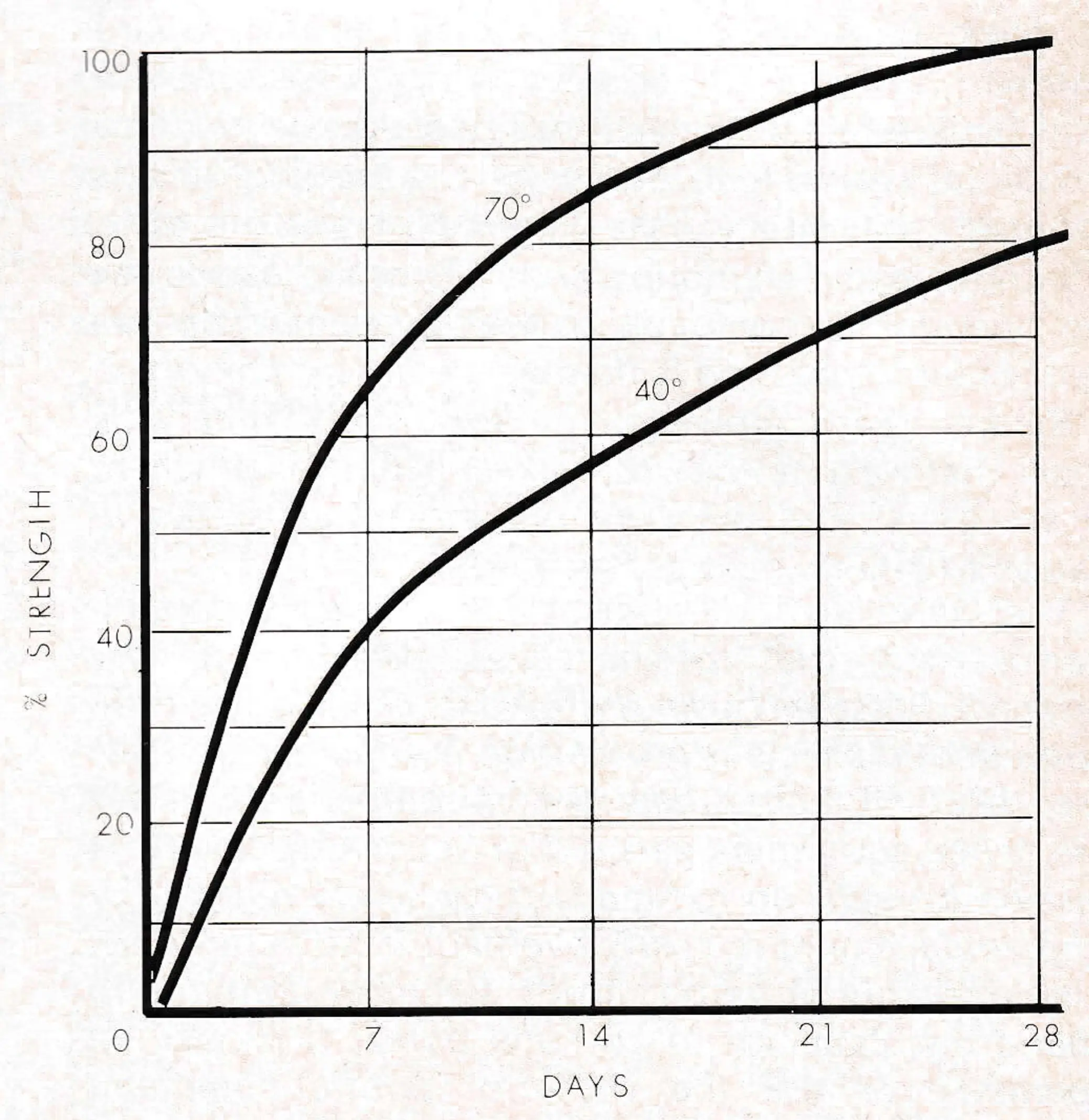
Proper mixing and placement of concrete are important not only for appearance but also for ultimate strength. (fig. 1) Generally, concrete takes 4 weeks to reach its design strength. But if the ambient temperature is lowered (40 F) only 78 percent of the final is reached in the same period.
For transit mixing, the recommended (American Concrete Institute) mixing time is 1½ minutes for the first cubic yard and ½ minute for each additional “yard.” The maximum total time is 20 minutes. After this period the concrete begins to stiffen which requires more water to make the concrete more workable. The problem here is that the more water added, the weaker the mix. A rough rule-of-thumb would be that if you double the water, the strength is cut in half.
Concrete should not be placed unconfined in water due to its mixing with the water and becoming weaker.
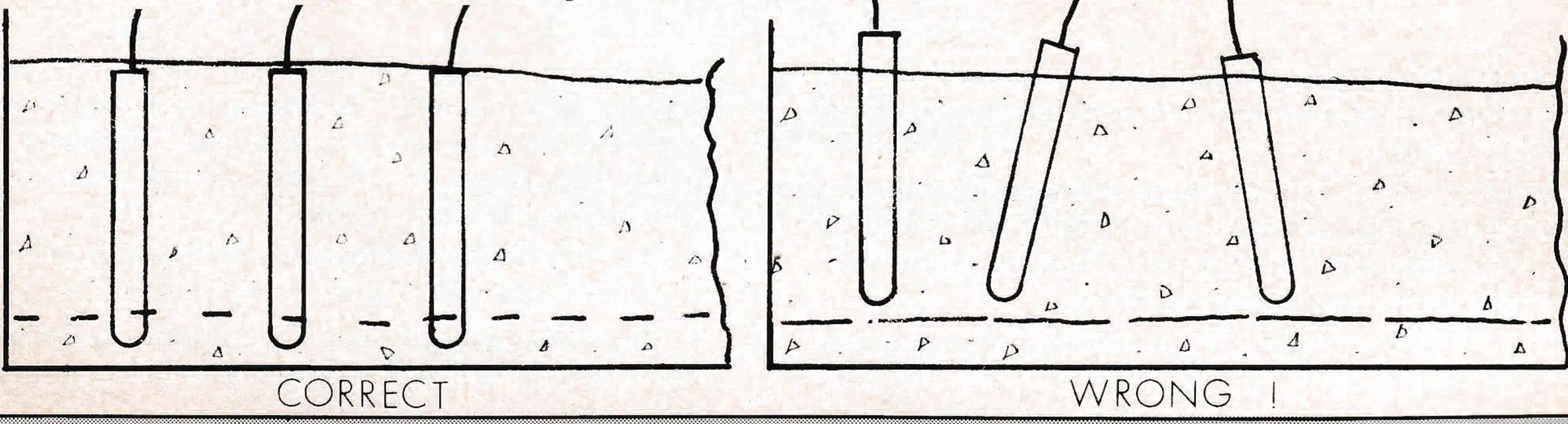
When using a vibrator, (fig. 2) it should be used as systematically as possible always holding it vertical and penetrating the last layer of concrete. The trick is to provide as homogeneous a mixture as possible.