When Sommet Saint-Sauveur decided to update its master plan in 2024, the resort was looking to grow its capacity to deliver year-round mountain experiences to its customers.
“Sommet Saint-Sauveur has been very active in bringing non-skier concepts to the resort over the last decade,” says Christian Dufour, senior director of strategic development for Saint-Sauveur parent company les Sommets. “We believe that the mountain experience and the lifestyle of skiing are much more important than the activity itself. People come to connect with the outdoors, with family and friends, and with the mountain environment. Our job is creating more ways for them to do that.”
Located in Quebec’s Laurentian Mountains, about a 45-minute drive north of Montréal, Sommet Saint-Sauveur is one of five resorts in the les Sommets group. The resort has a long history of expanding beyond traditional ski operations to become a well-rounded destination.
That history includes the 1986 opening of its water park, an early example of four-season diversification in North America’s ski industry. Over time, the resort has added a combination of year-round recreation, family attractions, dining experiences, and events, building a reputation as a place where there is always something to do—regardless of the season.
Sommet Saint-Sauveur collaborated with Ecosign Mountain Resort Planners to map out its latest evolution. One major component is a new green-season activation at the resort’s summit that utilizes existing lift infrastructure to connect visitors with a purpose-built summit experience.
The Planning Process
The 2024 planning process began with a fresh assessment of existing conditions at the resort—terrain, facilities, circulation patterns, land use, environmental considerations, operational requirements, guest experiences, and long-term business objectives. Ecosign planners also met with department heads to gain on-the-ground insights.
This process highlighted an operational reality: there isn’t much available space in the base area for additional development. Over the years, the resort had steadily expanded its collection of attractions, including more water park features, the Dragon double zip line, mini golf, a mountain bike park, amusement park features, and the Viking mountain coaster. The water park occupies most of the base area and the other summer activities were essentially built around it, so the planning team decided to look uphill for opportunities to accommodate future growth.
Creating a Destination at the Summit
“We had already repurposed much of our snow-front zone during the summer season for our water park, so expanding green-season operations at the summit made the most sense,” says Dufour. »
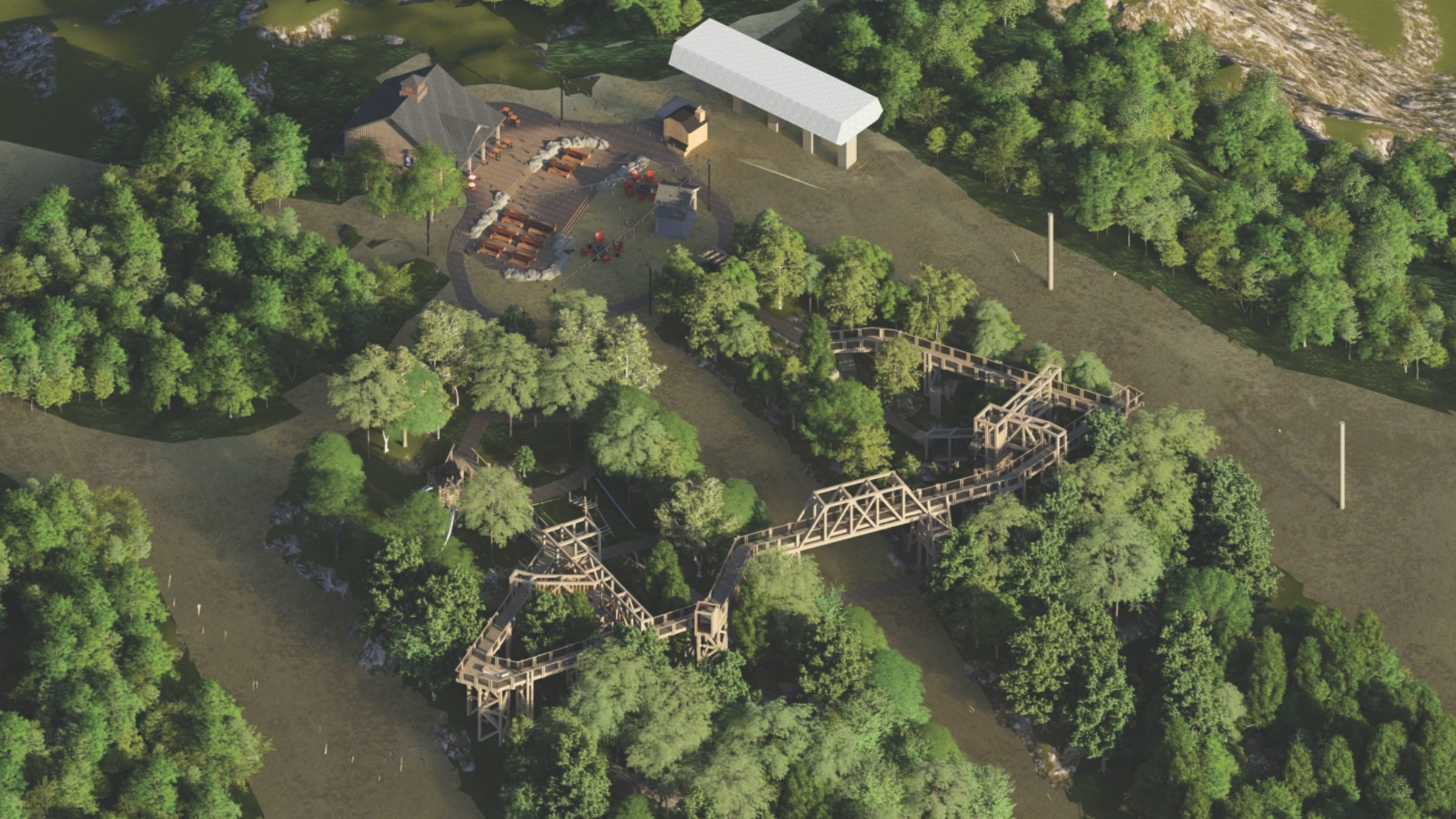
For this new green-season zone, which will actually operate year-round, resort leadership conceptualized La Place du Sommet: a collection of interconnected experiences that would transform the summit into a destination of its own. Their vision included low-impact, high-engagement activities that would invite skiers, summer guests, and outdoor enthusiasts to visit.
Key components include:
- an agora (a central public space) for events and programming;
- a canopy walk, including interpretive signage and scenic viewpoints;
- playground features and relaxation areas accessible from both the ground and suspended walkways;
- a night walk experience, extending activity into evening hours; and
- an on-hill general store and information kiosk.
This idea presented another opportunity for Sommet Saint-Sauveur: could the Côte 71 high-speed quad chairlift, typically dormant in summer, become a guest experience itself—and additional revenue stream?
Across North America, ski resorts invest heavily in lift infrastructure. Yet, many chairlifts operate only a few months each year before sitting idle throughout much of the spring, summer, and fall. Giving guests a reason to visit the summit can change that.
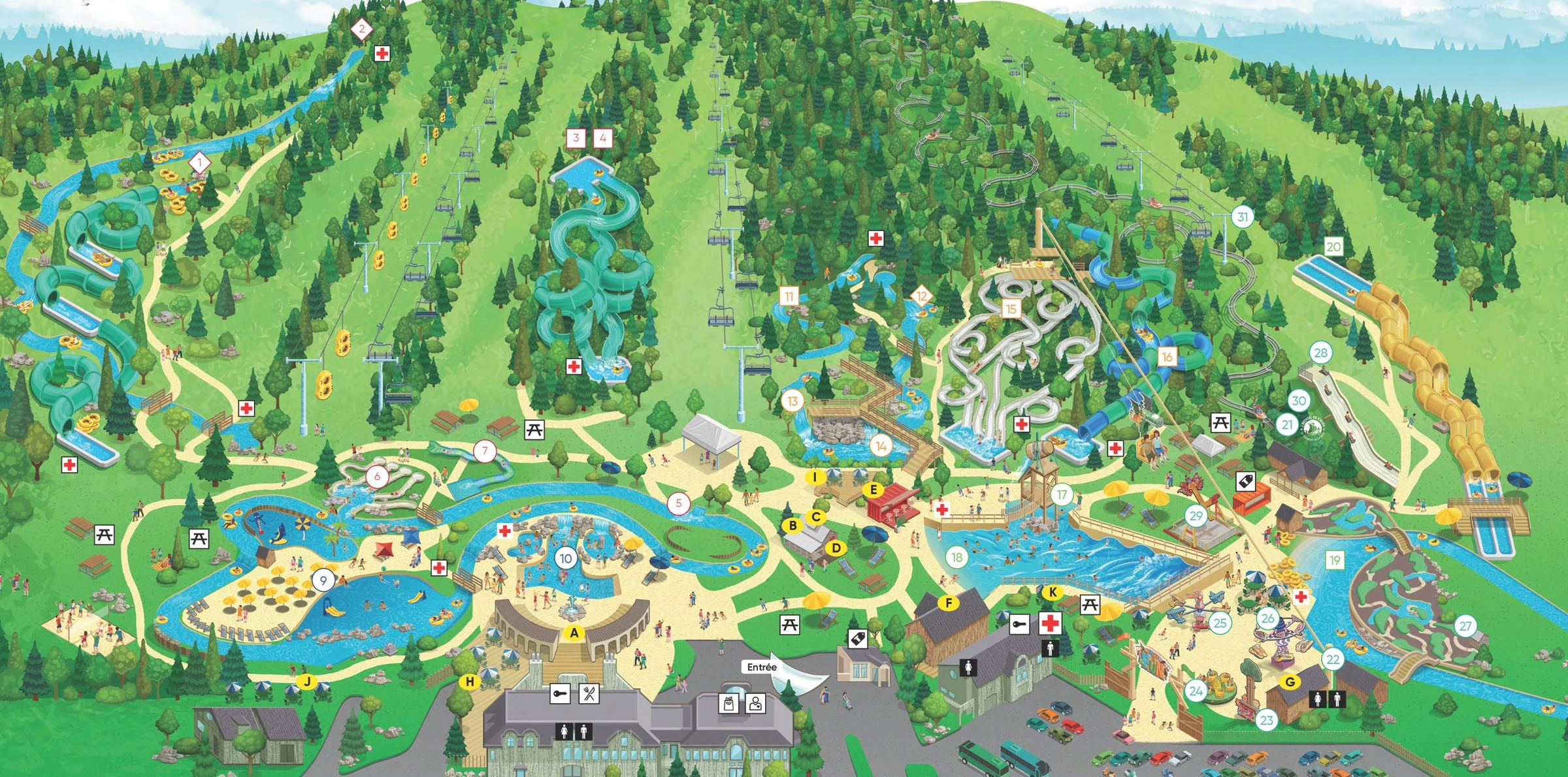
Sommet Saint-Sauveur’s summer base area map illustrates the density of the resort’s snow-front zone offerings, which is why planners looked to the summit for the latest activation.
Turning Vision into Reality
“The vision from Sommet Saint-Sauveur was exciting, and our role was to determine how it could physically work on the mountain,” says Ecosign principal Adam Schroyen. “We needed to understand how guests would arrive, move through the existing base area, up the Côte 71 chairlift and then around the summit zone, interacting with different attractions, and finally download as seamlessly as possible.”
The summit experience was one of 11 different recommendations Ecosign developed across the resort. It was evaluated alongside a range of other projects, allowing les Sommets to compare the relative opportunities, benefits, and trade-offs of each recommendation, including different design variations of the summit experience itself.
The planning process also placed significant emphasis on circulation throughout the resort, recognizing that a large part of any guest’s day is spent moving between activities. By improving the ease, comfort, and enjoyment of those connections, the plan aimed to elevate the overall visitor experience and make every part of the day feel more memorable.
“The plan highlighted many new features that can be added on and around our mountain for new skiers and non-skiers alike,” says Dufour. Importantly, the recommendations also aligned with Sommet Saint-Sauveur’s long-standing philosophy that mountain experiences should extend beyond skiing.
“We presented a range of possibilities and looked carefully at how each recommendation fit within the broader future of the resort,” explains Schroyen. “Master plans are most valuable when they provide a framework for decision-making rather than a single fixed solution.”
La Place du Sommet was a priority because it addressed multiple business objectives simultaneously.
La Place du Sommet would:
- create new reasons to visit during spring, summer, and fall;
- reduce pressure on the base area;
- increase utilization of existing lift infrastructure;
- broaden the resort’s appeal among non-skiers; and
- establish an entirely new experience without compromising the character of the ski area.
Phased Rollout
The first phase of the project, the canopy walk, opened for a special preview to winter season pass holders in October before opening to the public. Additional elements, including the general store and public agora, are expected to follow in spring 2027.

“From a construction standpoint, we chose to prioritize the canopy walk because it will serve as the project’s first major attraction,” says Dufour. “Our goal is to encourage visitors to reach the summit via our chairlifts and generate interest in this new destination from the very beginning.”
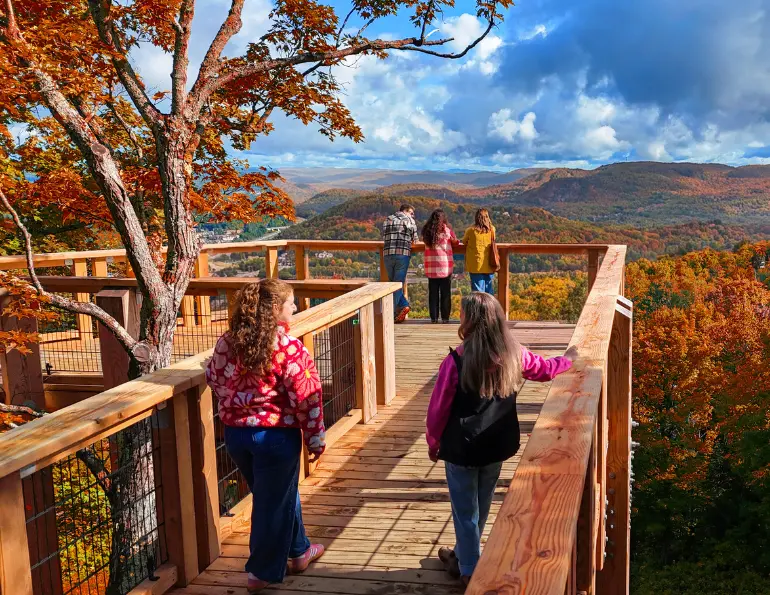
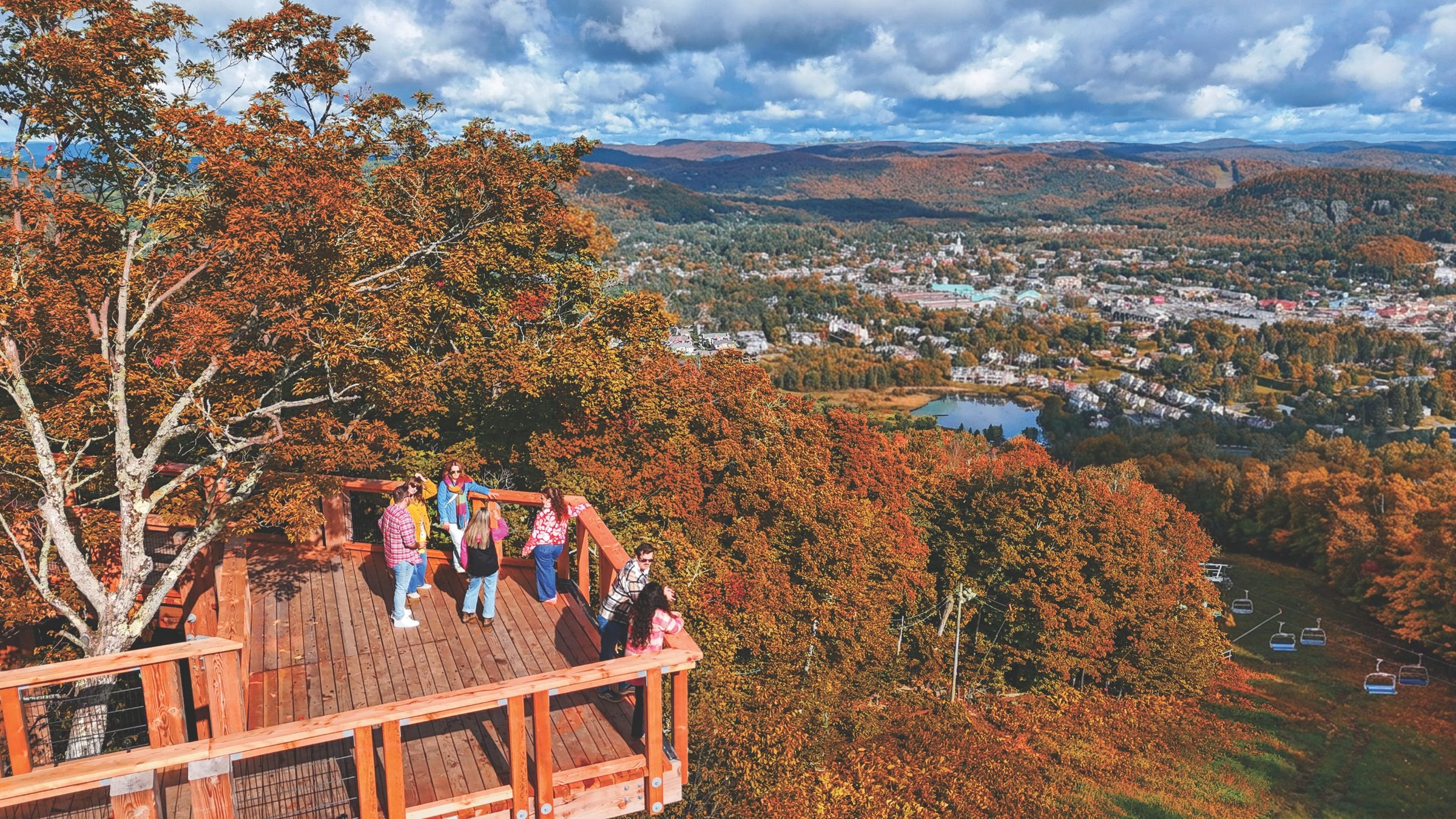
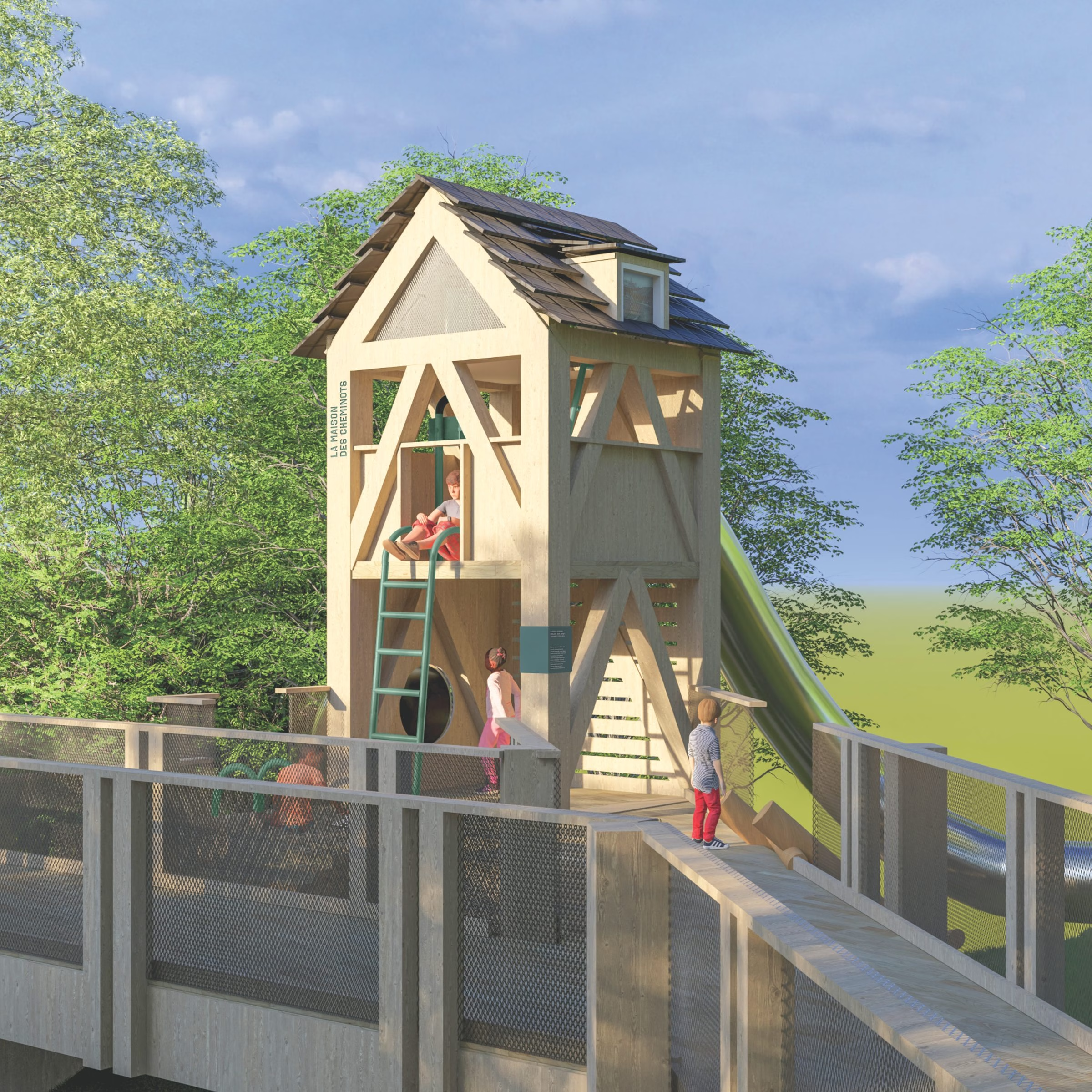
The canopy walk includes 220 meters (about 720 feet) of elevated walkways that wind through the treetops and several interactive features with views of the Saint-Sauveur valley. Designed as a completely flat, wheelchair-accessible loop, it also incorporates a playground, slides, relaxation areas, several scenic viewpoints, and a bridge overlooking the ski slopes.
“It will offer visitors an immersive experience combining nature, relaxation and entertainment,” says Dufour, with “smaller scenic spots and unexpected discoveries” integrated throughout the experience.
Designed by PXP, the canopy walk takes inspiration from the region’s Le P’tit Train du Nord, with elements that reference railway bridges and traditional timber trestles. It is built from British Columbia fir sourced by timber frame construction company Bois Hamel. Ultimateck served as the general contractor.
Access to the attraction will be either paid or complimentary, depending on the season and the activities available, according to Dufour.
Looking Ahead
While Sommet Saint-Sauveur pursues this first phase, the master plan provisions for investments across the broader resort.
For example, a new Doppelmayr six-passenger high-speed chairlift will replace the existing Côte 71 lift. Targeted to open in December 2027, the upgrade will strengthen the mountain’s infrastructure while supporting year-round long-term growth and development.
The water park is also preparing for a new ProSlide mountain waterslide, scheduled to open in June 2027.
Lessons for the Industry
When creating a successful master plan, Schroyen says, “The challenge isn’t about reinventing a resort, the challenge is to understand what people already love about it and build upon those strengths.
“The best development,” he adds, “feels like a natural evolution.”
The most recent master plan also helped support discussions related to land development approvals with the local municipality.
Helping governments understand where a resort is headed and being able to provide details of the impacts of individual projects is another benefit to updating these plans. A 2018 update to the resort’s master plan contributed to its successful application to the Government of Quebec for CA$2.3 million in funding toward construction of the CA$4.7 million Sommet Express, a heated six-passenger high-speed chairlift.
A successful master plan should effectively support a resort’s vision, identity, and long-term viability. Sommet Saint-Sauveur is an instructive example of what successful planning can achieve.
Rather than pursuing growth for its own sake, the resort has focused on maximizing existing assets, expanding visitor experiences, and creating opportunities for a broader audience to connect with the mountain environment. La Place du Sommet demonstrates how underutilized spaces and lift infrastructure can become a catalyst for potential new visitation and revenue.
Sommet Saint-Sauveur has already spent four decades proving that four-season operations can work. Through thoughtful planning, strategic investment, and a commitment to the guest experience, it continues to demonstrate how mountain resorts can evolve while remaining true to the qualities that made them successful in the first place.