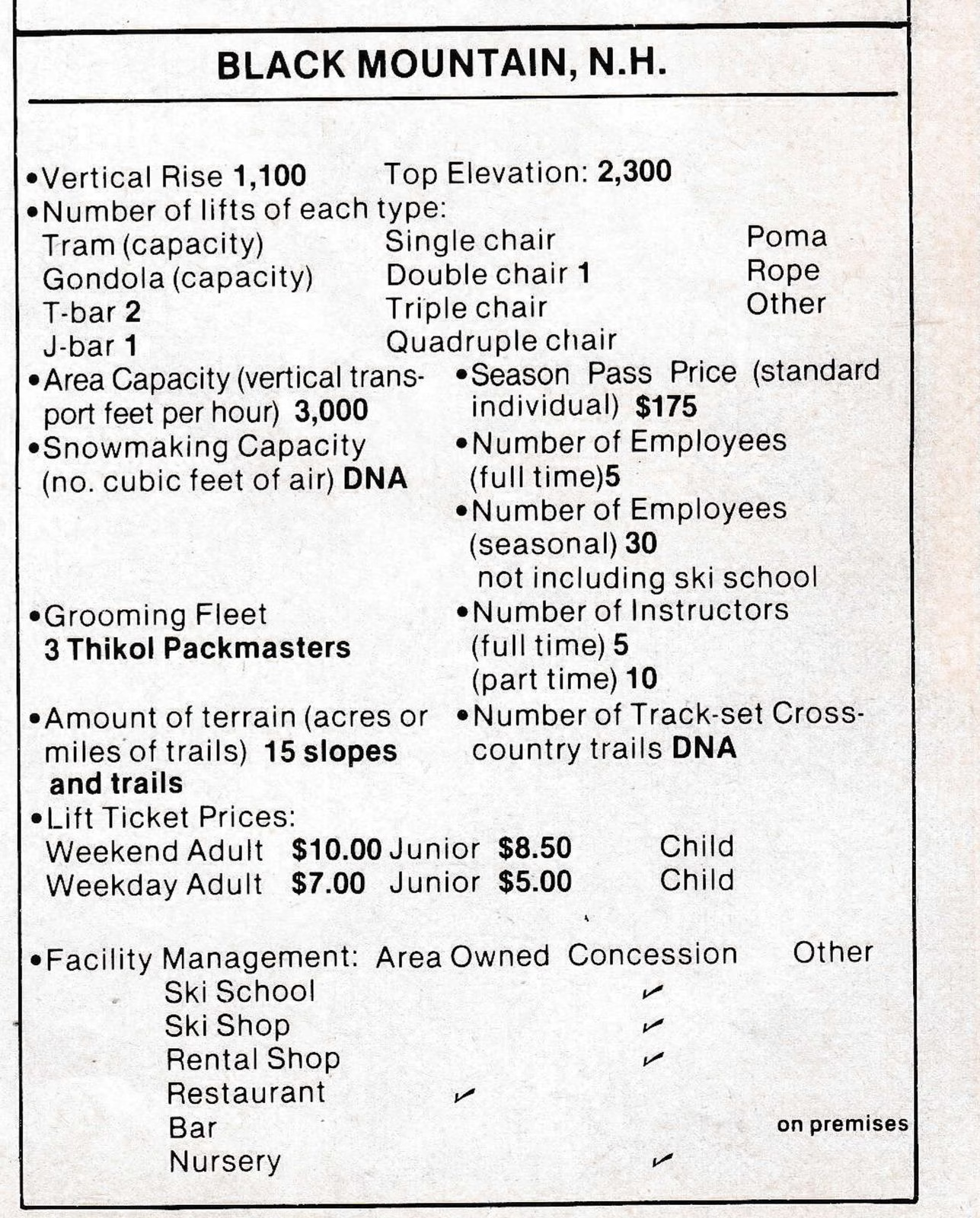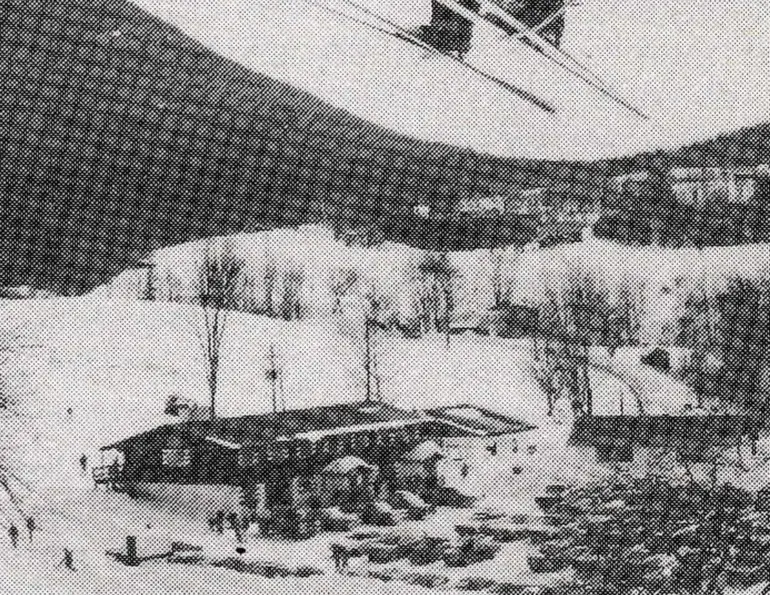
What would you say of a ski area operator who doesn’t make ski school pupils buy lift tickets? (concession-operated, at that). What do you call a “businessman” who won’t raise lift ticket prices even though he plans a $1.5 million expansion? Crazy? Philanthropist? Gentleman ski area owner not interested in making a buck?
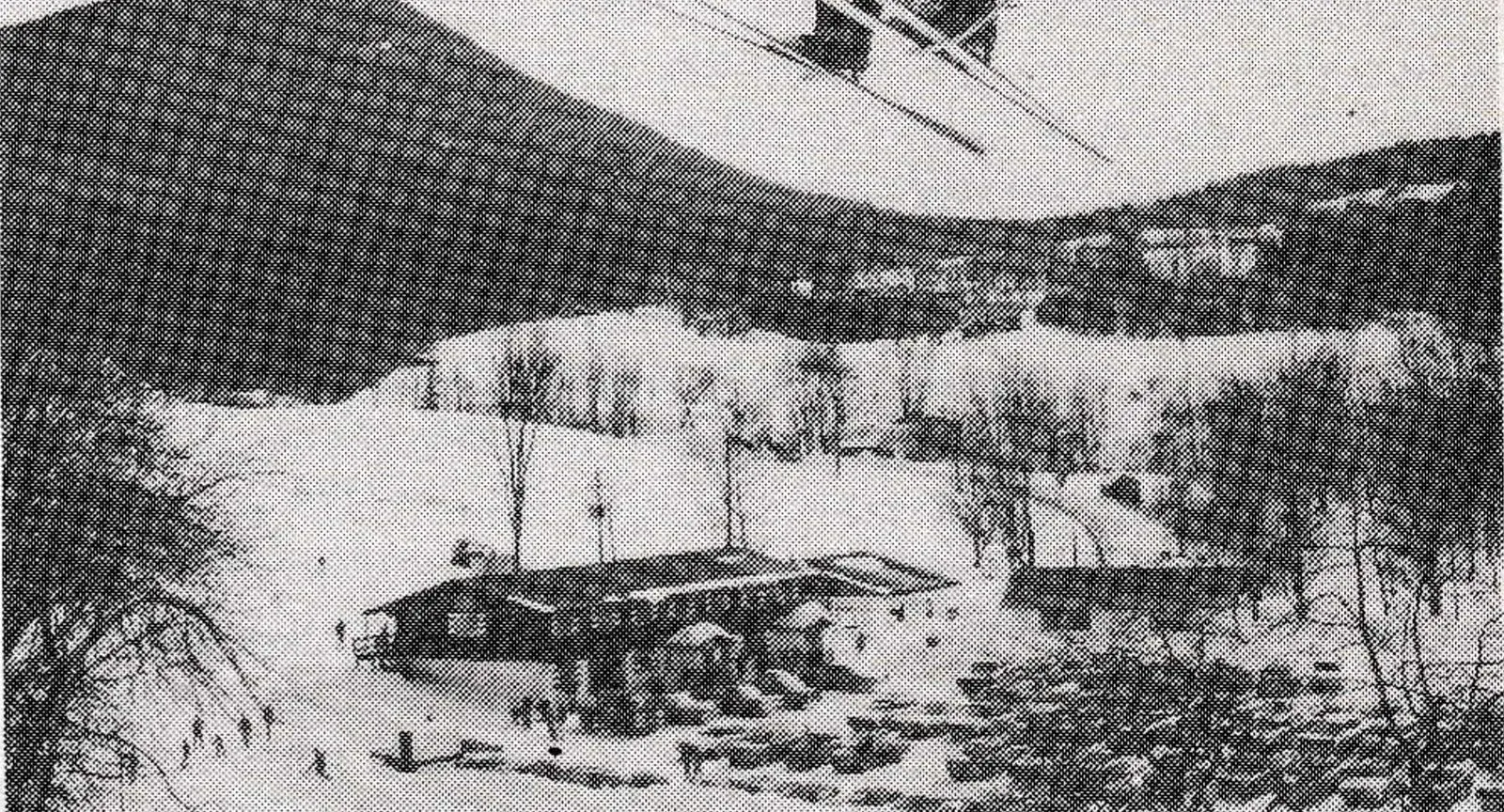
Guess again. How about successful. Or profitable. Or maybe a shrewd Yankee. Not only has Don Murray’s Black Mountain been a consistent money maker in the 1970’s, the area has returned nice profits when some of its larger competitors hustled to make snow, promoted like crazy —and struggled to break even.
How does Murray do it? Not only does he make the most of every dollar, but he passes the savings along to his customers. Moreover, he knows what is important and what is extraneous to his family trade in the picturesque New Hampshire ski town of Jackson. He also knows his own resources—what he can and can’t do well. And Murray makes thoughtful plans, not tied rigidly to unreasonable time-tables.
Some examples: Black has long needed more uphill lift capacity to reduce lift lines. The problem, of course, has been chairlift prices and interest rates—too high for a modest area that “never has incurred more interest payments than we could handle.”
Solution: Murray is replacing a low-capacity T-bar with a chairlift in stages. This year, a new chairlift direct-drive station, complete with bullwheel, goes in at the terminal of Black’s Roebling T-bar at a cost of $125,000. A modification will allow the drive station to power the old T-bar for this season. “If we have a good snow year and if everything goes right, the T-bar will become a chairlift,” Murray says cautiously. “Won’t know till then whether it will be a double or a triple.” Meanwhile, Black will have put in a $400,000 chairlift comfortably over two or more seasons instead of frantically—and with heavy financing—in one.
The same clear-eyed scrutiny governs Black’s payroll. Lifts run from 9 a.m. to 4 p.m., but 15 lift attendants used to report at 8 a.m. for lift inspection. Murray changed the procedure to have his two-man night grooming crew make the morning lift checks before quitting. Lift attendants now report at 9 a.m., work seven hour days and the Black payroll is 15 man-hours per day less than before.
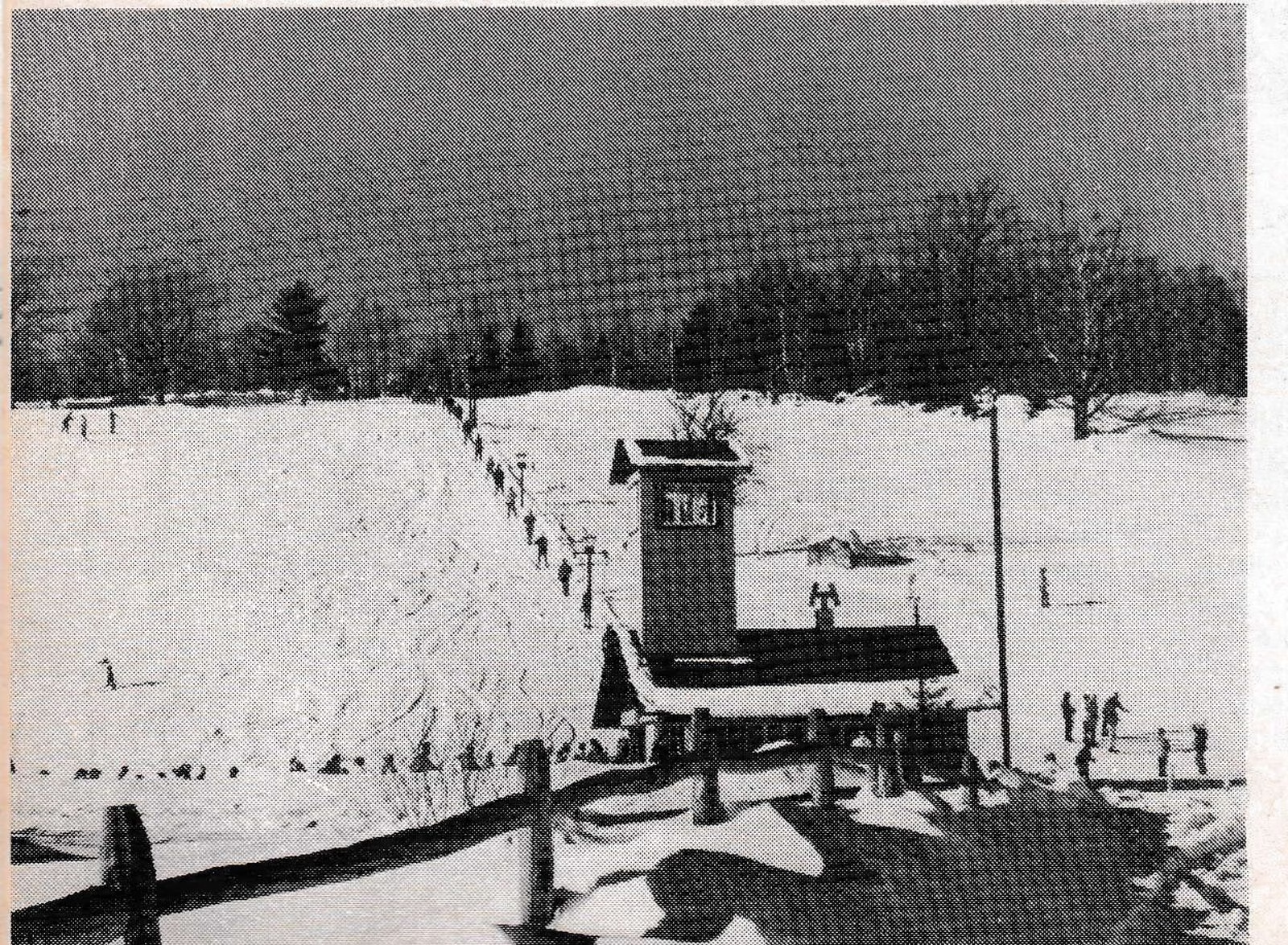
When the outlook for business is unpropitious, Murray will fold up his area faster than a shrewd poker player with a bad hand. Last March, after operating only one week during the season, the weather was perfect and skiers were out on the hill. Looking at the calendar, however, Murray shook his head. “This weekend we’ll take in $20,000, and we’ll have two-day operating expenses. But I’m going to shut down until next weekend.” He acknowledged that Black Mountain can get away with it whereas a major ski resort with large fixed operating expenses doesn’t have that luxury.
Murray’s private office, is open to everybody. “There are times I can get so annoyed—people walking in and out, in and out. But it works. You’ve got to make yourself available,” he advises. The manager is obviously first to know when people are happy or unhappy about something at Black. He’s attuned to the concerns and priorities of a clientele made up largely of suburban Boston families who are long-time but casual skiers.
“I feel food is very entwined with the image of a family ski area,” says Murray. “People will pay 30 cents extra for a good quality hot dog. So we won’t put the cafeteria on concession, and we pay a lot of attention to it. On the other hand, I do put the ski school on concession. That’s a breed in itself, and it allows the director the incentive of running a good shop and making a profit.”
“It’s the same with the rental and ski shops. The Jack Frost shop (in Jackson) runs those. They’re pros and can do a professional job. We ran it the first year and didn’t know what we were doing.”
It was partly that sense of trying to do too many things and “losing control” that led Murray to sell Whitneys’ Inn at the base of the slopes last fall. When Murray bought Black in 1970 from its founder (and one of America’s pioneer ski area operators), the late Bill Whitney, he also got the lucrative and popular Whitneys’ Inn. Soon Murray found himself spread too thinly, worrying about operations at the Inn and its Shovel Handle Lounge, the ski area and its cafeteria. “You have to rely on other managers,” he says, “and in my opinion you start losing something.”

So he sold the Inn to a Massachusetts vacation packaging agency, Yankee Holidays, whose owners upgraded furnishings and cuisine, expanded to year-round operations and created a tasteful atmosphere of a fine, antique-rich New England country inn.
Out of the deal, Murray; enough capital to pay off Black’s “handsome mortgage” plus a healthy start on a $1.5 million expansion program. (“It’s also not bad to have $1,000 of lift tickets sold at the Inn Friday night waiting for you Saturday mornings,” he grins.)
“The five-year expansion could be accomplished in three years or may take seven,” says Murray. Besides the new chair, the plan includes trail improvements (“with increased uphill capacity, you have to make sure you have the downhill capacity without the need for arm and hand signals to turn”). There are also to be expansions of the parking lot and base lodge, a new maintenance garage, plus conversion of the old garage to a brown-baggers building.
All of this is necessary because of skier demand increasing at about 1,000 skier days per year over six seasons, much of it midweek business. By 1978-79 skier days, excluding season pass holders, were 35,000. The area and the lift lines were stretched with 1,100 people. Expansion will increase lift capacity from 2,900 per hour to 3,600 per hour and “realistically” provide for crowds of 1,500.
Although Black has no snowmaking, Murray retained water rights to the Inn’s pond when he sold it, just in case he ever changes his mind. If Black did install snowmaking he says, it would probably be limited to the J-bar and small T-bar area and mainly used “to assist the Inn in a snowless Christmas.” Murray is not interested in extending Black’s profitable but admittedly short season (97-100 days average) at the greatly increased cost of snowmaking.
Value received for dollars spent is something Murray never seems to forget. “If I put in two more chairs, I couldn’t justify a $20 lift ticket (to pay for them), but the people here couldn’t afford it,” he says. Asked if he will increase next year’s lift ticket (already the lowest in Mount Washington Valley at $10), he responds unequivocally, “No.” When he went up to $10 a year ago, he “sort of figured that should cover rising costs for two seasons anyway.”
“I think too many people are just hopping on that bandwagon and raising prices. I definitely believe this business can price itself out of the market.”
Such a non-inflationary philosphy makes it easier to understand why Murray gives his skiers—and indirectly Black’s ski school concession—a break by not charging for lifts while they’re taking a lesson. It may even help to reveal why Black was one of the first areas to bite the no-snow bullet, announcing that last year’s season passes would be honored this winter.