


Ski Plattekill, N.Y.
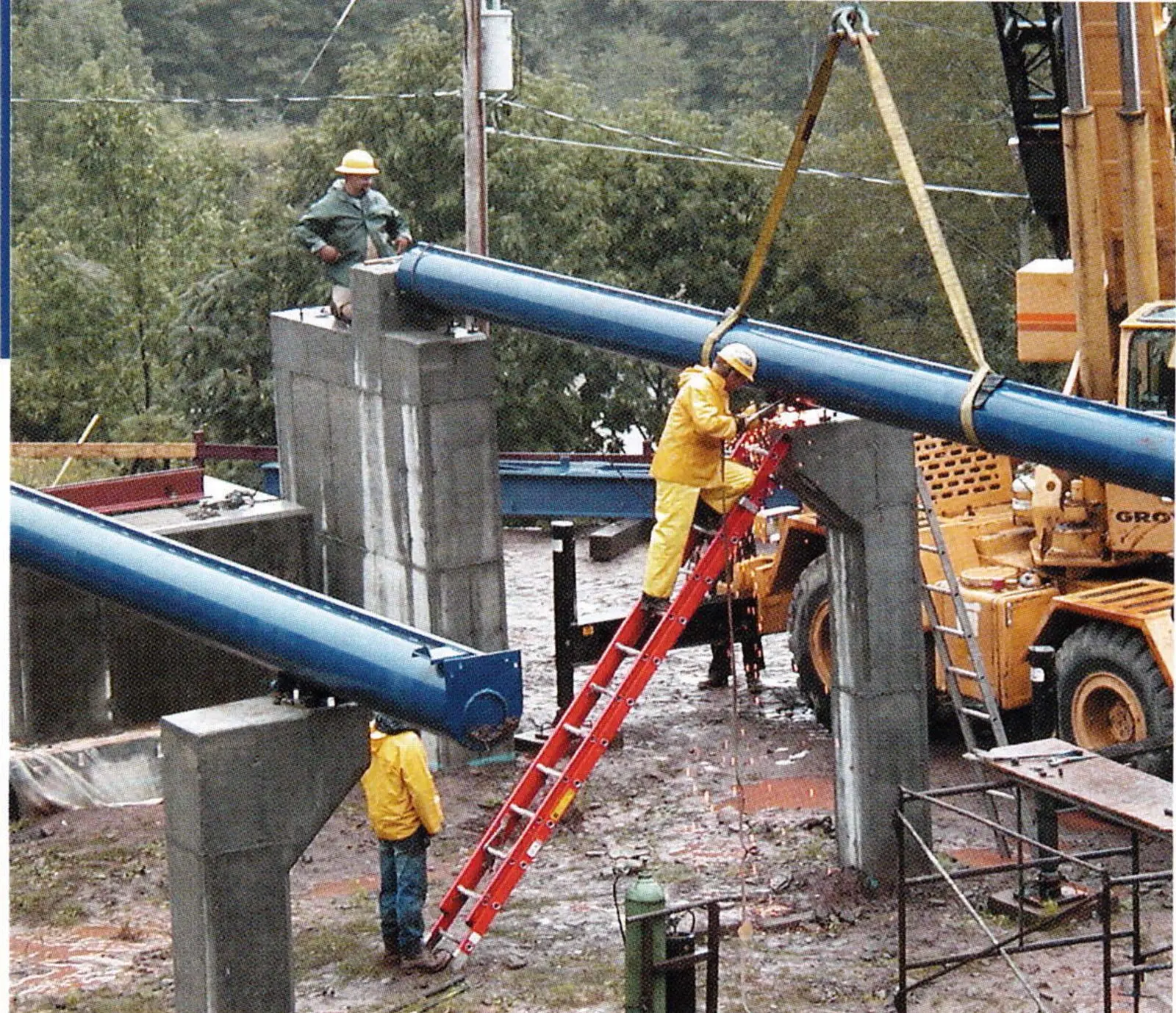
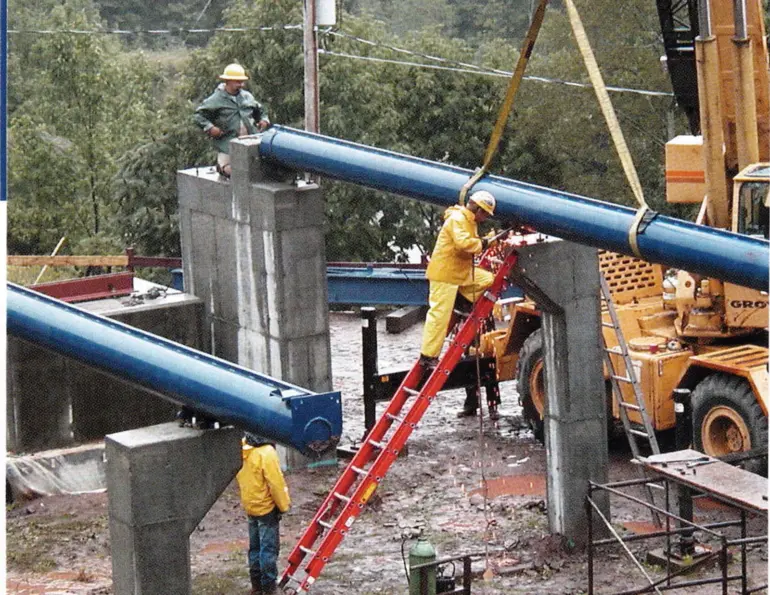
This small area’s new North Face Express is a 3,500-foot double chair operating at a rope speed of 500 feet per minute, for which Plattekill spent, all costs considered, less than $250,000. The area bought the lift and parts, a 1974 Hall with 125 chairs, at auction for about $21,000 in 1999. The area financed the purchase and initial prep work from cash flow. Then, the bottom terminal concrete was poured on September 11, 2001. Subsequently, obtaining funding to complete the lift was delayed in the aftermath of 9/11, and further work was put off for a year.
The area poured the top terminal and towers in the summer of 2002, then flew the towers in October. The area ran cable and completed the motor room by the end of November, and the lift was load-tested and inspected just in time for the area’s December 26th opening day.
All refurbishing work was done in-house, directed by mountain operations director Ken Davie. Plattekill rewound the motor, replaced the gearbox, rebuilt the planetary drive, replaced every nut, bolt, bearing, bushing, sheave wheel, shaft, and some grips, and sandblasted and repainted the original steel towers. Even marketing chief Tara Collins got involved, driving a topless Jeep last summer that provided refreshment to the installation crews (who would have preferred that she was topless, Collins told *SAM*).
Since Hall was no longer in existence, obtaining replacement parts was often an adventure. Sometimes, no one knew where to find them. The original shafts were manufactured by Tom Greene; Plattekill tracked him down to rework and remake them. Tim Pfister of Pfister Mountain Services managed the lift construction after all concrete work was completed. Installation posed its own challenges: the lift has a 1,100 foot vertical rise and is built on a vertical pitch in excess of 35 percent. Certain spots were so steep that workers erected chutes of plastic EDS culvert, cut in half lengthwise and fastened together with chains, to pour the tower pads. On the other hand, Carson Helicopters flew the towers in record time: 15 towers in 1 hour and 10 minutes, with a 15-minute refueling stop. The lift ran without a hitch all winter and (along with ample snowfall) helped the area achieve a 40 percent increase in business. By adding 100 vertical feet and reaching the true mountain summit, the lift allowed Plattekill to add some new trails, with more planned for this summer.
Winter Park, Colorado
Winter Park had a small problem—about a 50-vertical-foot problem, to be precise. The mountaintop Sunspot restaurant, built 10 years ago, sits atop a saddle that separates the resort’s Winter Park and Mary Jane sides. Skiers coming from Mary Jane had to either ski down the Winter Park side and ride a lift to Sunspot, or climb the far side of the saddle. Climbers got in the way of skiers descending from Sunspot, and vice versa, creating something of a traffic nightmare. In addition, the saddle funneled Mary Jane skiers into limited choices for returning to the Winter Park base. To eliminate the climb to Sunspot and give Mary Jane skiers alternative routes off the mountain, Winter Park installed a Telecorde, a sort of modern day rope tow. The tow covers 472 feet and a 51-foot vertical, with a line speed of 325 fpm and a 1,200 hourly capacity. It includes several modifications to alleviate problems with old-style rope tows. A special 1″ striped rope is used so any rope twist can be immediately detected. The sheaves are self-aligning to avoid rope twist, all potential “pinch” points are enclosed and protected, and a special “stop gate” was designed that rides on the rope and prevents entanglement. Overall, the ride is much smoother than with a traditional rope tow, with no boomerang effect when a rider releases the lift at the top. Special towers with hoists raise the haul rope out of the way for track grooming. For next season, Winter Park will improve gripability of the lift—the only aspect of operation that needs attention.
Solitude, Utah
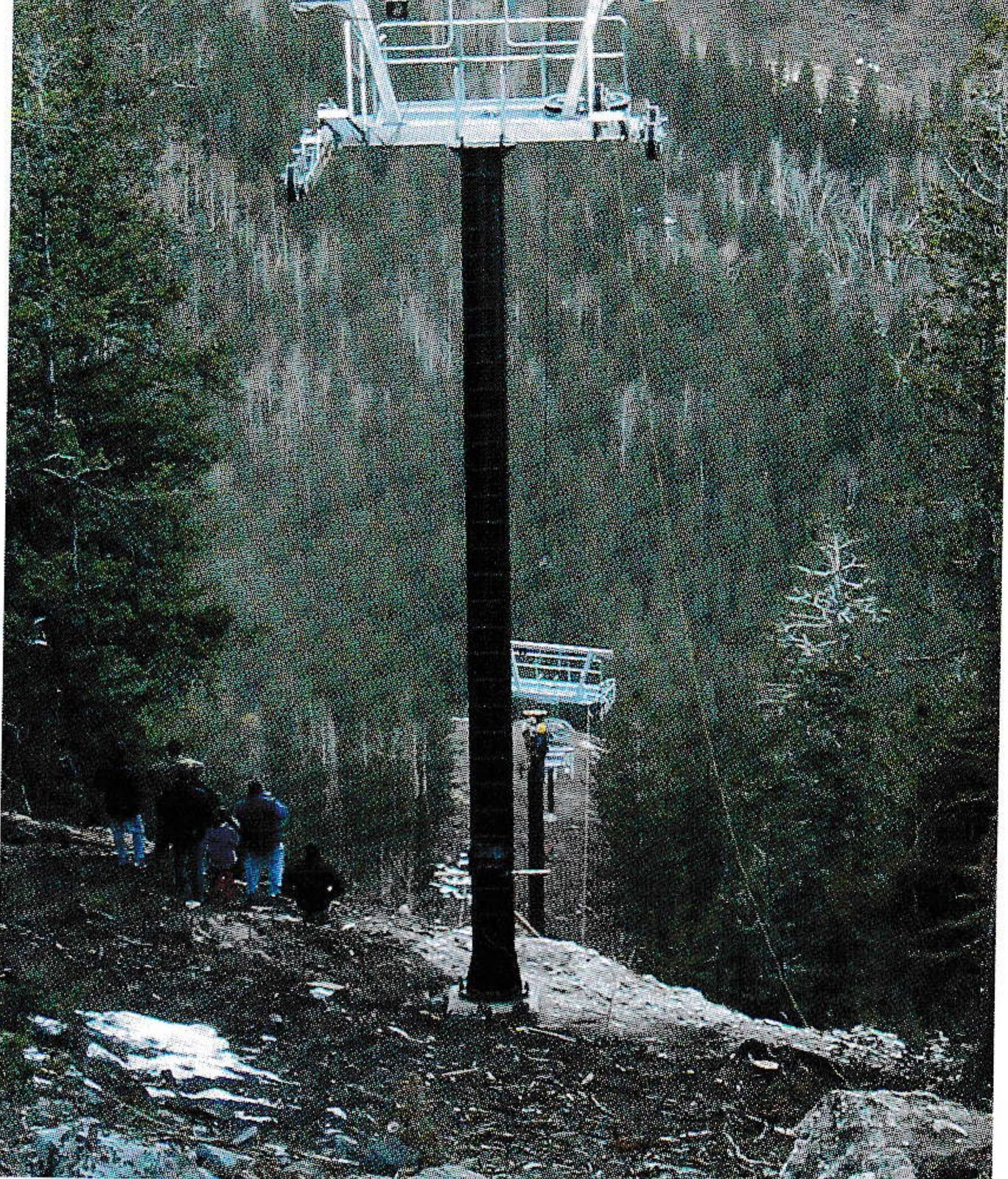
Solitude’s remote, backcountry-like Honeycomb Canyon comprises 400 of the resort’s 1,200 skiable acres. But to ski or ride the canyon requires three lift rides, and, until last winter, ended with a long, flat runout to the base area. To shortcut the runout and reduce the lap time, Solitude installed the $1.2 million Honeycomb Canyon fixed-grip quad last summer. A major goal was to maintain the geological and natural beauty of the canyon, so the resort spent a great deal of time picking a location that would minimize environmental impacts and still provide a productive lift.
Like the downhilling itself, installation was pretty much a backcountry experience, as well as a team experience. Solitude did all the prep work, including the electrical lines and preparing a road to the top terminal, while installation was a turn-key project managed by Doppelmayr CTEC out of its Salt Lake City office. Work on the short-but-steep fixed-grip quad (the lift climbs 725 vertical feet over a 1,350-foot length) began August 1. There is no road access to the base of the lift, and the liftline averages a greater than 50 percent grade, so the area winched to the top all trees cut to clear the liftline. In addition to the steep, rocky canyon wall, workers had to deal with snow cover for much of the fall. Everything necessary to set the eight towers and erect the base terminal had to be flown in. It took approximately 20 hours to pour the concrete tower pads using one helicopter and numerous concrete trucks, and nearly half that time to set the towers themselves.
To install the top terminal, crews had to haul the components over early-season snow, so Solitude crews plowed the route and laid a roadbed. The motor room was broken down and all terminal components—the bullwheel, sides, and even the crane required to install the terminal—were hauled by a D8 tractor.

The lift opened to the public on December 22. Now, skiers and riders save 15 to 25 minutes per lap, and they can yo-yo the superb glades and gullies of the west canyon wall itself. And with the drive at the top, Honeycomb Canyon remains as remote and quiet as it was before the lift was built.
Sunapee, N.H.
Mount Sunapee wanted to offer its beginning skiers and riders a better experience, but its existing terrain and lift were not up to the task, said general manager Jay Gamble. So the area called on Ericksen Associates to design a new beginner area and then rebuilt its learning facility.
The work started literally from the ground up. The grade of the hill was 18 percent on average so the area shaved five feet off the top of the hill, used the excavated dirt to fill in five feet at the base, and removed remaining natural contours to create a uniform grade of just over 15 percent. Then the area replaced an old handle tow with a new SunKid Wonder Carpet by Star Lifts USA. The handle tow was virtually impossible for first-timers to ride, especially when both adults and kids were using it. Realized capacity, due to frequent stops, was about 300 per hour.
The carpet lift, at 340 feet, is the second-longest in the East. Powered by a 20 hp motor, it handles at least 700 riders per hour. The speed is set for ease of getting on and off, and the ride takes just over two and a half minutes. In addition, the liftline for the old (and new) lift bisected the slope, as it ran to one side of the center line, and the bullwheel atop the handle tow effectively cut off access to the narrower portion—few skiers or riders were willing to hike above it. With the new carpet, Sunapee regained easy access to the entire slope.
As a final bit of renovation, the old handle tow was moved to a small cove with an 11% grade that Sunapee created off to one side of the hill. This adults-only section provides a degree of privacy that, said Gamble, “worked perfectly for the audience.” As did the rest of the redesigned learning area: beginners this past season had an easier time going up as well as down. “Ski school personnel raved about how much simpler their job was,” Gamble said, and beginners’ skills made a “quantum leap improvement.” This summer, Sunapee is extending the carpet another 20 feet and building a new kids’ center at the site.

