


Colonel Sherman Potter would be proud. After all, stepping in “horse hockey,” as he put it, was akin to a walk through tulips. And at Keystone Ranch, Colo., a new composting program that combines horse manure with restaurant scraps aims to not only help grow tulips bigger and better throughout Summit County, but is in line with the operation’s sustainability policy and helps with credibility among the public.
The composting at Keystone Ranch began in the winter of 2000 as a pilot program to determine whether it would be practical and worth the effort to expand to other areas of the resort. So far, the experiment seems to be working.
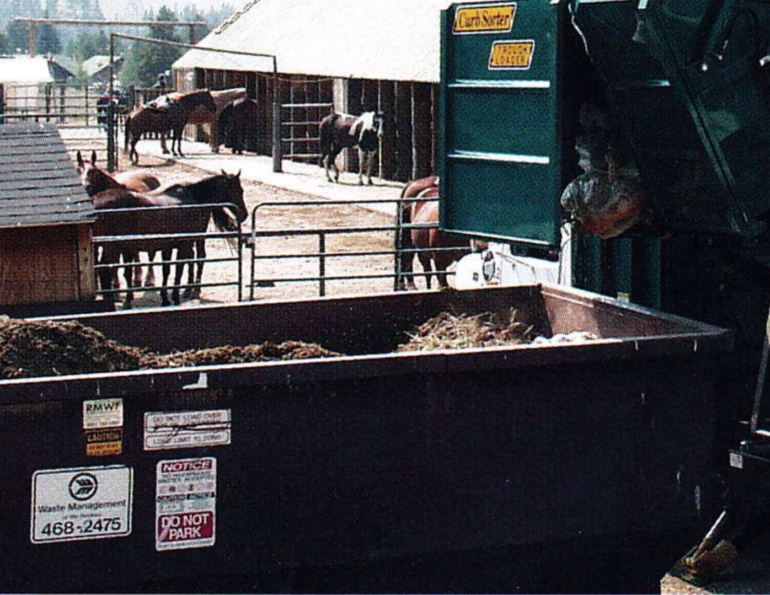
The current program combines the manure from Keystone’s 80 horses—available to guests for guided backcountry tours—with both vegetable and meat refuse from the Ranch Restaurant as well as ground wood waste from construction and landscaping projects in a 30-yard container stored near the barn. That container, which holds almost 20 tons of material, gets filled up every two weeks before being carted to a privately owned county composting operation next door to the local area’s landfill. In the winter, when the horse population drops to around 15 used primarily for evening sleigh rides, the container takes about 3 1/2 weeks to fill. The amount is much more than Keystone could properly compost or use on its own.
“We pay a smaller tipping fee for the compostable material,” says Jeff Sanders, Keystone’s environmental coordinator, explaining that compost only takes up space temporarily. On top of that, the regional landfill company that accepts the waste makes money on the end product. “That saves us about 30 percent in disposal fees [per ton].” But, says Sanders, there are other, more significant benefits to the practice. “We see value in that we are not landfilling, not adding to pollution in the county.” The program, to date, has diverted 450 tons of organic material to the county composting operation, freed up Keystone staff for other projects and has eased wear and tear on resort vehicles by cutting down on trips to the landfill.
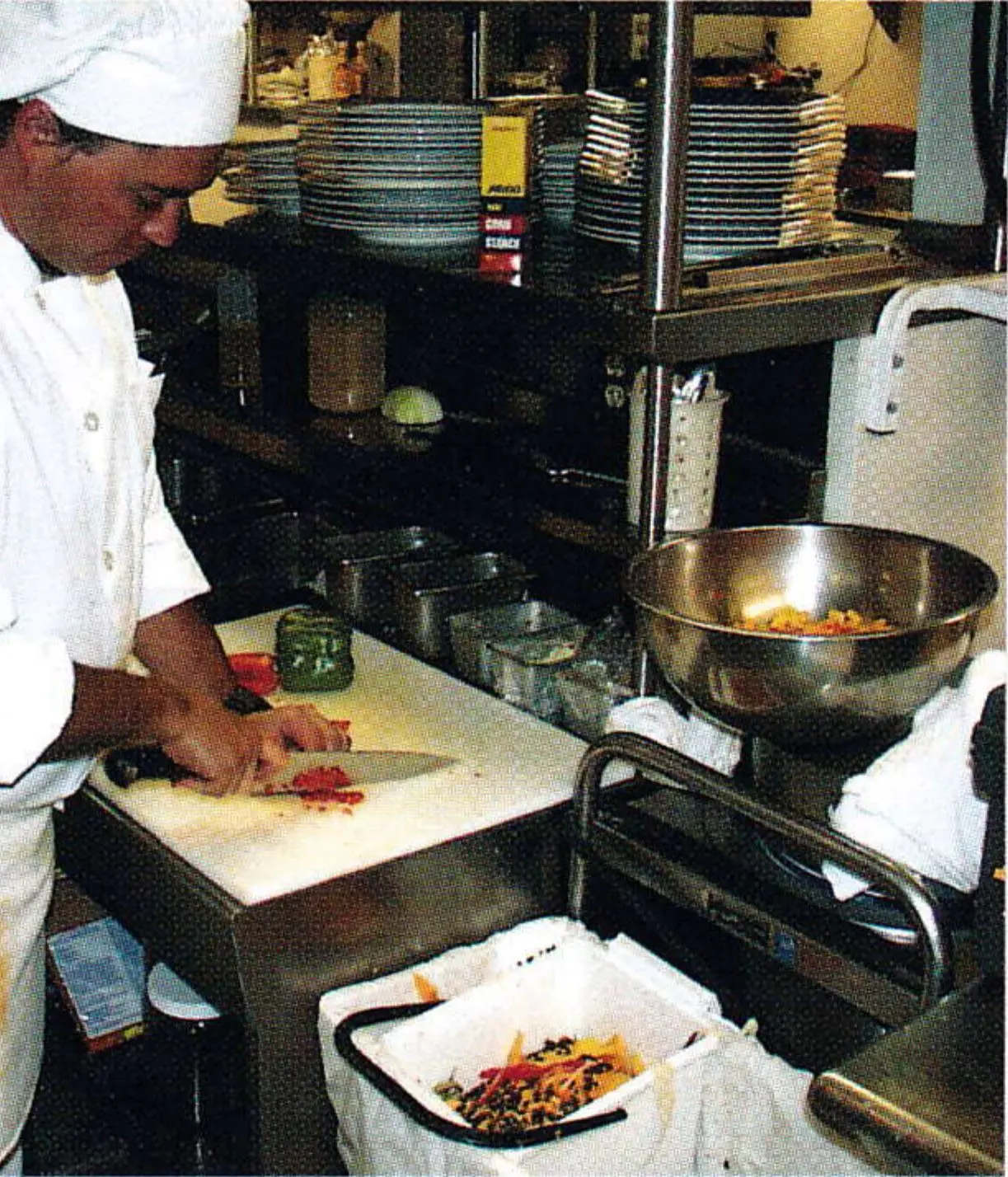
Once stalls are mucked, the manure is tossed into the 22-foot by 8-foot container. Much less often—when projects come up—wood chips are tossed in. In the ranch restaurant’s kitchen, biodegradable bags made of a cornstarch-based “plastic,” are placed at four stations to collect waste during food preparation and from plates turned in to the dishwasher after meals. Everything organic, including meat products, goes into the bags. They are then stored in a container behind the restaurant. Once full, that container is pulled over to the larger container and the bags are dumped inside. Somewhere between 10 and 15 percent of the full 20-ton container is comprised of kitchen scraps.
“We need the manure for a proper mixture,” says Sanders, explaining that, on its own, kitchen refuse is too wet and rich in nutrients to compost well and would simply rot because it is starved of air and carbon. When that happens, the process turns anaerobic and intense odors and carbon dioxide are produced. But because Keystone regularly mixes its kitchen waste with manure, horse bedding and wood waste, decomposition begins and cuts down on the odor that usually emanates from straight fermenting kitchen garbage.
The microorganisms found in manure speed up the decay process, which relies on nutrients (nitrogen and carbon), moisture, heat and air. The nitrogen comes from the food scraps and manure, the carbon from hay, wood shavings and sawdust. The microorganisms in the manure create heat by feeding on the waste and other carbon sources. Mixing air into the compost moves everything along.

When the rented container is full, a hauler comes and takes it away. Previously, when the manure and kitchen garbage were being landfilled separately, the resort was using its own vehicles to haul the material. Now, says Sanders, the hauler is cheaper because of the savings realized in less wear on resort vehicles and more efficient use of staff time.
At the Twin Landfill Corporation in Dillon, Colo., Keystone’s material is mixed with more wood chips and sawdust and turned regularly to keep the chemistry of composting going by adding air. Chemical reactions heat the pile up further, killing bacteria and turning it into fertilizing mulch. Once samples are tested to make sure no pathogens exist, the compost is screened and sold by the yard to landscapers and farmers. The entire process takes from 60 to 90 days after reaching the landfill site.
Sanders says he is not sure if the resort will buy any of the rich compost when it’s ready because very little fertilizer is used to begin with. But if it does decide to purchase the mulch, the resort will get a big enough break on the price to still come out ahead.
As a result of the composting program, says Sanders, the “restaurant is rapidly approaching a zero-waste status” as all glass, tin, aluminum, cardboard, newspaper and office paper is currently recycled. After all is said and done, however, cost savings are a wash, but Keystone is looking forward to possibly saving some money by expanding the ranch restaurant’s organic material policy to the ski resort’s other restaurants and hospitality sites. Besides, it’s all part of a company-wide goal to operate with a sensitive eye on the environment.
“The real value for us in this is not saving dollars,” says Sanders, “but in being in line with our sustainability policy. . . . Our guests appreciate that and our staff knows it’s the right thing to do.”
