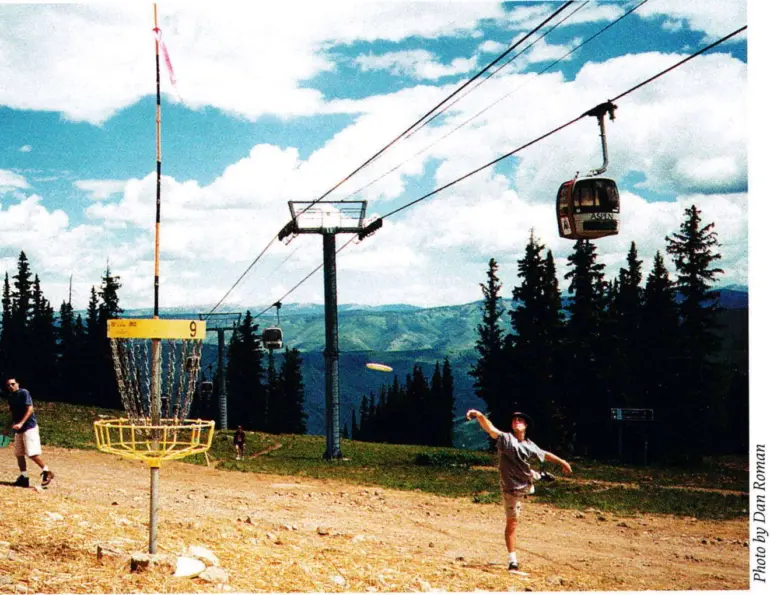
What sport tests players against an established par, uses tees and holes, has a professional tournament circuit and uses Frisbees to score? Yes, Frisbees. In case you hadn’t heard, disc golf—where players try to reach a “hole” in as few “strokes” as possible by throwing plastic discs for distance and accuracy—is becoming red hot as a pastime and has caught on at some mountain resorts that view the activity as an added revenue driver for established and developing summer programs alike.
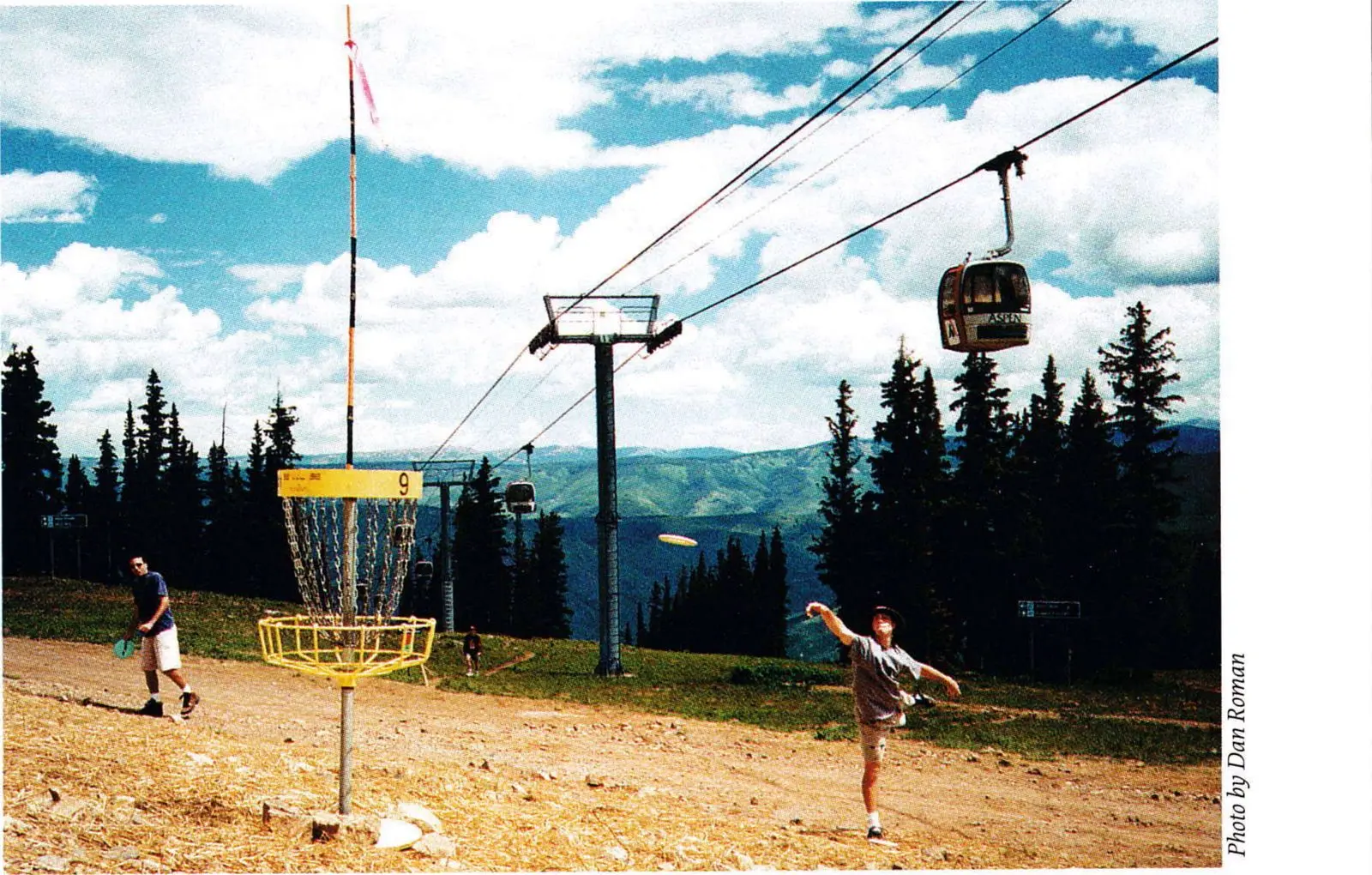
Photo by Dan Roman
Born on college campuses in the late 1960s and 1970s, disc golf follows the familiar 18-hole and scoring format of golf. Players start their throws from a tee box and try to fly their discs into a metal basket that surrounds a pole in as few throws as they can manage. Subsequent throws start at the point where the previous one landed. The game is now so popular that there are about 1,000 courses throughout the United States and Canada, and more are popping up as far away as Japan and the Netherlands. In fact, the Professional Disc Golf Association (PDGA; www.pdga.com) organizes a tournament schedule that stretches throughout the year, attended by amateurs as well as pros of varying classes and boasts more than 16,000 members in 20 countries; a membership that has doubled in the last four years. There’s also a magazine, Disc Golf Journal, dedicated to the sport. There’s no question, disc golf is a fast-growing sport.
The first disc golf course in the Aspen area was opened for play on Ajax Mountain in the summer of 1993. The 18-hole course, considered the highest officially sanctioned disc golf course in the country at 11,212 feet, is spread out on top of the mountain with the first nine holes on relatively flat terrain. The back nine is more technical in nature and aerobically demanding as it is laid out across steeply sloping ground.
“We call the front nine the ‘family nine,’” says Dan Roman, a summer ranger at Ajax who mans the pro shop. “The back nine gets physical.” Roman says guests use the course for free with the purchase of a $19 summer gondola ticket ($9 for seniors and visitors aged 7 to 17, kids under 7 ride free) or may simply hike up and play at no charge. Golfers are asked to sign in at the desk before they are pointed to a basket from which they can choose their disc. “We lose discs once in a while,” says Roman, who is on the Ajax ski patrol in winter, “but we can afford the attrition.”
Getting People on the Mountain
Another course at Snowmass, Colo., opened in the summer of 1996 with nine holes when management witnessed the rising popularity of the added Ajax amenity. It only took a year for the Snowmass course to be deemed popular enough to add another nine holes. The course starts at Snowmass’ Midway Mountain and stretches for about a mile and a half to end in the village. Again, players can use the course for free, but are charged a $5 deposit for discs and $10 for a lift ticket if they don’t want to make the hike up.
“We see it as just another reason to get people up on the mountain,” says Doug Mackenzie, Snowmass GM. “We probably get 200 guests a week who buy a lift ticket to play the course.” On Ajax, Roman estimates an average of 50 people a day play disc golf; from families with children to scratch players who come outfitted with special bags full of variously sized and weighted discs (called drivers, approach discs and putters).
In Snowmass’ case, building the course was actually a joint project of the ski area, the town and the Snowmass Resort Association—a group of merchants formed to promote events in both the village and at the ski area. They used town and association funds to purchase the pole holes—approved regulation contraptions—and resort personnel installed them.
The pole hole’s basket is connected to the pole below a web of hanging chains that drape from the top of the pole. A disc on target will hit the chains and drop into the “hole.” The pole holes used on Ajax and Snowmass (a few different manufacturers make several types) cost about $350 each. The course layouts follow specifications published by the Disc Golf Association and include signage and natural hazards.
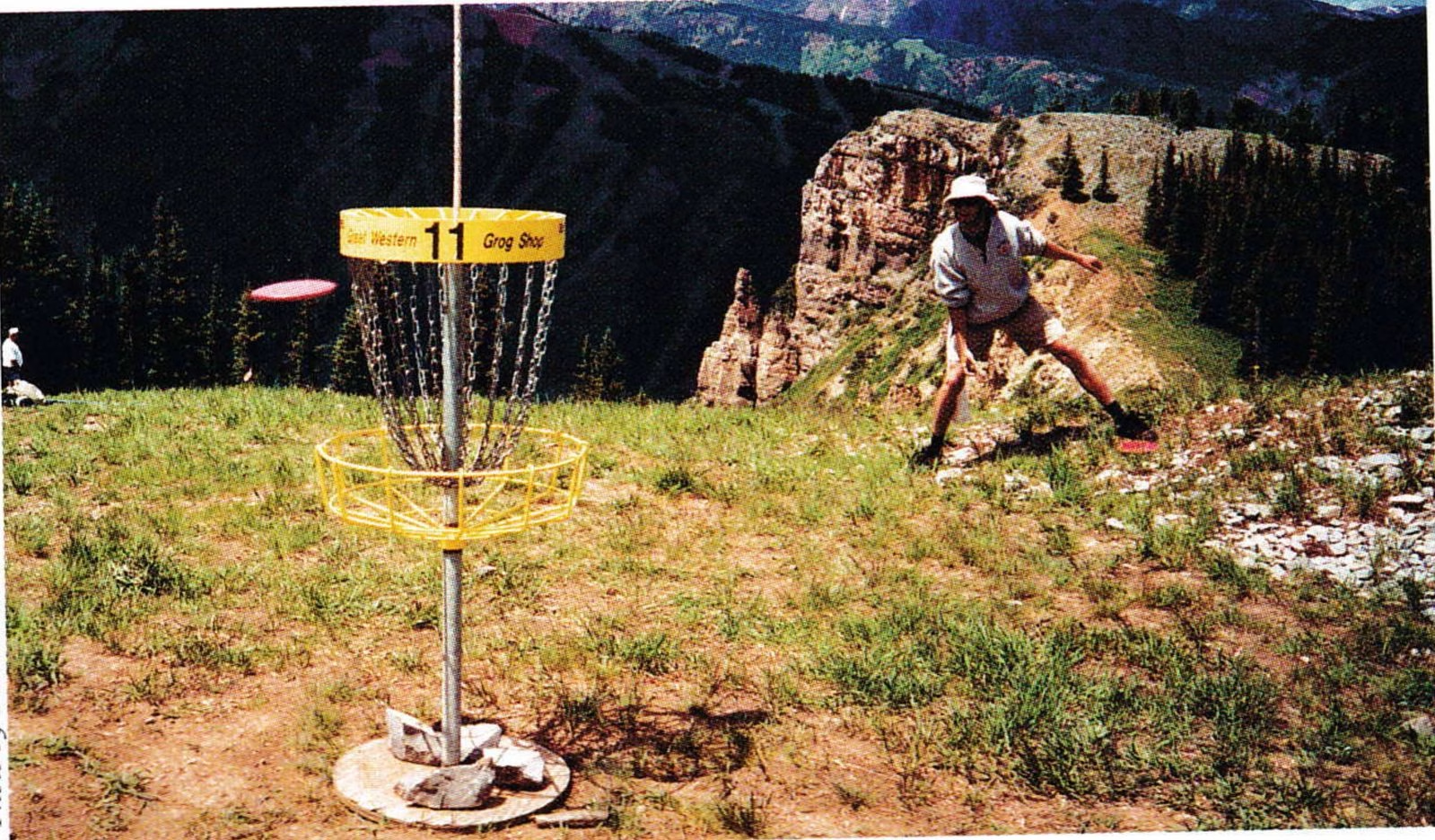
Photo by Dan Roman
Easy Fit with Ski Areas
Course builders at Snowmass and Ajax found that existing terrain, trees and other features were easily incorporated into the course configurations without the need for modification—a discovery made at practically all resorts that have added the activity. At both locations, players are issued free course maps and scorecards, and holes are between 200 and 600 feet long. In Snowmass’ case, some would argue that the change in vertical over the entire 18 holes makes the course more difficult than its par 54 would suggest.
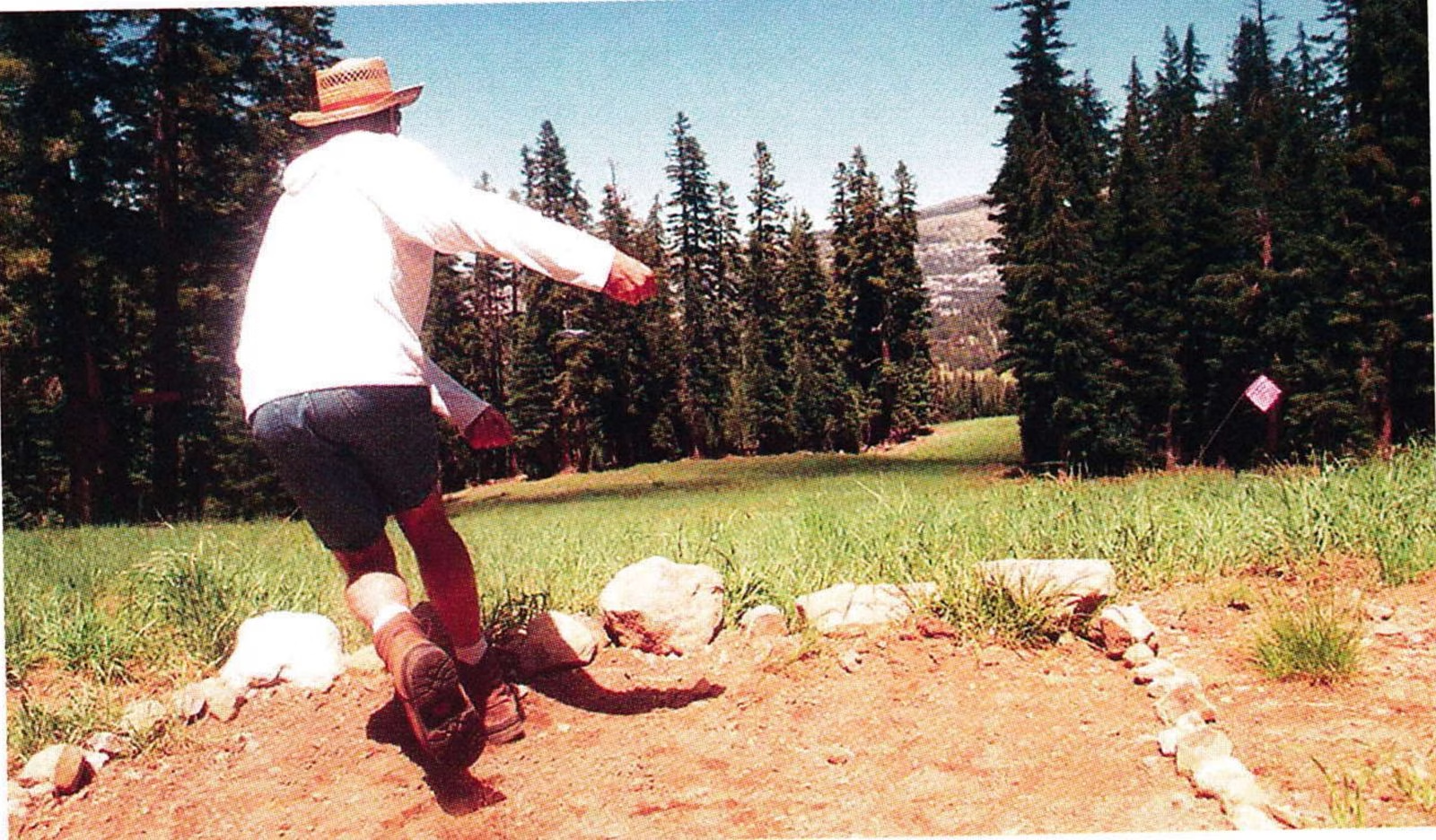
Some other ski areas with courses include Vail, Beaver Creek, Breckenridge, Copper Mountain and Silver Creek, Colo.; Sipapu Ski and Summer Resort, N.M.; Grand Targhee, Wyo. and Snowshoe Mountain, W.V. The Sipapu course, which is walkable from the base, was opened in summer of 1997 and has hosted groups from as far away as Pennsylvania. During tournaments (two or three a summer), Sipapu’s 240-bed accommodation base sells out.
In fact, management at Sipapu is considering putting in one or two more courses and making one of them a year-round course. “It’ll work pretty much anywhere, but course design is the real factor in how frequently the course is played,” says Bruce Bolander, Sipapu’s general manager. “It’s the perfect thing to put on for folks in the summertime.” And winter? “We think it’s a year-round (business) generator,” says Bolander, who points out the winter course will not interfere with skiers or snowboarders.
Bolander says that from the time the course first opens—about May 1—there is traffic on it every day right through the summer. There is no charge to play and guests generally stay for the day or the entire weekend and frequent the pro shop, where discs are rented and sold. The shop also carries goods related to disc golf and other frisbee sports.

Bolander points out that ski areas are supremely qualified for hosting disc golf courses. Number one, he says, they already have tailor-made fairways in tree-lined slopes. Number two, the slopes keep the players away from picnickers, which can be a problem in municipal parks where most of the country’s disc golf courses are located. And that leads to number three: “Mountain courses are unique and that draws people away from crowded municipal parks. The weather is cool, the scenery is tremendous.”
Jungle Golf an Attraction
“[Disc golf] is definitely growing, and just as challenging and frustrating as regular golf,” says Joey Woltemath, a summer ranger at Snowmass. “There are some serious disc golfers out there who come use the course, and it’s a stop on the Kiss the Sky Tournament schedule,” she adds, referring to a summer tour supported by the PDGA. The tour also visits Aspen Mountain, where Roman says visiting pros call mountain disc golf “jungle golf” because they’re used to playing on manicured urban or suburban courses in city and county parks.
Though Mackenzie feels installing the course has been a “worthwhile endeavor,” he says the first season had its share of minor setbacks. “That first summer we gave discs away to people who wanted to play, and we lost, probably, 100 discs.” (Discs wholesale for around $4 each.) While Mackenzie does not see the activity as a sole justification for opening lifts in summer, he does view it as an added amenity to increase traffic at a resort where summer lift activity already exists. “Along with mountain bikers, hikers and sightseers,” he says, “any addition to the amenities is a small investment. It pays for itself. . . . If we didn’t have [disc golf], I know some people wouldn’t show up.”
Building a Course Inexpensively
Kirkwood Mountain Resort in California, which has been adding to a nascent summer program over the last few years, opened an 18-hole disc golf course in July of 1999 that was constructed entirely with volunteer labor. The course was an instant hit with area players and was dubbed “Discwood.”
After selling managers on the idea, Joan Wehan, summer marketing director, walked the location in late April with a Tahoe-based enthusiast and course designer. In May, they settled on a design, which was drawn free of charge, and in June—after all the snow had melted—employees dug pole anchors and poured concrete bases. (For less permanent pin placements, moveable pole holes are also available from dealers.)
The PDGA-approved course starts at the parking lot and climbs a total of 1,000 vertical feet. There is currently no lift access during the summer and playing the course is clearly “a good aerobic workout,” according to Wehan, for the estimated 200 guests a day who play the course on weekends. All of the holes range in length from 250 to 625 feet, except one. The Number 16 is a 1,200-foot par 5, known as the longest in the West.
The resort spent a total of $5,400 on pole holes, $200 on concrete, $200 on signs for the course and $100 on locks to make sure the pole holes stay anchored to their bases. (Some city parks have reported the pole holes walking off on their own from time to time.) Donated railroad ties were used to create tee boxes. This year, Kirkwood will add 18 more pin placements (bases) so the pole holes can be moved when the resort wants to alter the course.
Like the Colorado resorts, Kirkwood does not charge a fee for using the course, but the base-area Adventure Center sells a variety of discs, all costing less than $10 apiece. Last summer they sold 1,500 of them. —J.G.