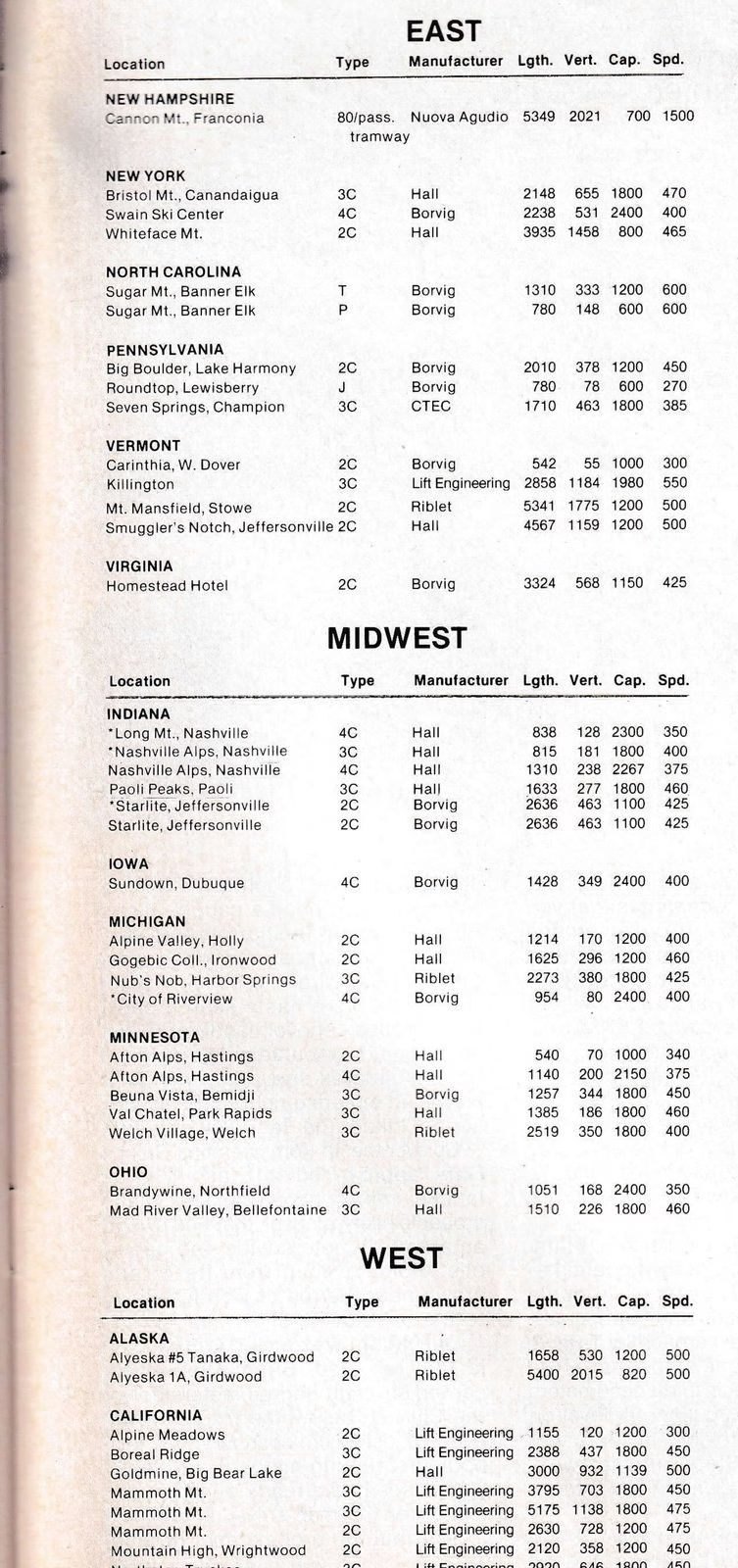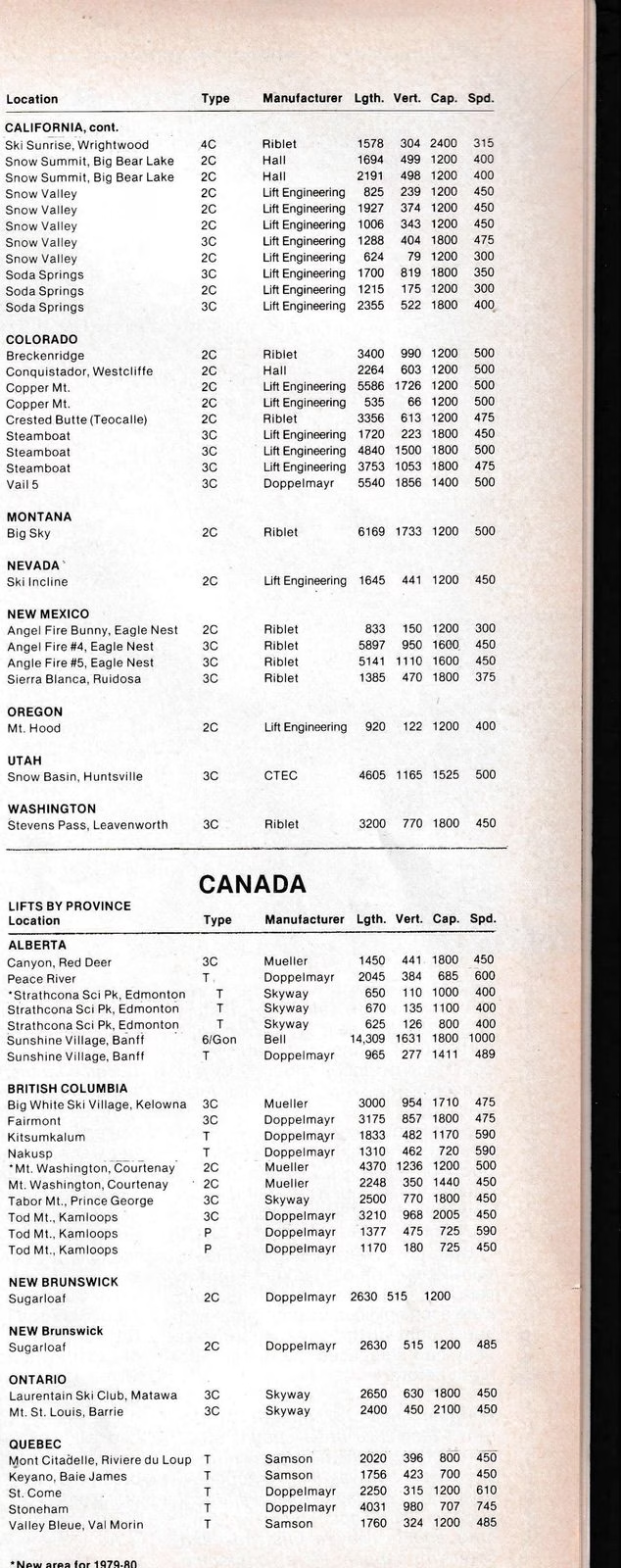
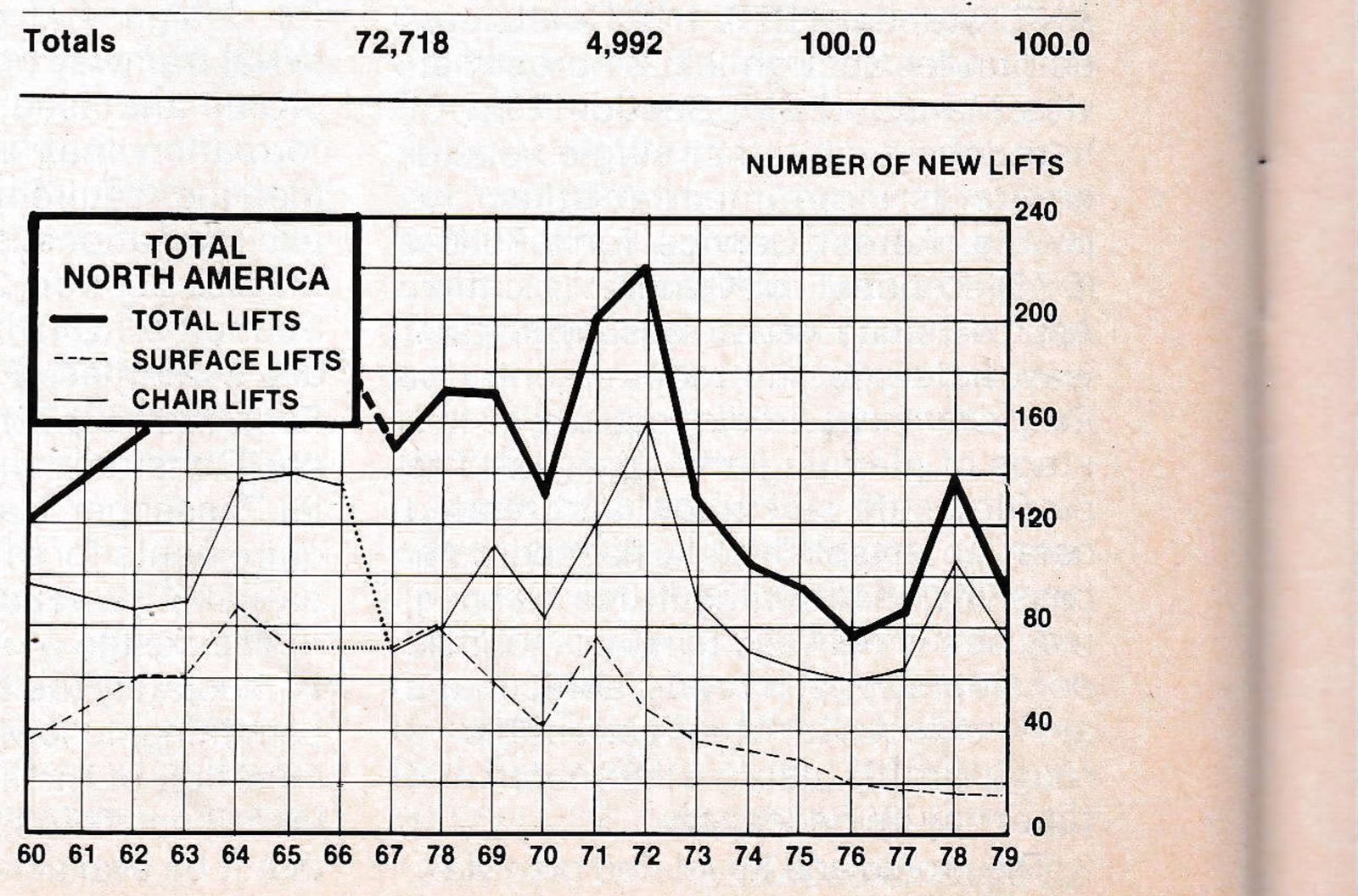
There are strong indications that last year’s sharp upturn in new lift construction might have been sustained in 1979 had it not been for the energy shortage. By and large the industry had enjoyed an excellent snow year, and it was for the second year running. There were plenty of expansion plans afoot, and many lift contracts signed.
Then came the gasoline lines, the uncertainty, the leadership vacuum. And with it came deferments of plans and many cancellations. It was not so much the gas lines themselves, or the predictions of recession, or the rising interest rates, but rather the nagging doubts about the whole economy that made areas reconsider their expansion plans.
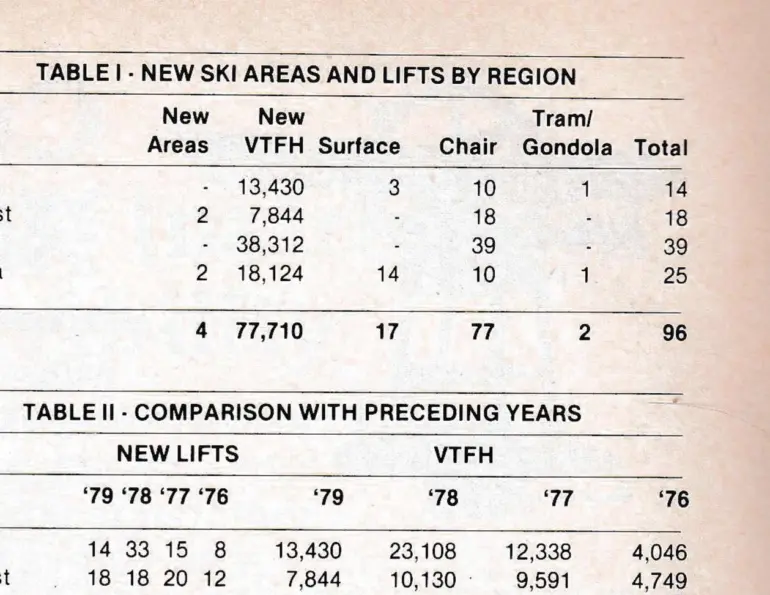
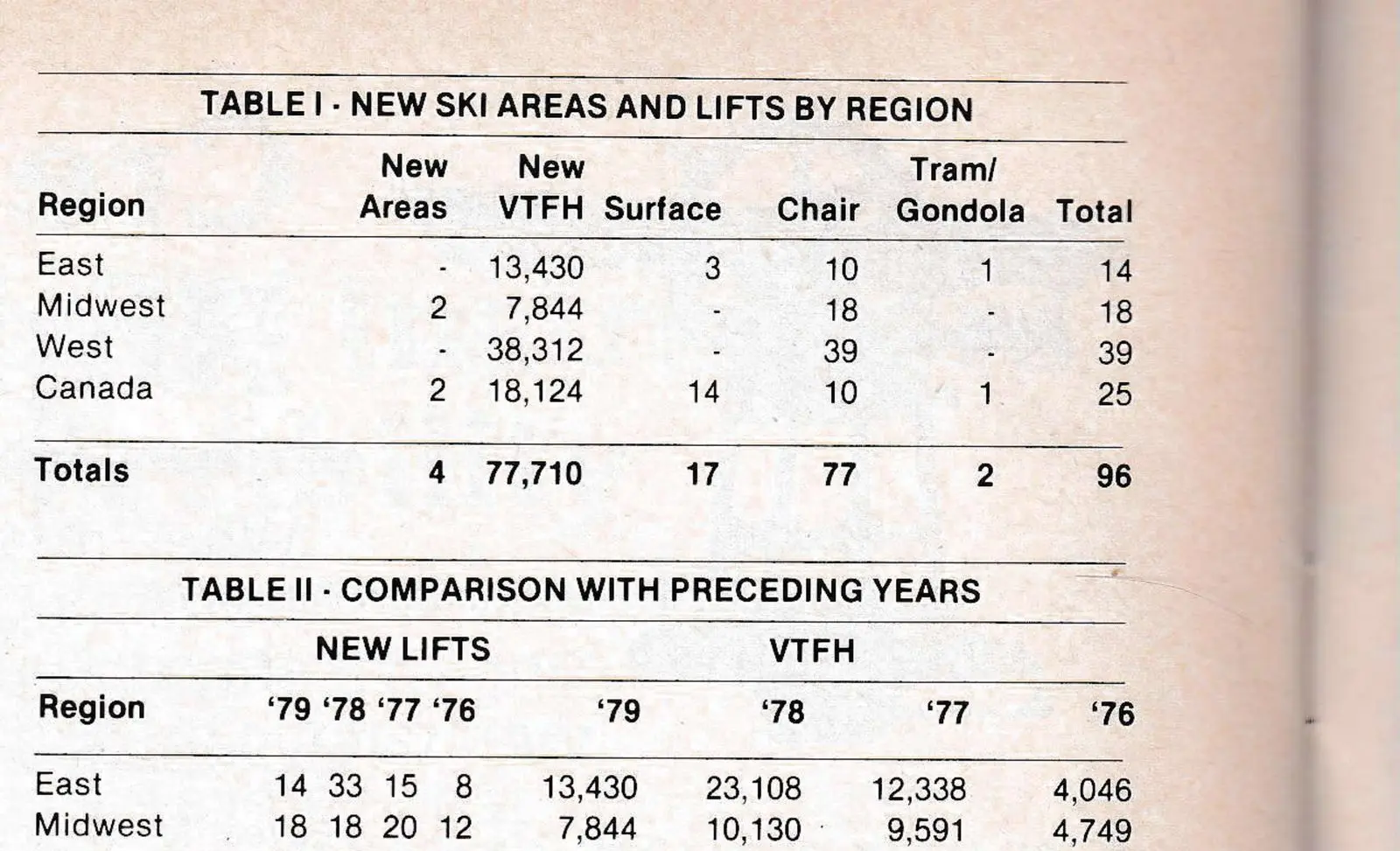
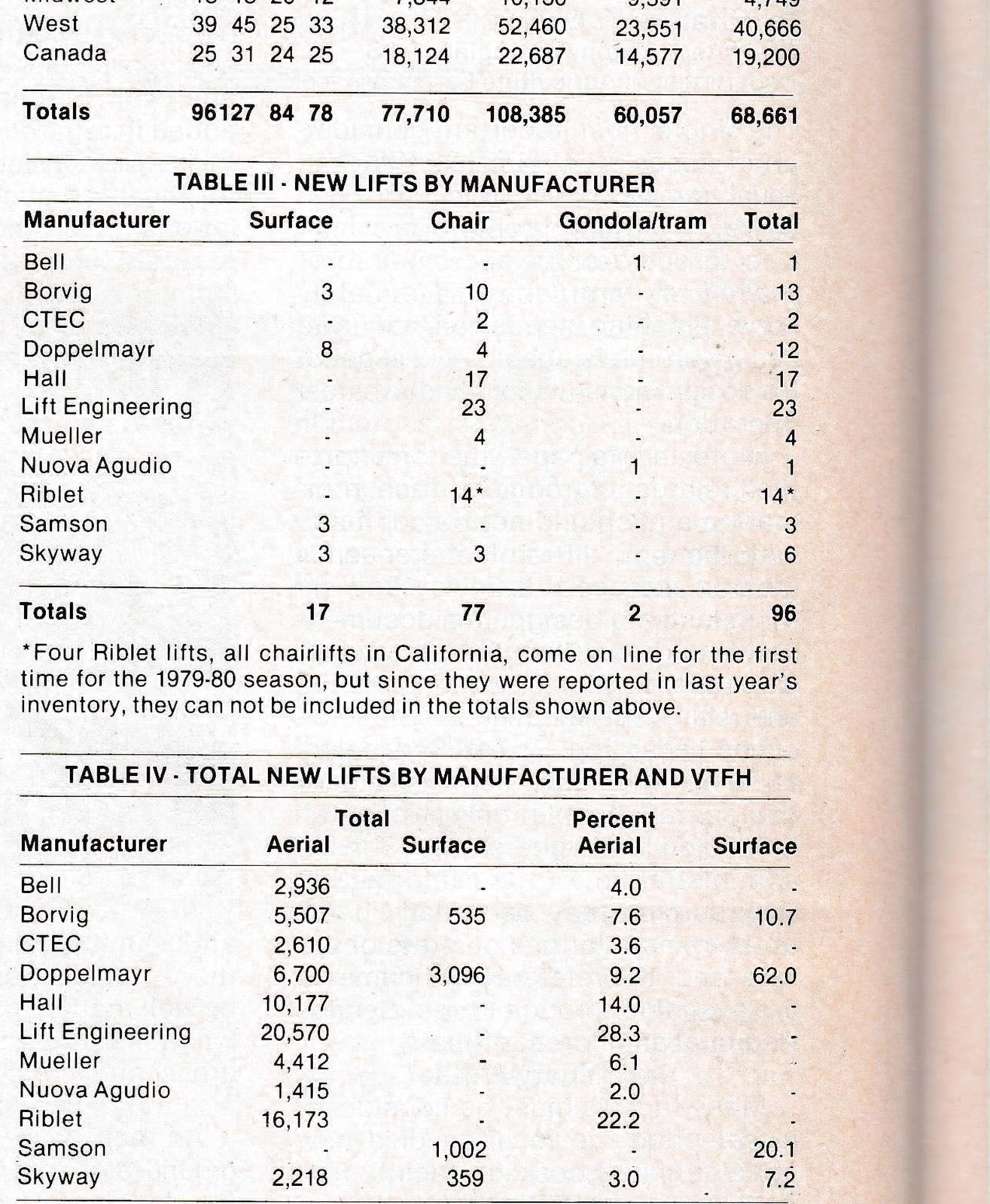
Even with this, however, the 1979 new lift construction index is remarkably strong: down from 1978 to be sure, but well ahead of 1975, 1976 and 1977. The total new lifts for North America was 96—down 25 percent from last year’s 127—and the total new capacity in VTFH was down 29 percent. (VTFH stands for vertical transport feet per hour—the number of skiers who can be carried 1,000 feet vertically in one hour—and is the more sensitive measure of investment.)
We record six new ski areas, but this is understated, since some new areas are starting off with used and relocated lifts, and thus do not show up in these tables.
And this leads to the point that much of the lift work being done—and quite a bit of the overall increase in capacity—is in the form of relocations and re-engineered lifts. Many of these have been very major undertakings from a cost and engineering point view.
For instance, Mueller completely rebuilt an old Roebling lift at Mt. Baldy, CA; Hall engineered three relocations (one a double chair at Crystal Mt., WA) and two major modifications; Lift Engineering installed eight new terminals on seven double chairs; Stadeli rebuilt a Waterville Valley chair; and so forth. The lift companies were all increasingly engaged in this sort of work, and there is no way to show this statistically in our tables of new lifts.
The aerial tram/gondola column has two entries this year—the first time since the Garaventa tram at Grouse Mt. in 1976. There is Nuova Agudio’s new bicable reversible tramway at Cannon Mt., N.H., and the Bell gondola at Sunshine Village, Alberta, which was described in November SAM.

Geographically, the west continued its pace-setting ways, with 40 percent of all new lifts accounting for 49 percent of the new VTFH. Last year the west had 35 percent of the new lifts and 48 percent of the new VTFH. Canada also was strong, with 26 percent of new lifts, representing 23 percent of new capacity.
One of the brightest single spots was Indiana, which accounted for no less than six new chairlifts, including Borvig’s double double (shown as two lifts in the tables) at the new Starlite area in Jeffersonville. Another was Hall’s quad and triple at equally new Nashville Alps. It all adds up to Indiana having a half of all the new ski areas in North America, and one-third of all new lifts in the midwest.
The big lifts were again in evidence. There were six—the same number as last year—in the 2,000-and-up VTFH category, though this year there was nothing to match the over-3,000 of last year’s Sun Valley lifts. But big lifts aside, the trend towards shorter quads and triples continues, with 53 percent of all new chairs in these categories.
By and large, new lift construction in 1979 represented a positive growth picture, especially when viewed against the background of uncertainty that underlay the whole economic picture.
Lifts by State