Actually, Sugar Hills has been a year-round resort since its third year in business. It opened as a ski hill (now with two chairlifts and three T-bars) in 1962. Two years later, a large lodge was opened a few miles away on the shore of Sugar Lake for the summer trade. In 1974, Mrs. Catherine Skinner organized the crafts program to augment the resort’s summer program.
A sailing school, new in 1979, also has succeeded, with graduates having the option of going on to keel-boat training on Lake Superior after learning the basics on small boats on Sugar Lake.
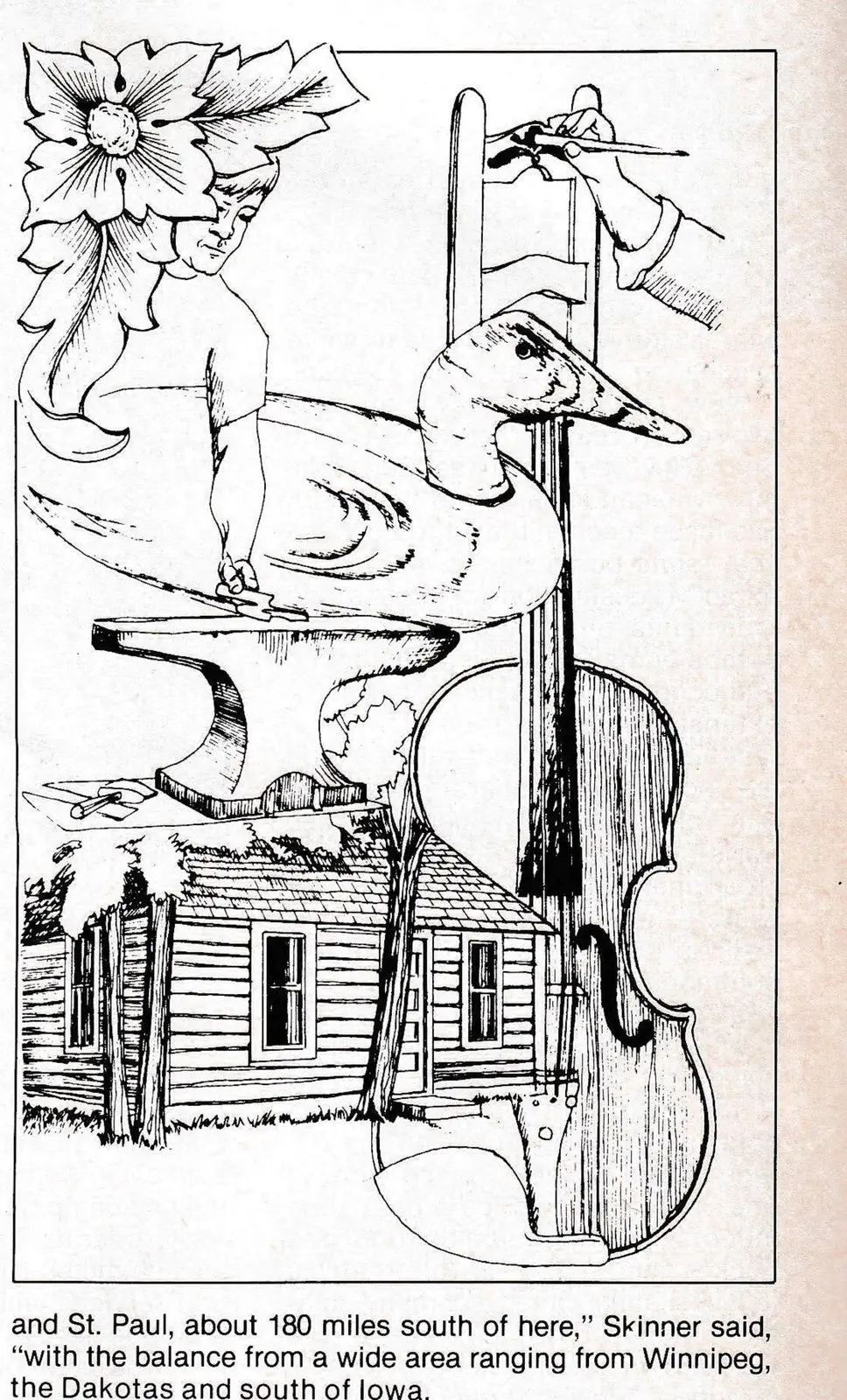
It has been the crafts program, though, that has attracted widespread attention to Sugar Hills, named for all the sugar maples in the area. In the summer of ’79, some 27 crafts programs were offered, most of them one-week long, ranging from American Indian beading to violin construction. One of the most popular was decoy duck carving taught by Dick Wetzel who works for the Minnesota Forestry Department and carves for a hobby. He made four one-day appearances at Sugar Hills last summer.
Would a craft program work at other ski areas? Skinner said that depended on the nature of the resort, and its customers, and the availability of artisans.
“Few costs are involved for us,” he said. “We don’t pay the crafts people. We give them free lodging, and they in turn get most of the lesson and sales income for the handiwork they sell. We keep about 20 per cent, so I figure we break even.”
Lodge guests and day visitors watch the crafts people at work, gratis, or they can take private or group lessons, as in ski school. Group lessons cost $4.50 an hour for adults, $2.50 for teens and $1.50 for children 12 and under. Registered guests get a 20 per cent lesson discount. Lessons and demonstrations are given in a 70-year-old log cabin adjacent to the big lodge.
Many of the crafts are characteristic of the region, in northcentral Minnesota near Grand Rapids, which was Judy Garland’s home town. These include bead and leather work, Norwegian rosmaling, which is decorative hand painting, usually on wood, scrimshaw, lapidary, blacksmithing, woven wall hangings and Swedish needlework. Artisans are mostly from Minnesota, North Dakota and Canada. The crafts program runs from the third week in June until Labor Day.

The main lodge accommodates 300 guests. Some come for the crafts, others for the recreational mix which includes golf, fishing, sailing and tennis.
“About 60 per cent of our guests are from Minneapolis and St. Paul, about 180 miles south of here,” Skinner said, “with the balance from a wide area ranging from Winnipeg, the Dakotas and south of Iowa.
“There’s no question that the crafts program is an important drawing card. I’d estimate that our gross income from guests who come primarily for the crafts is about $30,000.
“We promote and advertise the crafts, along with our other features, in Twin City newspapers and with brochures that we mail to all craft stores in the upper midwest. But word of mouth is probably what has made it a success.”
The theme is “vacation with your craft,” and the “reputable, skilled craftsmen and women” who make up the faculty are featured by name and description in all promotions.