

Out in the Valley of the Jolly White Giants, where big resorts are king, there lives a little ski area which has few of the bright, expensive toys offered by its famous neighbors. The poor little ski area has no gondolas, no condominiums, no night spots, no fancy lodges, not even a place for a visitor to lay his sleepy head. Horror of horrors, it doesn’t even have a fat budget for advertising and promotions.
So how did this poor little ski area ever compile 210,000 skier days last season in competition with some of the hottest ski areas in the hottest market in the country?
At Loveland Basin, truly one of the “little guys” amid Colorado’s giants, there is no single answer. Rather the success story comes from a variety of directions, not the least of which is a dogged determination to find out what works and stick with it.
To put Loveland Basin’s achievement in perspective, it should be noted that attendance has increased by 55,000 in two seasons. And that two years ago, when almost the entire West was shriveling under a near-ruinous drought, all Loveland did was boost its attendance by 25 percent—a 63 percent improvement over the Colorado norm for 1976-77.
To further illustrate the meaningfulness of Loveland’s 210,000 skiers, we can compare with several much larger resort-oriented areas which invest heavily in national advertising and promotion. Last season Aspen Highlands had 216,000 skier days, Aspen Buttermilk 225,000, Purgatory 218,000, Crested Butte 207,000 and Telluride 88,752.
It would be simple to suggest that Loveland’s relative standing is the result solely of its proximity to the Denver metropolitan area, just 56 miles distant by interstate highway. But that would be too simple and would ignore two basic facts.
As recently as 1973-74, with the same location and highway conditions, Loveland had only 138,000 skier days. And to achieve its present numbers it must endure intensive competition from such aggressive nearby resorts as Breckenridge, Winter Park, Keystone and Copper Mountain—all of which vie for the same Denver market.
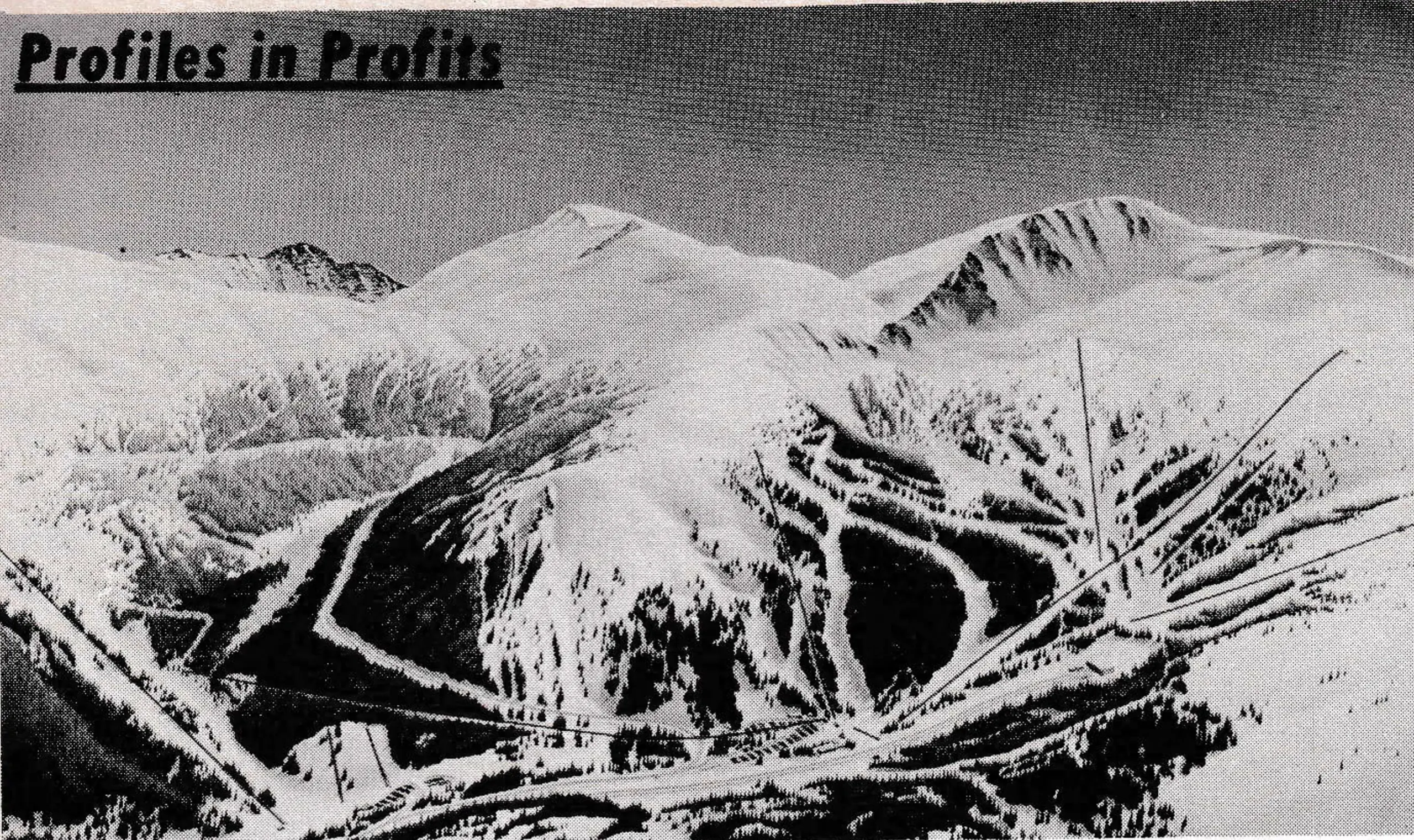
To fully understand Loveland’s operation a brief description of the plant is in order. Located in a large snow bowl beneath the brow of the Continental Divide, it has a base elevation of 10,800 feet and a vertical of 1,430—a very marginal descent in a state where 2,000 feet is considered a short ride.
Actually, there are two Lovelands. The Basin is the larger expanse with a seven-day-a-week operation and all the major support facilities. Loveland Valley, a mile away and separated by U.S. Highway 6 over Loveland Pass, is utilized for overflow on weekends and holidays. There is a double chair and Poma at the Valley, four double chairs and a Poma at the Basin and a connecting horizontal transportation chair between the two as a balance for parking facilities. A day lodge complex houses a restaurant, rathskellar, ski school, patrol, nursery and offices. There is a ski shop in an adjacent structure.
None of this elevates Loveland out of the realm of the ordinary. Superficially, it differs little from a lot of other ski areas in size. But when it comes to attracting and serving its guests, the difference becomes readily apparent.
Perhaps the big thing which sets Loveland apart is snowmaking. Lest you think that statement absurd in an era in which hundreds of ski areas have some form of snowmaking, you might try recalling how many of them have snowmaking at a base elevation of 10,800 feet. With this elevation and an average snowfall of 275 inches, Loveland already rates as deep snow country. It receives more than ample snowfall and keeps it much longer than its less lofty neighbors.
While snow supplementation isn’t at all needed in the main, it does play a key role in extending what is one of the nation’s longest seasons—more than 190 days. And it is at the beginning of this long season that snowmaking pays its grandest dividend: without it, the area seldom could open until mid-November; with it, it has opened as early as October 10.
It was after missing the Thanksgiving season in 1966 that Loveland officials decided to put in that first 2,000 linear feet of pipes. Now the total is up to 15,000—including an additional 5,500 installed just last year.
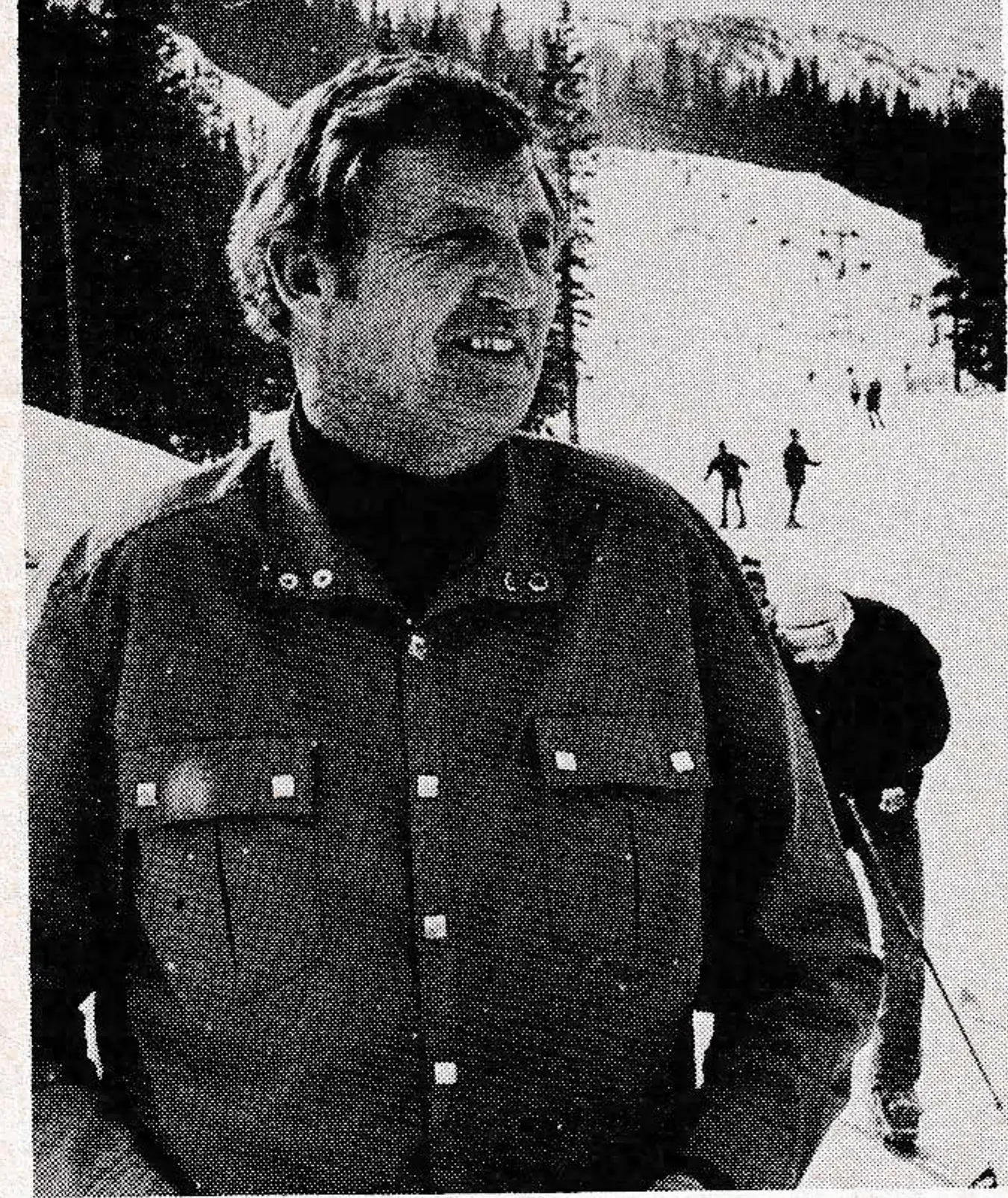
The beauty of all this is that it permits Loveland a considerable jump on its competitors in the heated competition for the Denver market. “It is during this early season that the enthusiastic skiers are most eager to get going,” explains Otto Werlin, the genial six-foot, seven-inch stork of a man who has directed the area’s fortunes for the past 14 years. “We want to be there when the people want us.”
Not only does this give Loveland a healthy extension of its prime season, but it annually provides massive media and word-of-mouth exposure, disproportionate to its position in the market. Each year front-page photos in both major newspapers herald the opening of the Colorado ski season at Loveland, and television cameras grind away with yards of film coverage.
“We know it is very important in the Denver market to get a jump on everyone else,” Werlin continues. “We are able to get an exposure to people who might not normally come here but who now might come back after seeing what we have to offer.”
Apart from this early snow, the two assets Loveland markets most heavily are proximity and flexibility. Being only an hour’s drive from Denver, the area can stress half-day ticket programs which appeal to professional people or others who can’t get their usual early start for the mountains. One promotion discounts the half-day price from $7 to $6 in keeping with the area’s general practice of underselling its more illustrious neighbors. Next season Loveland’s $10 full-day ticket price will be $2 less than its immediate competitors. Additionally it offers a $5 special for children. School and recreation groups which might get short shrift from larger areas are courted heavily by Loveland.
This flexibility which comes from being small also enables Marketing Director Harry Benson to work the Denver market from top to bottom. He attends small shows, communicates frequently with ski shops and spends a great deal of time in person-to-person contact. He also is able to act on spur-of-the-moment promotional schemes by clubs or radio stations. The effort pays off at the ticket window.
Three years ago when the Eisenhower Tunnel was completed through the Divide adjacent to the ski area, negating the often perilous drive over Loveland Pass to reach the larger resorts of Vail, Keystone, Breckenridge and Copper, Loveland had a quick comeback. The area came up with a billboard and bumper sticker campaign tied to the slogan, “The Tunnel Is a Big Bore.” The slogan not only produced chuckles, but considerable awareness and, subsequently, business.
Loveland management believes that getting skiers is only half the battle. The other is keeping them making them want to return. In this regard, Werlin is a stickler for making visitors feel they receive their money’s worth. He is keenly aware of pricing, so Loveland is the home of the 65-cent hotdog and the 80-cent hamburger and the 10-cent cup of coffee. “We want to keep prices down,” he says.” We’re sensitive in deciding the price of even a glass of milk. We serve lunch for McDonald’s prices.”
Werlin’s strategy seems to prove that a ski area can think small in several ways and still be big at the cash register where it counts.