

The ski industry is coming of age and as a result of its new-found maturity, many ski resort operators are taking a look at themselves, their organizations, and their personnel, in an attempt to find out where they have been, where they are at the present time, and where they should be going.
In order to assess their current position, managers shojld understand that, generally speaking, any enterprise passes through four stages:
- Birth and Creativity; when the company struggles for survival, is characterized by unusual camaraderie, and is run by a charismatic and dynamic leader (not necessarily a businessman).
- Growth and Power; when standardized procedures replace informality and randomness, administrators replace the entrepreneurs, and systems approaches replace spontaneity.
- Adolescence and Decay; when in failing to adapt to change, leaders motives become suspect, they are slow in responding to opportunity, they resort to cosmetic repairs to their threatened image, they “do it like we used to do it”, and the resort fails to keep up with the rest of the industry.
- Death or Rebirth; when a resort either adapts to change, cycles its ownership/management, or dies.
More often than not it is extremely difficult for the owner/manager to identify what phase of the cycle he is in. In any case, the identification and understanding of various management styles can be a first step in adapting a resort to the needs of the immediate and the future situation. The intent of this article is to describe some of those management styles which are prevalent in (but not unique to) the ski industry. Not all of them are specific unto themselves—in fact, one organization may exhibit a number of individual styles depending upon the levels of management involved.
The objective of management is “to get things done” through people. There are two basic ways to get things done: 1) You can command, demand, order, force, bully, dominate, intimidate, pressure, coerce, threaten, etc.; or, 2) You can explain the objectives in the situation, ask for inputs, seek agreement, use persuasion, display understanding, exercise influence, employ leadership; motivate, and create the desire on the part of other people to participate, cooperate and achieve.
At this point, we will not ask “Which management style is yours?”, but rather we’ll describe some of the more unusual management techniques which we have witnessed over the past several years:
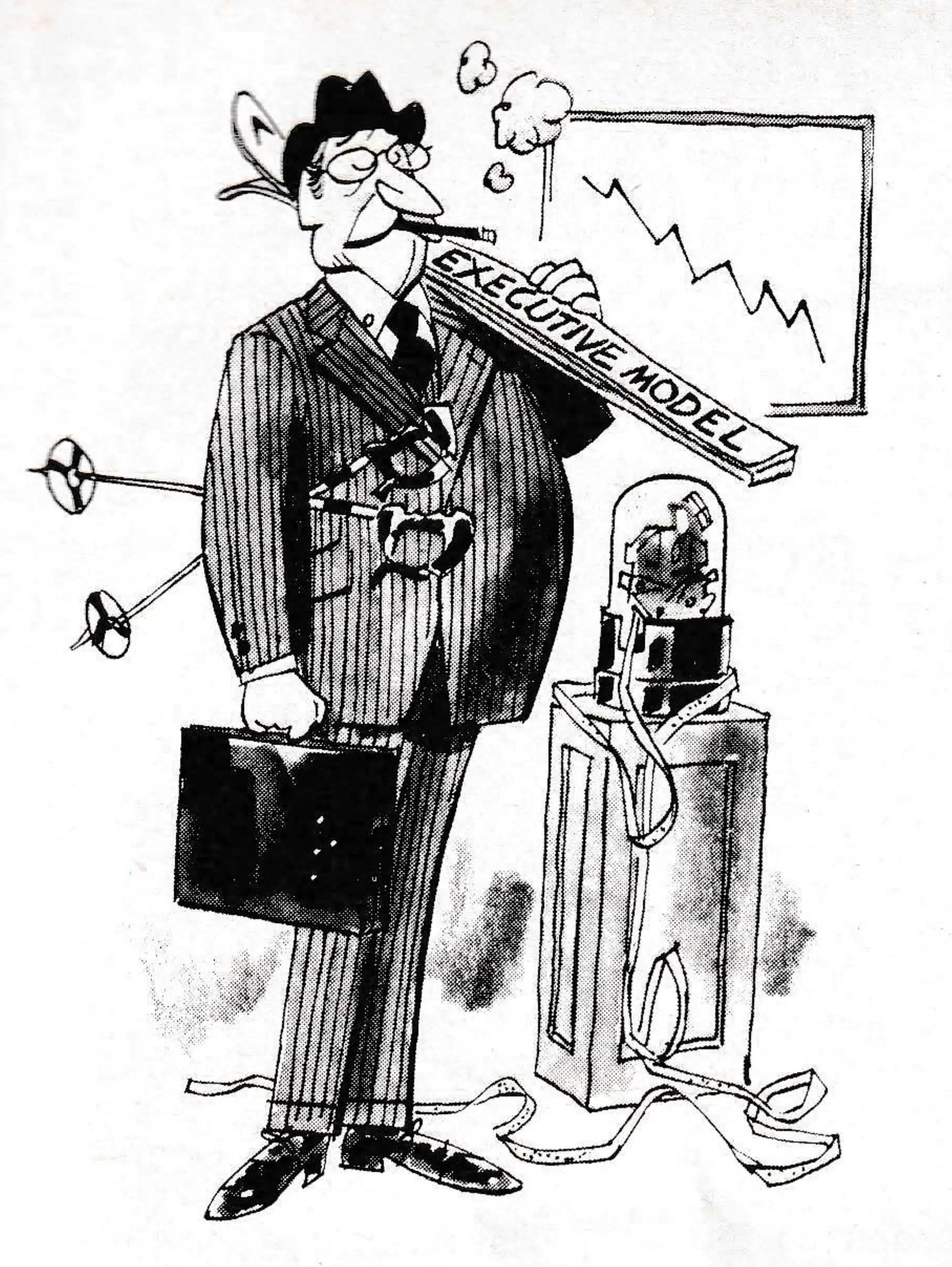
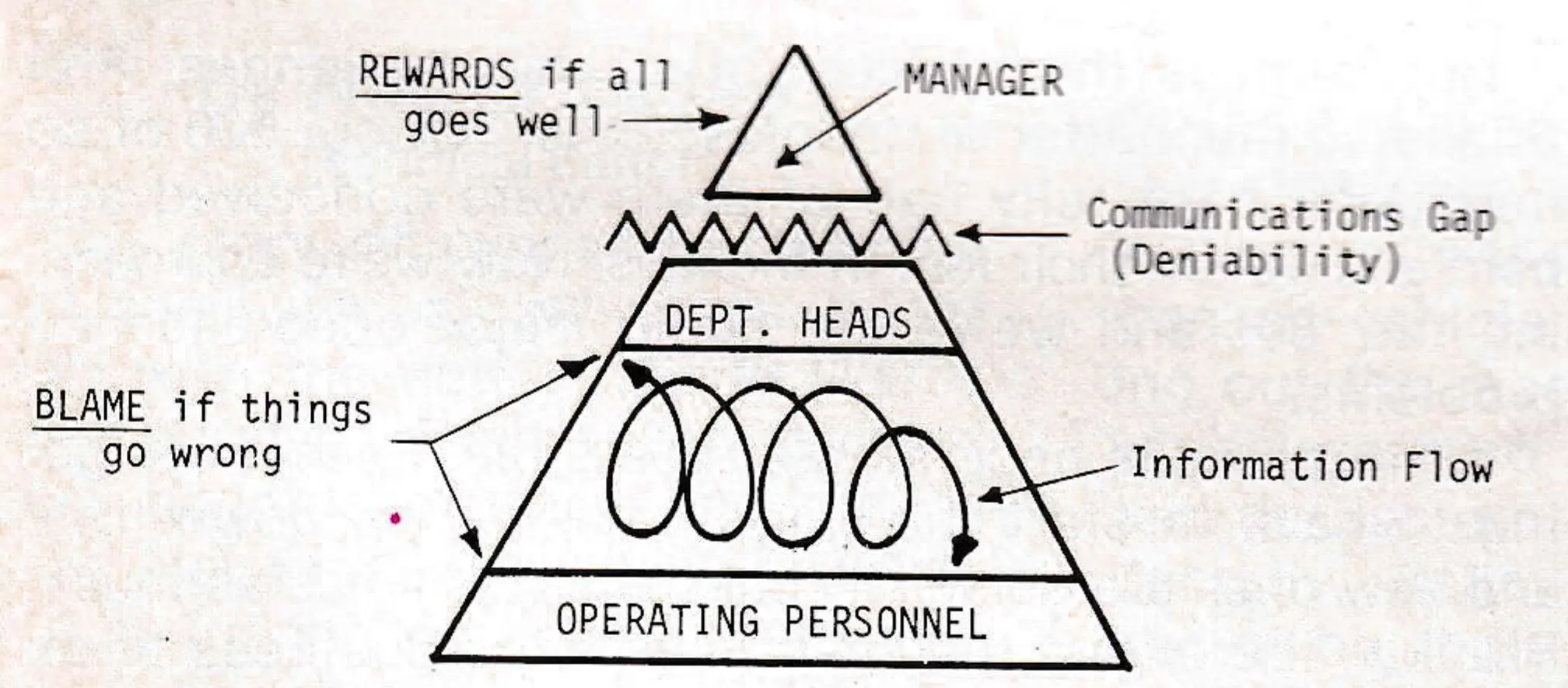
1. Front Office, or Brooks Brothers, Three-piece Suit, Button-down Shirt, Ivy League approach. This manager is too aloof and self-important to work with an operating team. He is usually from “outside” the industry—many times from the financial world. He gives almost total autonomy to his department heads because, in actuality knowing very little about ski resort management, he perceives that he must retain “deniability” for making poor decisions. This generally results in a lack of proper information flow between the executive/decision making level and the operating department heads. Often, when information is prepared for top management it is “tailored” in favor of the reporting department.
This manager generally demands results but loses control, which in turn can generate a proliferation of game playing at all levels, a superfluity of memo writing, and an obfuscation of the critical issues. This manager needs a link with his operating divisions, someone who knows “the firing line” and can bridge the communications gap without being a corporate fink on one hand, or a departmental lobbyist on the other.
The corporate organization looks something like this:
2. The “Fire Warden” or Situation Manager. This manager never plans or looks ahead far enough. To him, master planning is knowing what he’s going to do next month or perhaps next season. He waits until a situation erupts, then spends his time in a flurry of seemingly critical activity putting out the brush fire. He seldom achieves critical goals and, in truth, creates many of his own problems. Key employees become disenchanted because they cannot see any light at the end of the tunnel; and they find themselves in problem situations which, if properly planned, could have been put to rest with one good decision. This manager’s motto would appear to be “if you are up to your fanny in alligators, it is difficult to remember that you went out to drain the swamp.”
Without doubt the area has no Standing Operating Procedures manual, and employees are best advised, like Boy Scouts, to “be prepared.” The situation manager is usually under-budgeted and often ends up peddling his real estate to generate a cash flow. In that case he generally sells his best land prematurely, unplanned, and at too low a price.
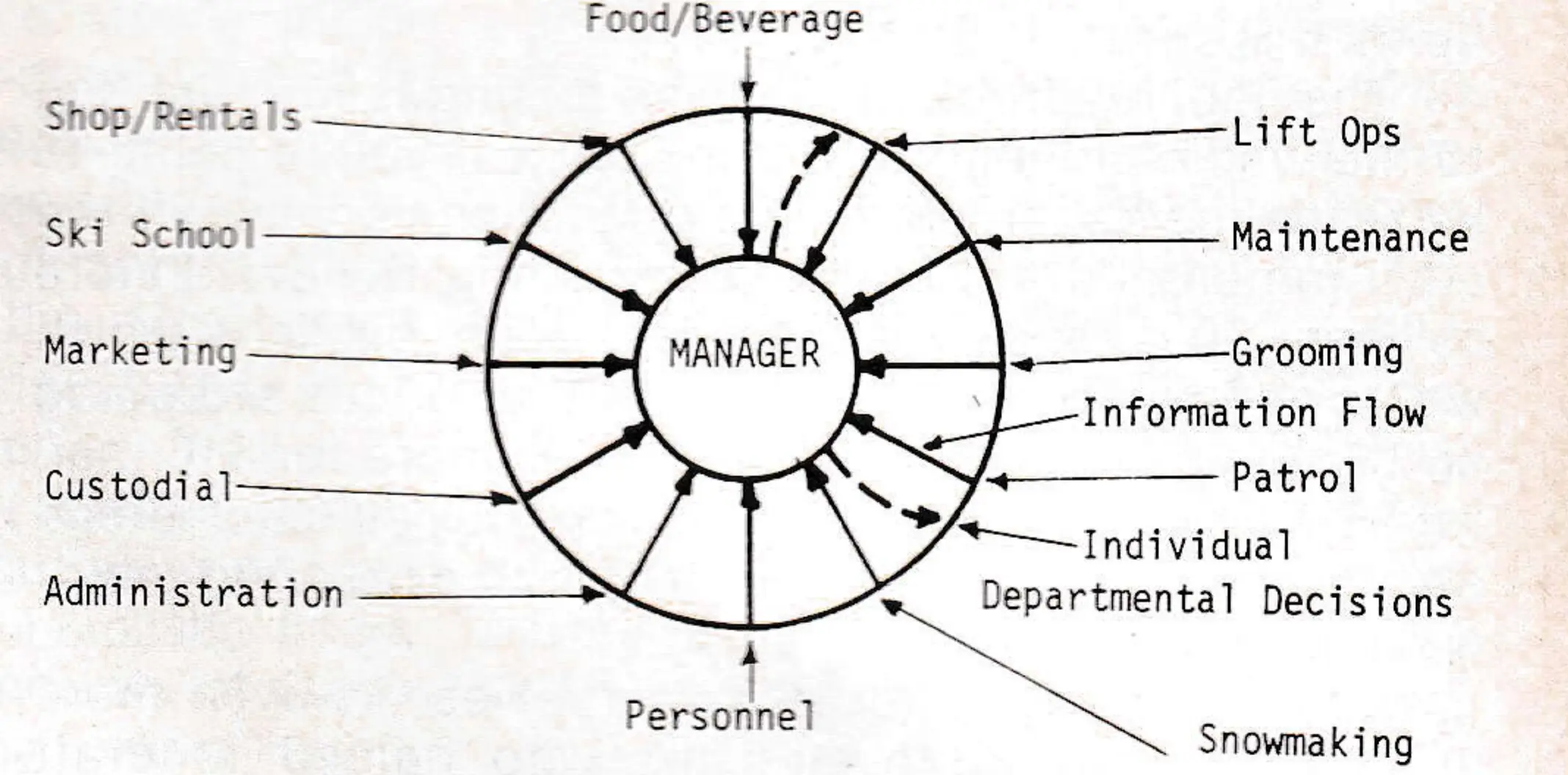
3. Spiderman. This manager keeps his people dispersed from an organizational standpoint, discourages direct contact among department heads, and forces all communication to flow through him. He refuses to give his department heads full responsibility and authority. He is almost pathologically incapable of delegating any aspect of the decision making process. He complains of overwork, appears to be a super manager on the surface, but in actuality stifles creativity. The management/operational process becomes burdensome, slow, and inefficient. Group meetings involving all key personnel at one time are seldom held. Spiderman, more often than not, attempts to make the area an extension of his own personality.
His organization looks something like this:
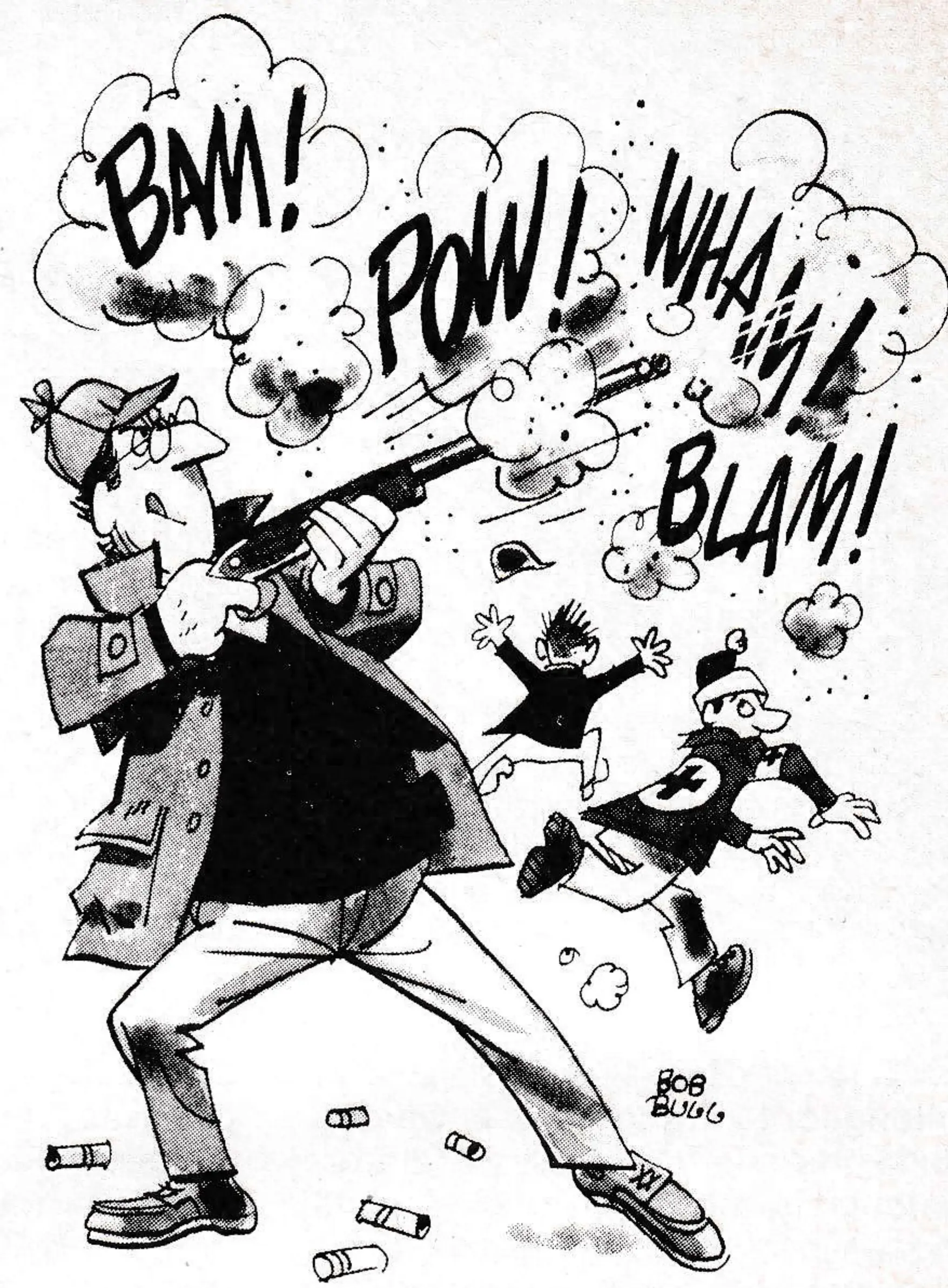
4. The Remote Manager or Shotgun Artist. This management style is characterized by the top decision making executive who spends only part of his time on the job. He doesn’t really know what is happening and has very little understanding of the background of situations that arise, but when on the job leaps over-aggressively into the fray (creating a great show) and demands quick answers and resolution to extremely complex situations. In essence, he gets out his big management shotgun, pulls the trigger, and runs out to see if he hit any targets. More often than not, the person who gets “shot down” in this management style is the well-meaning employee who stands up to say something important and gets caught in the crossfire.
If you’re part of the management team under an individual like this, it is best not to expose yourself when he’s around unless it is to feed his ego and dazzle him with your apparent brilliance. These managers rely on quick judgments and superficial friendship, and usually end up promoting or supporting the wrong individuals on the team. If you, as a middle level employee, are a good poker player you can do well in a situation like this, but remember to leave town before the truth ultimately comes to the surface.

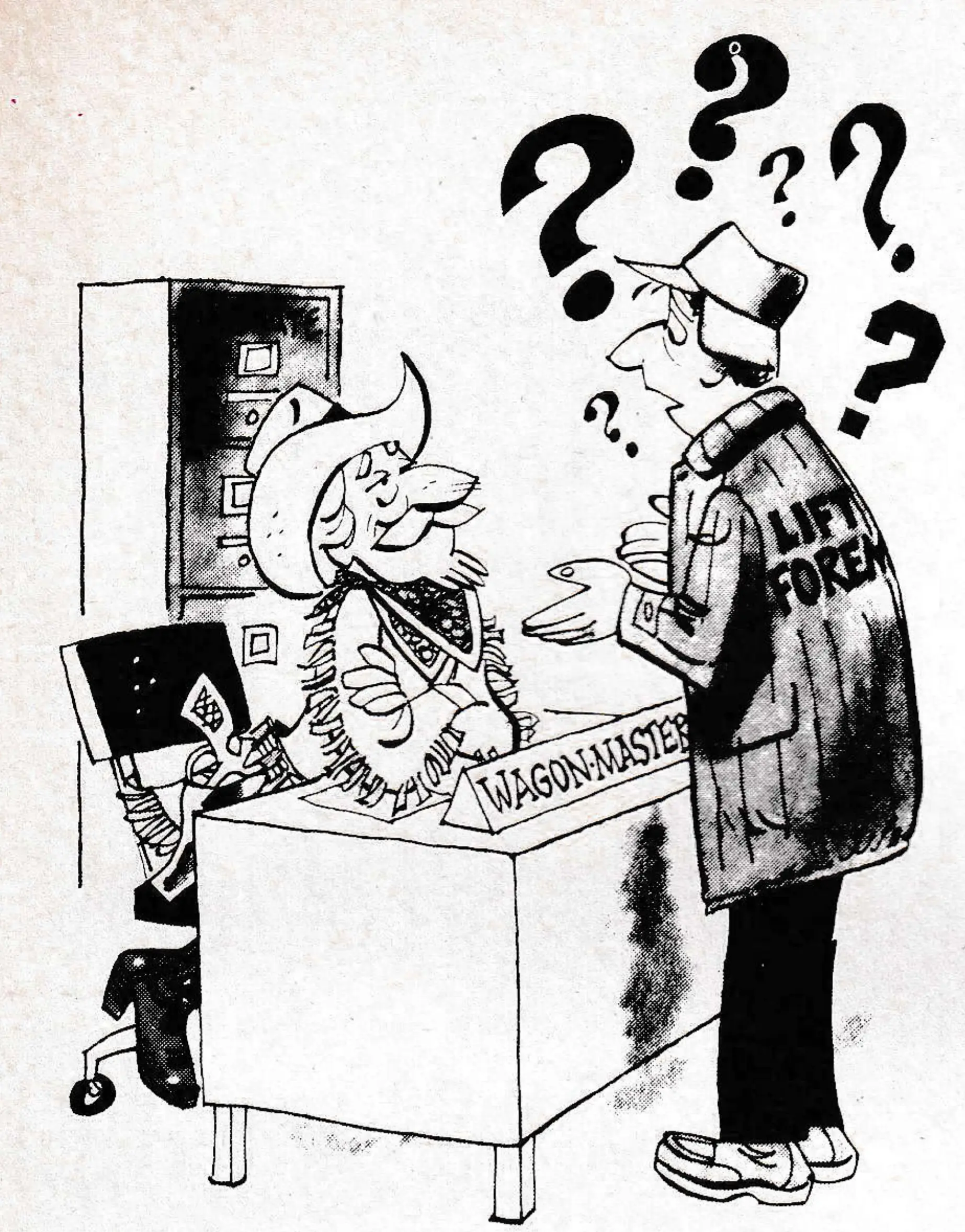
5. The Grand Old Wagon Master. This manager practices management by confusion. It is the clever gambit indeed and looks good on the surface. He professes a friendly, open door policy but never lets anyone know what the goals and objectives of management really are. He keeps his employees on a day-to-day minimal task basis, so that they “don’t really know where the wagon train is going or where the Indians are coming from.”
This manager never reveals all of the facts about a given situation, so that department heads have only ill-defined goals and obscure procedures to work with. Their only resolution is to humbly ask assistance of their boss who, strangely enough, seems to have the ready answer (since in truth he has withheld the critical element of information).
The Wagon Master is something like Spiderman, but different in the respect that he does not force his key team members to work through him. It is just that they have to in order to get anything done. The result is obviously a very high level of frustration, especially with good department heads who are geared to identifiable budgets, controls and productivity.
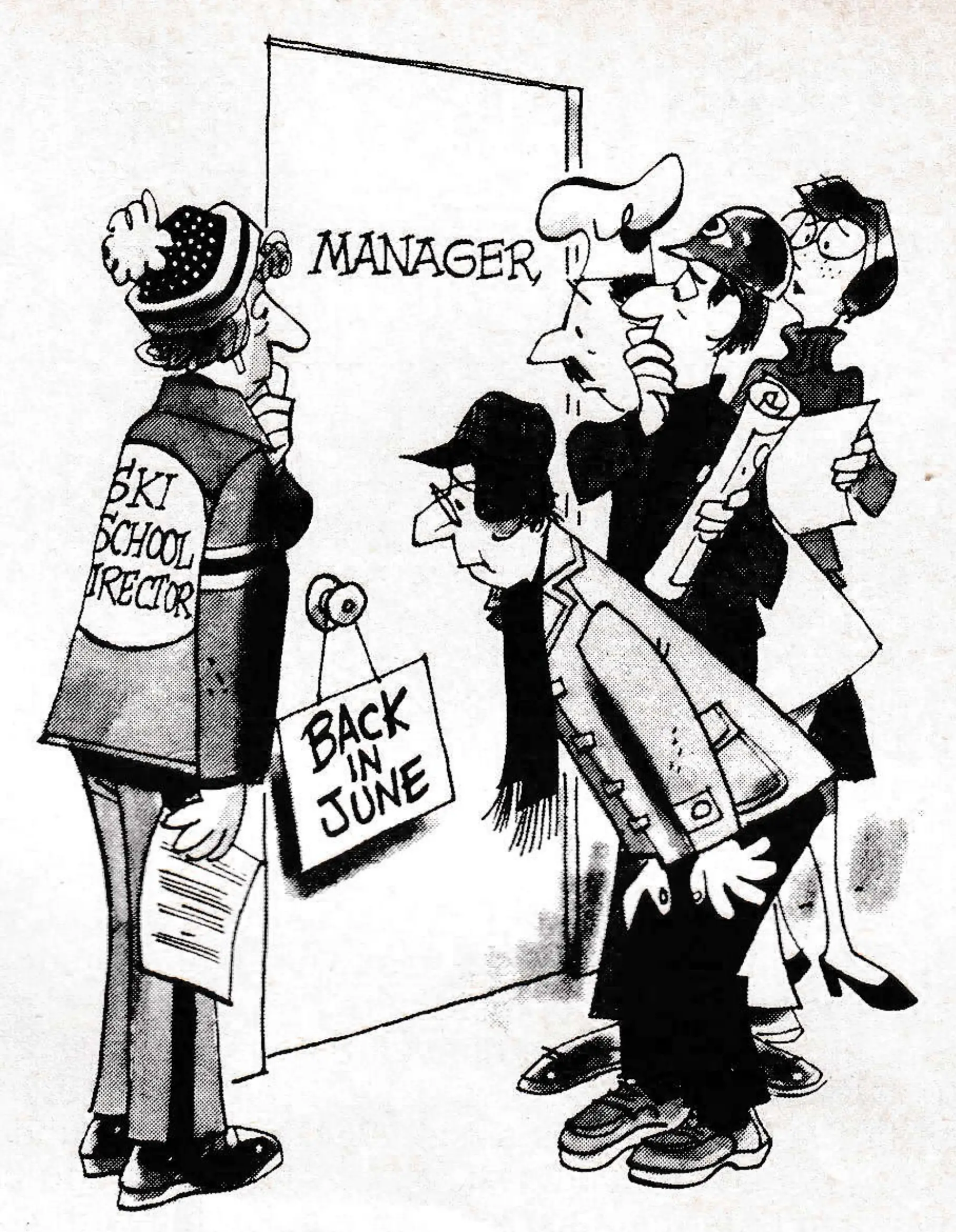
6. “The Shadow Knows”. This manager is essentially an invisible man. He is never there, or if he is, he leaves all management to department heads, even to the extent of setting corporate policy and being responsible for carrying out that policy. (This same failing applies to boards of directors which are basically honorary.) The end product of this style is usually chaos, with a proliferation of finger pointing and accusations at the end of the year (or six months thereafter) when actual operating and financial results come in. The basic problem here is that the top level individual (or Board of Directors) should establish policy and, if department heads agree to it, the department heads should be responsible for carrying that policy out. If a problem arises, the responsibility can then be identified as one of being either (a) a bad policy to begin with; or (b) an inability to carry out policy. Under no circumstances should a key individual be responsible for both the establishment of and the carrying out of policy — this is generally a “no win” situation for the man at the operating level.
7. The Zoo Keeper. To this manager people are much like animals. His approach is to hire them cheap, make them perform, and if they do, pay them (or feed them a fish) and that’s all. Communications, team spirit, cohesiveness are all meaningless in this situation. This approach used to be called “scientific management” with the objective being to get work done in the cheapest method possible. It apparently evolved during the days of the industrial revolution.
Admittedly, holding down costs is an extremely important aspect of area management today, but ski area employees in this day and age are somewhat different from “the old unemployed farmhand.” They are younger, they are the product of a more affluent society, they are reasonably well educated, they are informed, they are well traveled, and they maintain a high level of mobility. They want more than just dollars; they want to be part of a team that is going someplace, be a member of a meaningful social structure, they seek self-enhancement and they want to contribute and participate. The zoo keeper doesn’t understand this because he’s living 25 years ago.
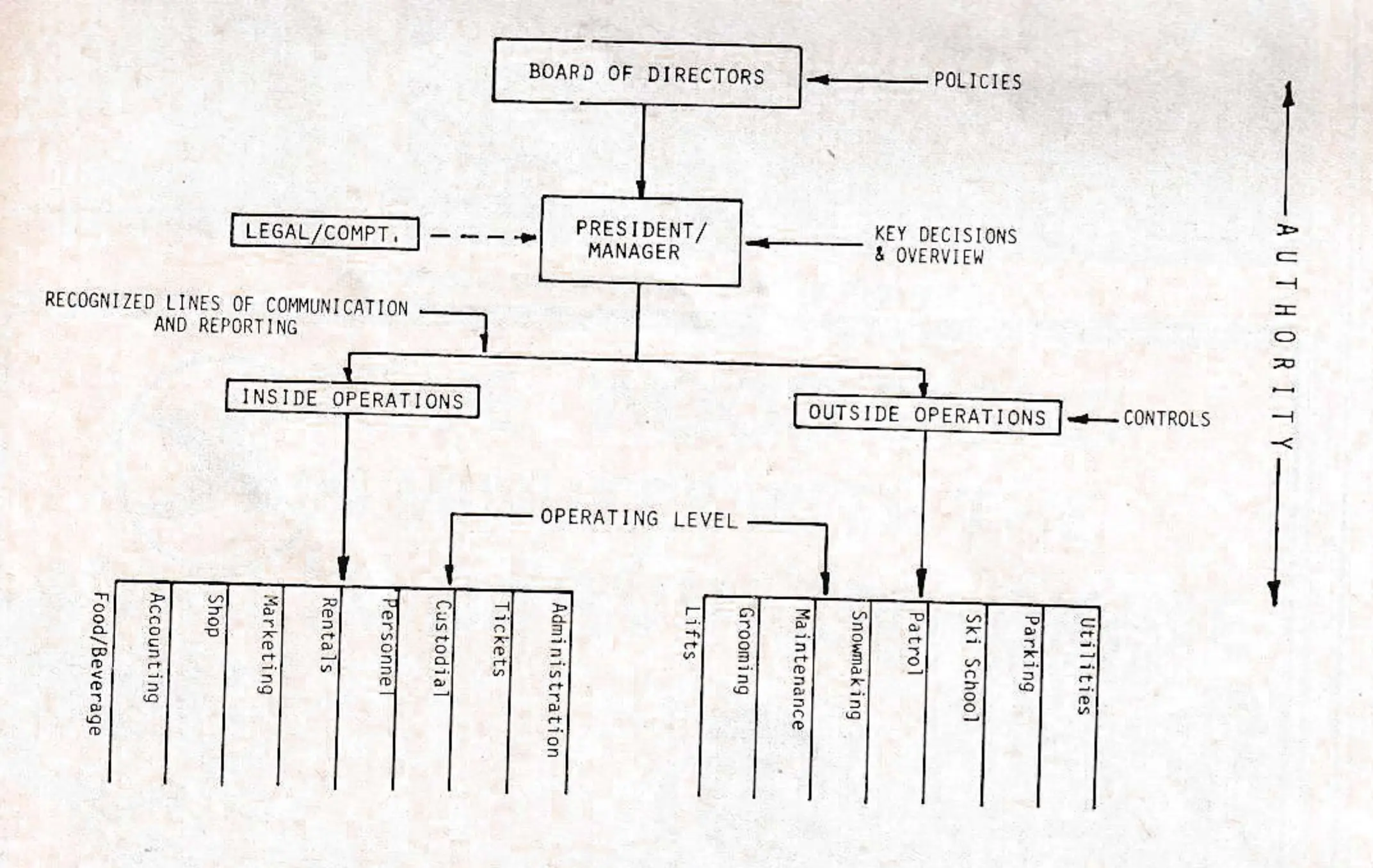
8. Last but not least there is Management By Exception. This management style typified the good manager. He knows his personnel and their capabilities. He shapes his organization around them and not vice versa. He sets up job descriptions, establishes authorities and responsibilities on a balanced basis, and identifies the appropriate reporting and communications format throughout the entire organization. He establishes, with the help of his key employees and department heads, the objectives, the time schedules, the budgets, and the methodologies for measuring results. He gets his information reported on a regular basis along pre-established lines. He reviews the information, equates it to projections, and if the organization seems to be operating efficiently, he does not meddle. This manager does not step in except when a department is not performing according to projections. Then he enters the picture at the operational level in the form of assistance rather than punishing or removing authority from the employee who is responsible.
The competent manager is much like an orchestra leader. He keeps his departments in balance, does not let one preempt the position of another, and always maintains overall corporate goals as the objective, rather than just the performance of one element of the operation. He acts in an “overview” position rather than as a daily participant.
This manager usually gets results, develops a good team and keeps them, and has a highly motivated crew whose positive attitudes rub off on the public—and that is the key to management success.
A prototype of management by exception situation might look like the chart shown.
We hope we haven’t made any of the readership feel uncomfortable; that was not the intent of the article. However, it just may be that some people in the industry can use these words somewhat as a mirror, to see if they get a reflection of their own management style with the thought in mind that managers are leaders and their responsibility is to “show the way.”