
While few Midwest areas opened with the premise of night skiing profitability, many have offered it from their inception. Alpine Valley, Wisc., opened in 1964 with three trails, all equipped with lights. “There are 10 million people within a radius of 110 miles,” says Fred Cimino, general manager of the area. “They don’t mind a two hour drive each way from North Chiago. We couldn’t afford not to have lights for night skiing.”
In recent years, he says night business has been booming because there is a change in philosophy to hedonistic thinking. Young couples with two incomes want to get out and have fun. They say, “I owe it to myself.”
Although the Alpine Valley’s lights usually go on at 5 p.m., night skiing doesn’t officially start until 6 p.m. At 5:30 the 12 chairs stop, the patrol sweeps, the work shift changes and the groomers move out to re-surface all the slopes. Meanwhile, the skiers arrive and start the evening at one of the area’s three bars, two restaurants or get rooms in the 132-room lodge.
“I would guess that 15 percent of our overall lift ticket business is from night skiing,” says Cimino. “But the rest of the business — restaurants, cocktail lounges, and lodge — brings the gross night business up to about 35 percent.”
The cost of operating the 96 lights on Alpine Valley’s eight slopes with 280 feet of vertical drop, is not readily calculated. But each quartz or mercury vapor bulb costs $65 and burns for 10,000 hours or about two years. The electricity bill is about $60,000 for the season, of which about $44,000 is for operating the snowmaking, chairlifts and lights; the rest is for heat, cooking and odds and ends.
Alpine Valley sells over 200,000 tickets in a typical season. Probably one-third of the buyers are on skis for the first time. Many come in buses — day and night.
The essential ingredients for a successful night skiing operation, according to Cimino, are a large population within two hours each way; the availability of entertainment, good dining, a bar and a fireplace; and a management that is conscientious about snowmaking and grooming — snow takes an extra beating at night and the colder temperatures produce more ice and hard conditions.
Thirty miles from Chicago’s Loop is a 150-foot-hill with seven rope tows, snowmaking and lights: Four Lakes. From December through February every night until 10 p.m. cars and buses deposit 400 to 600 skiers for lessons and skiing. During midweek, 85 percent of the area’s business is at night. (Saturdays as many as 3,000 skiers buy tickets and do whatever is possible.)
The bulk of the night skiers come on a five-lesson (one hour), equipment rental and lift ticket deal for $40. Park recreation groups, schools and colleges and corporations like IBM, Amoco and Bell and Howell bring the ski school a gross as high as $100,000 in group business, with another $25,000 in walk-ins.
Four Lakes operates a cafeteria and a very popular bar and restaurant called the Pub. Skiers come in the evening for good steaks, drinking, socializing or watching events like the Super Bowl on a six foot TV screen. The Pub booms most nights until 1 a.m. In the cafeteria, groups can arrange for private buffets before or after the evening’s skiing, and on Tuesdays an all-Italian menu is featured for “Spaghetti Night.”
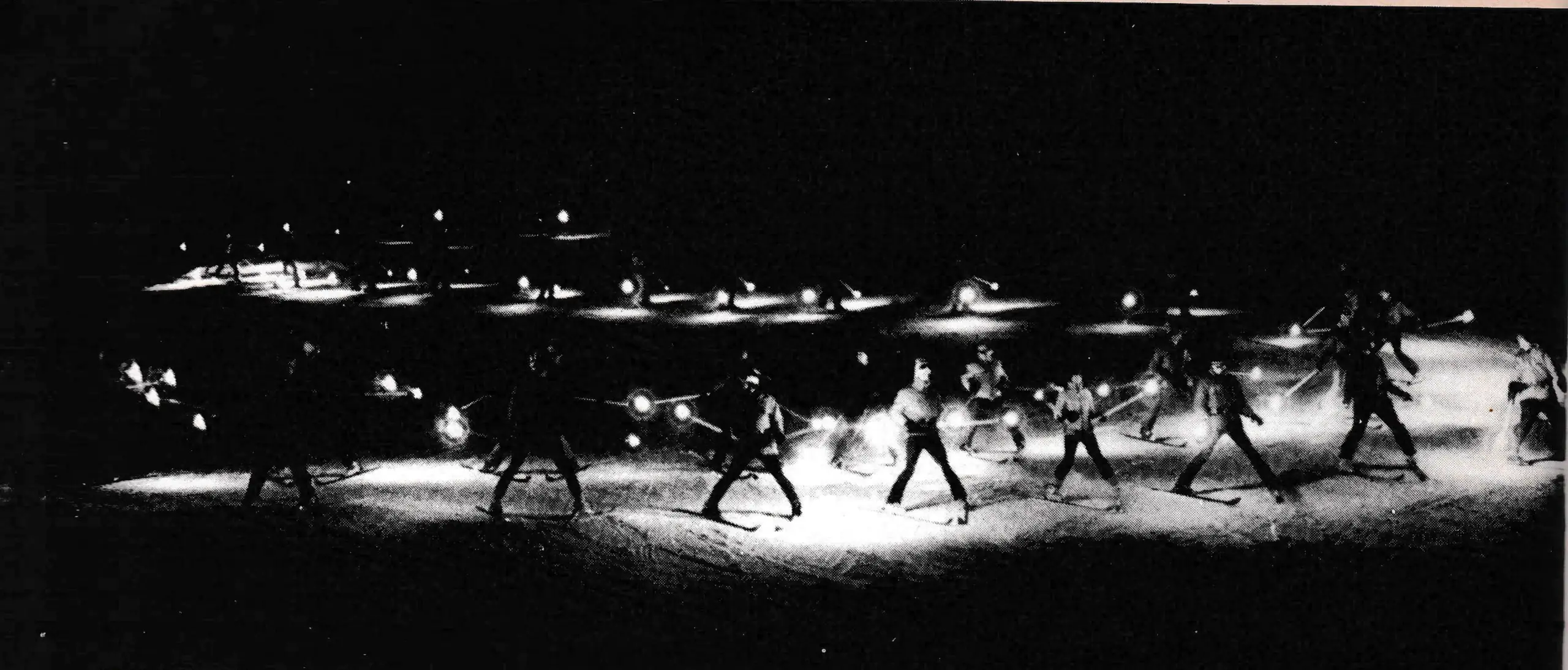
Outside, two shifts of workers make snow and groom vigorously to maintain a ballroom snow surface. At night 40 500-watt wide angle quartz bulbs produce an almost sunny glow, except for the green and pink snow tones.
If this is hedonism, it’s also a breeding ground for more serious skiing endeavors elsewhere. Although there is still plenty of snow on the ground, business drops dramatically after the first of March. As one ski patrolman said, “I ski here until March. Then, I’m ready for the Rockies.”
Wilmot, Wisc., opened as a ski hill in 1938, but it wasn’t until 1963 that night skiing began in a serious way. Now the area requires three shifts of close to 450 full- and part-time employees to keep things running until 11 p.m. every night.

Sometimes the entire area is groomed three times in 24 hours with eight Tuckers and two Thiokol Hydromasters hauling a battery of grooming tools and accessories. Snowmaking is often continuous.
One reason for this attention is that 60 percent of the area’s skiers come at night — as many as 3,000 skiers on 230 vertical feet. The 24 open slopes have seven chairs, one T-bar and eight ropes. Night becomes day with 240 bulbs blazing.
Wilmot is 45 minutes from Chicago’s Northwest suburbs and one hour from Milwaukee. The area has two bars (open until 1 a.m.), two cafeterias, a snack bar, a pizza counter and a dining room. Add it all together and you come up with Fred Cimino’s formula for a night skiing winner.
One brand new area, Paoli Peaks in Indiana, found itself operating a third shift from midnight to six in the morning on Fridays and Saturdays to accommodate skiers who couldn’t get rentals in the earlier evening sessions. Management did not know what to expect, but the answer came in emphatic fashion on the second night when 434 skiers turned up!
In the Pacific Northwest, night skiing usually breaks some kind of record each year. The four areas in the Snoqualmie Pass — Snoqualmie Summit, Ski Acres, Alpental and Hyak — average 50 percent more skiers at night during midweek than during the daylight hours. The areas are 50 miles from Seattle on six and eight lane freeways that take about one hour to drive. Probably 25 to 30 percent of their overall gross income is from the night skier. Some of the areas have tickets divided into all day, evening from 4 to 10 p.m. and night from 6 to 12 p.m.
Crystal Mountain which is about 70 miles from Seattle has about the same midweek day and night attendance. Only on Friday nights does the area boom with skiers who are up for the weekend.
Multopor and Mt. Hood Meadows are 50 to 60 miles from Portland, but Mt. Hood is experiencing a record year all around, including the night business.
Mission Ridge, 12 miles from Wenatchee, is offering night skiing for the first time this season. The weather has not been too favorable, but the night business looks like it’s paying off.
Mt. Spokane, 40 miles from Spokane, has had many years experience with night skiing. About 30 percent of the gross revenues are from after dark skiing.