Did you know that 51 percent of all ski resort lift tickets in the United States are now sold to people under the age of 24? Or that it took 300 hours to build the U.S. Open Snowboarding Championships halfpipe at Stratton Mountain this March? Or that Heavenly had more than 75 rails in its terrain parks at the height of the season?
Photos by John Stouffer, Rick Wargo, Stu Osborne and Jennifer Rowan
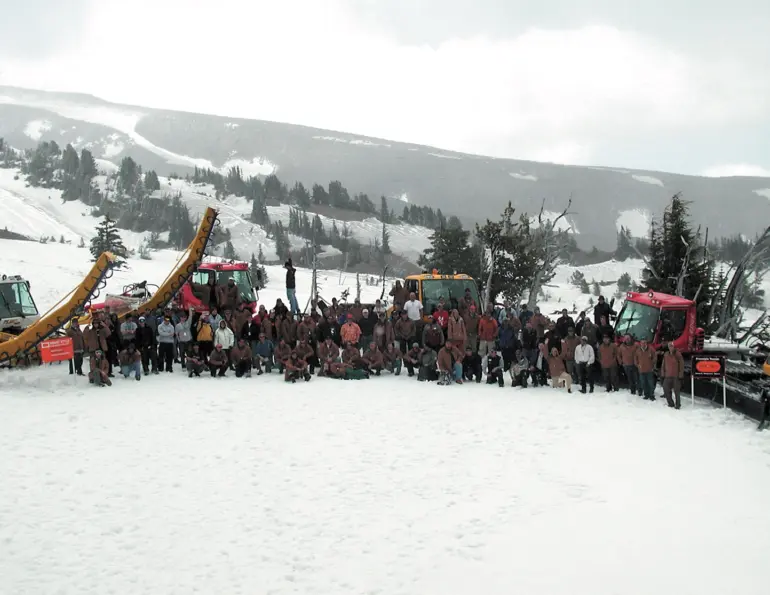
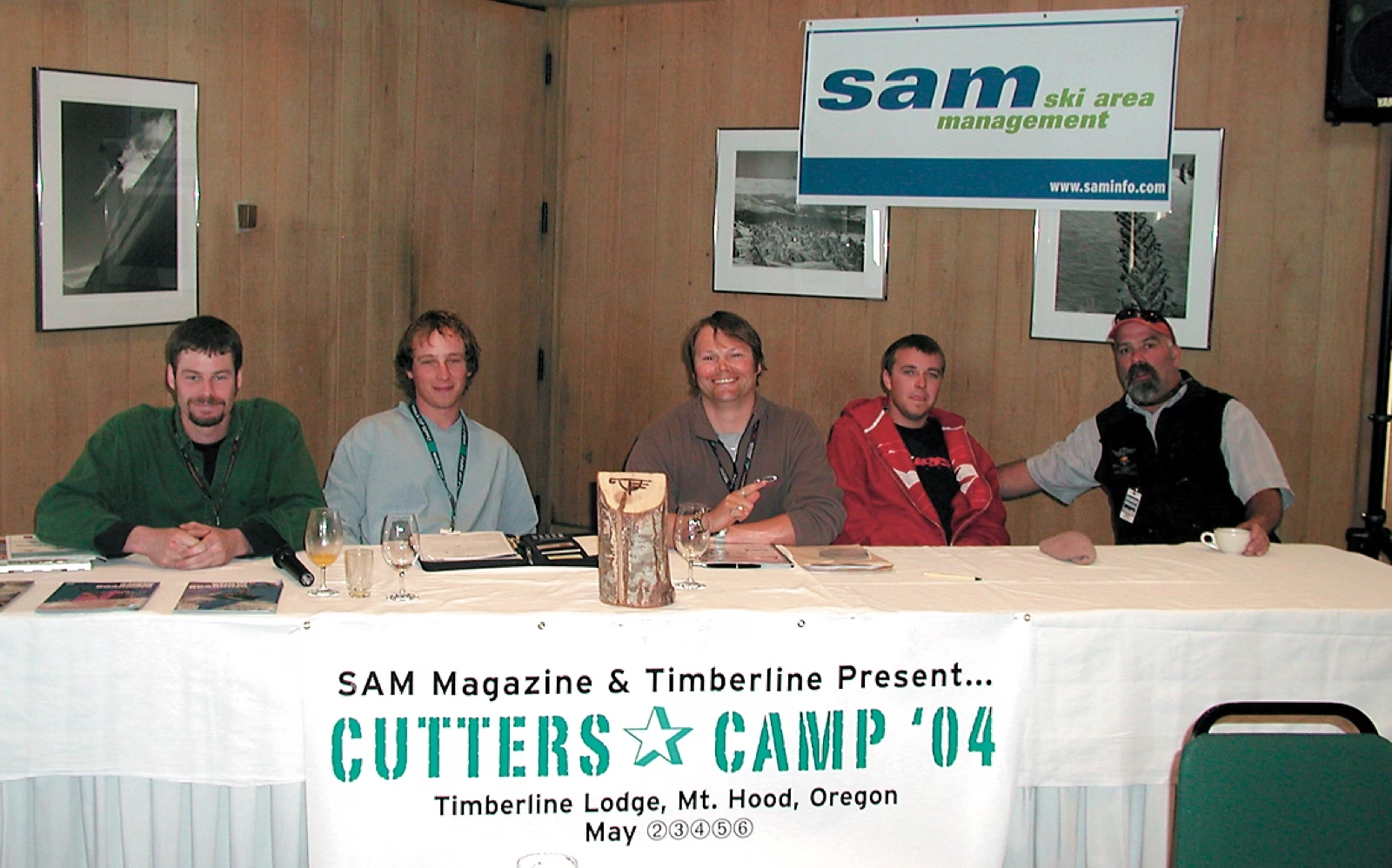
These were just some tidbits of information more than 90 attendees received during the 2004 Cutters Camp, presented by SAM magazine and Timberline Lodge, which was directed at educating resort employees about how to build, operate, and maintain freestyle terrain.
Photos by John Stouffer, Rick Wargo, Stu Osborne and Jennifer Rowan
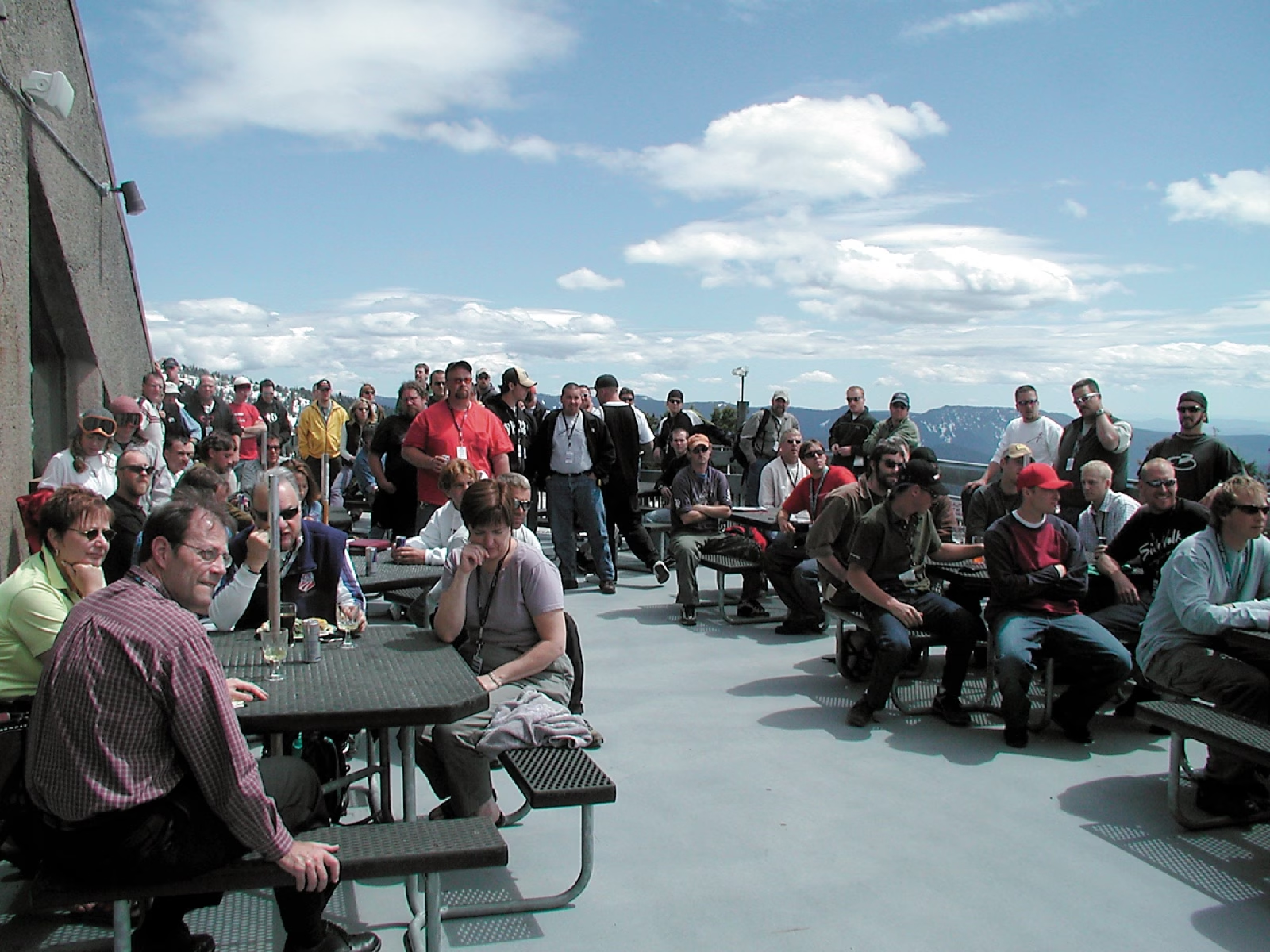
Held at the captivating Timberline Lodge on Mount Hood, Ore., from May 2-6, 2004, the event hosted various resort personnel including park staffs, mountain managers, insurance company representatives, grooming machine reps, and media from across North America. There were resorts represented from California, Colorado, Connecticut, Indiana, Maine, Massachusetts, Michigan, New Hampshire, New York, Ohio, Oregon, Pennsylvania, Wisconsin, Utah and Wyoming, as well as several Canadian ski areas, one from Australia and one from Norway, totaling 50 areas.
Photos by John Stouffer, Rick Wargo, Stu Osborne and Jennifer Rowan
Monday morning kicked off the first day of sessions, both on and off the hill, with an overview of what’s going on in the freestyle terrain across the world.
Photos by John Stouffer, Rick Wargo, Stu Osborne and Jennifer Rowan
John Stouffer, former editorial director at TransWorld Snowboarding Business, presented a review of the most current images of terrain parks around the country to show the audience what other resorts were doing this past season. “It’s important to mix things up, change your features, and to add new ones,” he said. “Kids are excited by the discovery of new elements in your parks and will continue to come back if you offer changes.”
He also stressed to the crowd that they need to be more proactive documenting what’s going on at their own resorts, and then to tell the world about it through more aggressive PR and marketing campaigns.
Photos by John Stouffer, Rick Wargo, Stu Osborne and Jennifer Rowan
Scott Mason, a pro contest judge and the executive director for the International Judging Commission, described how snowboarding has been (and continues to be) heavily influenced by skateboarding, which progressed from riding concrete bowls and pools, moved on to freestyle street skating, and has even included halfpipe ramp riding. All these styles of riding are now mimicked on the hill by snowboarders. To prove the point, he presented numerous pictures juxtaposing skateboarding and snowboarding images. He urged attendees to hit the urban skate centers to see what will be coming to the mountains next.
Photos by John Stouffer, Rick Wargo, Stu Osborne and Jennifer Rowan
Mason then defined the concept of flow in a terrain park and how the concept should help resort managers design better parks. “Think about the skill level, size, speed, added risk, and frequency of jumps when you’re building your parks,” he suggested.
Photos by John Stouffer, Rick Wargo, Stu Osborne and Jennifer Rowan
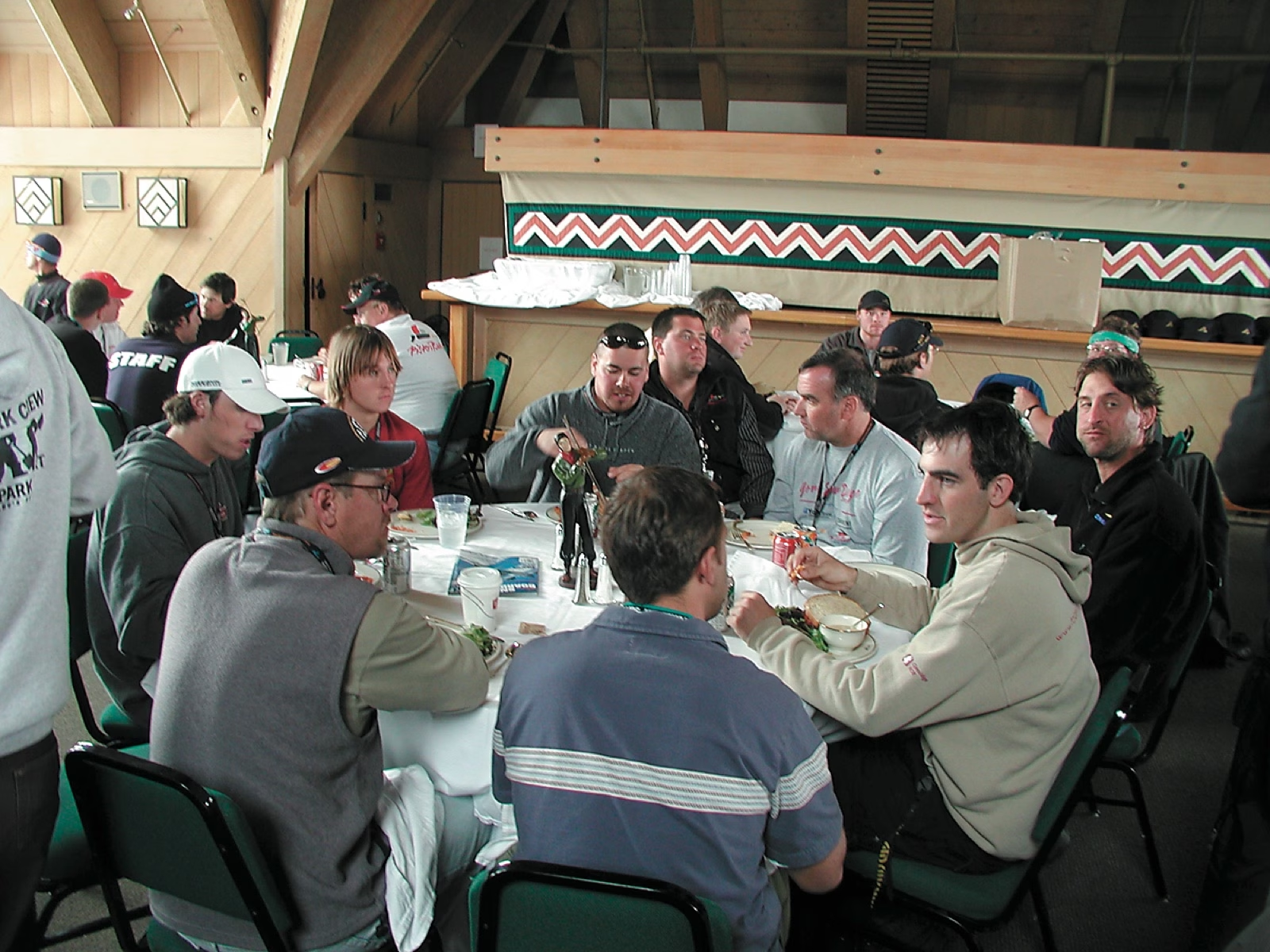
Burton Snowboards Global Resort Manager Jeff Boliba recapped the significant changes in the snowboard market over the year, and highlighted the fact that the level of snowboarding has risen dramatically.
Photos by John Stouffer, Rick Wargo, Stu Osborne and Jennifer Rowan
Boliba also highlighted several significant changes in the terrain-park world, including the teaching of freestyle sessions by instructors across the nation, the global distribution of the Smart Style terrain-park educational programs, and the increased level of women’s riding.
Photos by John Stouffer, Rick Wargo, Stu Osborne and Jennifer Rowan
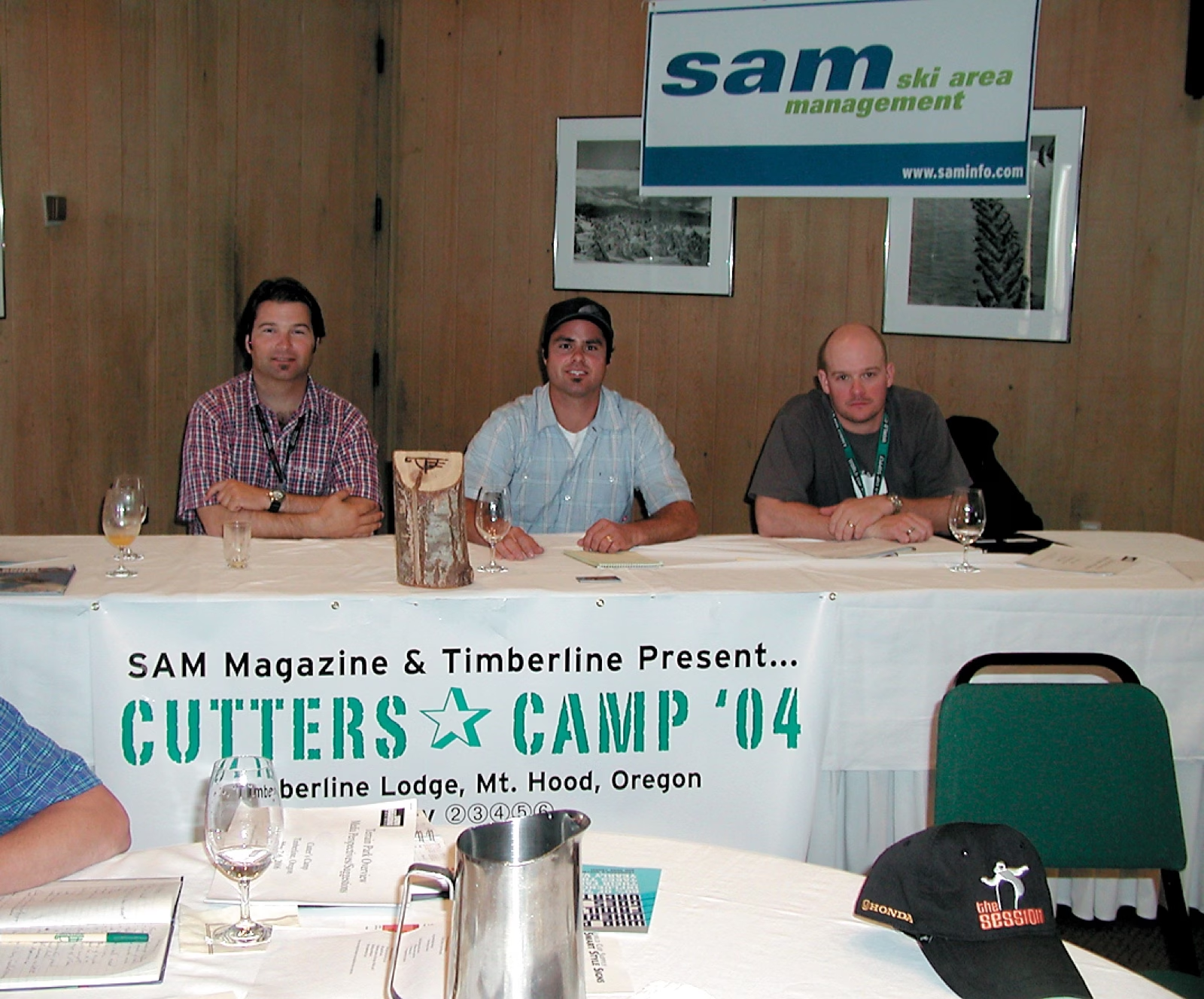
The specifics of park and pipe design were the Camp’s big focus. A panel group representing some of the most forward-thinking resorts discussed terrain-park and pipe-design specifics. Moderated by Timberline’s Steve Kruse, the panel included American Skiing Company’s Elia Hamilton, Whistler-Blackcomb’s Stu Osborne and Steve Petrie, Heavenly’s Day Franzen, Stratton’s Dave “Hooter” Van Houten, Sunday River’s Josh Lempert, and Timberline’s Jeff Flood.
Photos by John Stouffer, Rick Wargo, Stu Osborne and Jennifer Rowan
The discussion ranged from specific rail construction techniques to anchoring ideas and different grooming options. Among the innovative ideas:

Photos by John Stouffer, Rick Wargo, Stu Osborne and Jennifer Rowan
- While most in the crowd said they used plywood to skirt the rails, some suggested investigating plastics that will work well in winter temperatures. Franzen pointed out that FallLine Corp. has been testing and will soon release an entry in plastic skirting.
- During the season, one panelist suggested that terrain-park staff should make sure their rails look as good as when the season starts, because the rails are the resort’s number-one marketing device on the hill. Several resorts have adopted consistent color schemes with their rails, while others mix it up and color-code the rails by ability level.
- To help grooming during snowstorms, one resort marked rails with bamboo so groomers could see and avoid them. At Alyeska, the staff shoveled around rails before the cats groomed the park, also making the process easier for drivers. At Stratton, staff marks the rails with an orange strip above the anchor so groomers know when to stop removing snow around the base.
- Stratton’s Van Houten told the audience about Cold Wars, a special Friday-night contest series featuring a new rail or fun box in the base area. The contest promoted the feature at the event, the event itself drew good crowds, then the feature would be added to the terrain park.
“We close to open”—Stu Osborne, Whistler
More Ideas
Other key education took place on and off the hill. Bombardier’s Chris Nyberg gave an educational overview of how snow crystals are formed and what happens to them over time on the slopes and how this affects slope grooming.
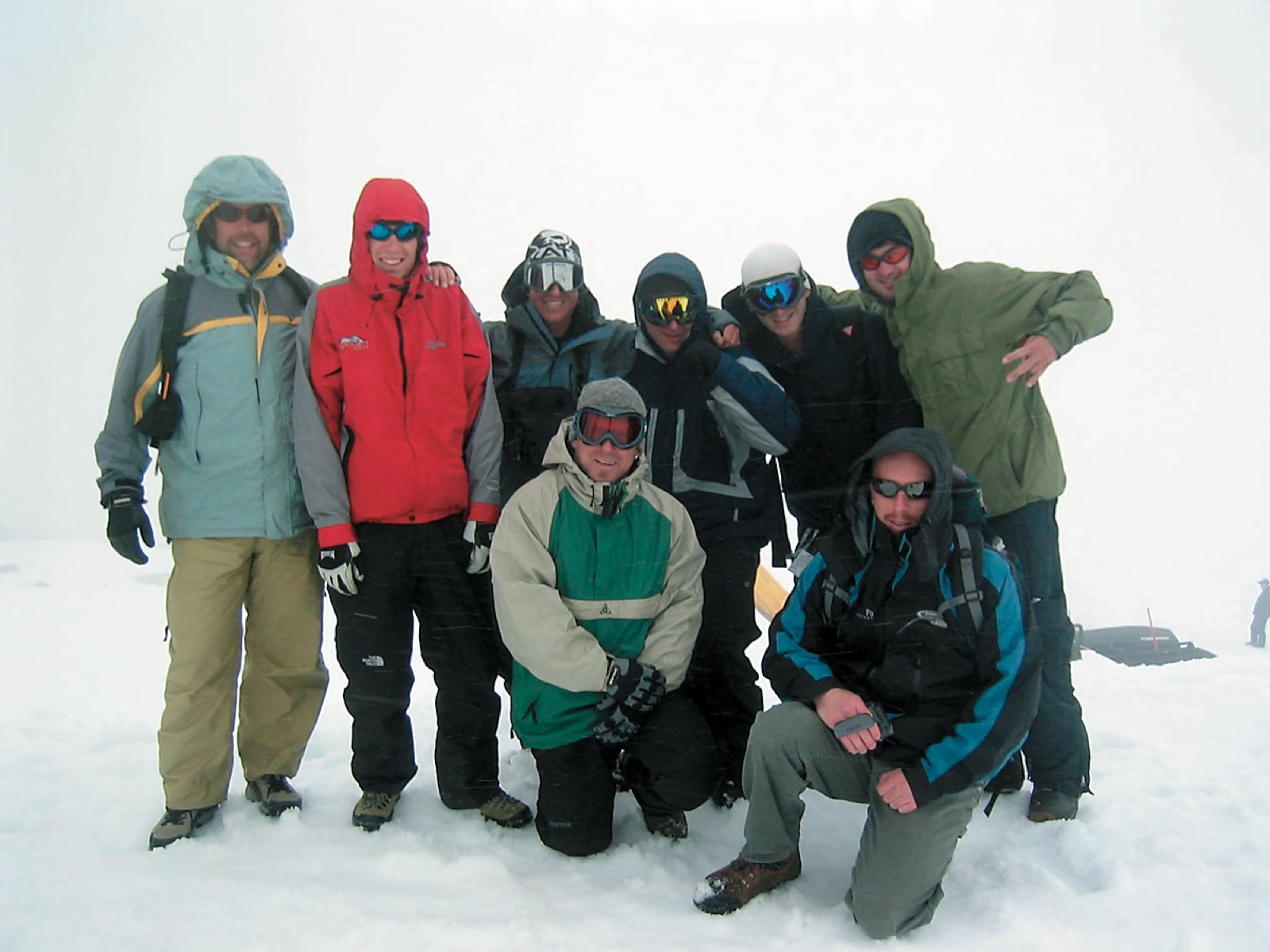
On days two and three, half the audience worked on Timberline’s terrain park in the mornings while others were in seminars. Then the two groups switched places in the afternoons.
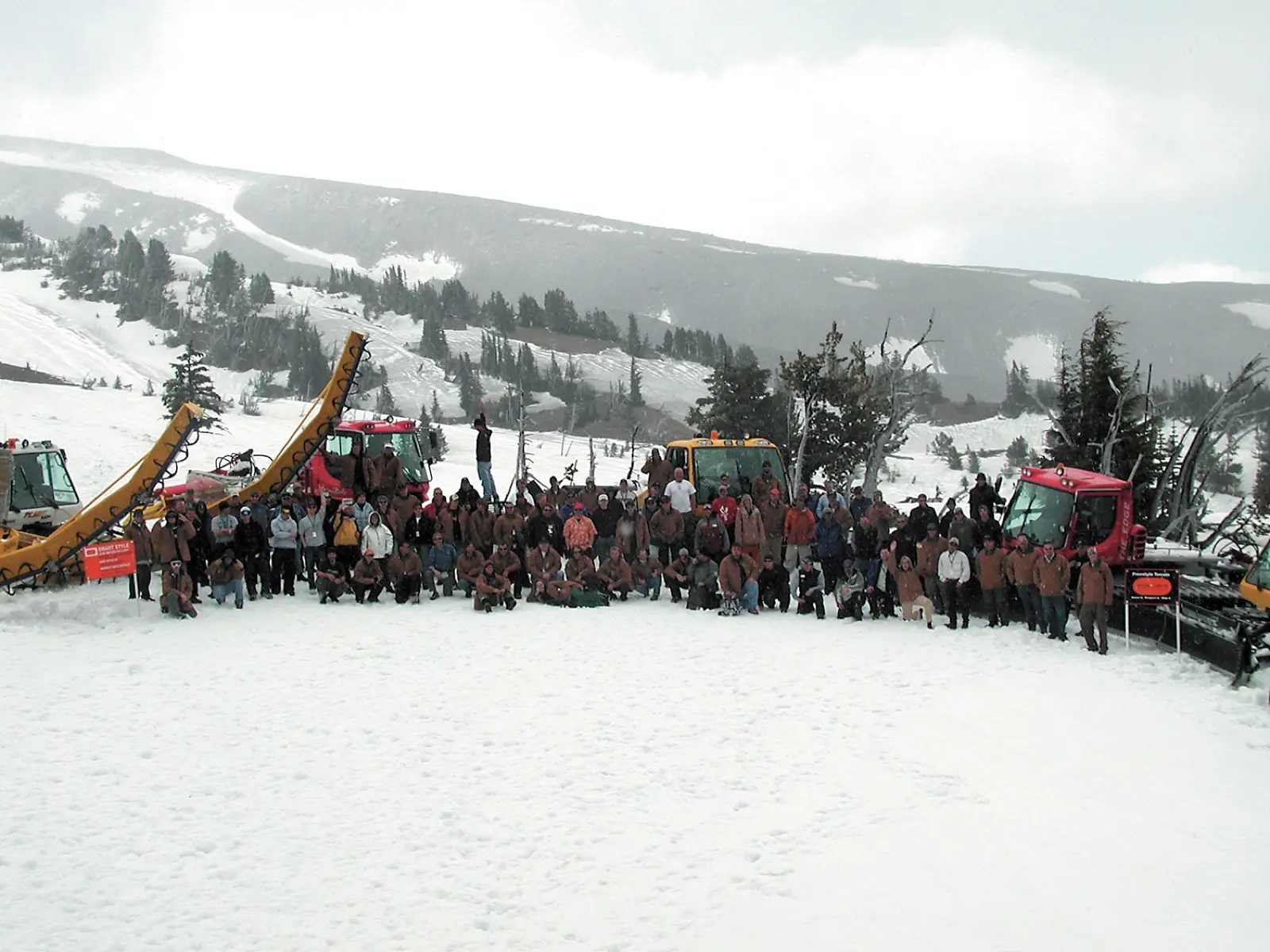
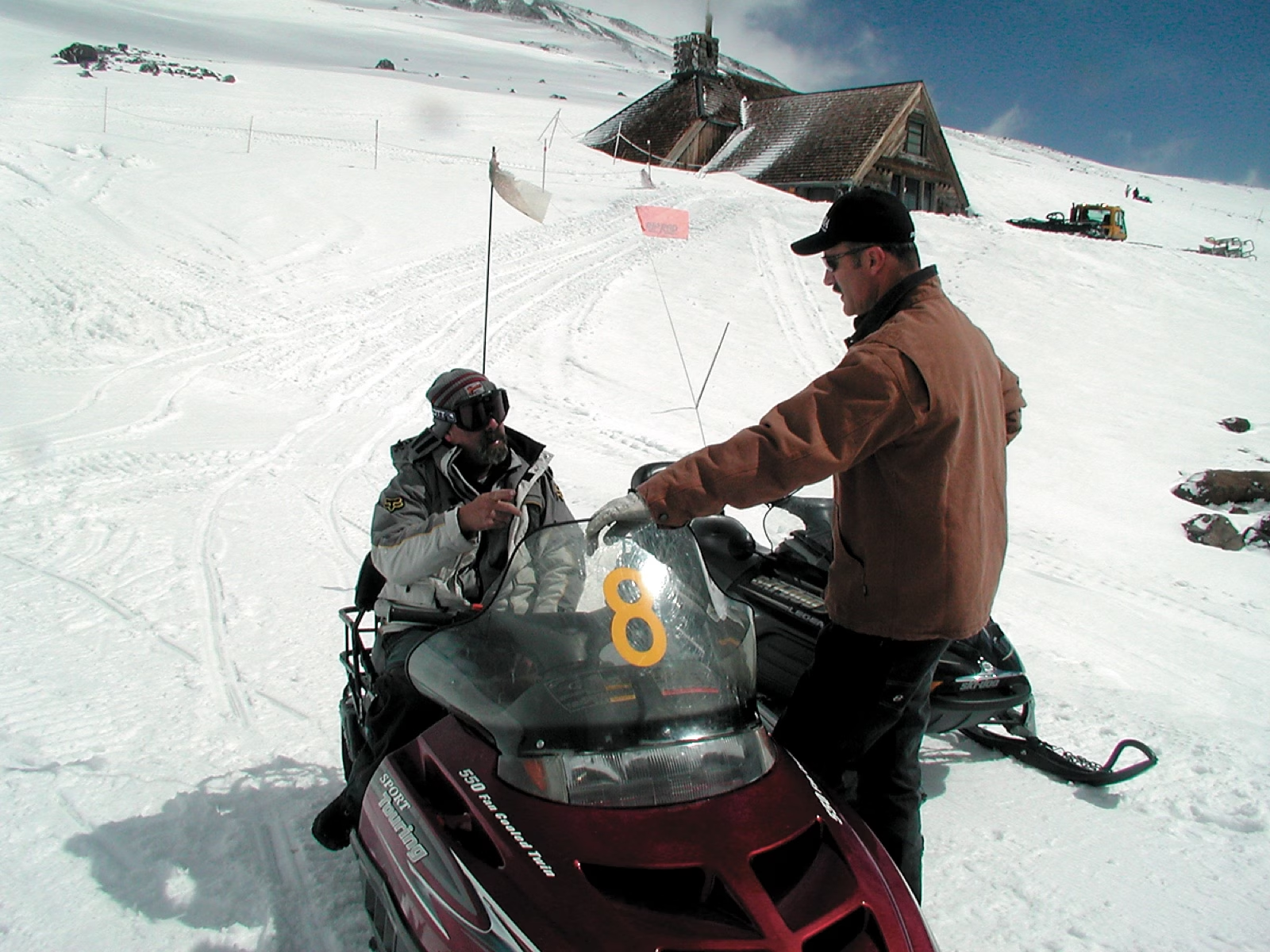
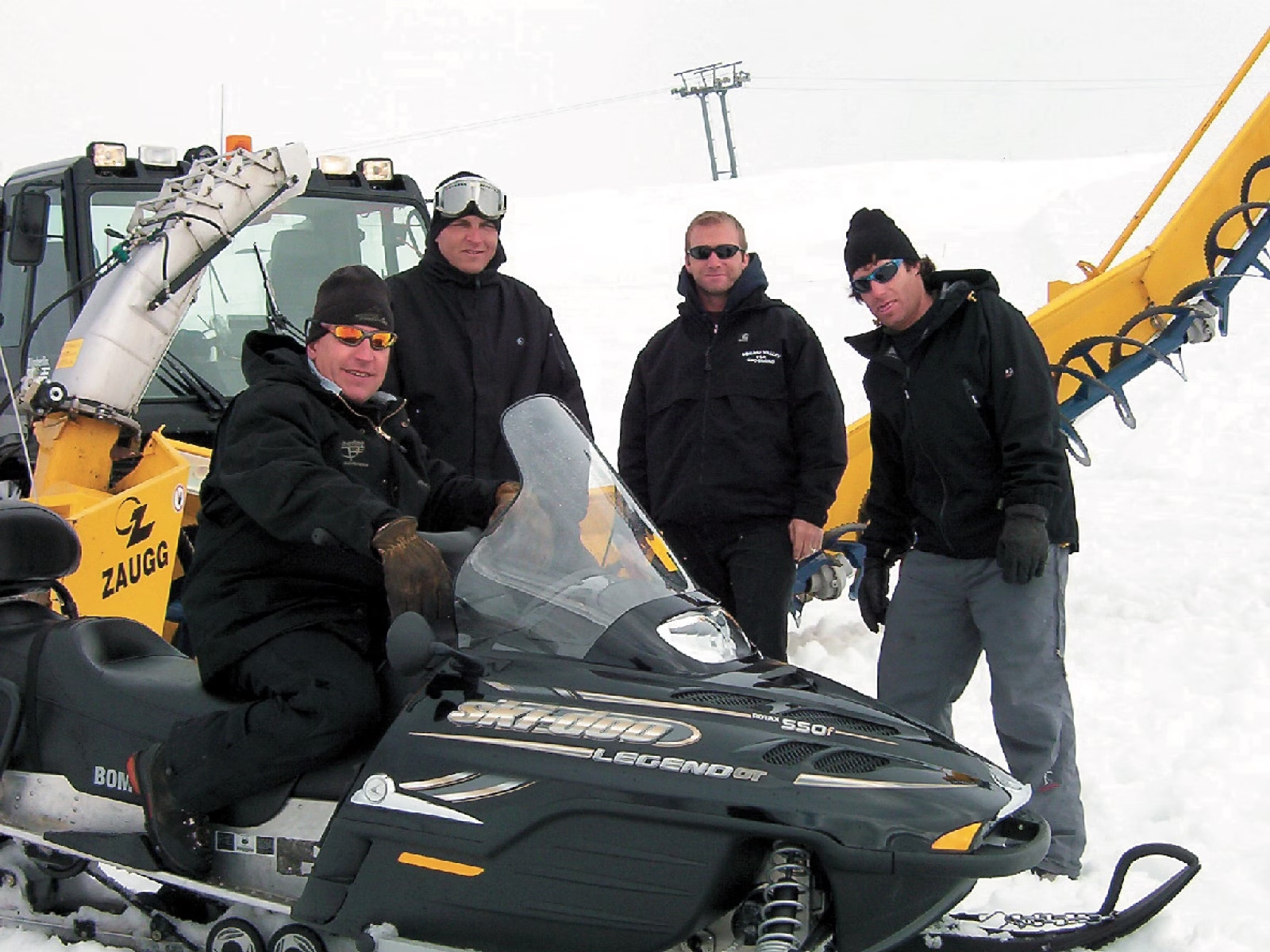
On the hill, attendees had the chance to operate the different groomers from Bombardier and PistenBully and build jumps, move and set up rails, and construct a halfpipe with the Zaugg Pipe Monster. Zaugg also had its smaller Pipe Monster and Snowbeast on hand to work on progressive terrain for beginners. In addition, Terry Goodman from Mt. Baker brought in his self-built rail mover and wowed campers with the ease with which these unwieldy objects can be moved.
Classroom sessions included one on vehicle and implement usage and tips. Timberline Mountain Manager Bill Brett, Bombardier’s Nyberg, John Glockhammer of PistenBully, and Zaugg’s Paul Leck led the discussion, which touched on such things as the force loads that can be withstood by a snowcat and how to upgrade an HPG. One panelist urged the crowd to “Read your [grooming machine] manual. Seventy-five percent of all groomers haven’t even read it.”
In the afternoon both groups joined for a discussion of the evolution of terrain parks and litigation. One thought-provoking panel was headed by John Rice, general manager of Sierra-at-Tahoe, and included lawyers Ruth Nielsen and Brad Stanford, along with Jerri Tranquilli from Acordia Insurance, Mary Bozack from Willis and the resident rocket scientist who addressed fall height equivalency, Larry Young. It was definitely the most crowd-engaging seminar of the entire camp.
Chris Hargrave, an AASI instructor who is one of the authors of the upcoming Terrain Park and Pipe Instruction Manual, addressed the progression of terrain park and pipe instruction, pointing out what makes for good teaching features. Hargrave recommended that learning features be built to mimic the larger ones and that ramps to jumps start below the level of the deck because the cheese wedge can be intimidating.
Although the Cutters Camp was full of stimulating discussions, it was the interaction between the people from big and small resorts that made the event even better. These people all have something in common: they’re pushing riding to new levels, but don’t always feel they get the support from their individual mountains. However, in this conference, they were totally appreciated for the contributions they’re making to the future growth of the snow world.
Ed. Note: SAM would like to thank the generous sponsors of this event: Acordia, Bombardier, Burton, FallLine (railbuilders.com), PistenBully, Salomon, Sorel, World Cup Supply and Zaugg.