

“The failure to market our product is the single most important factor in our business stagnation. We’re not telling all those existing and potential clients what we’ve done for them and why they should come visit us.”
Chris Brink wrote those words in SAM (May 2003) after the National Ski Areas Association (NSAA) released the annual Economic Analysis. He pointed out that marketing expense had dropped from 6.7 percent of revenues in 1997-98 to 5.3 percent in 2001-02 (marketing expense fell to 5 percent of revenues in 2002-03).
The culprit for this lack of marketing? “The culture of most resorts is operationally oriented, rather than marketing oriented,” Brink said. This sounded profound to us at SAM, and we wondered who else we could enlist to reinforce the point. Ideally, we wanted a diehard ops guy who had converted to a faith in marketing.
After months of pondering we hit upon our candidate: former Kirkwood president and current NSAA president Michael Berry. He began his career as an ops guy, then launched NSAA on the Growth Initiative, an ambitious marketing concept for American sliding. Perfect, we thought.
We sat down with Berry in his modest office suite in Lakewood, Colo., one morning in late December, between Christmas and New Year’s. Berry seemed relaxed; the NSAA offices were half empty, and most areas were enjoying a busy holiday. We began the interview, expecting our leading questions would take us to our obvious conclusions.
It didn’t turn out quite that way.
With the NSAA focus on the Growth Initiative, how have areas changed their approach to marketing?
The one thing we’ve come to understand, we’re linked to two forces we can’t control: the weather and the demographic trends. The flat spot in the 1980s and ’90s was a result of the demographic trends—there were fewer people out there to talk to; we were between the Booms. In retrospect we should feel good about holding our own.
Everyone realizes there is opportunity out there now. Reaching the new demographic is the challenge for the industry over the next 10 years. If we miss it, it won’t happen again in our working lifetimes.
Is the entry-level experience good enough?
We’ve made great progress, but there’s still tremendous room for improvement. We have to constantly query the customers to see if the experience meets their needs. And it requires constant vigilance. It’s easy to turn away from the nitty-gritty and focus on the more glamorous.
But I believe we will get the job done. There is an air of optimism at small- and medium-sized areas close to town. Ten years ago when I took this job, there was no sense of optimism. People at the smaller areas wondered what their role was. They were starting people out and watching them migrate to destination areas.
About 4 to 5 years ago, that began to change. More people were coming into the sport. Those places close to population centers saw that they could make money by starting these people out and have been keenest to improve the learning experience. They are not letting this slip by.
You once told me that moving from president of Kirkwood to president of NSAA changed your perspective on marketing. How have your views shifted over the past decade?
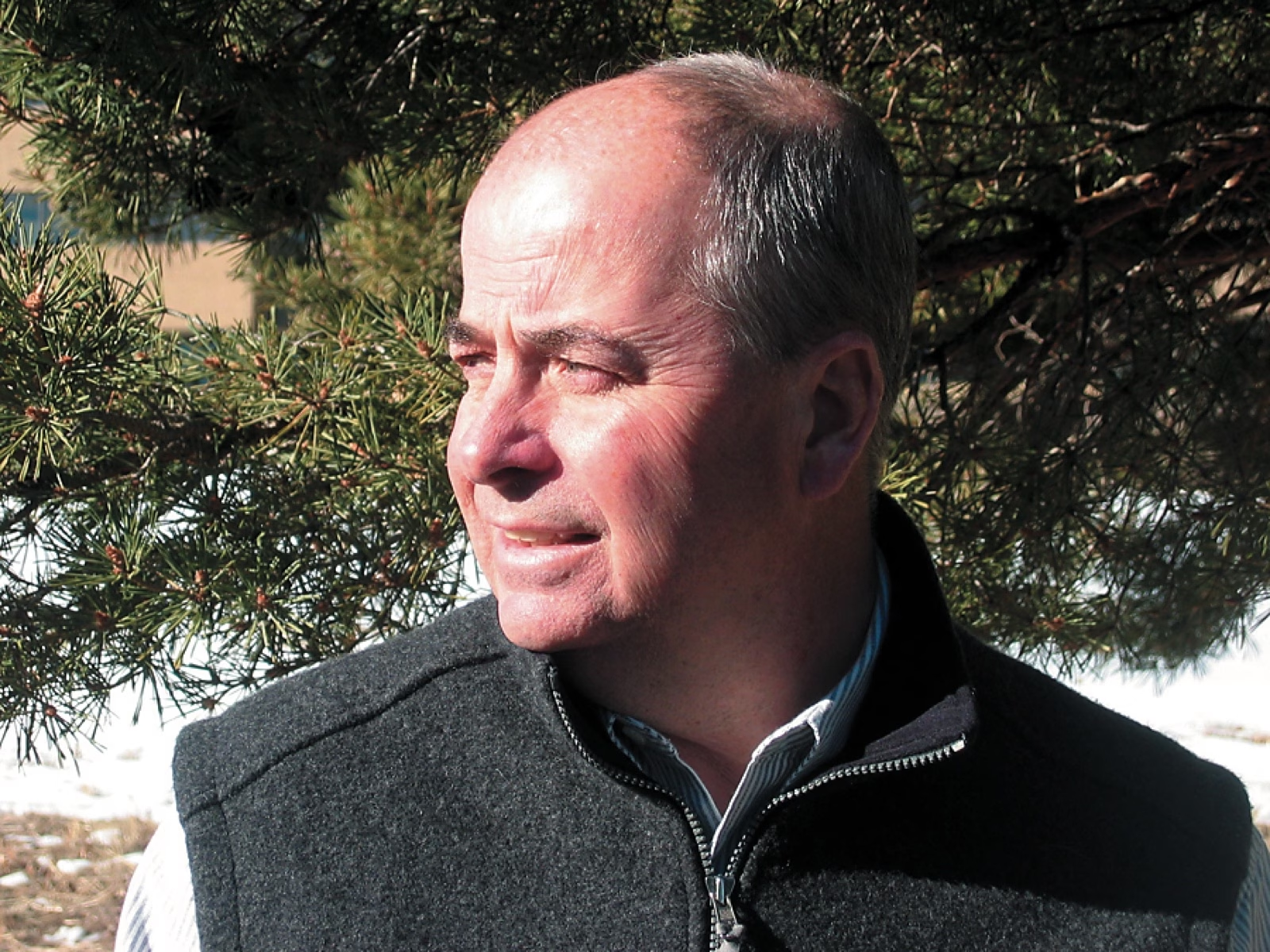
I think I’ve changed pretty much in lockstep with my peers. I was a fairly typical ops guy through the ’80s, focused on the product. Then I began to appreciate that there were forces more powerful than our ability to market the product to succeed on a regular basis.
The shift began before I left Kirkwood and accelerated in this job. The ski business is not necessarily a “build it and they will come” sport. Communicating the appeal, the absolute joys of our sports, requires constant effort. That message can attract new customers, and it’s something we can control.
We have to remember that this communication is our responsibility. We can’t expect others to tell the story for us. There are always folks who have messages that, though they may be supportive of the sport, won’t necessarily draw people to the sport. Which is to say, showing people leaping off cliffs won’t necessarily draw new customers.
Pipes and parks are helping to fuel area visits—aren’t they part of that extreme message?
Pipes and parks can be quite different from that. The message doesn’t have to be extreme at all. Showing a group of kids having fun in a park has appeal, much like images of people sharing good times at the end of the day. Or images of dad and kids driving home, talking about having the best day of their lives after eight inches of new.
Our message is about the value of time uniquely well spent, the quality of life we bring to individuals and family, the intangibles. It’s about the feeling that at the end of the day, skiing or riding was better than just about anything else you could have done. I often think of the differences between watching my son play soccer versus spending a day on the hill with him, and there’s no comparison.
Speaking of soccer, how does the trend toward sports specialization affect winter sports?
There’s no doubt that kids specialize sooner. There’s huge pressure for kids to make a total commitment to sports like soccer, hockey and volleyball and to play year-round and on weekends.
That’s not all bad from our standpoint. We find that the expression of freedom has a huge appeal to kids today as a result. If we can communicate the uniqueness of our sport, the life skill aspect, then we have a way of resonating.
But getting over the entry barrier remains an issue. We still have to make the entry experience easier, faster, more welcoming and more accessible. We have to make sure we are winning over the decision makers, and that’s a complex process.
Who are the decision makers?
I am of the opinion that it’s mom. Getting family buy-in is a big deal. Kids say that one of the biggest problems is, how do we get to the hill? The number of school programs has declined, the popularity of clubs is in decline. Kids would go more often if they could find ways to get there more easily. For those under 18, that is clearly one of the biggest obstacles. So moms are important.
Will those school and club programs ever return?
Those were not a function of the industry directly; they were the function of related groups that were tangential to the resorts. Can the industry step in to fill the void? It’s a burden we may have to pick up and carry.
The motivator here may be to get healthy and get out. There’s a new awareness of the benefits of skiing and snowboarding. The dialogue about the benefits is growing within the school community, but the initiative is still ours.
People are interested in the issue of child obesity, and we have the ideal solution. But we are not top of mind. We have to make the point. We have to connect the dots.
How important an opportunity is the child obesity issue?
The main thing is, it changes attitudes. You think about growing up in the ’50s, phys ed was a daily occurrence. But in the past few years it was a fast-disappearing phenomenon. That’s changing again.
Over the last 10 to 15 years, we faced some formidable competition from schools and the entertainment industry. There’s been a feeling within schools that kids need to be more focused and spend more time on academics. At the same time, the entertainment world said, you don’t have to actually do all these physical activities, but we can give you the experience in your own home.
It was the rule of unintended consequences: kids were sitting down doing schoolwork, doing video games, eating popcorn and drinking Pepsi instead of doing more physical things like cycling or any of the sports that have seen a decline.

The new message is, whoa, you have to get up and get out and exercise. The alternative could be catastrophic.
It’s our responsibility to take advantage of this change in sentiment. It won’t happen on its own. This child health movement is still in its formative stage, but there are indicators that we can take advantage of it. We’ve just turned the corner on this in the last 12 to 18 months.
Are video games still competition for winter sports?
More and more, it’s a time-filler, between other activities—hockey, soccer, skiing. I see it with my own son. This year, he had six days on snow before Christmas. And as a result, I had six days, too.
With growth of pipe and park, how do you avoid conflict between risk management and marketing?
Finding new products has been a key focus. There are few if any arbitrary bans these days, unlike the late 1980s when snowboarding first surfaced. Across the board, the industry is looking to manage risk at the same time we offer new features to customers.
There’s a huge difference between now and 10 to 15 years ago. And I would argue that the new products are keeping some areas in business, which is why we haven’t seen a continuing decline in the number of areas. Many smaller areas have become very appealing to a younger, snowboard-oriented audience.
Parks also create a natural segregation of skiers and riders by age. The kids are spending the majority of their time in and around the features. The older audience is elsewhere on the mountain. And that’s not a bad thing.
How long will that older audience keep coming to the areas?
The Boomers have already exceeded the old rules. There’s no doubt that if we can keep them engaged with the products we have, we can keep them involved for a while yet. The downhill experience, the skis we have, the off-mountain options are great. The shaped short skis have been a great help. We have to remind people, though, that they are skiing faster.
Also, the Baby Boomers had their kids later; lots of guys at 50 have kids in their teens and pre-teens. And there’s nothing better than spending time in the mountains with your kids. And that’s a huge opportunity.
This opportunity is not going to last forever. Maybe 10 years; maybe seven or eight. Then, hopefully, we go through a period of market stability. Then, in another 10 to 15 years, we’ll have another, smaller, window for growth.
The point is, once the demographics shift, our chance for growth is gone. If there’s nobody out there listening, you can do all the talking you want, but it won’t help much.
Few other ski countries have the same opportunity, by the way. Looking at snowsports elsewhere around the world, the only potential for significant growth is in North America. The Europeans don’t have an echo boom, and their population is aging at a much more rapid rate. The only population growth there is via immigration, and the sentiment has been to slow that down.
Okay, we have this rare opportunity. How do you convince the ops guys who run the areas to spend money on something as intangible and unpredictable as marketing?
The ops guys aren’t as dominant as they used to be. Ten to12 years ago, the long-tenure guys were all ops guys. They were more comfortable with chain saws than calculators. But now even ops guys realize that it’s about more than what lifts or which snowguns you’re going to buy. Now it’s about cash flow, and marketing—how you measure your return on investment in marketing, and we are much more inclined to spend money on marketing than we were 10 to 20 years ago. Net net of it all, there has been a shift, a good shift.
Plus the managerial group is becoming more diverse. People are moving into key positions from new avenues. A good example of the change is Vern Greco at Powdr Corp. He has a ski school background. The same is true with Chris Ryman at Booth Creek. He also moved into executive roles from ski school.
For more than a year you have been pointing to the upcoming convention in Savannah as especially important for advancing the Growth Initiative. How will the convention help?
All meetings in recent years have focused on the issue of opportunity. How are we going to take advantage of it? How do you communicate with people you don’t even know yet? That’s the focus of Seth Godin, one of our keynote speakers. It’s all about what he calls permission marketing.
This year, we have more stuff packed into a shorter time, which is typical for meetings and conventions generally today. We’ve got two and a half days, with the last half day for two symposiums: one on risk management, the other on marketing.
What we’re saying is, “here is this opportunity, don’t turn away from it. Here are some tools and ways to take advantage of it.”
Since the ski industry is small, it’s important for everyone to speak with a unified voice. Are the marketing goals of SIA and NSAA in sync?
We have our occasional differences, but we work together on many programs. The Winter Feels Good campaign is a good example of how we cooperate. The program fulfills the function of the national organization, which is to create interest in the press and reach people who could organize trips.
But program development and follow-through also have to happen on the ground. That remains the responsibility of the individual areas. Everyone recognizes that it’s a function of the sales and marketing organizations at the areas.
How well are we reaching out and communicating?
We can communicate so much better now. There’s no one who isn’t aware of skiing and snowboarding as an activity. Technology allows us to communicate in a way that didn’t exist 20 years ago. What we hear from people is, the more information we can give about what to expect, the better. Everything from nuts and bolts—hats, socks, gloves—to knowing what to expect on that first day. If they give us permission, we can help them a lot. And that may—may—encourage them to stick with it. They can turn the corner quicker.
These are good times for the industry. There is lots of opportunity. The future is ours to take control of, and I’m optimistic about our ability to do so.