


Brake Time
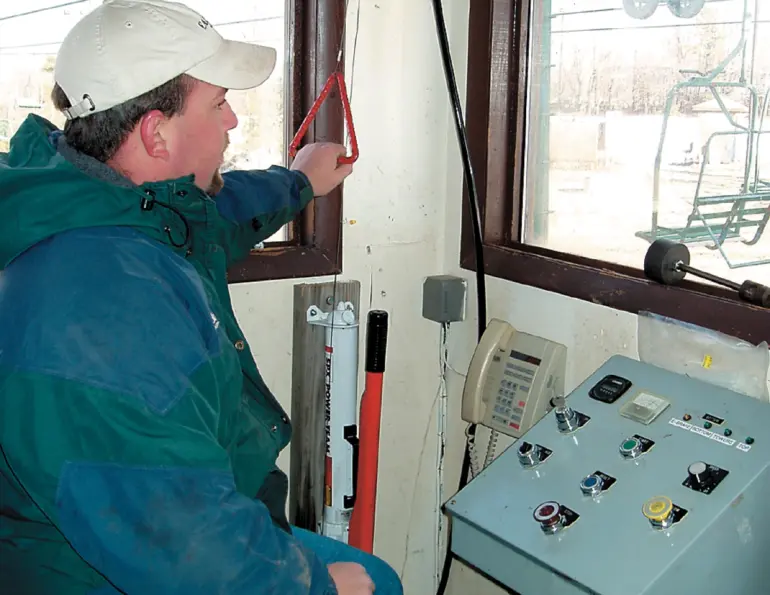
Like many ski resorts, Eagle Rock Ski Area, Pa., has some older lifts still in service. The problem was with the location of the old style hand-operated emergency brake pump and brake release pull ring: The pump was mounted at the base of the drive terminal, near the brake, while the brake release pull ring, in order to meet the ANSI B77 code, was located outside the attendant’s building. Also, the cable from the pull ring to the pump pressure release switch ran through a whole series of tubes and turns, creating a lot of friction. Sometimes it was difficult, if not impossible, to apply the brake.
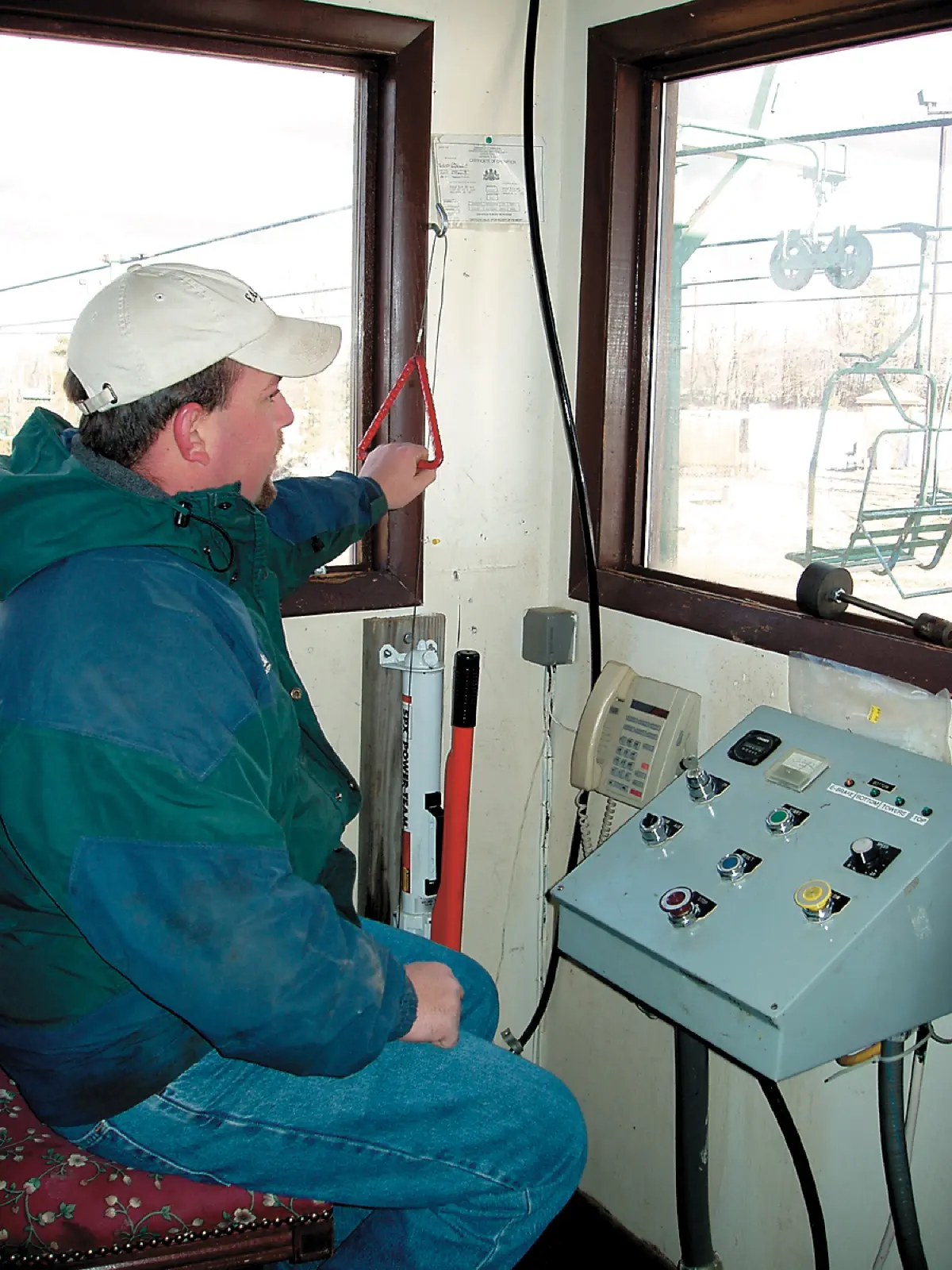
Rick Hengst, operations manager, and Justin Carter bought a new hand-operated emergency brake pump for $229 and installed it inside the operator’s building along with the emergency pull ring. Thirty feet of high-pressure hydraulic hose, which cost $179, was used to connect the pump in the operator’s building with the bull wheel flange brake.
Now there is no fear that the pump will freeze in the cold outdoors. Operators can better monitor the pressure and, if need be, apply the brake with ease.
Lid on a Lift
If you think that the roof over this lift bullwheel at Mt. Brighton, Mich., looks like the top of a farm silo, you are right. Mountain Manager Brad Lee told us that the late Bill Risky, once a co-owner of Mt. Brighton, saw the need for a protective roof over their St. Lawrence chairlift to protect the band brake that otherwise could be affected by snow, ice or rain. It also protects clothing from the dirty water that comes with rain and snow falling on an uncovered bullwheel, collecting dirt and debris on the way and dripping on the skiers below. It is a natural law that dirty water never drenches the Carhartts but waits for a mink or Armani to show up before splashing down from the bullwheel.

Silo roofs can be found in many locations, such as local farm stores, second-hand farm supply businesses, and directly from manufacturers. A quick search on the Internet will produce some good results.

Starter Golf
Young golfers in training were finding it difficult to get accepted to the courses around Yawgoo Valley, R.I., so Yawgoo Valley Ski Area’s owner, Max de Wardener, a golfer himself, set out to fix the problem.
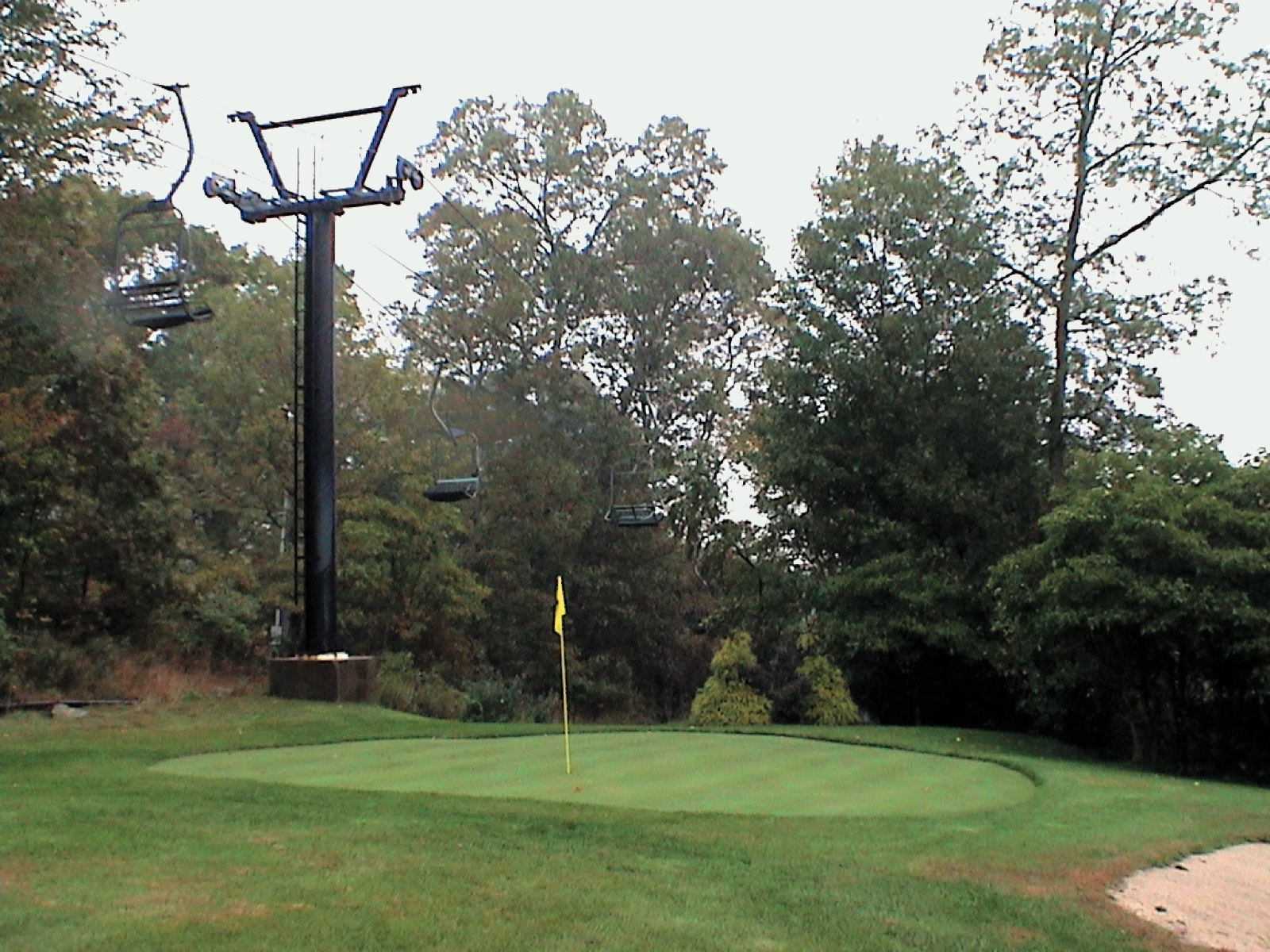
Max and son Todd created a 9-hole regulation pitch and putt course right on their home turf at Yawgoo. Golf Digest approved the course, which is laid out around the base area and along some of the lifts at the resort, as shown in this photo.
In order to be a regulation pitch and putt course, the holes cannot be less than 25 or longer than 100 yards apart. At Yawgoo, the distance between the holes is 30 to 80 yards; price for playing is $7 for the nine holes.
Now a beginner can earn his PGA golf certificate at Yawgoo, thereby also getting entrance to the neighboring courses. As with many passion projects, this one is very profitable, too. An added bonus is the profitable two-day-a-week landscaping business that sprouted from the golf course maintenance, and that uses the same machinery.

