At a time when more and more ski areas have marketing specialists, publicity specialists, promotion managers and outside advertising honchos, Hunter Mountain’s unorthodox Pepe is a throwback to the do-it-yourself era. He wears all four of those hats and then some.
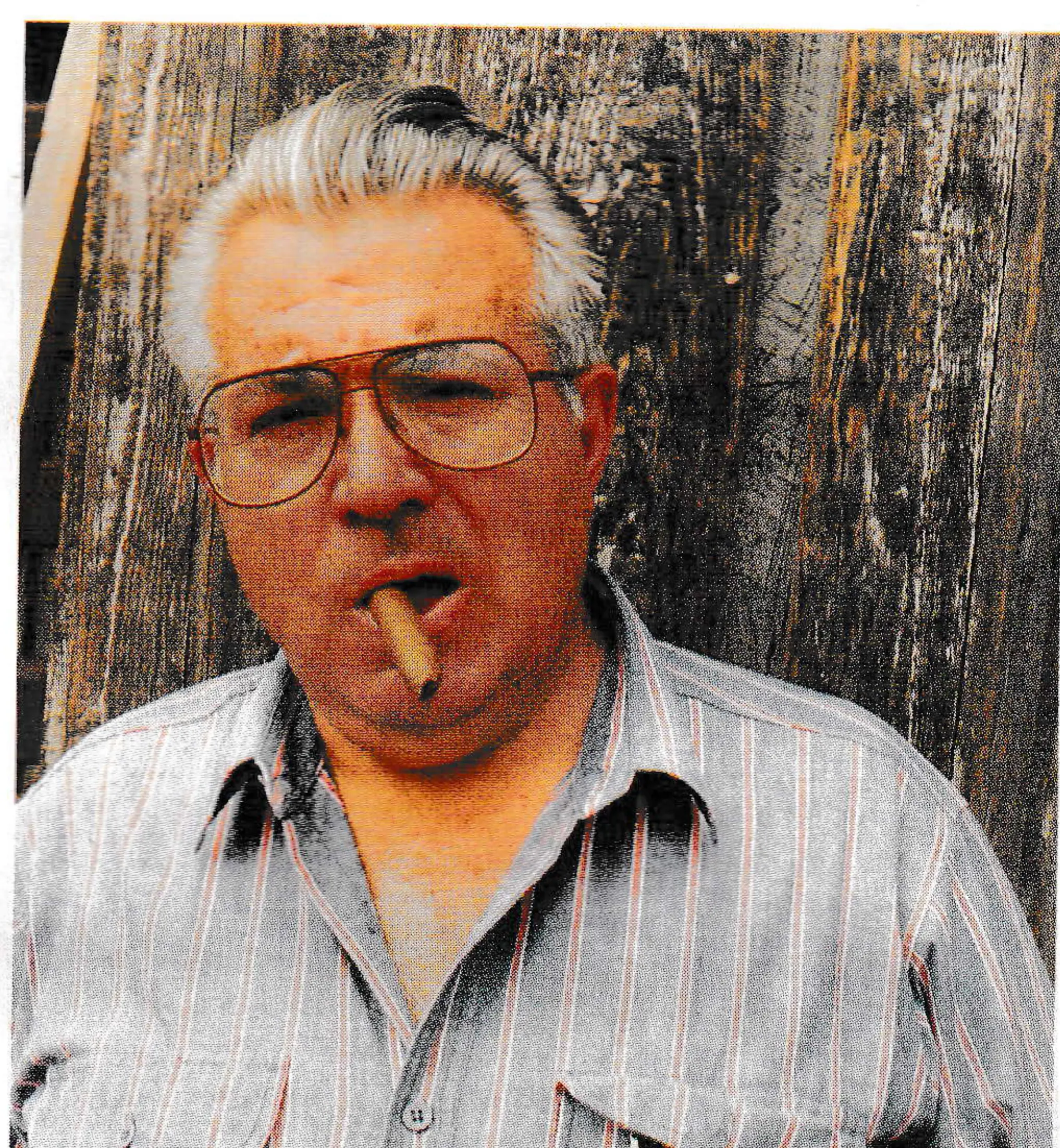
And unlike today’s specialists, many of whom have advanced degrees and change jobs every few years, the gruff-talking, cigar-chomping Pepe completed just two years at Brooklyn College (“I took as many journalism courses as I could”), worked briefly as a Broadway press agent and then, because he just happened to be in the right place at the right time, became Hunter’s PR man in September, 1959, a few months before the mountain was opened for skiing. He’s been there ever since — two and a half years longer than Hunter’s present owners, Orville and Izzy Slutzky.
Does the Pepe system work? By almost any measure, the answer seems to be yes. Competitors envy the ski area for its press coverage and Hunter’s numbers increase almost annually, although they were off slightly this past season as were those of most other areas in the Northeast.
Pepe himself cites his system’s efficiency. “If I have to have a marketing meeting where the advertising agency has to talk to the PR agency and the promotion people to see if things mesh, I have that meeting in my head,” he says. “I don’t have to call this guy in, call that guy in, call somebody else in. It’s all tied in. The most effective marketing campaign is one where all the elements are tied in and that’s what we’ve done here for a long time now. If I create a slogan for Hunter Mountain, I can publicize it, I can promote it, I can tie it in with other stuff. We don’t waste time with long, long meetings.”
Another thing that makes his job easier, says Pepe, is his 29-year association with the Slutzkys. “Here, for example, is how tuned in we are,” he says. “I do all the editorials for the Hunter Mountain newspaper. I’ll call Orville and say, ‘It’s time to do an editorial.’ He’ll say, ‘We should talk about a and b and c.’ I say, ‘Fine,’ and I sit down and write the editorial because I know what he’s thinking. We know each other that well.”
How does Pepe explain Hunter’s overwhelmingly favorable treatment in both the print and electronic media?
“I was schooled in the Broadway press agent tradition,” he says. “First of all, you never lie to the media. Unfortunately, too many people today think you’re supposed to lie to the media. I was schooled to give only the truth, to provide information that is valid, that is relevant, that is news and to make certain that if they call you with a question you can’t answer immediately, you damn well better be back to them in 10 minutes with the facts.”
“When I learned this business, it was truly servicing the press, servicing the media, because that was our livelihood. What I’ve done is just carry this through so that at this point I’m really proud to say that most of the people I deal with are very close friends. They’ve become close friends because I’ve serviced them, I’ve given them material they could use, I’ve never pandered to them, never lied to them, never bought them off. I’ve never had to. I think it’s a case of mutual respect, which is as it should be. They respect me for being honest, for being factual, for getting them material when they need it, for never pushing them too hard because you can do that too.”
What about Hunter’s annual Thanksgiving press weekends? Aren’t they a payoff of sorts, an attempt to con the media, to buy favorable coverage?
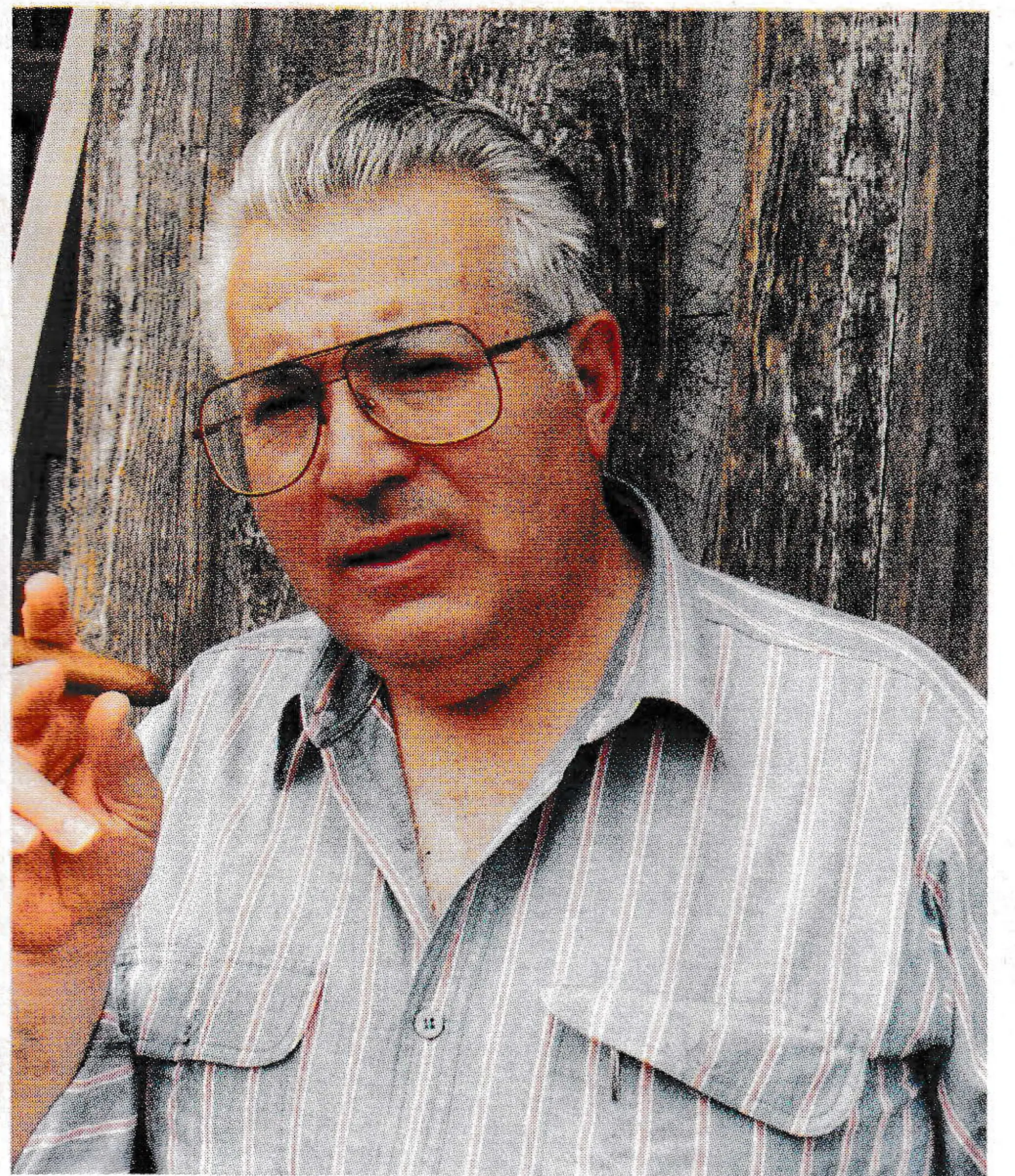
Not so, replies Pepe. “I’m never selling anything at these press weekends. All I’m selling is, ‘Come up, pay a few bucks and have a nice weekend with your wife, girlfriend or kids.’”
But then it comes out.
“They’re going to remember us because they’ve had a good time … I think that over the years I’ve built up a rapport with [the press] … so that if there is something negative they might hear, they don’t often write about it. They’d rather do a positive story.
“We’ve found that the only negative stuff we get is from people we never see and who get stuff hearsay. Most of the regulars who write on a regular basis are going to take care of us because they know what we are trying to do here. And they know that, yeah, everyone has a problem now and then but the pluses so far outweigh the minuses that they are not going to write about the minuses.”
Even so, Pepe’s publicity program hasn’t always schussed down well-groomed media slopes. He concedes — and Orville Slutzky agrees — that his biggest failure has been and still is an inability to eradicate Hunter’s image as a perpetually overcrowded mountain on weekends and holiday periods.
“We’re no more crowded than any other area on a weekend or a holiday,” says Slutzky. “And we’ve taken steps to overcome the image with our high-speed detachable quad. We’ve got virtually no lines. People go out there and see a lot of people but it [the quad] takes over 750 people every 15 minutes.”
Adds Pepe: “Perception is the problem. The way this mountain is set up with three lifts in front of the base lodge, there is always going to be a lot of people … People look with their eyes and they don’t think with their brains. And so the perception has haunted us … You tell me why Killington can get away with liftlines of an hour or more and nobody says anything, but when we have a l0 or 15 minute liftline, people complain about it.”
Pepe is also nonplused when people say they won’t ski at Hunter “because it’s filled with wild, reckless people from New York City who don’t know how to ski.”
“There’s very little you can say to them,” he says. “Yes, we’re close to the metropolitan area and, yes, we get a lot of skiers from Brooklyn, Queens, Long Island and New Jersey, but so what? You’re talking about 20 million people in the metropolitan area and they have to ski someplace. Who says they are any worse skiers than people who to go Killington, Sugarbush or even Aspen?”
But that’s the down side of Hunter’s proximity to the city. Pepe exploits to the hilt the ski area’s location by promoting events such as races for city cops, fire fighters, chefs, nurses, even orthopedists, although the latter group may be widened to include all physicians and surgeons to heighten interest. So popular has the fire fighters’ race become that Hunter now runs it in two divisions, one exclusively for those from the city and the other for smoke-eaters from Maine to Florida.
Pepe concedes he didn’t originate these events, that people came to him with the ideas. But he does claim credit for their success. “My strength, my value to Hunter, is not in creating events, but in being able to pick up the ball and run with ideas, to create promotional programs for them.”
Nonetheless, Pepe has been the innovator of several programs. Perhaps the best known and most successful is the Silver Series, which is now international. Last year saw regional competitions in Colorado and Canada as well as at Hunter followed by the finals in Europe.
Pepe also claims to have originated snow-report ads in which he tapes on-mountain reports that sound like news bulletins. “In the beginning, some stations balked because they said it sounded like one of their reporters,” Pepe recalls. “I said, ‘That’s the idea.’ I sold them on it but I bought the commercial time.”
Last season, he says, 77 stations carried a total of more than 12,000 of these one-minute reports over a span of 18 weeks, much of it paid for through barter; for the 1990-91 winter, Pepe expects to be on about 125 stations. “We are spreading our message all across the eastern seaboard from Boston all the way down to Washington and Baltimore and into Pennsylvania and the Capital District [Albany].”
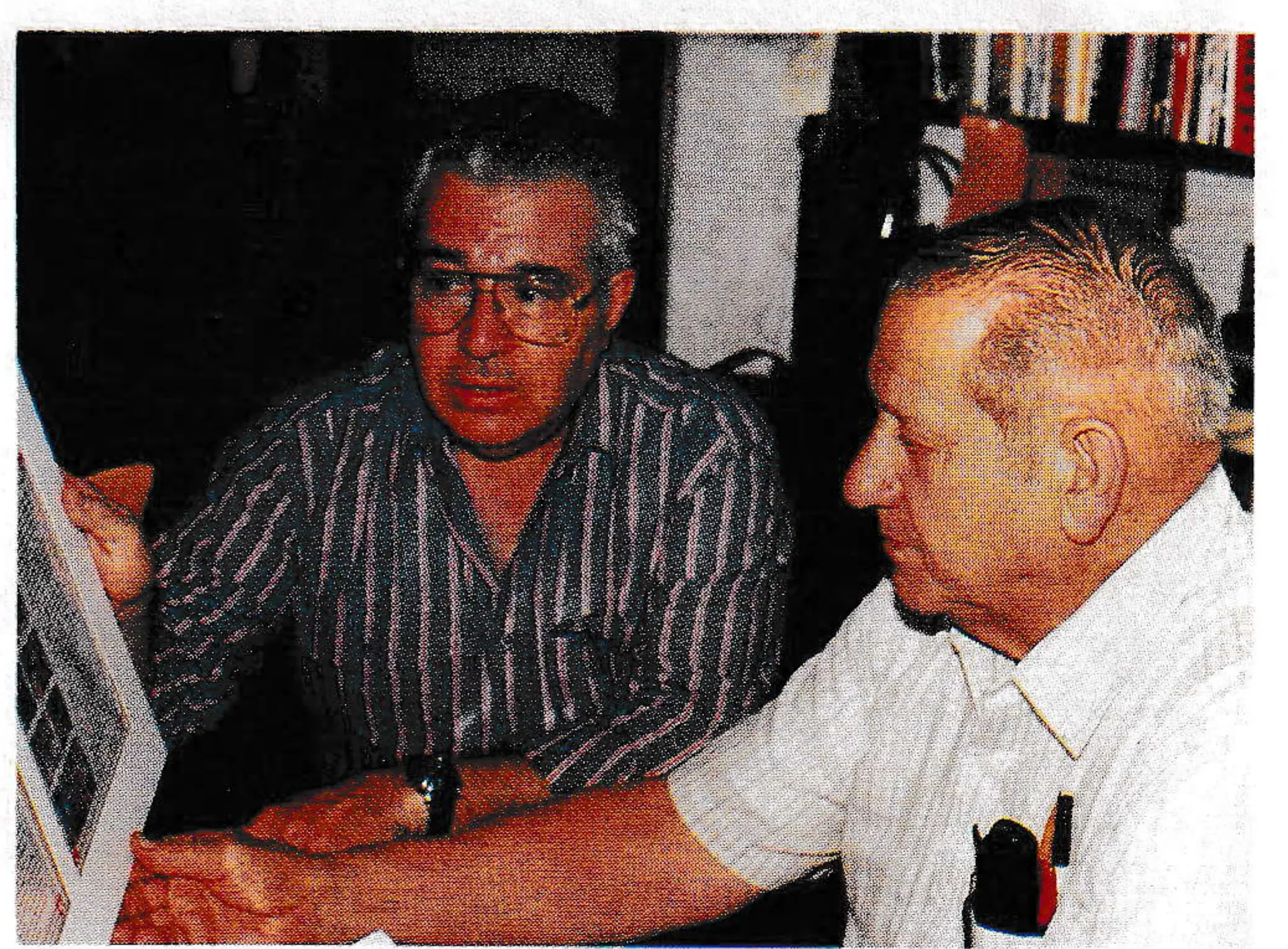
Neither Pepe nor the Slutzkys will disclose Hunter’s advertising budget, but in an obvious reference to his bartering ability Pepe says: “I’m very efficient in how I buy my media. I’ve got a lot of people mad at me because of that, but if everybody latched onto my secrets, there would be very little advertising money spent.”
Even though Pepe clearly has fun on his job and regularly banters with reporters and photographers, he says his campaigns “never really aim for the big laughs because we take skiing seriously because it is a serious sport.”
Maybe. But in the next breath Pepe concedes to doing “some offbeat things like when we had a sauna here a long time ago, three of our ski instructors jumped into it in their bathing suits and then went outside and skied in the middle of January when it was five degrees above zero.”
He also recalls how he selected and promoted Hunter’s three millionth skier.
“We were having a pro race and we had a press room set up and a lot of press were here. And I said to my brother, Michael, who was taking pictures for me, ‘I think we are going to have our three millionth skier today.’ So we hung out and this blonde, blue-eyed lady comes along and I said, ‘You are our three millionth skier and you are going to win all these prizes.’
“Now whether she actually was, I can’t say for sure because we were selling lift tickets at a bunch of different locations, but it was close enough so that it was valid. So then, of course, I interviewed her, did a quick press release and brought her down to the press room where there were perhaps a dozen guys. So I pass out the release and introduce her as the three millionth skier and they take one look at her and with raised eyebrows say, ‘Yeah, right.’ But they couldn’t prove that she wasn’t.

“It worked so well that we had the four millionth skier, the five millionth, the six millionth.”
Is he going to do a seventh?
“Oh, yeah. Absolutely. It’s worked every single time. It’s the kind of thing that’s totally meaningless, but it works.”
Has he ever had a male millionth skier? “No.”
Is he ever going to?
“No. They’re all going to be blue-eyed blondes. Luck of the draw. That’s fate.”
Pepe got into the ski business by accident when a Broadway client told him a friend had just bought a mountain and wanted to talk to Pepe about doing publicity for it. (Actually, the man hadn’t bought the mountain but had leased it from the Slutzkys.)
“I said sure, fine,” Pepe recalls. The client’s friend, he soon learned at a luncheon meeting, was Jimmy Hammerstein, Oscar’s son.
“He had just signed a deal to take over Hunter Mountain,” Pepe remembers, “and because he was Broadway oriented and I was Broadway oriented, we got along right away and he said, ‘Okay, you’re hired.’”
But that association with Hammerstein and a coterie of original show-business investors that included luminaries such as Kim Novak and Paul Newman and for which Pepe was paid $200 a week was short-lived.
“In the middle of 1962, the third year, it all went kablooie,” he recalls, “and Orville took over.”
Pepe was out, or so it seemed, because he heard nothing until the fall of that year. “Then Orville called and we got together and he said two things, ‘Do they owe you any money?’ — I told him I was one of the few people who hadn’t been stuck — and ‘Do you want to work for me?’ I said, ‘Yeah,’ and then Orville, who had spent his life in the construction industry, said, ‘I have no idea of what publicity or advertising means or is going to do for me; but I know I gotta have it.’ And we made a deal.”
Thus began their 29-year relationship, the financial details of which neither Pepe nor Orville will disclose. “But we’ve never had a contract. Never,” says Pepe.
He has also never had a staff and says he neither needs nor wants one. “I have a typewriter — it’s an old Royal standard — a fax machine, a Xerox machine and an answering machine. That’s my staff.”
Won’t Hunter buy him a computer or a word processor? “I don’t want one,” is the curt reply.
Paradoxically for one who makes his living from the ski business, Pepe never skis. Or as he puts it, “I don’t ski anymore.”
When did he last step onto a pair of skis?
“Sixteen years ago. I was not a great skier. I never progressed above the level of an excited beginner. And I reached the point when I started coming up here to ski. And I said, ‘I can’t do that. I can’t be a skier and also do my job.’ If I really got into skiing then I would be spending my time skiing and not working.”
When the Slutzky’s first took over, the job wasn’t enough to keep Pepe busy full-time but his responsibilities increased as the ski area grew in popularity.
“At one point I said to Orville, ‘Let’s take the fee and spread it out over a full year.’ And we did that and instead of doing just publicity, I got involved in promotion and then with advertising and then the entire gamut,” Pepe recalls. Soon he was so busy that he jettisoned his Broadway clients and moved his office out of the city and into his Syosset, Long Island home. Two years ago he sold his share of The Ski Industry Letter and now works exclusively for Hunter except for teaching a public relations course and overseeing a staff of adjunct professors at C.W. Post College of Long Island University.
Teaching at the college level even though he didn’t graduate from college?
“Yeah, which I think is a hoot. But I’m not teaching math or earth science, I’m teaching 40 years of PR. I’m a department chairman because I created the PR program. Did it from scratch. We offer a degree in PR — the only college or university in the state that offers it and only one of about 10 in the country. But what I’ve done is something real clever, I think. I’ve brought in all my friends as adjuncts and they’re teaching what they’re expert at and it’s worked great because 80 percent of our graduates — and this is our fourth graduating class — are working in PR. So we’re doing something right.”