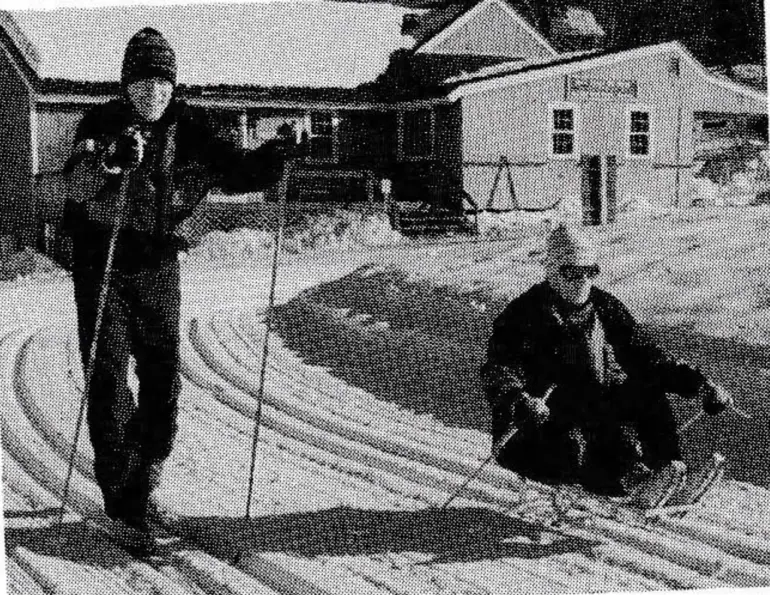
Wheelchair athletes are a familiar sight at road races and alpine ski events; now they are cross country skiing as well. This season, cross-country sit-skis were introduced on the trails at the Jackson Ski Touring Foundation in Jackson, N. H., thanks to the inspiration of Thom Perkins, executive director of the Foundation, and the help of the local community. Interest in providing wheelchair athletes with access to cross country skiing began in 1985 when Jackson hosted the first FIS race that combined able-bodied and disabled skiers in one meet. Following that, in 1990, the resort hosted the World Disabled Nordic Championships. “The World Nordics really opened up a lot of eyes around here,” said Perkins. “It was a vivid demonstration of the ways disabled people adapt to everything from competitive skiing to everyday life.” It was apparent that people who use wheelchairs would be good candidates for cross country skiing — if they had appropriate sit-skis. In researching the problem, Perkins discovered that Ski for Light, a Minneapolis, Minn., organization was using a sit-ski design that originated in Europe and was modified by world sit-ski champion, Jeff Pagels. At $300 each the sit-skis were affordable and a donation from the Concerned Citizens of Mount Washington Valley covered the cost of two of the devices; Jack Frost Ski Shop donated two pairs of cross country skis and a commitment to maintain them.
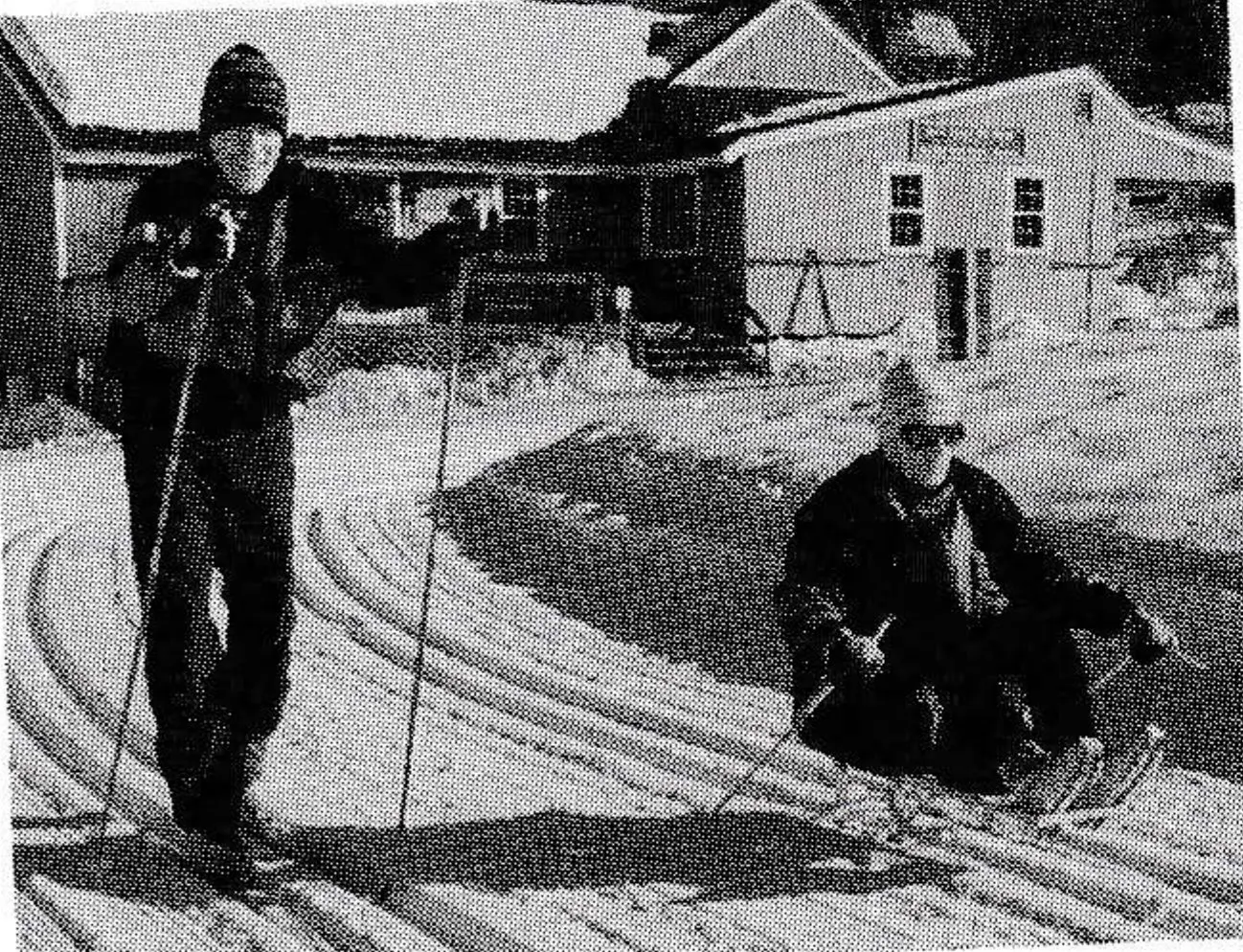
The sit-skis, which weigh about 16 pounds, have a high-back seat attached to a box frame and straps to hold the skier’s torso and legs in place. The skier propels himself with ski poles that are slightly above head height. The sit-skis have no brakes, so skiers use their hands to slow down.
At Jackson, courtesy patrollers and ski club volunteers have trained as sit-ski instructors and guides under the direction of Craig Gray, a sit-skier from Scarborough, Me. Part of the training includes actually using the sit-ski on the cross country trails.
So far this season, sit-skiers have been training on local golf courses and the gentler trails at the Jackson Ski Touring Foundation. “I fully expect sit-skiers to progress to skiing a wide range of [cross country] terrain,” said Perkins. “I’m not about to set limits for these people based on the fact that I cannot sit-ski down the back of Wildcat Mountain.”
Jackson Ski Touring Foundation offers complimentary equipment and training, and free trail passes for the sit-skier and a volunteer guide, but reservations are required. “All skiers, able-bodied and disabled, gain a greater sense of community from sharing the ski trails and ski experience with others,” said Perkins.