


When lights for night skiing were installed six years ago at Shawnee Peak, Me., the expectation was that night skiers would have the same quality ski experience offered to day skiers. More than 300 high-pressure sodium lights were placed on 15 trails to illuminate 1,300 vertical feet of expert as well as beginner and intermediate terrain.
The idea proved popular with skiers, but that popularity brought its own challenge. Increased skier traffic mandated afternoon grooming if night skiers were to enjoy the same conditions as day skiers. But re-grooming the mountain while it was in operation wouldn’t be easy.
The two principal hurdles to afternoon grooming were safety and time limitations. The obvious safety concern — exposing the skiers to the groomers — was easily remedied by closing trails. The broader challenge was working out a system to close and groom 15 trails, representing over 100 acres, without disrupting the skiers’ experience.
To implement a safe and quick groom, Henry Hudson, ski patrol director, and Eric Bloomberg, mountain manager, developed a system founded on two basic principles: the program must be completed in under three hours and no more than one trail could be closed at a time. Strictly adhering to these criteria is what simultaneously makes the program successful and challenging.
Over this past winter, the program that evolved is as structured and disciplined as a military drill. With few exceptions, the routine is the same each day. Completing afternoon grooming requires three groomers and the attention of six ski patrollers.
The daily routine goes like this: The groomers head out at 3:45 p.m. Prior to their arrival at the first trail, ski patrol closes and sweeps that trail and then stands guard at each possible trail entrance. When the groomers have almost completed the first trail, other designated ski patrollers move on to close and sweep the next trail, timing it so the second trail closes at the same moment the first trail re-opens. This process continues and the entourage works its way across the face of the mountain, east to west, trail by trail.
To complete afternoon grooming in the allotted time, the groomers must be in continual motion; yet only one trail can be closed at a time. This requires the ski patrol to continually stay one step, and just one, ahead of the groomers. It has meant teaching 50 ski patrollers, all potentially assigned to assist with afternoon groom, the entire process.

This synchronization of groomers and ski patrollers is the backbone of the program’s success. Over the three months that it has been in place, the afternoon groom team has cut the time required to complete the process by about a third and can now thoroughly groom the night skiing terrain in about two and one-half hours. The afternoon grooming program is so well rehearsed that Bloomberg believes they could complete it without radio communication — if they had to.
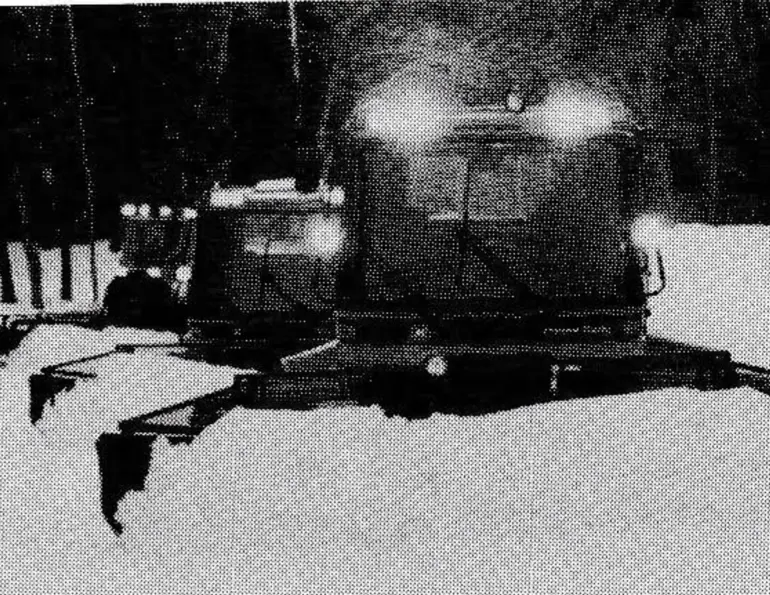
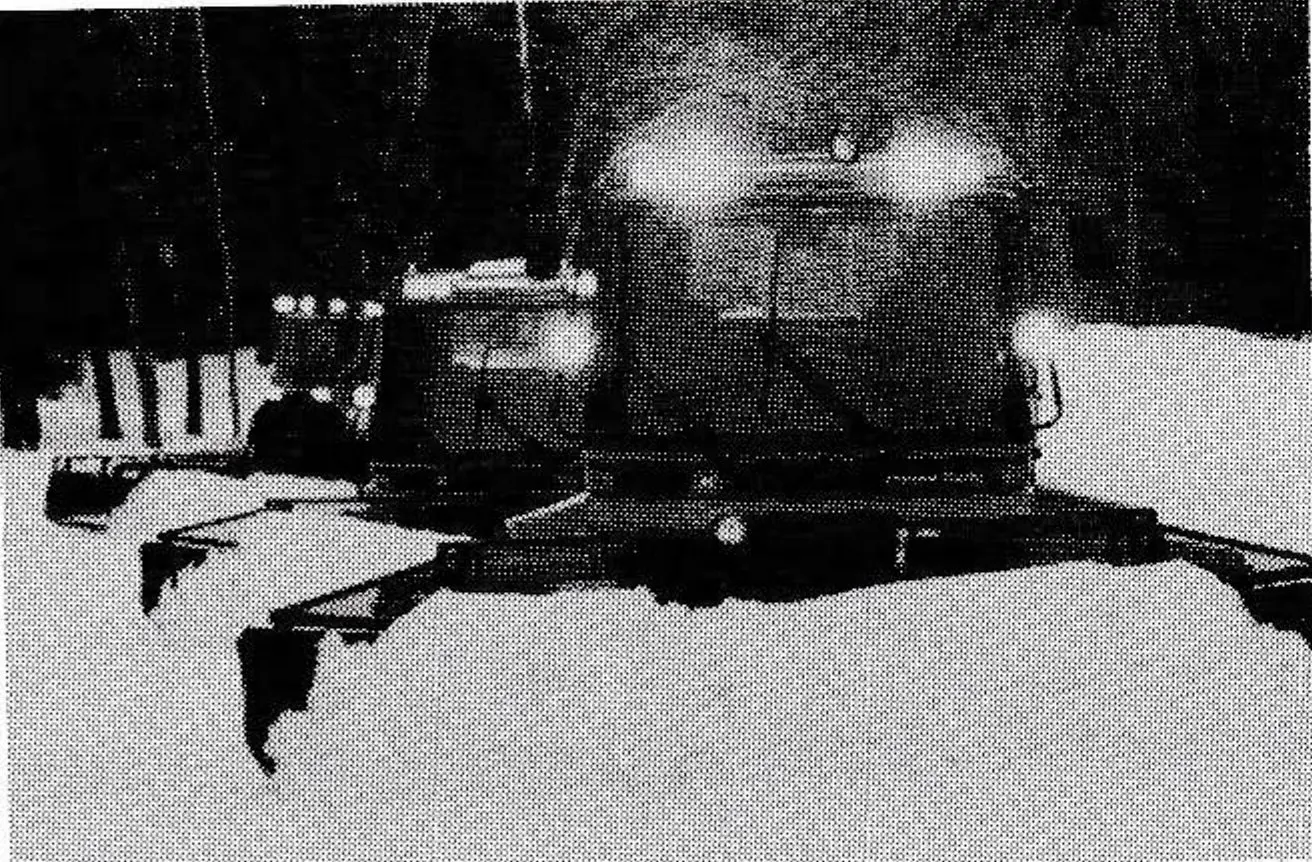
To maintain the time schedule, conventional night grooming techniques have been altered somewhat, but not as much as originally anticipated. To speed up the process, all three vehicles — two PB 240’s and one LMC 3700C — work side by side, in staggered formation. During regular night grooming operations, however, the groomers work independently, each being assigned specific trails, which allows for more blading and detail work than grooming in formation. When originally working out the plans for afternoon grooming, Bloomberg envisioned having only enough time to accomplish “drive-by grooming” or just laying down new corduroy. Instead, the afternoon groom program has evolved to include significant trail maintenance such as blading and windrowing of snow from the edge to the center of the trail.
With the addition of afternoon grooming, Shawnee Peak crews now groom continuously for 17 hours every day. As a result, a second grooming crew was hired. The first shift works the afternoon groom and then moves on to Shawnee Peak’s East Ski Area, which is not lit. The second shift comes on at 10 p.m., when night skiing ends, and completes the regular after-hours grooming routine.
As part of the overall safety program, Shawnee Peak has put extra emphasis into educating skiers about the importance of respecting closed trails. Signs around the base lodge and at all lifts, as well as announcements on the PA, encourage skiers to enjoy the freshly groomed trails while stressing the importance of staying off closed trails. Ticket revocation is the rule for offenders.
Despite the costs involved in the afternoon grooming program, Shawnee Peak’s management considers it worth the money. Afternoon grooming has produced more vocal customer appreciation than any program in recent memory. On-the-hill proof is the crowds of night skiers lining up at the safety ropes waiting for a chance to get “first tracks.”

