

There were excellent examples of this right across the country, but with the powerful motivation of survival to spur them on, eastern areas were probably the most resourceful in their efforts, and they worked out some lulus.
The developers of Saddleback Mt. in Maine, John and Jill Christie, had been hurt as much as anybody by the weather and gasoline shortage of 1973-74. Ever since, they have been in a battle for economic survival. This winter, however, they have given the banks a basic course on ski area economics and on the impact of a strong winter recreational facility on a region’s economy.
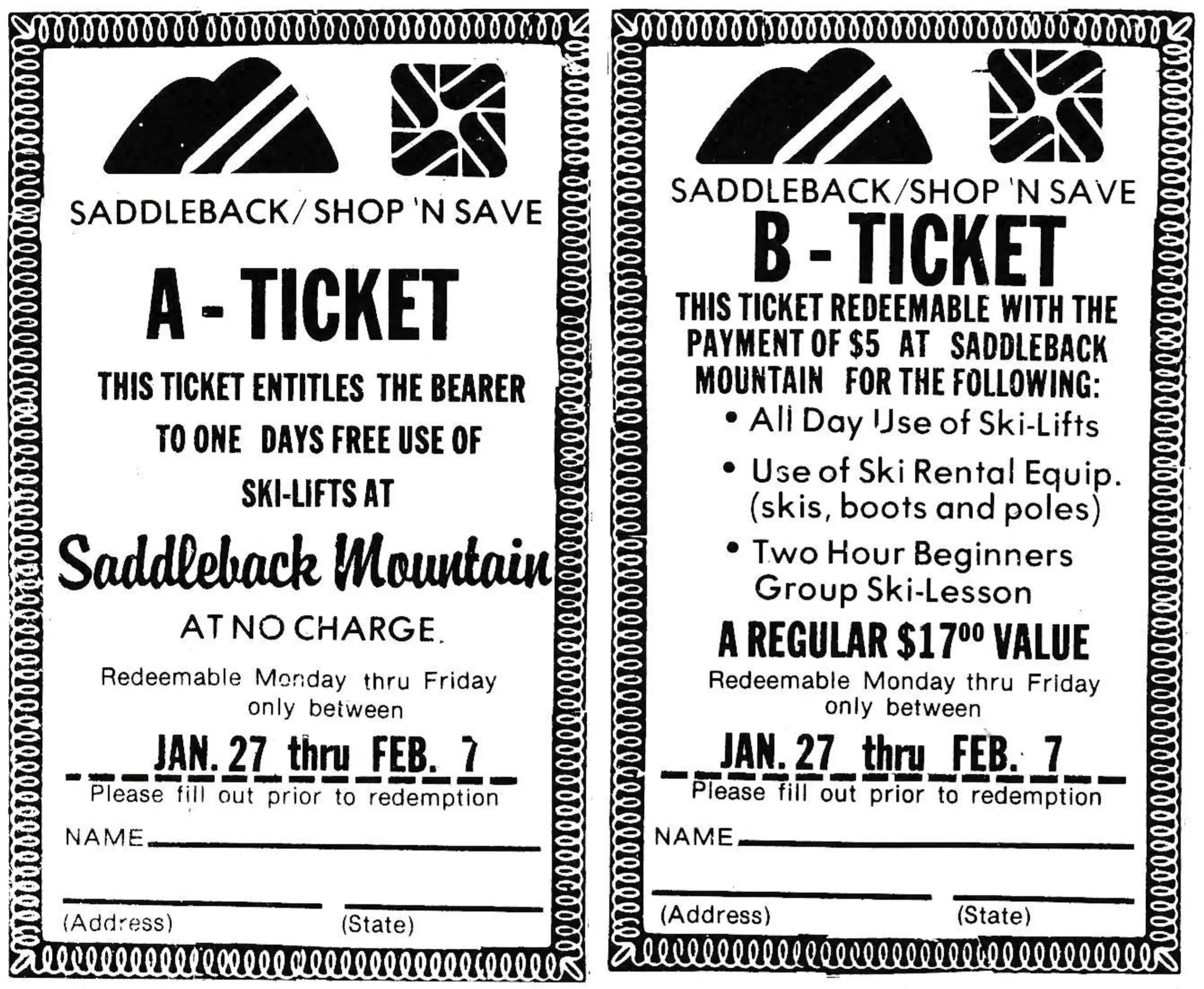
One very successful program inaugurated by the Christies involved a promotion with a large chain of supermarkets in the state, Shop ’n Save stores.
For five weeks, Saddleback was featured in the stores’ print, TV and radio advertising, as well as in the in-store displays. It featured a special ticket which was given free to store customers at the check-out counter.
The ticket offered two options: A) good for a free all-day lift ticket; or B) with payment of $5 it could be redeemed at Saddleback for an all-day ski package that included lifts, rental of hardware and a 2-hour beginner’s group lesson — regularly a $17 value. Both options were good any weekday during the weeks of January 27 and February 3.
The program was “a fabulous success,” according to John Christie. It gave his area massive multi-media exposure in a year when his promotional budget had been trimmed to the bone. About 16,000 of the coupons were handed out, and 40 per cent of these were redeemed. Of these, 1,400 paid the $5 and took option B. John adds that of the 600-per-day average, 400 were new to Saddleback, 100 were new to skiing and 100 were skiers who hadn’t skied for years.
The Christies staged a similar program with the Maine Savings Banks. There was a 40 per cent increase in deposits during the term of this promotion, according to Christie.
One interesting sidelight to these promotions is that the 40 sets of rental touring equipment were used extensively by the coupon redeemers when the area’s alpine equipment ran low. There were no complaints on this.
John Christie feels the program effectively utilized excess capacity while building and broadening the base of his total market. Also, that sort of mid-week traffic played a merry tune on the cash registers in the town of Rangeley, as well as for his own food and bar operations.
Another winner was put together by Sandy Haas, Executive Director of the Ski 93 Association. This organization is comprised of the major ski areas on Highway 93 (Loon, Cannon, Waterville Valley, Bretton Woods, Mittersill and Tenney) and numerous lodges, motels and restaurants that serve them. The promotion involved the New Hampshire-based packer of Habitant soups, and included extensive radio promotion in such major markets as Boston, Providence, Albany, Worcester and Springfield.
The public was offered a $2 discount on a mid-week lift ticket (week of February 17 excepted) on presentation of two Habitant soup labels. Another two labels entitled the bearer to a second night’s lodging at a participating lodge or motel.
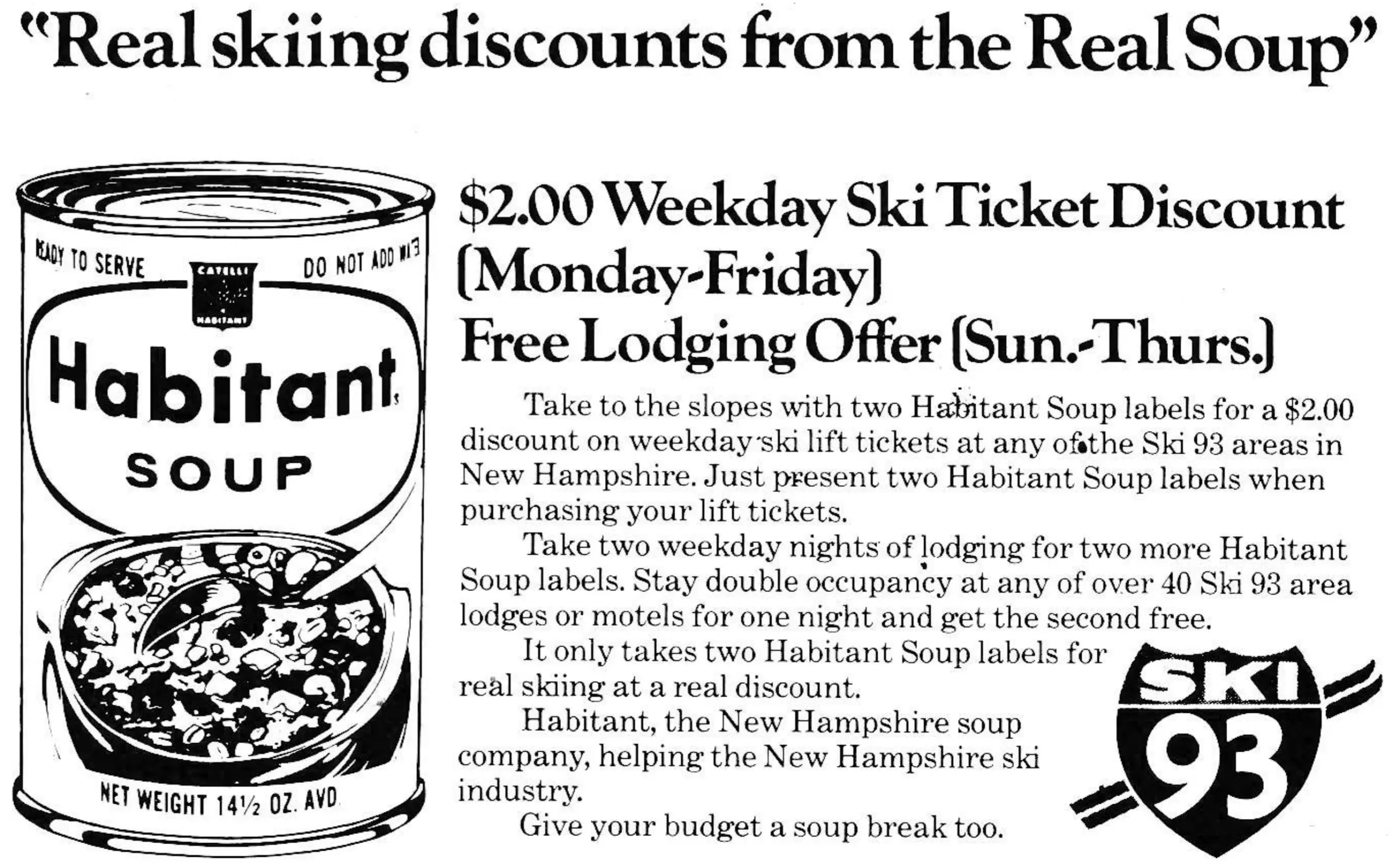
The program also benefitted from extensive point-of-purchase display in supermarkets, and from the inclusion of the Ski 93 logo in all of Habitant’s print advertising. The company’s slogan, “The Real Soup” went to work for the promotion as, “Real Skiing Discounts from the Real Soup.”
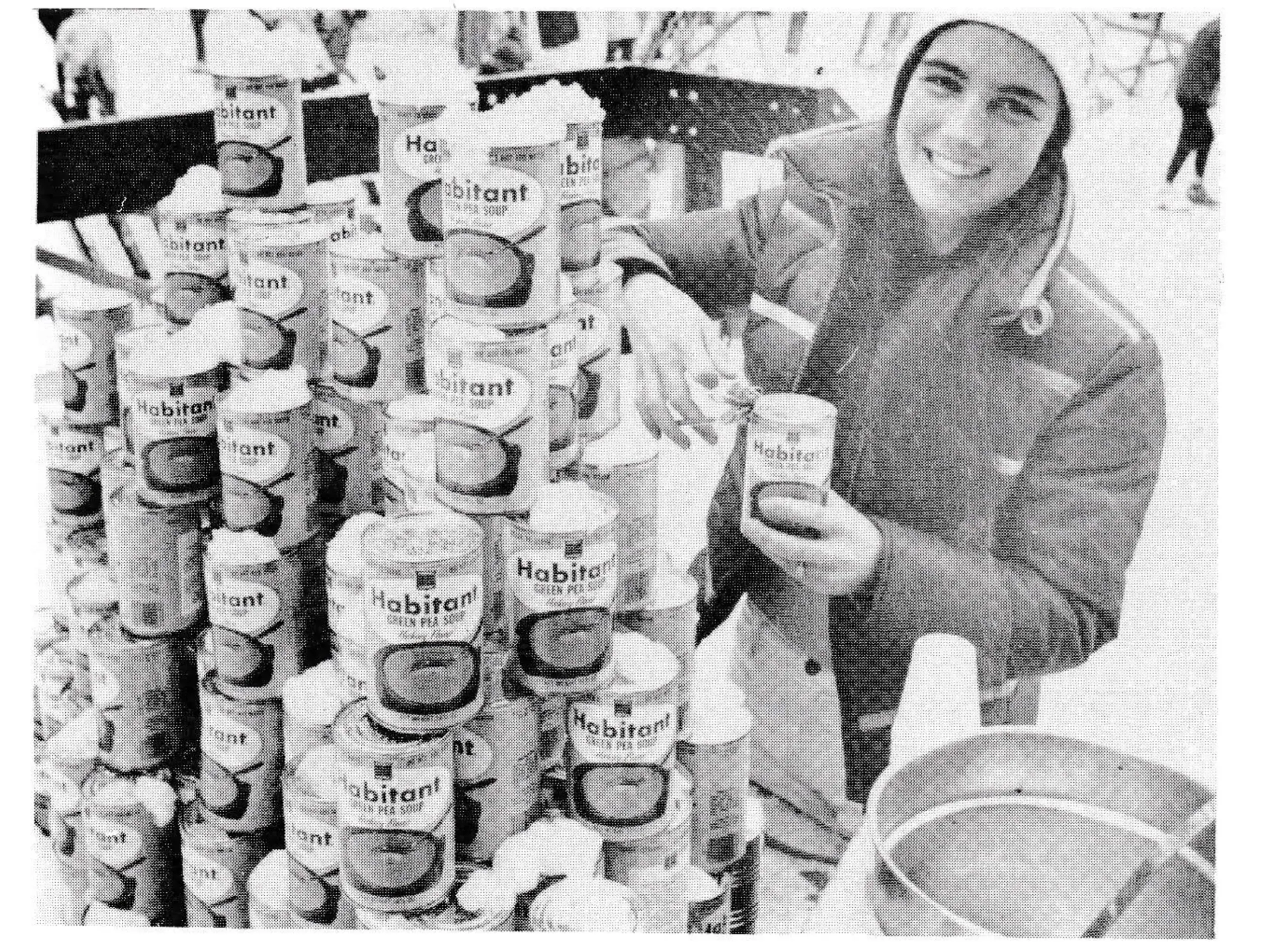
Soup samplings were held at the areas and were highly successful, though one problem was encountered: Habitant sells only through retail outlets and does not distribute commercial-size cans. An on-slope soup station, involved opening some 1,500 14¾ oz. cans.

Haas reports the whole promotion went very well. “It stimulated mid-week business, and it sold the sport of skiing using the promotional muscle and consumer reach of an important company. What made it tespecially appropriate was that it was a New Hampshire-based company selling a New Hampshire product: skiing.”
Still another promotion worth studying for its applicability in other regions is the radio broadside worked out by Bernie Weichsel, NSSAA/Coca Cola Ski Promotion Coordinator.
Bernie started with the basic Coke “Ski Special” that offered dollar discounts on mid-week lift tickets with bottle-cap redemption, or the $5 introduction to skiing program. He saw the tremendous amount of radio advertising that Coca-Cola regularly does, using the youth stations that reach the same market that the ski industry is trying to sell. And he put the two elements together.
A “forced listenership” contest called Ski-Roo-Bee-Doo was put together by the Hartford station, WRCQ, with $15,000 worth of prizes from ski poles to ski lessons to the grand prize of a week’s vacation for two at Harrah’s at Lake Tahoe. The station lined-up all the prizes in return for on-the-air mentions.
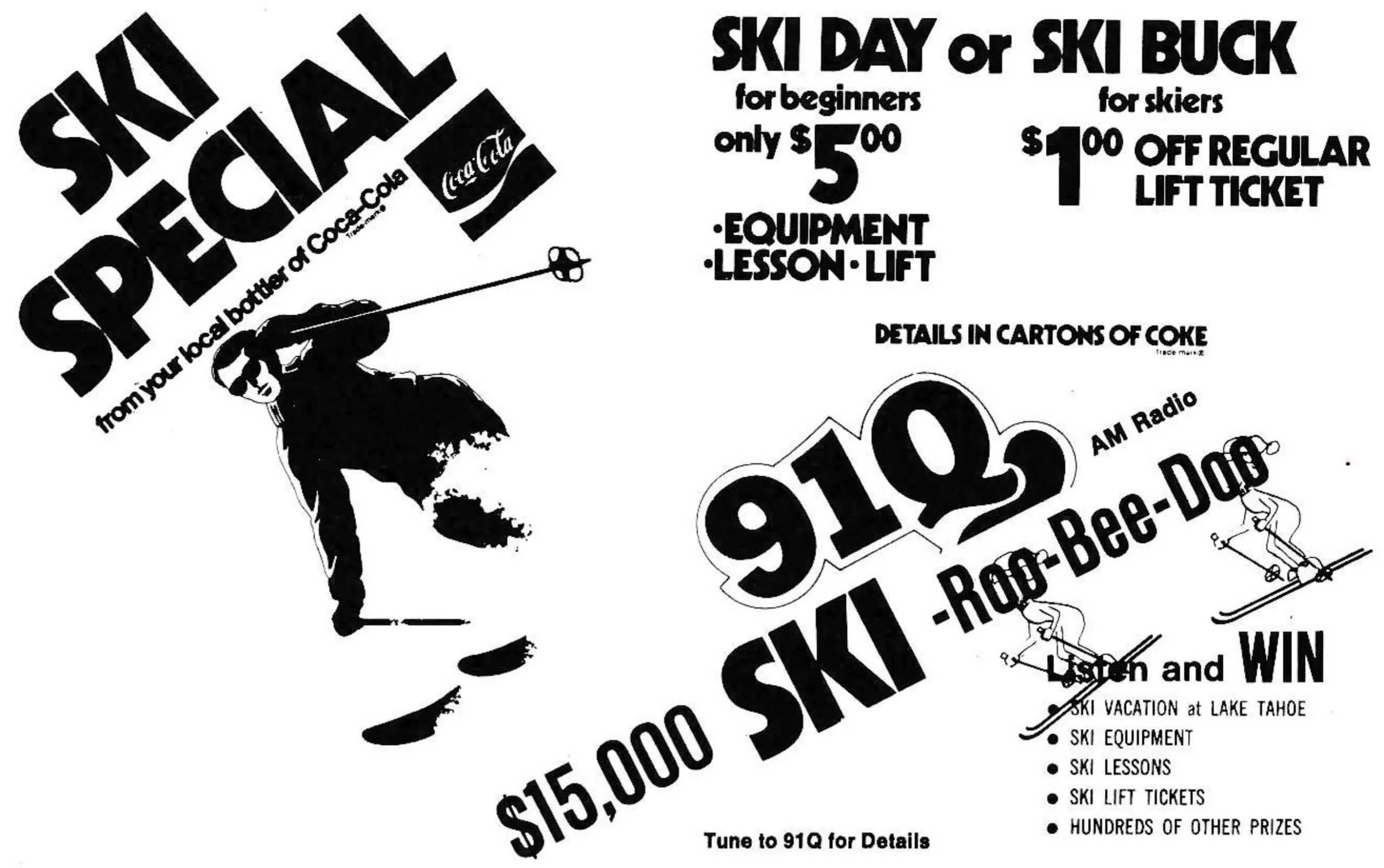
The intensity of the campaign is staggering. There was a pre-contest phase that featured one spot per hour, 24 hours a day for seven days. From January 20 through February 28 the contest was in progress. Eight times per hour the contest was plugged. And the contest itself was aired 308 times in the six-week period. All of this was backed up by some 130,000 Coca-Cola bottle stuffers identifying the station and the Ski-Roo-Bee-Doo contest, plus various Coke shelf and window display materials, TV commercials and newspaper ads.
The station was pleased because the contest built listenership, and they liked the association with skiing and also the association with Coke. The Coca-Cola people liked it because it turned a static bottle-cap redemption promotion into something that really grabbed hold of people and gave life to its promotion.
Bernie Weichsel, whose brainchild it was, was equally delighted because it was dynamically using the reach of radio to sell the sport of a skiing, Coca-Cola’s through regular promotional channels. As such, it involved no extra cash outlays for anyone, and was simply a combination of three natural partners: Coke, skiing and radio. Bernie emphasizes that the Ski-Roo-Bee-Doo contest was hatched by the station itself. The idea and coordination came from Coke through Bernie’s office at NSAA.
These three promotions — Saddleback, Ski 93 and Hartford/Coke — are cited as examples of what went into creative marketing this past winter. There are others that could be explored if there were space, such as the “Special” worked out between Sears and Tahoe Donner — an area which made a real specialty this winter out of creating and caring for first-time skiers.
Ski Area Management invites other areas and area associations to submit details on their creative programs for inclusion in a follow-up story in the next issue.