
The way skiing is developing into a family sport, all resorts, whether they promote themselves as family ski areas or not, must be basically family-oriented. The problem is—what does the mother do with the tiny children who are too young to go off skiing by themselves? Either they clutter up the warming hut, the parents pay exorbitant fees for a sitter—or the family cannot go skiing until all the youngsters are old enough to go skiing.
The ideal program for children at a family-oriented ski area includes special instruction with appropriate terrain, a nursery, junior racing and just-for-fun events.
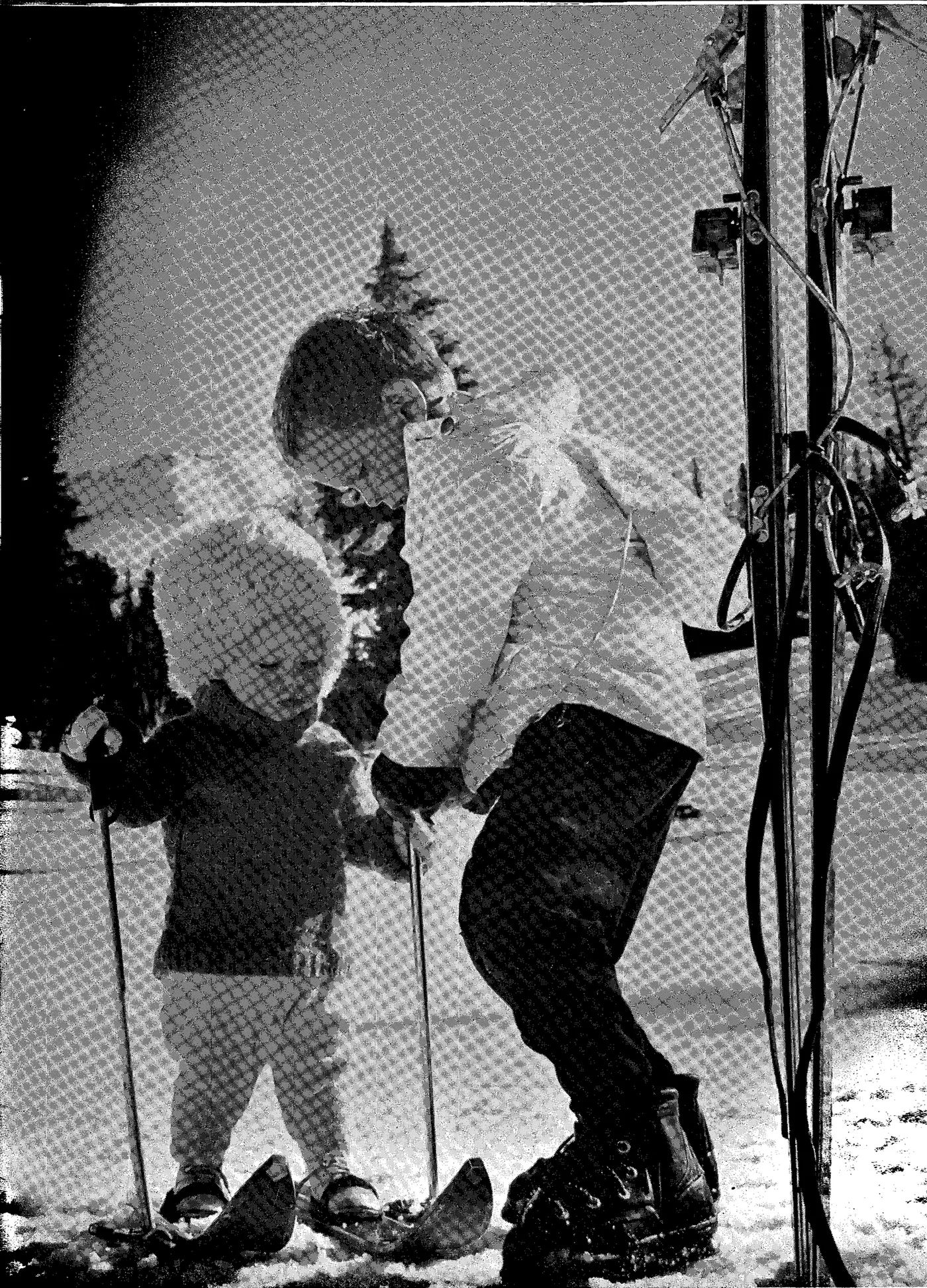
It is commonly known that children cannot be taught to ski by the same “talky” methods that serve grown-ups. Separate classes for the youngest beginners are a bare minimum for an area already in, or hoping to attract, the family trade.
These classes can become great attractions for a new type of clientele. Advertising emphasis on the youngest age at which children will be accepted in class (if they can walk . . . , toddlers welcome) will bring you whole families of beginners who have been waiting for the littlest to get big enough.
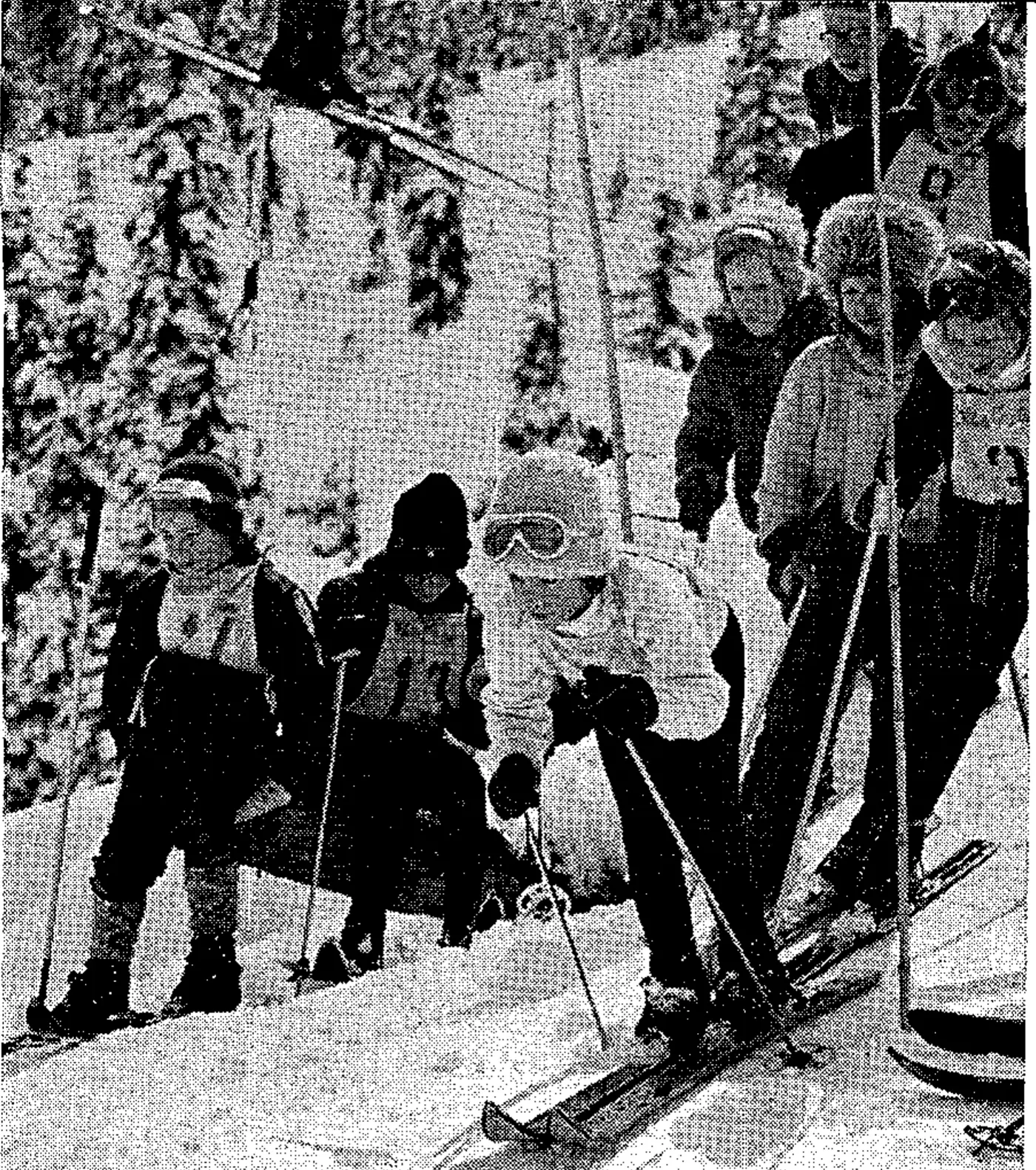
No concession in rates is usually made to children in ski school. On the other hand, concessions in class size may have to be made. The younger the children, the smaller the class should be, particularly with beginners. For children under five, six in a class must be considered an absolute maximum. Children from six to ten can be taught well in classes of up to ten or twelve students.
Once established, classes of young beginners become their own best advertisement. The area photographer should spend some time following them around, as photographic possibilities of children are limitless. Society and women’s editors are intensely interested in children engaged in a new and “in” activity, and the power of women to choose the family vacation sport cannot be overestimated. Literature pertaining to ski weeks or weekends sold as packages should emphasize that everyone except real infants can learn to ski.
At Blue Knob, Bedford, Pennsylvania, An Alice in Wonderland Kiddie School was established for moppets 3 to 6. Peggy Resconsin, wife of the area’s public relations director, dresses as the white rabbit and leads the group on a ski tour through Wonderland.
The story characters are all there in plywood, pinned to the trees—the Cheshire Cat, the Queen of Hearts and the others from the Alice in Wonderland world.
As they ski, the talking rabbit tells the story of Alice and at the end of the hour lesson, the young skiers attend the Queen of Hearts unbirthday party and are served cookies and hot chocolate.
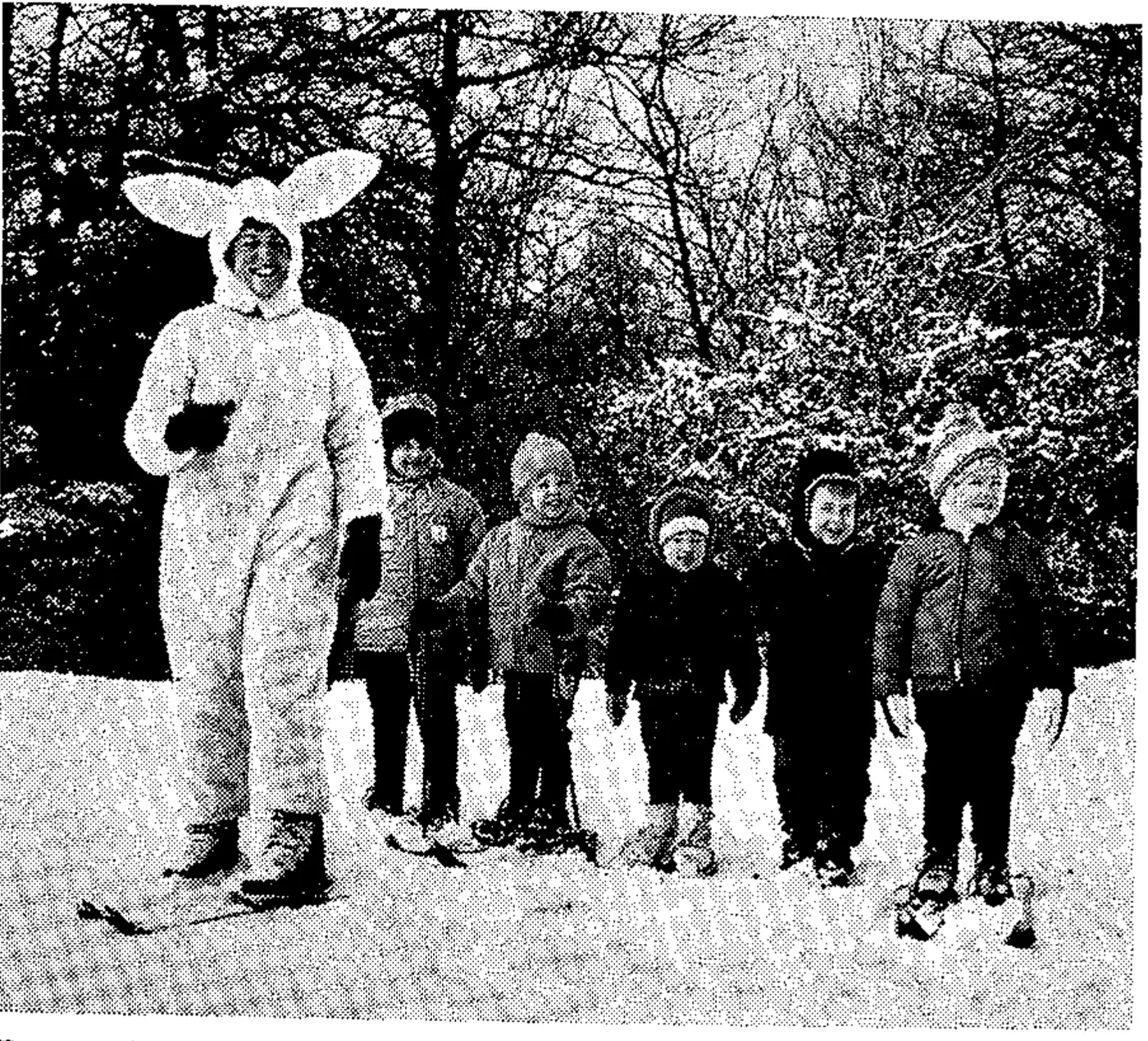
To the hardened area operator, the whole affair might sound questionable, but it serves the valuable purpose of giving the children the feel of their equipment and teaches walking and climbing, plus some limited downhill skiing.
Classes of children collect spectators in no small numbers. Such groups stay fairly close to the buildings, to the center of things, while advanced classes vanish and are never seen in action by bar and porch skiers (groups which may include many well-heeled grandparents).
The picturesque effect of a group of happy children skylarking behind a pretty instructor can scarcely be overvalued. The manager of the area will be subjected daily to exclamations of delight at the sight from customers.
The economic value of the Kleenex brigade does not end with their own lessons. The children who come to a given area to obtain specialized ski instruction are brought by parents or other interested individuals who will spend money in adult sums. The children themselves spend on cheeseburgers, soft drinks, innumerable goggles and mittens, replacing previously lost goggles and mittens.
An area with established children’s classes can afford a little attention to making sure that learning the sport is as easy and fast as possible for youngsters. If ideal terrain for the purpose is not available near a building (preferably located to give prominent display to the children) it can be provided in a few hours with a bulldozer in the summer. A shallow bowl is best, with considerable variety in the degree of slope around the rim, including some that is barely perceptible. A frozen pond, hard by the front porch, is a favorite spot at California’s Sugar Bowl.
If a bowl is impractical, a very gentle slope (with a concave outrun long enough to really stop a skier) should be provided.
Some effort can profitably be made by management to assure that area ski shops are catering knowledgeably to children. Some ski shops are still making such basic mistakes as selling or renting skis that are too long for the children. This can make learning to ski so uncomfortable that your child customer is lost to you on the first day.

A number of areas have established baby-sitting services, and many others feel the need and are planning nurseries for the future. Few areas, however, have attempted the easy and logical move of integrating such a service with the program for older children. Yet the move would surely assure an additional clientele of importance.
If a nursery is simply a room for storing children indoors while parents ski, parents will likely work out their own arrangements at home, or stay at home. In spite of the pressure for such service, area operators profess disappointment at the small volume of business. Even Crotched Mountain Ski Area, opting loudly for a family trade, had at peak only 20 children a day during its first year, with attendance of 1,500 skiers. Sugar Bowl in California tried a nursery, closed it in two weeks without having a single customer. Bill McAdam, of Crotched Mountain, approaches the in-and-out nursery we envision as ideal with a flying-saucer slope under the supervision of the nursery personnel.
The biggest problem of children’s classes is apt to be the child who has to go in to the bathroom, or just because of the cold. In most areas it is not generally practicable to turn a young child loose in mid-lesson to find his own way, get out of his equipment, then clothes, unaided and find his own way back.
Yet the instructor finds it equally impossible to leave the rest of the class, or take the whole class indoors. This possibility is often enough to keep parents hanging around the class when they and the instructor would rather they were free to ski.
Cooperation between the nursery and the ski school offers the solution and is the sort of service that has made advanced thinkers in other sports rich. Plan to put your moppet classes as close to the nursery school as possible; that way the instructor can send the kiddies unescorted into the waiting arms of the nursery school personnel. The class won’t be interrupted and the instructor can continue to teach the others.
An area with family business (are there any without?) or reaching for an increase in the steady year-after-year kind of customer family skiing represents must always work to improve its program for children. The program outlined here can be introduced step by step, as needed. The keystone of the program is special instruction so that your young bunnies can learn to ski properly and well, and that requires only arranging to make instructors available.
The nursery involves capital, but not much. Space, bathroom facilities, a crib and playpen, a few toys and a reliable teenager will put you in the nursery business. It should be open during ski school hours.
The real payoff for all this attention to the small fry is apt to show in a noticeable increase in whole families among your customers. Then special lodging facilities may be desirable and remunerative. “Family” rooms with four bunks (cot may be added) and private bath are big money-makers in some areas.
Where the family skiers go, cabins and other land developments will follow.
Caberfae, Michigan, has an energetic program. They brag first about their Christmas racing school, started several years ago by Franz Gabl and to be run this year by head instructor Robert Mayer, Jr. About 50 kids over 12 attend the four day session, paying $25, including meals. They work in three or four ability groupings with top instructors.
Kids grow up to be skiers. The drop-out rate among adults who learn to ski after 21, on the other hand, is enormous.
“We’re building the future skiing population,” says William MacAdam of Crotched Mountain. “Fixed overhead,” he adds. “Most areas are unpopular Monday through Friday. Our costs remain the same. An extra 100 youngsters cost nothing and we use any inducement to get them up here.”
The Crotched Mountain Foundation for crippled children is near by and the area looks hard for “opportunities to cooperate.” Among other entirely gratuitous services, lessons for a group of deaf youngsters and one blind student were donated all last winter, once a week.