

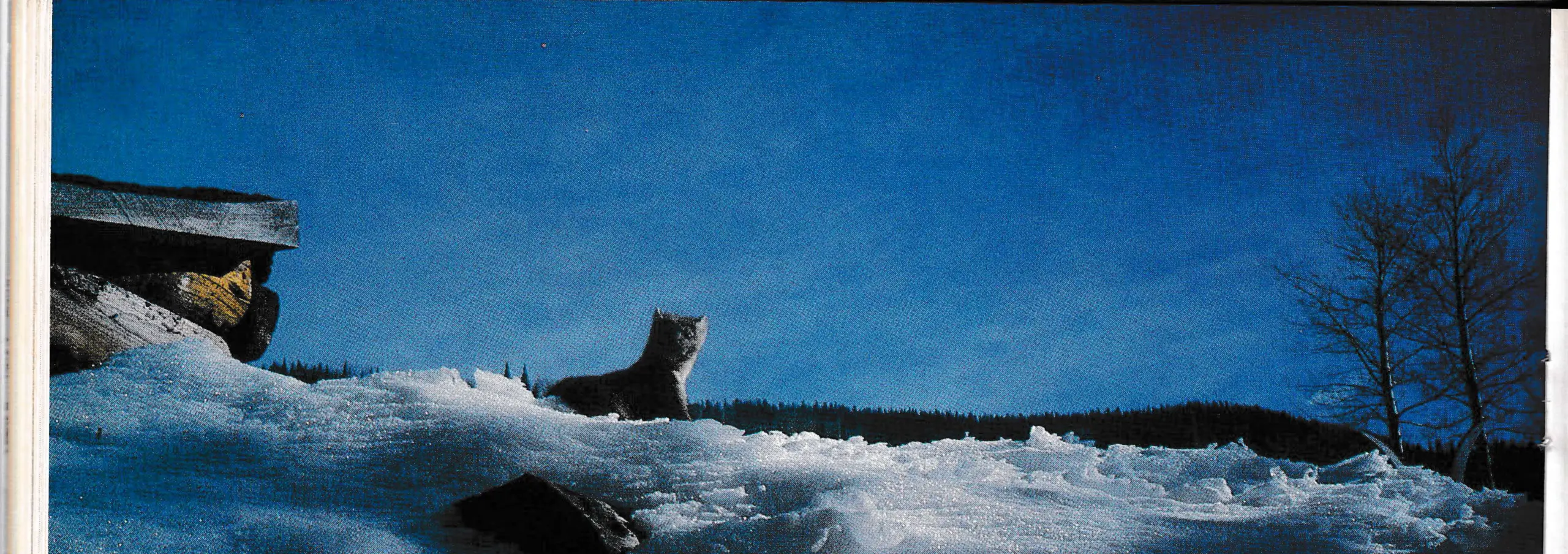
The American marten, Martes americana, is a reclusive arboreal carnivore of the genus Martes, about 2 1/2 feet long, with 9-in. bushy tail, and a long, glossy, dark brown coat. This denizen of the alpine and sub-alpine forests is making news in the ski area industry by being made the focus of a Challenge Cost-Share Agreement brokered by the Wildlife Habitat Enhancement Council (WHEC). The agreement brings together Steamboat Springs Resort and the Colorado Division of Wildlife (collectively the “challengers”) and the Forest Service, or more specifically, the Routt National Forest and Rocky Mountain Forest and Range Experimental Station.
So what? What’s the big deal?
Though it is no big deal, monetarily or otherwise, for any of the participants, including the American marten, it does represent the first of what may become many wildlife enhancement programs at ski areas engineered through WHEC, a non-profit, apolitical, non-lobbying organization whose activity in the ski world has been encouraged by the American Ski Federation. Other areas in the decision-making phase include Beaver Creek and Mt. Hood Meadows.
The story begins at the 1991 USIA convention in Reno, when WHEC’s executive director, Joyce Kelly, made a presentation on her organization and how it could involve the ski resort industry. Among those in the audience that day was Vern Greco, CEO of Steamboat Ski and Resort, who brought the concept back to his staff for follow-up.
Following the WHEC formula, a plan was set in motion for involving company personnel. An intra-company memo was released asking for interested parties to volunteer for a wildlife enhancement project. In addition, there was an article in the local paper on the project.
The volunteer committee was formed, initially with two people from the community and the balance from the company, “They came from throughout the company,” says Doug Allen, Steamboat’s director of mountain operations, and a soft-spoken leader of the group. “There were mountain people,” he says, “but also from elsewhere, like accounting. We turned up one who had a degree in enviro-science.”
The volunteer group is up and running, even before the final agreement has been signed for the master project, which is just as WHEC would like it: the drive from the local volunteers is what it is all about.
This past summer the Steamboat committee undertook what Allen calls “a few minor projects to get things started.” In fact, a lot got done.
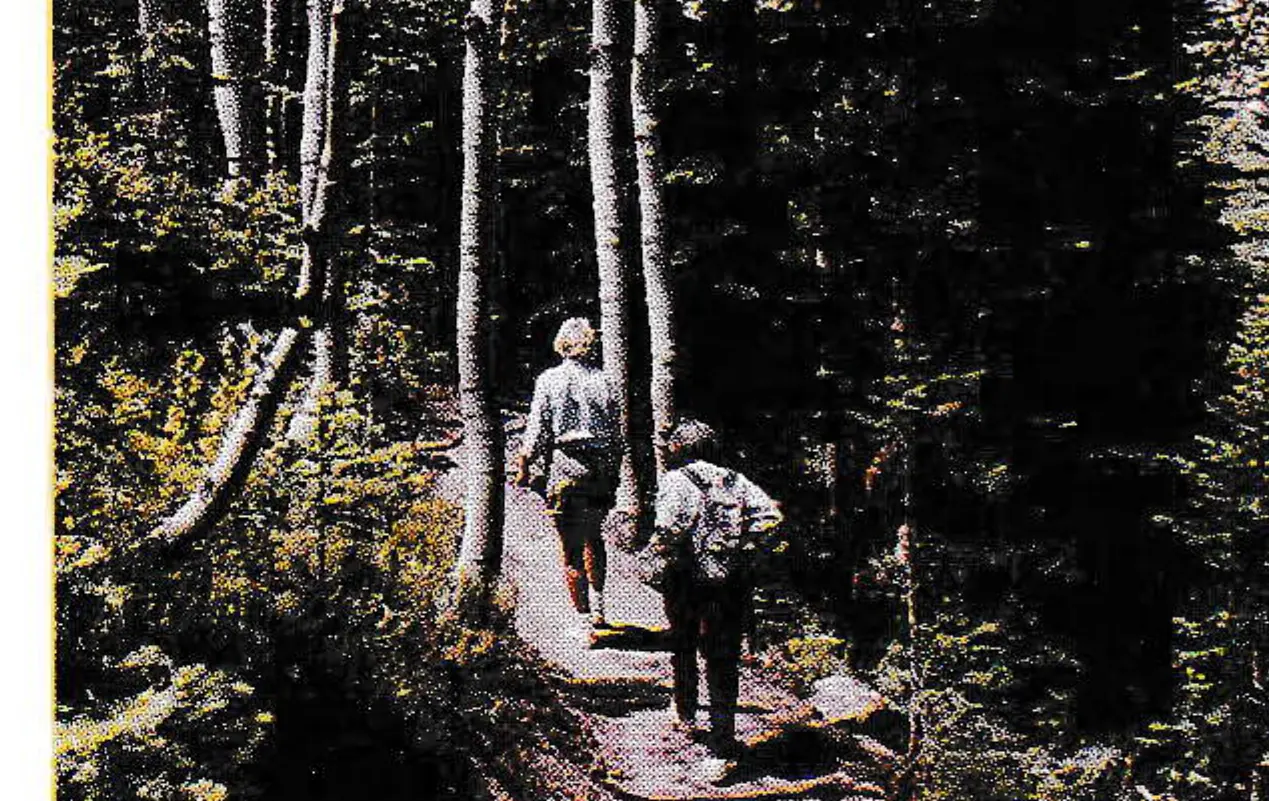
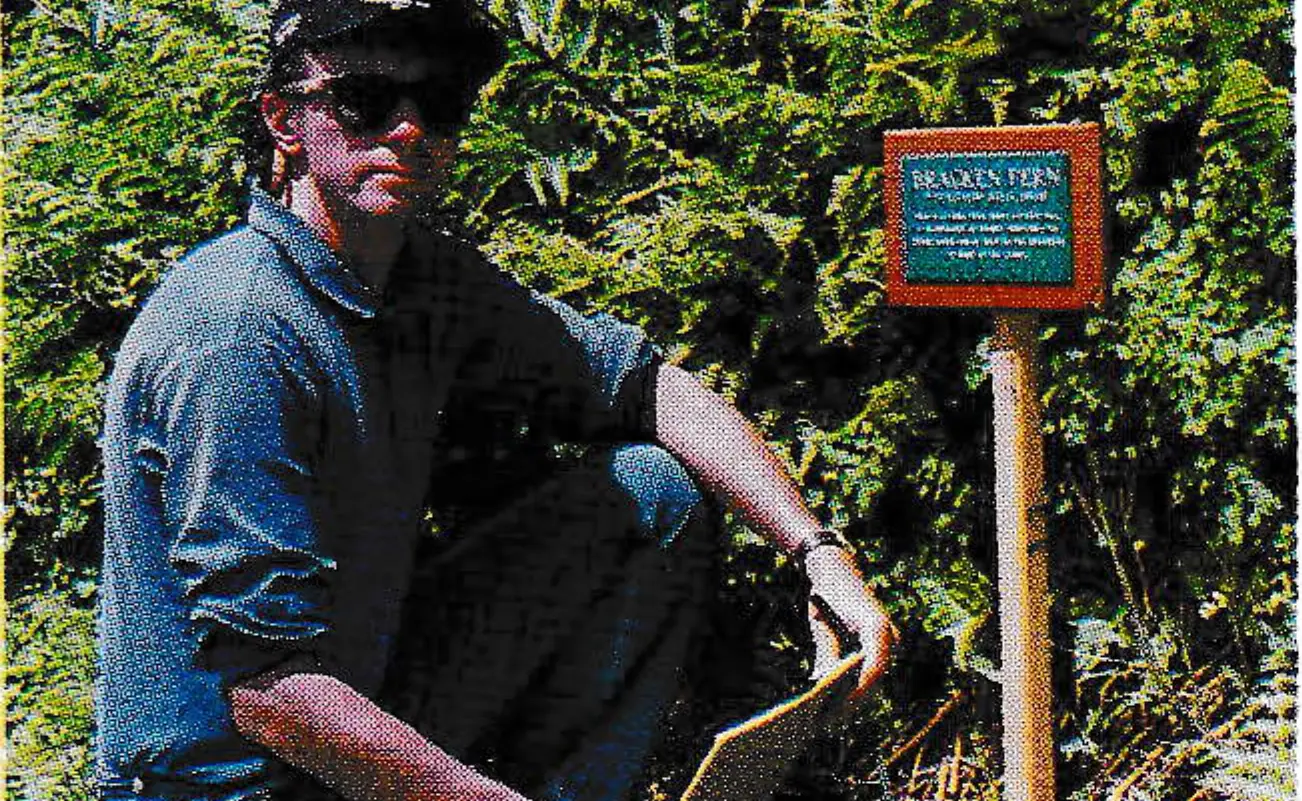
Volunteers took plant material from a lift excavation site and transplanted it to the .7 mile nature trail around the Thunderhead mid-station. Other work was done on this popular summer facility towards making the trail barrier-free for handicapped or older visitors by hard-surfacing it. They also undertook to construct “kiosks” where interpretive signs, including glass-covered artwork, told visitors about what they were seeing.
“We’re also trying to do a little better job of enhancing wildlife habitat,” says Allen. “Where before we might have just burned or buried timber that’s cut, now we’ll stack some in a trail cut. It’s good for wildlife.
“Ski areas typically get a bad rap as far as wildlife is concerned,” Allen continues. “It’s frustrating, because the deer population here, for instance, is fantastic. And where I was before, at Copper, we really increased habitat. When we were cutting Soliloquy, a big, wide intermediate trail, we created some really nice habitat. Pretty soon the elk were using it as a calving ground, and that just wasn’t there before.”
The American marten project, originally scheduled to be launched in October, was postponed for some last-minute revisions, but ASF’s president, Joe Prendergast, was confident that a couple of “minor misunderstandings” at the field level would be quickly ironed out. “The project has high-level support in the Forest Service in Washington,” he adds. Depending on the funding eventually agreed to, the project will be from one to three years. It is designed to better understand the incidence of the marten and its habitat use. Aerial photography will be studied to identify “hot spots,” and a ground check made of these. The Steamboat volunteers will also monitor marten track statistics. In the final phase they will develop interpretive exhibits for the public.
WHEC’s involvement in all this will have been in helping all the parties come together, helping them focus on the project and then, once it is underway, certifying it.
Using its own words, “WHEC is a non-profit, non-lobbying organization designed to help corporations improve their lands for wildlife.”
WHEC helps its corporate members identify feasible wildlife enhancement projects, suggests ways in which that corporation can reach inwardly into its own organization for committed volunteers, and outwardly into its local communities for support and involvement. The primary beneficiary is the environment and the wildlife itself; the side benefits that WHEC preaches include enhanced employee pride and morale, as well as improved community relations. WHEC also wants its members to earn environmental white hats and then not be shy about wearing them and showing them off.
While most of WHEC’s work has involved developing programs on private land, the opportunities for working with permittees on public lands — Forest Service, BLM, Park Service and others — are equally compelling, according to Joyce Kelly.

“When Joe Prendergast (ASF president) and I talked about trying to get the ski industry involved, one of the opportunities we saw was to work within the Forest Service’s Challenge Grant Cost-Share program,” she recalls.
The Challenge Grant program is where the Forest Service acts as a sort of co-venturer with the private sector on projects deemed desirable and worthwhile. Typically, the cost and benefits are shared by the Forest Service and its partner.
Joyce Kelly sees value in developing and shaping the various relationships. “It’s a good way for the state people and the Forest Service landlords to see the company in a different light — in a non-regulatory mode. It forces service personnel to understand that these programs are voluntary. They are not part, and should not be part, of the ski area’s operating plant. the minute they become regulated they are no longer part of what WHEC is all about, which is doing things over and above what is required either under regulations, or as part of litigation or as part of the area’s basic operations.
The step-by-step sequence for a ski area to get a WHEC program up, running and certified starts in one of two ways. First, it can say, “We are going to start a project and we need you to come and help us figure out what this is.” The second avenue is, “We already have some things we are doing and we need to get them certified.”
In the first instance, says Joyce Kelly, a site visit is scheduled. The local committee will have been formed and WHEC meets with it in a general session that tells them what WHEC is all about.
“We establish that we are all dealing with partnerships,” says Kelly, “and that it is a voluntary effort, driven by the ski area, not by the Forest Service. The Forest Service is in a support role, as is WHEC, as is the state. Obviously, anything that is done in the National Forest has to be compatible with the Forest management plan, but that’s not all that difficult to do.”
After the general meeting there is a ground visit to see first-hand what the opportunities are and to gather input both from the employees who see the wildlife more than anybody, and also from the Forest Service as to their concerns and interests.
WHEC then writes an “opportunities report.” There are two sides to this: the human resources side and the wildlife side.
“Then,” says Kelly, “we lay out a whole menu of opportunities and identify those which we think the group might like to start with. We suggest starting small because there is a greater probability of success, and that’s what we’re after. If you want to do ten projects the probability of succeeding at any one of them is low; if you only do a couple, the probability is high.”
From the big menu the committee decides what it wants to do. “This is key.” says Kelly, “because we could suggest a project where there is no interest, and if so, it isn’t going to fly. You have to build on the personal interest.”
Then WHEC produces a report that pulls it all together, after which the committee is ready to implement a couple of projects they have chosen. Once the projects are running, perhaps after a year, they are eligible for certification, and the committee goes back to WHEC with a detailed management plan detailing how they are managing the species, whether it is the American marten at Steamboat or the gray crowned rosy finch at Mt. Hood, or perhaps a plan for revegetating for a species. Recertification is done every two years, and WHEC requires photo reference points. “We’ve tightened up the criteria for the certification,” says Kelly, “because if the ‘cert’ program is tight it is more credible, and that benefits all of the members.”
Bob Kuusinen, Steamboat’s vice president for operations who is heavily involved in the WHEC project, is not unaware of what the values are for the company, but his summing up about favorable public and community relations and corporate image reflects both his and the committee’s priorities: “Side benefits are nice if they occur, but we have a strong focus on doing good for the wildlife.”