
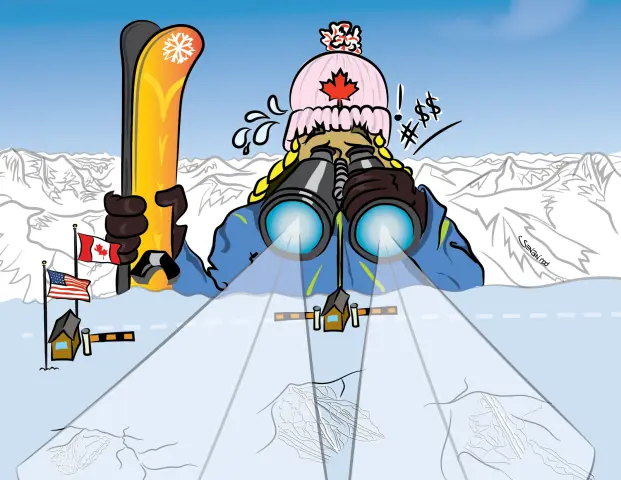

Ski area operators, despite their concern with the environment, may not be too concerned about the furbish lousewort in the Allagash wilderness of Maine nor the snail darter in Tennessee’s Clinch River, but you can bet they are openly concerned about the survival of the major consumer ski shows. To some observers, it appears that a couple of shows already are dead, but haven’t been buried. Others are gasping for breath.
Meanwhile, area operators are looking at their marketing dollars. The sheer economics of higher air fares, more expensive hotel rooms and more costly everything are being weighed against the dwindling returns—or perceived returns—from the ski shows.
“I’m not really sure how you would quantify the results of a ski show from a purely statistical standpoint,” says Harry Baxter, marketing chief for Jackson Hole, Wyo. Before moving West, he was with Sugarloaf/USA, Maine’s largest ski resort, and he knows the problems of trying to peddle a distant resort to skiers. He sees the apparent potential in ski shows, but he also knows, like so many operators and marketing types, he isn’t getting his money’s worth these days.
The big city shindigs are the major concern. Metropolitan areas like New York, Los Angeles, Chicago, Boston, Detroit, San Francisco, Toronto, Montreal, Atlanta, Minneapolis and Washington are vital to the continued growth of skiing. Local and regional shows seem destined to continue, flourishing on a modest level. But they deal with limited numbers of skiers and their potential—from an area’s standpoint, which is “how many of these showgoers can I get up on my hill this season?”—is equally limited.
It’s the heavy-hitters who clearly worry a large segment of the ski industry, from area operators to equipment manufacturers. Some shows seem safe while others are nothing better than a crapshoot. Two or three so-so years can put even a seemingly solid show into a tailspin. Chicago, Toronto, Atlanta and Syracuse, N.Y., are fingered as the best by participants, with Los Angeles, Montreal, Boston and Minneapolis fairly solid. But New York, Detroit and San Francisco seem perilously close to following the steps of the dodo birds, free lunch and balanced federal budget. Going . . . going . . . go . . .
And, of course, ski shows have tiptoed around Philadelphia and Portland, Ore., despite their obvious potential, for several years.
Ski shows have been as much a part of the fabric of skiing for years as media press kits, ski shop preseason sales and area operators’ snow forecasts. Now, though, they’re on the downslide of a 25-year roller coaster ride. The boom time is over and ski shows have to get serious or get out.
Exhibitors express disappointment and frustration over the inability of major shows to pull in enough potential business yet they have continued to participate—until now—because they felt they must maintain some form of visibility in an obvious in-close marketplace.
Eric Dixson, sales director for Squaw Valley USA and an admitted ski show nut, says he has to put professional considerations ahead of personal feeling in assessing where Squaw participates. Or even if it participates.
“There are two considerations for a ski area. You have to be in your immediate area and then in any other market in which you’ve built up some support. For us, that’s Chicago and maybe some co-op program in places like Minneapolis, Toronto, even New York. We’ve got to plant the Squaw flag at Sacramento, San Francisco and even LA because those are obvious markets and then it’s down to what other markets are proven for us. You just can’t be everywhere now,” according to Dixson.
Just about everyone contacted by SAM felt the ski show idea is still valid. It is, as they say in pro sports, the execution of that idea where shows stumble.
“I’m not disappointed with the idea of a show,” says Sugarbush Valley marketingmeister Chan Weller, “but it’s the management of the shows which is erratic. They consistently told us one thing, but their promotion was not what they said it would be.”
Weller, who attends about two dozen shows every year for the Vermont twin-area resort, says promoters simply must do exactly that: promote. “I’d go into ski shops or visit clubs and they didn’t even know the show was in town that week or they weren’t sure where it was. In Detroit, about a third of the ski shops hadn’t even been contacted.”
Promotion was the loudest bitch heard from exhibitors. On the other side of the counter, promoters concede some of the obvious failings, but also cite the lack of industry support for the diminished “sizzle” at shows.
“I’d have to agree with you that ski shows seem to be an endangered species, as witness the understandable but almost ruinous lack of support this season from suppliers and manufacturers,” says longtime major domo Harry Leonard. “Of 38 companies who participated in our shows in 1979, only two came back for 1980: Salomon and Burt. They gave home office support. We had a couple of reps at some of the shows, but no home office support as we’ve had in the past.”
Based on past returns, though, if he were a manufacturer, would Leonard have put his company booth into one of those shows this season?
“Absolutely. If I’m a major company, I should have reps in the markets where I sell. Every company, I don’t care who it is, should cover the market where it sells. That’s basic business,” he says.
What also gnaws many exhibitors is the apparent unwillingness, not just a lack of ability, but the unwillingness on the part of some promoters to help create an interesting show which is going to have some appeal, to skiers and potential skiers.
“You get a hall full of bag-fillers and what good is that? You’ve got to have something happening,” says Dan O’Connor, sales and marketing manager for Stratton Mountain and Bromley Ski Area in Vermont. “It used to be a cheap night out and a fun time. Now it’s no longer cheap by the time you figure in parking and everything else, and it’s no longer fun.”
Leonard defends promoters: “Well, what’s the industry done to add some spark? There aren’t that many new areas and there aren’t that many innovations any more, either.”
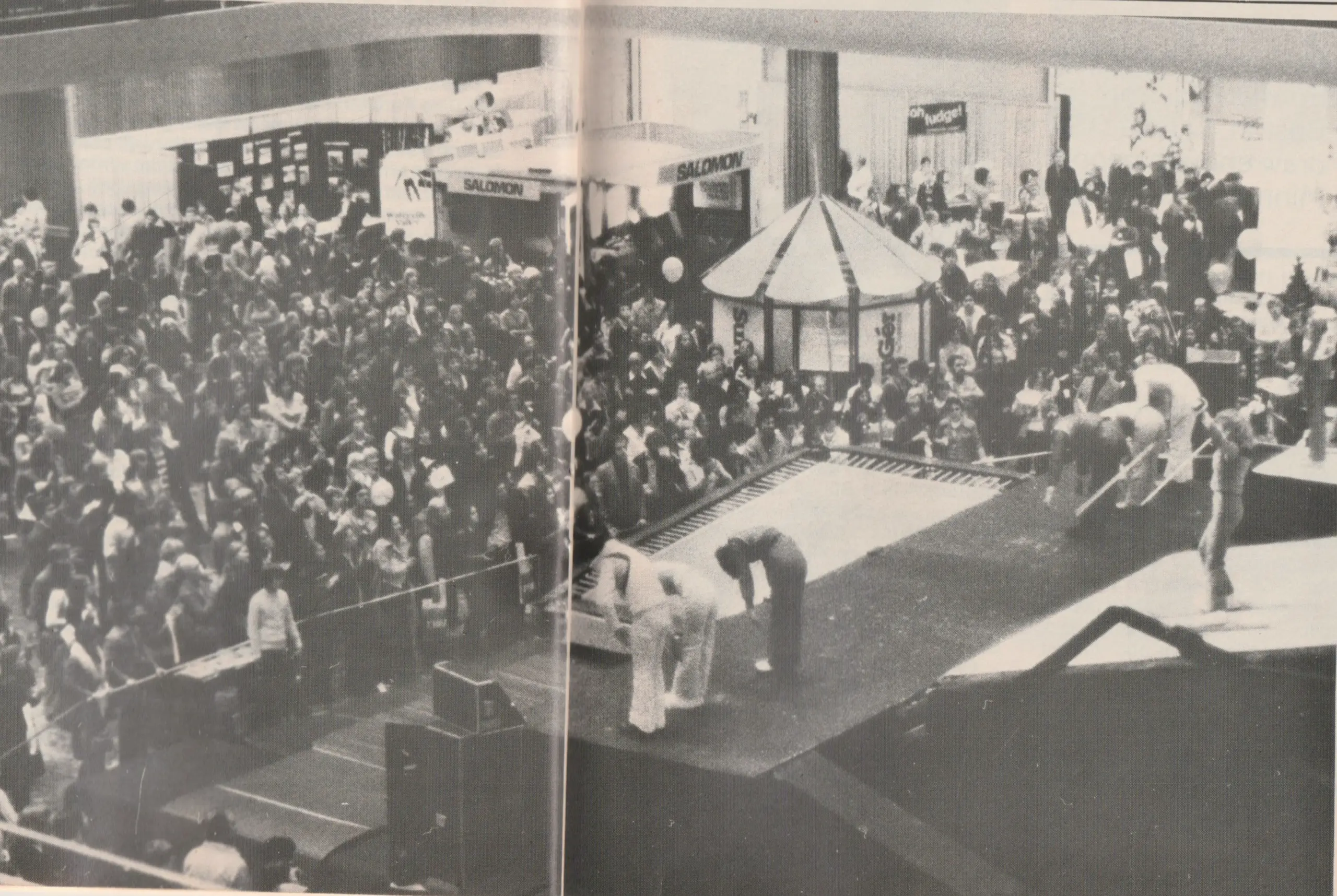
Scott McCrea, marketing director for the Aspen, Colo., Chamber of Commerce and former marketing quarterback for Copper Mountain, echoed many operators when he reflected on ski shows: “They started to get really big in the early ’70s. You’d pass out brochures, maybe some posters to the kids, see some travel agents. There would be a deck show with Wayne Wong and all that. But, after three or four years of the same thing, you began to ask yourself, ‘What are we doing here?’ United Airlines had a big booth and they’d pass out our stuff if we didn’t personally attend a show; now they’re out of it. So, you’d pass out a bunch of stuff, sometimes go out and get drunk. San Francisco would be good for Mammoth, Heavenly and Squaw Valley, which was nice for them, and we’d have a nice time in the city. But what was the area really getting out of it?”
“Well, those of us who started maybe 10 or 15 years ago as PR underlings and then moved up the ranks to become marketing directors and so forth, those people began to question what kind of returns were coming from the shows,” McCrea explains. “In many cases, a lot of people just saw no use for some of them. And at a thousand bucks a day, depending on the show and all its costs, a lot of areas pulled back from the wide support they had been giving.”
Aspen PR director Jack Brendlinger says the ski giant has been out of shows for several seasons because, “there just aren’t the endless marketing dollars any more. You have to draw some priorities.”
At Kneissl of America, marketing manager Bill Johnson says the problem is not only with the shows in many cases, but with the rise of outside competition. He specifically points to the increased number of ski shop preseason sales. And their timing.
By the time the ski show hits town, a lot of that growing anticipation of the past on the part of skiers may have been defused by some blockbuster ski shop sale, Johnson says.
“In the old days, the ski show was the vehicle which created the excitement for the skier, yet today with the increased competition of the ski retail market, sales are now taking on aspects of the ski shows. Some of them compete with tent sales, celebrities and even ski decks. Thus, when the ski show comes to town four to six weeks later, there’s been a lot of ski fever already and the consumers are just waiting for the snow to fall.”
“Bill’s an astute analyst of the ski industry, one of the best,” says Leonard, “I’d have to agree, as I look back, that the demise of the ski shows—well, not the demise but the, uh, downturn—coincides with the rise of the early big shop sales.”
“Still, I believe the root reason a human being, male or female, comes to a ski show is to research the market for themselves. They’re looking ahead to the season and for that $3.50 or $4 ticket you can get in a lot of research . . . if the big companies are there.”
For a quarter of a century, Leonard was the unquestioned kingpin in the business, running shows in the major markets of New York, Chicago, LA, San Francisco, Detroit and Boston. He stepped down a year ago, giving up the shows in Chicago and California, but working with an “interim producer” for the three eastern shows, which fell on their collective kissers. Of the six shows, Chicago ranked second to the raves for Toronto, according to the SAM survey, with LA and Boston getting marginal to mixed reviews. The others did a pratfall; “complete bust” was the kindest comment heard on New York, Detroit and S.F.
But those aren’t the only troubled shows. A new promoter in Houston laid out a reported $250,000 for a Hollywood-style gala with Bob Hope, Mel Tillis, Dottie West, the Baja Marimba Band, Jean Claude Killy (what’s a ski personality doing in there?), Hank Aaron and others as the headliners to get the throngs to attend. Not necessarily skiers, just hordes of people. It never happened.
Recalls one participant, “I was one of the 10 or 12 people who were there watching Bob Hope perform on opening night. It was more than embarrassing. It was a farce. She (the promoter) had been claiming she’d sell a million tickets at $7 each and she’d have 800 exhibitors; there aren’t 800 exhibitors in the business, I don’t think. Well, she wound up with maybe 200 people on opening night, got maybe a thousand on each of the next two days on the weekend. She couldn’t have had more than 2,500 total, though. She went right into Chapter 11 and the Dallas show, which she also was doing was cancelled.”
Such management—some might prefer manglement—has hurt other shows, too. Site selection is a nightmare in New York, but everyone feels Rockland County is simply too far away from the marketplace, and then letting in T-shirt vendors and that level of booth drags down the show. Green Bay, Wis., diluted the ski aspect with snowmobiles and other non-ski exhibitors, and reportedly had problems.
Travel Alberta’s marketing officer, Danny Cherney, sounds a frequent lament: “It has more to do with the promoters than with the shows themselves. If you give people something for their money, they’re going to turn out.”
In his case, Travel Alberta, the provincial tourism development agency, underwrites the effort to promote such ski spots as Banff, Jasper and Lake Louise resorts, “because the areas can’t afford it all by themselves. It could go up $25,000, depending on your literature and how many people you put on the road, and that’s too expensive. We also have to be at these shows to inform people in general about Alberta. So many of them haven’t any idea about where we are; they want to know what state we’re in, stuff like that, so we have to make every effort to hit those major markets.”
“It’s still the management that’s the key on the shows, though. Allen Adezio in Chicago is a sharp promoter,” Cherney says, “and he gets the turnout. It isn’t that way everywhere.”
The need to be represented is a cornerstone of Salomon’s continued participation, says promotion services manager Larry Perry, but he quickly notes the company is re-evaluating its future role. The boot and binding manufacturer takes part in the shows with its own booth for two reasons: communicating one-to-one with the consumer and also a dealer support service for local shops, hopefully helping to create excitement and interest in Salomon products.
Salomon, of course, is not alone in taking another look at future participation. Everyone who returns from a round of disappointing shows reassesses whether to muddle through it again next season.
Perry says, “The consumer shows which are successful are so because of three reasons: they’re well-organized and managed by an active ski club; they have a close tie to the media, such as the Albany (N.Y.) show with the Times-Union (daily paper), (that’s important because of all the promotional activity you need); and because the show has a well-organized manager and promoter.”
Stratton and Bromley’s O’Connor balances that by looking at the other side, why shows may have dropped off. “Is the reason because the growth rate in skiing has stabilized? We may not have a lot of new skiers coming into the sport, which means we’re getting an older skier who already has seen everything and knows a lot about skiing, so the ski show must have something more for him or her and, frankly, we really haven’t had a helluva lot in the last couple of years.
“Look back 20 years and the industry was completely different. Stratton and Killington were just starting. There wasn’t any Vail—Vail didn’t open until 1962—and look at all the things, the areas and the technological break-throughs since then. But not much in the last few years,” he says.
Okay, so consumer shows have a couple of high points (take a bow, Toronto and Chicago) and a truckload of low points. It’s easy to throw rocks at the promoters and say it’s their fault. But, if ski shows are as viable as so many people feel, then what can be done to pump them up again? Is it a case of blowing a bundle on advertising (Adezio dumped $40,000 in the Chicago market while the Houston fiasco was preceded by advertising on two country and western radio stations)? Is it Billy Kidd, a Warren Miller movie and maybe Wayne Wong back on the ski deck, followed by a Barbara Alley fashion show? What about adding some more cross-country skiing and getting away from such a 99.9 percent emphasis on Alpine skiing?
Or should the industry let ski shows take their place alongside leather boots, bamboo ski poles and 12-foot skis?
Two things are apparent, immediately according to those questioned in the SAM survey: there is no single answer to what’s needed and there is no guaranteed, locked-in concrete successful format. Ski shows are not like stretch socks: one size (format) does not fit everyone. What sells in Boston, Quebec City or Greenboro might not draw enough people for a good fight in Minneapolis, Milwaukee or Miami.
“That’s true,” says Leonard, “and I also think everyone has to re-examine what a ski show is. What do they want from it?”
For many, like the Alberta contingent, they must have that exposure which ski shows could afford. They must be out in the marketplace, knocking down misconceptions and spreading the true word. Or, as Ralf Garrison of Crested Butte puts it: “We’re still building our national exposure, so we hit as many shows as we can, the consumer shows as well as the Ski Group seminars in the spring. It’s not just a question of signing up someone right then and there for Crested Butte, but to make them aware that we exist, where we are and anything else that comes with such exposure.”
Dave Ingemie, who became executive director of Ski Industries America in December has seen the situation from a couple of vantage points. He was marketing chief for a small Massachusetts area before becoming the first fulltime head of New Hampshire’s Mount Washington Valley (five Alpine ski areas plus more than 125 miles of XC trials in eight villages with 6,000 beds) and then on to SIA as marketing director. He thinks shows should reconsider their time frame and their focus.
“Shows have to redefine their target and find out what’s going to make it more complete. People definitely are looking for more information. They want to be updated and told how-to. We’re in a period in society when everyone wants instant answers. People are buying top-of-the-line merchandise because they don’t want to look like beginners; they want to look like experts and they want to become expert right away.”
“Maybe, though, shows should drastically reshape what they’re doing,” Ingemie suggests. “In the snowbelt, what if Boston held off until January when there would be snow on the ground. We’re finding out in our high school orientation programs that we’ll get 14 percent sign-ups for skiing ordinarily, but it’s about 30 percent when there’s snow on the ground. Okay, that doesn’t work for Atlanta or LA or Dallas, but those people are used to traveling, so maybe there should be more of a travel focus, telling them how to go skiing, what to do in going skiing.
“As it is now, you get people cranked up in October and they can think about Thanksgiving, Christmas, maybe worry about taxes at the end of the year . . . and if there’s no snow, they lose that desire. Hold the show in January and they can go right out skiing.”
Several areas question whether a more broadbased travel show isn’t the way to go instead of the one-sport, one-season approach. “We were down at the Travel/Vacation Show (at the New York Coliseum) and I was pretty impressed,” says Frank Heald of Pico Peak, VT. “The people who go to that show are looking for suggestions on what to do for a winter vacation. They’re not necessarily looking only for Hawaii or the Caribbean or just a sunny beach or a cruise.”
Adds Dan O’Connor, “And if you’re a major resort, like Strattion with a year-round schedule of activities, there’s even more potential in that kind of a show. We can talk to them about our golf, about the skiing, the John Newcombe Tennis Center, the complete picture. It’s probably not a good place for a medium-size area, but it can pay off for a full-scale resort. We don’t look out of place next to booths from Little Dix or Club Med or Hawaii.”
Several marketing directors proposed rotating shows from one city to another each year. The major metro shows should stay anchored, most felt, because it was too crucial a market to skip every other year. But the second or third level of shows might be more productive if they moved some sites.
“I can see a show that goes from Spokane to Seattle to Tacoma, or maybe Sacramento to Portland or someplace else in California,” says Dick Kohnstamm of Timberline in Ore. “There’s definitely a place for ski shows and maybe rotating them means they wouldn’t go stale in one city.”
There also appears to be more demand for greater cross-country participation in the shows. In Chicago, a successful show has started in suburban Wheaton, an outgrowth of an annual “Nordic Night” sponsored by the 30,000-member Chicago Metropolitan Ski Council. While Adezio drew 42,000 through the gates to check out his 125 booths in Chicago, Al Triebolt and Joan Payne attracted 6,000 serious XC skiers to chat with 55 exhibitors at the Cross-country Ski Expo in Wheaton.
“All those people are cross-country skiers or they’re fairly interested in it,” says Phil VanValkenburg, Telemark’s sales manager. “They know they’re only going to find cross-country when they get there and Al’s got an excellent program, from waxing and repairs, a track-setting demonstration, a fashion show.

“It’s small but first-rate and he gets the manufacturers to exhibit,” he says. Triebolt, a former teacher and XC center operator, is a sales rep for Edsbyn skis and Mother Lode clothing, so perhaps being part of the unofficial fraternity is a help in attracting other reps. (Payne runs a ski shop in suburban Chicago.) He feels, however, that it’s the product—XC skiing—which brings in the people and the exhibitors, not his purist’s love of the sport nor his job as a fellow rep.
“We’re serving as a kind of clearinghouse for information on the sport. It’s not a big gala type of thing. We’re pretty nuts and bolts, and there obviously is a desire to find out about that in the Chicago area,” he says. “We used to have some instruction and a demonstration at our Nordic Nights wherever we could, in a rented fieldhouse or a high school gym. As it grew, the audience grew more diverse. Not everyone was a beginner any more and we saw the need to provide information which wasn’t available in one place anywhere else.”
Triebolt says the show lost money for its first two years, but recouped those losses this time around. “It’s designed as a service to skiers, not so much as a big profit thing,” he says.
Booth space goes for $200 before June 1, $300 after mid-September. By comparison, most metro shows go for about $450, participants say.
Leonard, who says he plans to return to a more active role in ski shows next season (see box), admits he may pirate an idea which Scandinavian Ski Shop in Manhattan has used successfully for about five years: a “Ski Rap” with two or three major personalities who sit around a table and field questions from customers in the store.
This season’s participants in the shop on Nov. 1-2 were Billy Kidd, Ned Gillette and Stein Ericksen. “I’m not too concerned about getting sales from it,” says Scandinavian owner Harry Vallin, “because I just want to make some noise, create preseason excitement.”
“We had a good crowd this year. It was kinda dead our first year, but we’ve gotten good response every time since then. This works for us. If too many shops did it, it wouldn’t work. There are so many other things shops can do—ski movies or a reunion of a ski club or their longtime customers or something like that,” Vallin says.
Smoky Vandergrift of the Steamboat marketing staff would like to see show promoters pour some money into coming up with ideas and bigger crowds. “I’d like to see ’em go the whole route, go into the Astrodome and make it a real gala, a real circus for skiing. Don’t go for 40,000 people in attendance, go for 250,000. Think big. Get out of the same old mold shows are in,” he urges.
All of which leads straight to an admittedly “off the wall” suggestion from Eric Dixson, the show buff from Squaw Valley.
“I could talk for hours about shows. I just love ’em,” he says. “I’ve talked to Harry Leonard about this idea and he thinks I’m crazy, but I think there should be three bigger-than-big ski shows in the country: New York, Chicago and Los Angeles. And they should be the grandiosest.
“Put the shows into the Coliseum in LA, Soldiers Field in Chicago and maybe Yankee Stadium in New York. Make them outside shows, that’s okay because you’re talking about skiing and people could wear their ski clothes. Have some Evel Kneival ramps where they would have ski jumping or decks for some slalom runs, use circus lights, the whole bit. Do it big. BIG! Tie it in with NSAA, maybe, and bring in the heavy equipment. Get Thiokol and the Hedcos and snowmaking and grooming equipment. People have become sophisticated enough so they want to know about that, too . . . not that they’d buy any of it, so I’m not sure it would be worth an exhibitor’s time, but that could be handled through NSAA.”
Dixson, who admits he toyed with trying to corral one or two of Leonard’s shows a year ago, says the plan would take big bucks, “but it would attract a crowd of quality people that wouldn’t quit. One thing, though, is to keep it at strictly a ski show. None of these T-shirt parlors with motorcycles on the front, and all the rest of that stuff. Just don’t let ’em in.”
The flip side of that coin, he says, is a round of strictly regional shows, a series of small mall shows where industry reps would show up in support of local ski shops and areas could pitch their obvious in-close markets and maybe reach out a little farther, hustle local ski clubs and improve their exposure.
“That’s the happy medium:going local,” Dixson says.
Crested Butte’s Ralf Garrison says, “Whatever type of show you attend you’re making a contribution to the sport and that’s an important consideration, whether you’re in hard goods, soft goods or an area or an airline or something else. We need, as individuals, to start looking more to the consumer. We have to work more on fertilizing the market. Our competition really isn’t each other as much as it’s the sun spots.”
“I’m not so sure skiers really haven’t made up their minds about a season. I know the ski groups already have their minds made up long before the season gets here. I wonder if we’re not a step behind the market with ski shows,” Peterson says. “I wish there were some research available on attitudes at the show. We really could use some data on why people go to shows.”
And, adds Dan O’Connor, “We need to know why they don’t attend shows. We’ve got to get out and find out what’s on the mind of the consumer and the potential consumer outside of the show. We really need some basic marketing research.”
“There’s no question about next season. 1981 is already happening,” says Leonard, sounding like he had just finished his minimum daily requirement of euphoria pills. “All of this year’s promoters are back except for Boston, New York and Detroit, and someone has taken them over. Allen, for instance, will have both Chicago and Detroit and someone else will have New York and Boston. There also are people who plan a show for the Washington-Baltimore area. They’re going into the Capital Center (in Landover, Md.), which should be great.”
In New York next fall there is the makings of a bruising battle for ski show supremacy. John Capozzi, whose New York Travel and Vacation Show is held at the N.Y. Coliseum, has filed the name “New York Ski Show,” and will incorporate it as a separate entity into his Travel Show next October 17-19. In the meantime a TV production house called Supermedia has announced its consumer ski show at the New York Statler in mid-November. Both promoters promise to stage spectacular, well-attended shows.
On the West Coast, Judy Gray and Jim Foster of Gemini Productions, who drew 12,000 to a Ski Dazzle ’79 in Long Beach, are analyzing their experiences in Los Angeles, San Francisco and Anaheim where they staged Winterfest ’80, a complete winter show with ice skating instead of strictly skiing. They had some high moments and some low (hello, S.F.).
Opening night at the LA Convention Center broke all records for a Thursday opening, they say, and the final “published figure” was 67,000 over four days. At least one participant disputes that claim alleging, “They may have had 45,000 max, but no more.” In San Francisco, attendance was 23,000 for three days and it was 21,000 for three days at Thanksgiving in Anaheim.
Without commenting on Gemini’s figures, Leonard says flatly, “Attendance figures are almost always inflated, no doubt about it. How much varies from city to city, but in the end, the medium (the ski show) does its job because it gets the people in there.”
In Chicago, Adezio says, “I’ve always tried to convince Harry there was great potential in local management. I can stop at Viking Ski Shop in town any day, or stop somewhere else, and we chat about what they like, what they want in the show. I can respond while an outside promoter can’t do that. So now we’re working to build back up to the old days.”
He credits local media support in addition to the paid advertising for the 42,000 turnstyle count, way above his hoped-for turnout of about 30,000. He budgeted $40,000 for advertising and promotion, “and we spent every penny. We were on four or five local radio stations, we worked with the Trib (Chicago Tribune) on a tab section which they produced the week before the show. We’re already working on next year’s, going to a magazine format.” The bottom line? “We were in the black. We did quite nicely,” he says.
And the future? From the exhibitors’ side, everyone is taking longer, harder looks at which route to go. If they stay with the shows, how many do they hit? If they bolt from the national line-up, do they swamp the regional shows or try to come up with their own promotion.
“I’m backing off, picking a couple of cities and then blitz the pants off ’em,” says Harry Baxter, the man from Jackson Hole. Alex Wilson at Mont Ste. Anne plans to recommend massaging the regional shows and metropolitan ski councils. “We’ll probably be in Seattle because we have to be there,” says Timberline’s Kohnstamm, “but I don’t know about the rest. Maybe Chicago. That may be all.”
“Seattle, of course, does very well for us,” says Mel Borgerson of the Pacific Northwest Areas Association, “and now that there’s more competition for the skiers’ dollar, our areas have become more conscious of the need to promote. For years, I think we were a little guilty of not supporting these local shows and going instead in the Midwest or elsewhere. Now, if one goes in, they all do because they feel they have to be there . . . Vancouver, San Francisco, and so on.”
Eric Dixson of Squaw Valley says, “You just can’t pass up local shows. If you do skiers are going to mutter, ‘Of course, just like those guys. They don’t give a damn about us.’ Eventually that can really hurt, so you go down to the local show—Sacramento for us—and meet with everyone, take their grief about ticket prices going up a buck again, and then they walk away saying they’ll see you back on the mountain.”
Chan Weller, whose participation for Sugarbush Valley has increased dramatically in the last four seasons, observes: “Things are cyclical in this business. For a while, everyone wants ski shows, then they want radio advertising or brochures are the way to go. We seem to be in a downward trend for ski shows, but I see them sticking around. There is still tremendous potential in them. You’ll see more mini-shows in shops, complete with the ramps and all, but I think we’ll see the ski shows, the good big ones, come back.”
Says Bill Johnson of Kneissl, which dropped out this season. “The labor demands of a consumer ski show are tough. Time management is, more than ever before, critical for equipment manufacturers. To properly staff an exhibit, it takes two or three reps off the road for a few weeks. The shows come during a time when it’s crucial for reps to clinic dealers on new products for the coming season.”
“With tightening budgets, manufacturers have to seriously consider whether they can pull the reps off the road for the consumer shows. What it comes down to is a matter of priorities.”
And what does the guru see down the road? Harry Leonard takes a deep breath and smiles. “I just can’t believe there won’t be any ski shows,” he says. “Nobody else has these shows—not tennis, not golf, not swimming. Nobody. They just need a breath of fresh air.”
“I was having a drink with a friend during the New York show and he hit it right on the head. He said ‘This is just like sitting up with a sick friend.’ That’s it exactly,” Leonard says. “We’re all sitting up with a sick friend and we’re going to make these shows healthy again.”
Leonard is coming back
Harry Leonard, who announced a year ago he was retiring from the ski show circuit, told SAM after the 1980 round of shows he was going to return in a more active advisory role.
“The shows need a breath of fresh air. They’re like I was. I just got tired, ran out of fuel, ran out of things to show people,” he said.
At the same time, he concedes, “Maybe I was a little lazy when part of the ski shows were just handed to me for many years. When it came time to develop something that would make them more appealing, I just didn’t do it.”
Leonard, speaking at his central New Jersey home, says he has had countless inquiries into what he was planning to do after leaving the ski show scene. Actually, he never did leave because although he walked away from Chicago, Los Angeles and San Francisco, he remained as a consultant to Donna Contini Gross, a former assistant who tried to run the New York, Boston and Detroit shows this fall.
“I guess we found out how much help I was when all of them bombed,” he says.
In any event, Leonard says he has decided to work with all ski shows as their representative to national companies, from soft drinks to transportation lines “or anybody else who feels they may be able to get something out of working with skiing. This should help breathe some economic life back into the shows which should enable them to come up with something else to make the shows successful.”
He says ski show promoters have agreed to meet in Denver during January to discuss the 1981 season in light of what they found during the 1980 shows—some shows were fairly successful, others were unquestionably failures.
Leonard says there will be 13 major shows in the U.S. next fall: his original shows in New York, Los Angeles, Chicago, Boston, San Francisco and Detroit as well as Atlanta, Washington, D.C. (a return to that city), Minneapolis, Milwaukee, Seattle, Albany, and Hartford.
Leonard says he hopes to serve as a contact between the show promoters and Ski Industries America, the manufacturers’ and suppliers’ trade association. The exact nature of any possible connection is undefined, he says.
Dave Ingemie, who becomes SIA’s executive director next October, says the organization will be glad to talk with Leonard and other promoters, but there are no plans to get involved with the shows.
“We’ve got to get to the SIA Marketing Committee because people, other exhibitors as well as the consumers, are offended when the big guys aren’t there. Maybe we have to make it feasible for the acknowledged biggies to be there, give them the booth for free or make some other concession,” he says. “We’ve got to talk with these people, though, and see if we can’t work it out so everyone benefits.”