

You might think that a ski area with its primary operations plugged into a computer (including point-of-sale outlets and the world’s most advanced snowmaking system); with four base lodges housing six bars and various cafeterias and restaurants; with over 500 winter employees; with the ability to move over 20,000 skiers per hour; and with an avowed seven-year plan to drop $22 million dollars into expansion might be able to call itself a “mountain” with some justification.
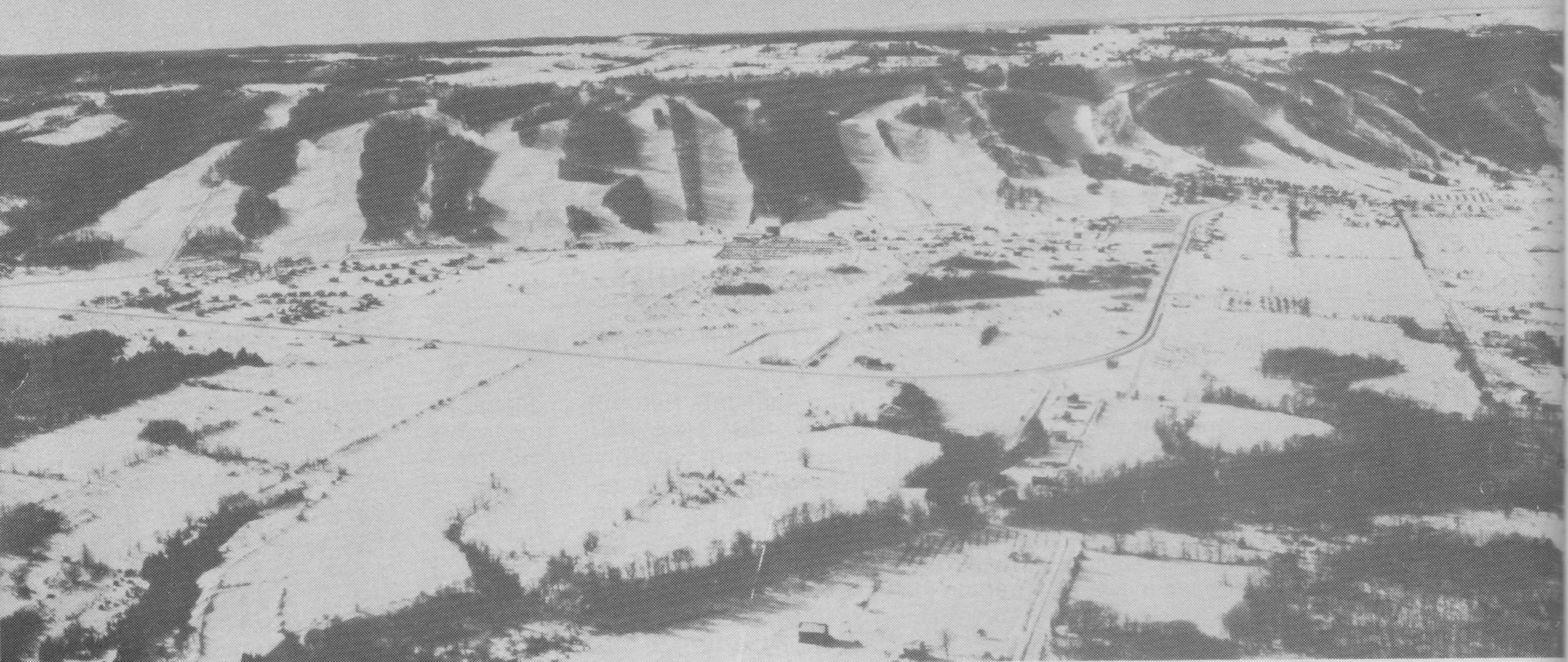
Not necessarily, even after flexing its monetary muscle earlier this year by purchasing Georgian Peaks, a large and ailing neighbour, Blue Mountain near Collingwood, Ontario, could only claim to be big—not high. Incredibly, this sprawling and very successful ski resort sits on the side of a stunted escarpment and boasts (or mutters) a vertical that barely tops 700 feet.
But according to ski economist Ted Farwell, that mountain, or hill, is made of gold. Farwell estimates that Blue Mountain ranks within the top 10 percent of North American areas when it comes to efficient return on investment. And with such a large investment at stake it’s a model of profitability. Spend as it might, Blue Mountain maintains a strick debt/equity ratio of 40/60 (with a 2/1 debt to after-tax cash flow).
The key is efficiency. And the personification of that word is the president of Blue Mountain Resorts Ltd., Gord Canning. His mania for efficient return on his money is like that of a Swiss bullion trader. You would be hard pressed to find a man more capable of squeezing more revenue out of 700 feet.
By the time Canning married Kathy Weider, the daughter of Blue Mountain’s original owner, Jozo Weider, he was groomed for the president’s chair. He had an MA in math and computer science and had spent time working with Imperial Oil’s computers. Then came an MBA with a marketing emphasis to round out his gilt-edged credentials for running a large ski area.
Canning says with great conviction: “I love computers.” His training with them is now being tested on an IBM System 34, and everything it touches turns instantly efficient. Three of its terminals are now operating in the accounting office processing budgets, payroll, mailings and so forth; it’s handling the growing reservation service; and point-of-sale food and beverage tabulation will be installed in the first of four lodges via eight NCR 2160s.
But none of that is out of the ordinary. Where Canning applies the computer to more creative tasks is in the areas of research, and snowmaking.
A big test for the computer came this past summer when over $2 million in computerized snowmaking was laid into place at Georgian Peaks. The job included a proposal for extensive tree planting and the burying of 15 miles of steel pipe under the frost line.
Without a doubt, snowmaking is Blue Mountain’s priority. And with the aid of Jeff White, a partner in Delta Associates, and Bill Skelton, Blue Mountain’s well-known area manager, he has created a system now considered the most efficient in the world.
Its brain, of course, is the computer. Its nerves, are small “weather stations” spread over the breadth of the mountain relaying 20 different atmospheric variables from wind direction to temperature back to the computer. Instantaneously the water pressure at the central pump station is adjusted for each area monitored. With little human involvement, the ideal snow mixture is created throughout the night.
To date, Blue Mountain has spent almost $4 million dollars on snowmaking and managed to cover 75 percent of its terrain. Spliced into the computer are five 1,300 CFM air compressors, one 3,200 CFM compressor, two 650 US GPM water pumps, 14 miles of steel pipe, a 44 KV electrical substation, a 22,000,000 gallon lake and 40 new snow guns (designed by Jeff White and made in the Blue Mountain machine shop) that are capable of firing 30-60 gallons of water per minute into the atmosphere. At 20 degrees Farenheit the system covers 100 acres with a foot of snow every two hours.
Bill Skelton operated the system manually last year, but his tests proved that Blue Mountain’s snowmaking efficiency should improve by 50 percent when the computer takes over this season.
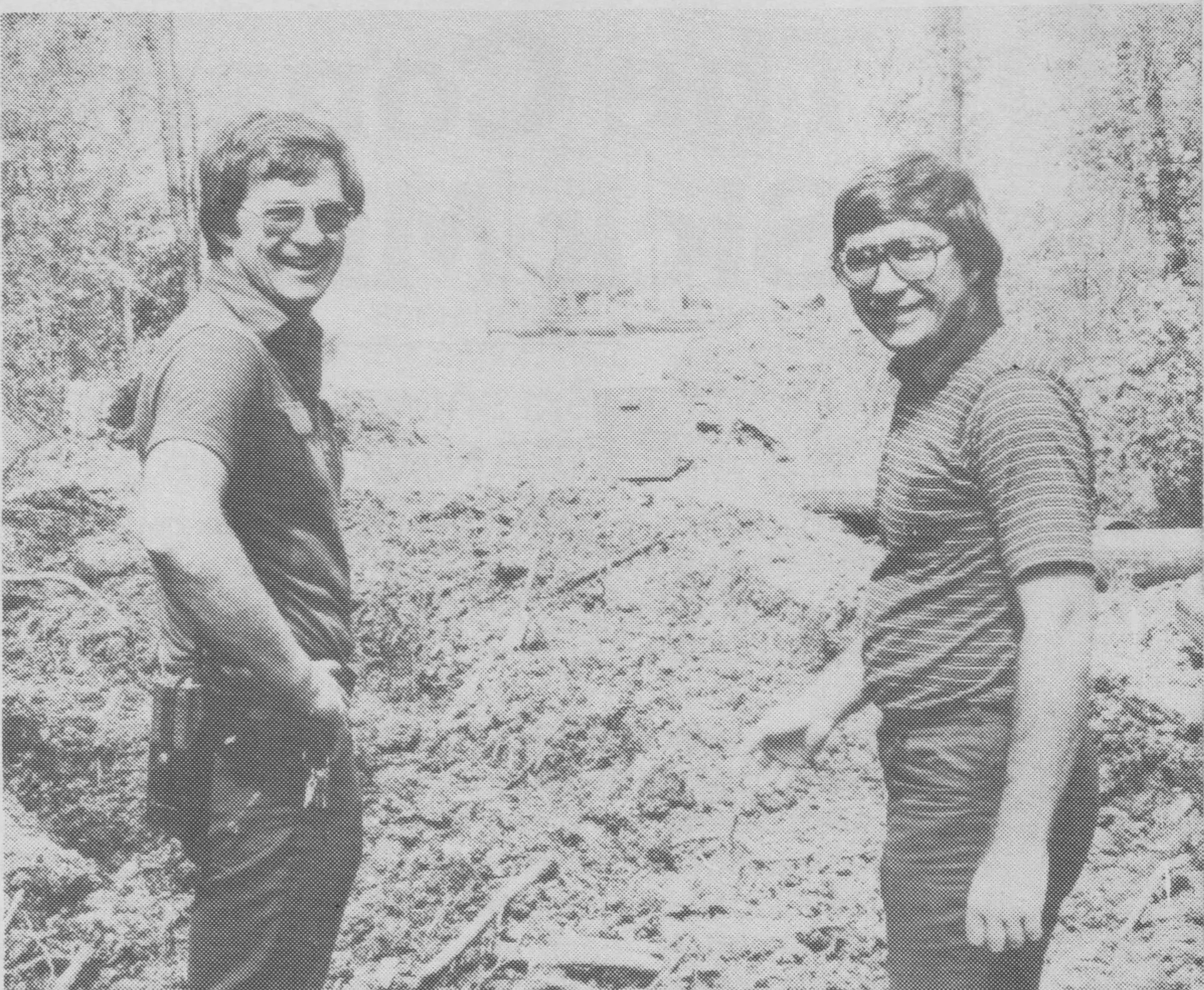
Using computer analysis for market research, Canning has determined through on-hill polling that the average skier at Blue Mountain is young, single and by no means impoverished. He or she wants quality first (i.e. more meat in the hamburgers and will pay for it in the cafeteria or on the slopes. Canning and his managers don’t miss a marketing beat.
As well as being partial to computers, Canning has a great rapport with human beings. He hires locally and promotes from within the organization whenever possible, and he’s the first one to eschew personal publicity, preferring instead to cite the accomplishments of his managers. Consequently, his staff is intensely loyal and steadfast.

Skelton is perhaps the best example. Like other Blue Mountain managers he’s young at 40 (food and beverage boss Dale McNichol and marketing coordinator Bev Philips are 35 and 32 respectively). Yet he’s been working at Blue Mountain for 20 years and his father was the area manager before him. Younger still is Lynn Warll, the 23-year-old director of skiing. She’s a local resident, one of Canada’s top-ranked instructors and the overseer of 130 other instructors. Also on staff is a full-time geographer-planner and a research analyst.
Canning listens to these people. He considers them the backbone of his operations. But he is also aware that the most talented and enthusiastic of management teams can’t hope to provide Blue Mountain with the highly technical input its development demands.
That’s where consultants like Jeff White and his associate, Ted Farwell, come in. Both men work closely with Canning—White on all snowmaking advances, and Farwell on fiscal policy. Once a year Farwell comes to Blue Mountain armed with computerized data from 140 North American ski areas of similar size, geography and market. Canning and his managers assess the data and, with advice from Farwell and the IBM 34, tailor their plans accordingly. In effect, Blue Mountain goes to school on the successes and failures of large American ski areas, capitalizing on what you might call a “social time lag.”
“We’re really not as advanced in the use of computers as some of the big American resorts,” Canning admits. “But as a smaller resort we have the advantage of being able to watch what’s going on in the U.S. We follow that progress very closely.”
Back in 1977 Canning was quick to pick up on the off-season slide concept being marketed at Bromley, Vermont, by Stig Albertsson. That summer Blue Mountain installed the 3,000-foot Great Slide Ride at a cost of $500,000. It quickly paid for itself and has since appreciated in value to an estimated $850,000. A second slide, this time a double water flume, was put into place this past spring at a cost of $700,000. Together the two slides are one of the province’s most popular summer tourist amusements and Blue Mountain can claim the enviable distinction of having lift lines in mid-summer.
By keeping tabs on some of the more successful ski areas south of the border Canning also realized very early the sense of keeping all concessions in-house. Blue Mountain assumed total control of its own food and beverage outlets in 1976 and it now profits immensely from six bars and lounges and six dining areas.
In all phases of operation—from dining and drinking to the transport of 10,000 skiers up 12 lifts—volume and turnover count for a lot. To insure that lift lines are at least of similar volume, even if they are lengthy, Blue Mountain installed “Get Moving” light boards at strategic spots. Controlled by the lift operators, the boards inform skiers how long they can expect to wait in a certain line. They also monitor which dining areas are open and let customers know about it. In this case, “efficient” might not be a strong enough word.
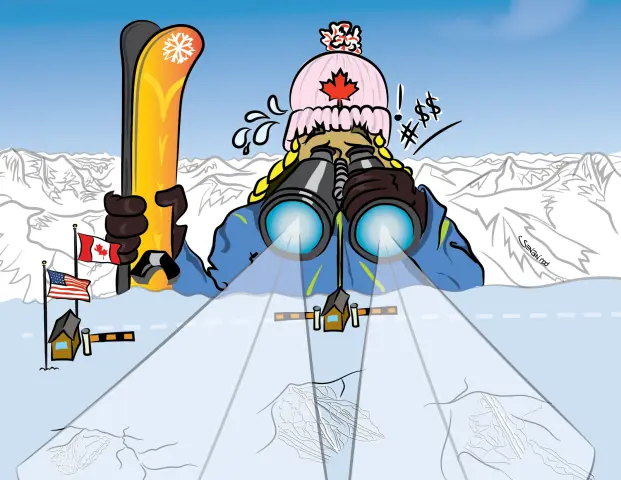
The ultimate in efficiency in any business, of course, is monopoly, an extremely desirable position that Gord Canning has placed himself in. Before this season Blue Mountain could generate high revenues thanks to its proximity to the ski-happy city of Toronto and its population of over two million people. Now with its acquisition of “The Peaks,” (for years a serious competitor just four miles down the road) Blue Mountain has control over “big hill”
Vital Statistics: Blue Mountain
Collingwood, Ontario
| Statistic | Figures |
|---|---|
| VERICAL RISE: | Blue Mt. 700 feet The Peaks 820 feet |
| TOP ELEVATION: | Blue Mt. 1,470 feet The Peaks 1425 feet |
| NUMBER OF LIFTS OF EACH TYPE: | Triple Chair 4 Double Chair 8 Poma 5 T-bar 1 Rope 1 Rope 4 Handlebar 1 |
| AREA CAPACITY (vertical transport feet per hour) | 11,400,000 |
| SNOWMAKING CAPACITY (number of cubiv feet of air or number of guns and feet of air) | Blue Mt: 9700 CFM (15,000 for 81-82) 40 guns The Peaks: 8000 CFM 30 guns |
| GROOMING FLEET | three Tucker 2700s (Blue Mt. acts as Tucker dealership) one Tucker 1500 two Thiokol Packmasters one Thiokol Sprite two Thiokol Hydromasters |
| AMOUNT OF TERRAIN: | 180 acres (plus 60 in area to be cut ’82) Blue Mt. The Peaks 80 acres |
| LIFT TICKET PRICES: | Weekend Adult:$15 Weekday Adult:$13 no junior ticket available at any time |
| SEASON’S PASS PRICE | $290 (standard individual) night skiing extra $25 |
| NUMBER OF EMPLOYEES: | Full-time 100 Seasonal 400 |
| NUMBER OF INSTRUCTORS: | Full-time 22 Part-time 100 |
No groomed cross-country terrain although certain rough trails are marked by resort.
All facilities are area owned.