

Automation and computers
Aerial passenger tramways will serve the skiers of 2001 as they do today. Current trends to the monocable, continuous circulating aerial ropeway system will continue, and this type will dominate the scene in the major ski centers. The chairlift will be the work horse; the enclosed gondola system will provide access and premium service; and, large cabin reversibles and self-powered systems will fill special assignments.
Basic wire rope transport principles will remain, and 21st Century technology will facilitate their application, assuring safe, economical, ecologically pleasing, pollution-free transportation. Passenger demands will be met with fewer aerial tramways, but of higher capacity.
Our current problems loading and unloading continuously moving carriers will be minimized by the introduction of mechanical equipment. Automation will abound in the control and machinery rooms. Electronic measuring and sensing devices will further assure operational reliability and passenger safety. Communication and visual surveillance devices will provide continuous monitoring of carrier passage and passenger movement. All operational functions will be controlled by an operator in a remote vantage point. Computer programs will monitor preparation of the lift for daily operation; they will identify and visually indicate specifics of operational malfunctions; and they will record the statistics of the day’s operations.
Automation of terminal area passenger controls, carrier doors, and safety devices will eliminate the need for station attendants. Line and terminal structures will be aesthetically pleasing as well as functional. Electricity from separate sources will power both prime movers and auxiliary drives.
Charles F. Dwyer, P.E.
Chief Aerial Tramway Engineer
USDA-Forest Service
Raised steel track system
There are many mountains in this country that would permit the economical use of ground support instead of high cable support. If the track system were supported directly on the earth, snow removal could be a problem. I visualize, therefore, the use of a structural steel track system from which 20-passenger coaches would be suspended with the bottom 20′ to 30′ off the ground. Depending on the design, skis could be carried aboard or placed in a ski trailer drawn by the coach.
The system would be designed to use as many coaches as necessary to handle the maximum capacity, but they would need to operate only when passengers were available. The system would have 180-deg. turns at the top and bottom, and the return coaches would be stored on the return track as long as they were all in use. When only a partial capacity was required, the surplus coaches could be stored on a siding.
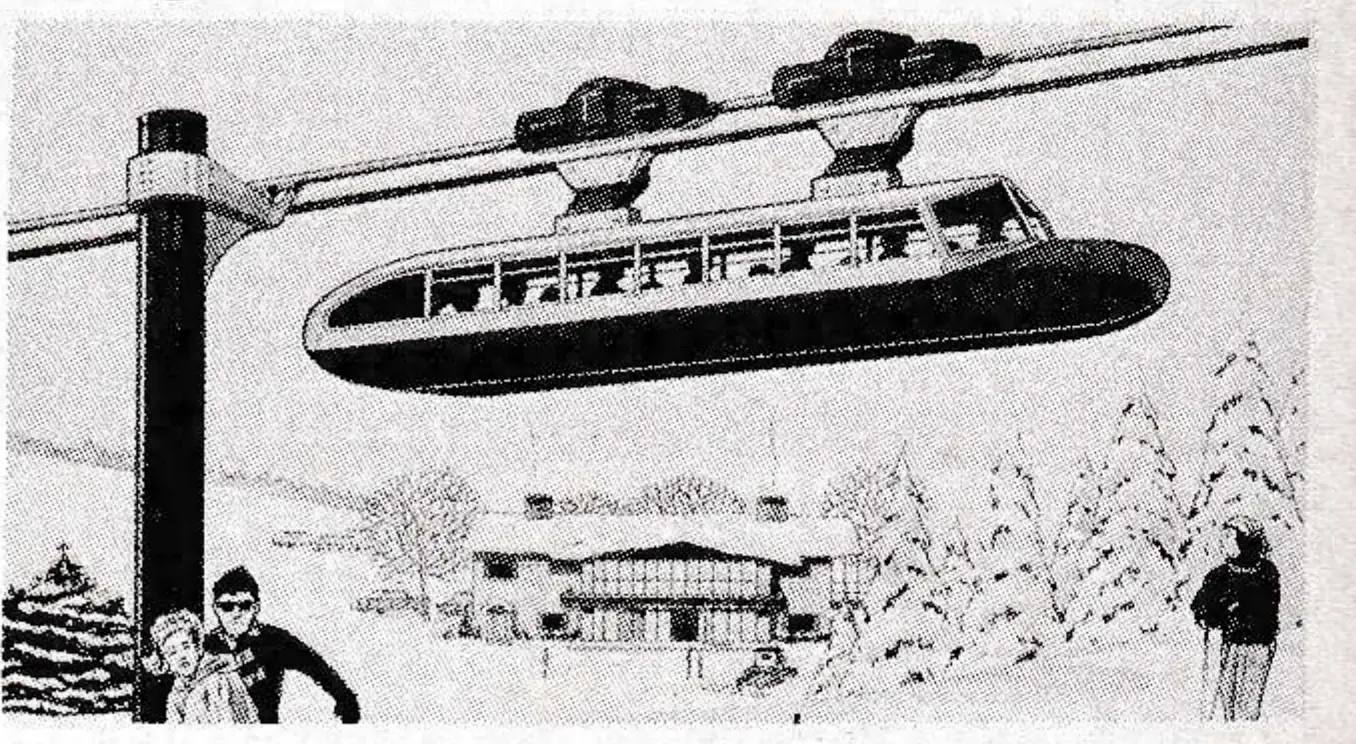
Each coach would be self-contained as far as drive is concerned. It would pick up power from an electrical bar system and could be completely automated. Another possibility would be the use of linear motors or energy cells.
Such a system as this would offer several advantages over the present means of transportation in that it would have great flexibility to match the coach requirements to the passenger load.
Victor E. Hall, P.E.
Hall Ski-Lift Company, Inc.
No Orwellian description
In coming up with a futuristic technical approach to grooming vehicles, we must ask ourselves one pivotal question: What will be the demands of the ski industry with respect to design in new development? We do not foresee sweeping changes in grooming vehicles with respect to the existing level of development of the ski areas. We must all admit that our industry is somewhat saddled by the size of the market, and we believe that the manufacturers will continue to ride the coattails of the industrial automotive world for some time to come. As solutions are developed for more energy-efficient propulsion and drive systems, it is highly likely that these, of course will be adapted to grooming vehicles.
So, rather than furnishing you an Orwellian description of some of our ideas, we must necessarily restrain our thinking until we have a better overview on future development and requirements as set forth by the ski industry.

Donald E. Wilson
Tucker Sno-Cat Corp.
“Chem Spreads” for grooming
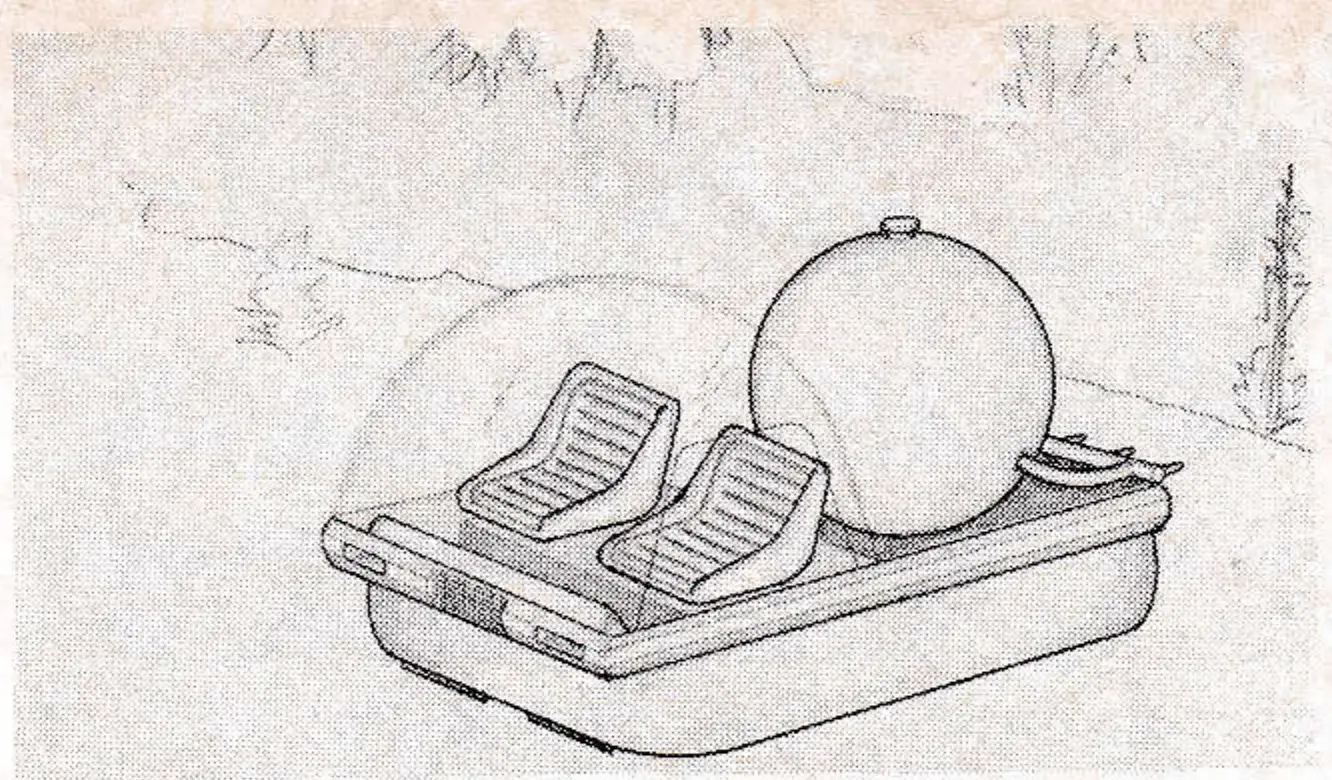
As skiers by 2001 will probably be crusing on “air cushion” skis in the back bowls of moon craters and kicking up lunar “deep dust” it is difficult to visualize the need for any grooming at all. However I would hope that the lower income bracket at least will be into the finer points of the Nose Dive or Rudi’s Run and will appreciate the efforts of the state-owned recreation areas to keep the bumps to a reasonable height with the use of “Chem Spreads”. Chem Spreads are a combination air cushion assisted, tracked vehicle which spreads chemical material “naturally biodegradable” that increases snow density and prolongs the wear characteristics while reducing the snow’s susceptibility to evaporation.
Gordon Hine
Thiokol/Logan
Star Wars and Snowmaking
The year 2001 will be remembered as the start of space age snowmaking and Selective Area Climate Control (SACC).
The NSAA-sponsored orbiting space platform will make it possible to selectively control cloud cover, temperature, rain, and storm patterns by using the Adnil energy rays beamed down to ski areas. These rays will be used to make the ambient pleasant and sunny by dispensing clouds. Threatening rains will be either diverted over bodies of water or turned into snow. The rays can warm the temperature during the day to make skiing more pleasant; and cool, if needed to avoid melting of the snow on ski trails. Bad storms will be directed over water or designated Storm Dispending Area.
A major problem with the Adnil rays is that snow cannot be made unless sufficient moisture-bearing clouds are present in the atmosphere over the ski areas.
Thanks to Dr. A. A. Kintar’s inventions, the Eastern ski areas are making snow by the Ambient Humidity Conversion process. The process machinery converts moisture in ambient into dry, powder snow. By lowering the ambient humidity from the usual 100 to 60 per cent range down to 50 to 20 per cent, the Eastern ski areas have pleasant climates and are the “In Places” to live and ski.
The Ski Center Council, composed of ski area directors and representatives of the home owners, meets regularly to plan the weather according to skier and resident wishes. The ski area Climate Scientist works with the NSAA Space Platform staff and the local Snow Engineer to provide the desired climate.
The Western ski areas are not so lucky because their ambient humidity