


During the last five years, however, the situation has changed and areas seeking expansion can no longer overlook cross-country as a potential source of revenue. It’s one of the fastest growing participant sports in America and, judging from the 1978 SIA show in Las Vegas, is almost on a par with Alpine skiing in hardware and software sales. Taking advantage of this growth and making first-class cross-country tracks available to skiers is becoming the job of many mountain managers.
Fortunately, there have been more success stories in recent years than failures, as areas begin to approach cross-country on a long-term basis. Here are a few case histories.
Waterville Valley, N.H.
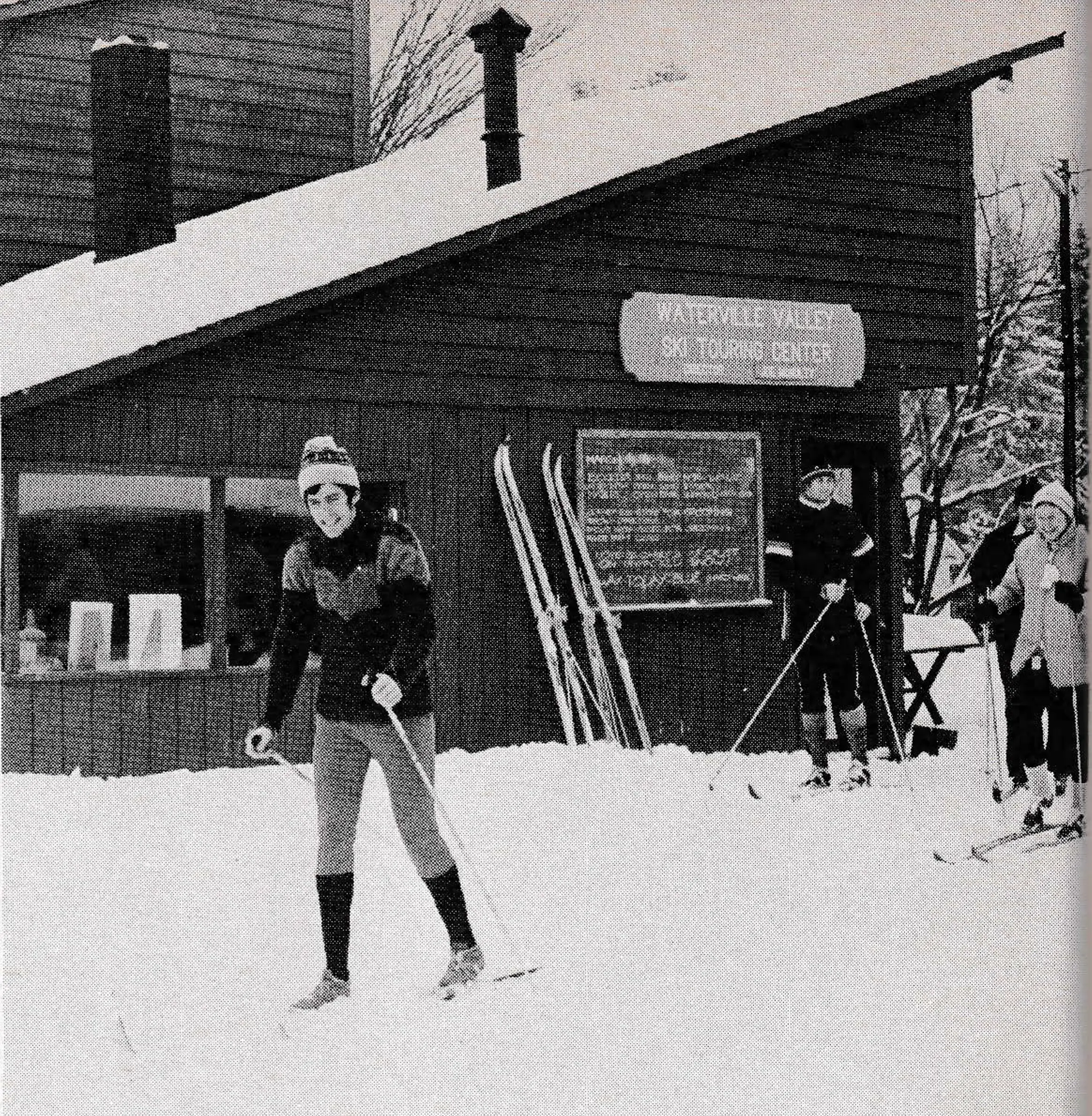
Waterville started cross-country operations in the early 70’s. For fiscal year ’77, the cross-country touring center grew 38 percent over the previous year and produced $100,000 in gross revenues. Most of the center’s income was generated drom ski rentals and retail sales.
“Tourers are still in the minority,” says president, Tom Corcoran, “so the key is to have a separate cross-country center. Don’t run your touring facility out of your Alpine facility.” Waterville’s cross-country touring center is located a half mile from the main ski area. Corcoran adds, “A touring center becomes the tail of the dog if you don’t watch it. It doesn’t get the visibility it needs. A touring center has to stand on its own two feet.”
Separating their touring facility also solved a major problem for Waterville Valley: parking. Away from the main area, cross-country skiers are not taking up valued Alpine skier parking.
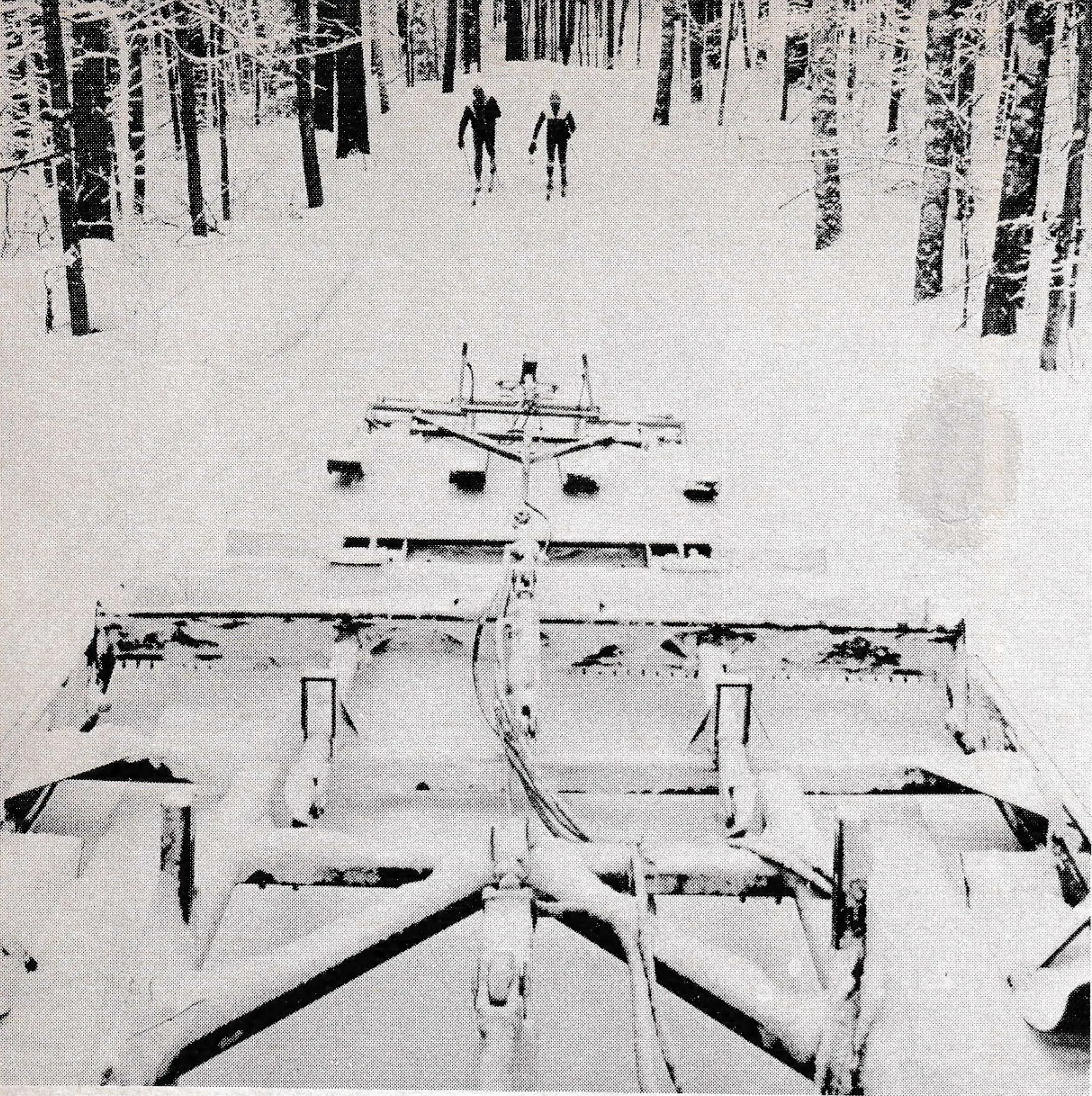
Identity and parking problems solved, Corcoran tackled track setting. “You have to make a track equipment investment,” he points out.” The job simply cannot be done with Skidoos. You have to get something like the Thiokol ‘Imp,’ plus top groomers and track sleds. There is no question that we will be getting into heavier investments for cross-country. People must be prepared to make a substantial investment in cross-country to realize a profit in the future.”
Corcoran adds that rental income is critical to financial success. “Touring is small,” he says. “Don’t concession out anything. Treat cross-country as a business division of your company and look for profit centers within it.” He stresses the importance of hiring a sharp business person who is also a cross country expert to manage the center.
Considered the leader in cross-country trail development and track setting, Telemark still gets the largest profits from Alpine skiing. But the cross-country picture is getting better. Last season over 19,000 skiers paid the $5 cross-country trail fee at Telemark. There were few objections to the price, according to area General Manager Jerry Berard. “People have no problem with our price because of the quality tracks we provide.” This season Telemark will raise the daily fee to $5.50.
Alpine skiing started at Telemark in 1947, cross-country was added in 1972. Berard and area owner Tony Wise followed the early developments of cross-country in America, and convinced that it was not a fad, plunged headlong into track development. One of the biggest assets Telemark had was over 2,000 acres of unused land surrounding the lodge and Alpine hill. Berard says being landlocked by federal or state forest can ruin a potential cross-country building program.
The start-up costs for Telemark came to over $150,000 in equipment. Today the program is barely breaking even with revenue from retail sales, trail fees and lessons the major sources of income. Not directly credited to the program, lodging dollars derived from cross-country skiers are increasing. “We are getting more mid-week junkets from cross-country ski groups,” says Berard pointing out that cross-country has about two to three more years before it plateaus in the midwest. “Estimates have the sport growing at 25-30 percent annually” he says.
If there is one chink in the Telemark cross-country armor, it’s the ticket patrol system. The trails take off in several directions from the lodge area and are hard to monitor for non-paying skiers. On the trail, patrols have been tried as a means to collect from errant skiers, but have been unsuccessful. “If I were planning a series of trails again, they would spin off of a hub so we could make sure everyone had a ticket and we could monitor the skiers with a few people,” says Berard.
Mt. Bachelor, Ore.
Bachelor might be the last place one would think of for a cross-country touring center. After all, there are miles of wilderness adjacent to the area, and the free-willed Oregonians talk a lot about untracked touring as the only way to cross-country. But like the rest of the growing cross-country market, Oregonians are finding that skiing a prepared track is very worthwhile. Not only are tracks easier to ski on, they are safer and more comfortable for people unfamiliar with the wilderness.
Part of the economics at Mt. Bachelor was the recent purchase of an $18,500 track setting machine. Another part, is a master plan that includes a separate Nordic center with its own parking lot, located down the hill from Bachelor’s main lodge.
According to Bob Mathews, cross-country director, a separate touring center is the key to profitability. At present, the retail and rental shop is situated in a crowded 500 square foot corner of the Alpine ski shop. Despite the location, rentals doubled in 1978 and lessons have been on the rise every year. The entire cross-country operation is run by three full time people with the help of two part-time employees. The staff’s workload includes retail selling, rentals, repairs, track setting and teaching.

One area should provide added income for Bachelor this coming season. For the first time, the cross-country trails will require a fee: $2 for day use, $35 per season or a full-family season pass for $105.
For Cliff Blann, Bachelor mountain manager, cross-country is still a pain at times. “I’ll be out there cutting a new track for the skiers,” Blann laughs, “and here comes a whole group giving me the finger as if I’m destroying their environment.” The sport may be changing, but in some areas the battle between man and machine continues.
Liability
Of major concern to any ski area is the sticky question of liability, but the liability side of cross-country hasn’t been tested yet. Telemark’s Alpine coverage is working for cross-country as well. The area uses a volunteer ski patrol as well as their own ski school staffs to cover the trails at nightfall. Snowmobiles do the trail sweep when it’s impossible to cover them on skis.
Waterville management says their liability insurance will increase as cross-country becomes more popular. “There are problems in cross-country that we don’t have in Alpine,” says Tom Corcoran. “The farther people ski from the touring center, the more you have to provide adequate patrolling. It gets very hard to sweep all the trails. There are surprisingly few exposure problems, but more will come. I think people are going to touring centers because they offer a sheltered environment and they feel safe.”
Fee Structure
Fees are on the rise at all touring centers. For areas like Waterville and Bachelor it may be difficult to get the Forest Service to go along with proposed fee increases. Waterville had to lobby to raise their trail fee from $1 to $2. It has to be clearly shown that the fee really means increased track maintenance.
Most areas find that once a charge for skiing becomes established, there is little public resistance, and increases usually reflect improvements that even a beginning skier will notice. Pure cross-country centers like Ashcroft outside of Aspen and Royal Gorge near Donner Summit, California, will be charging skiers $4-$5 this year for well-maintained tracks.
X-Country on the hill
Bachelor allows any cross-country skier who buys a lift ticket to ride the lifts and ski the hill. “What we’re finding is that the better cross-country skiers are the only ones taking advantage of the situation,” says Bill Healy. “They are very cautious. Our biggest problem is all the out-of-control slalom skiers.”
Several Colorado resorts have opened portions of their Alpine slopes to cross-country downhillers and are experiencing positive results. Waterville allows them to use the Snows Mountain lift, which is near the cross-country center. At the top, the cross-country skier can select a beginners run, an intermediate run or, intimidated by those two, a slow easy jaunt down an access road. Allowing cross-country skiers on certain slopes is creating additional income for combination ski areas.
Making a successful marriage
Like any marriage, the partners have to work hard to make a go of it. The Alpine area that makes a sound investment in track setting equipment, establishes an autonomous touring center, promotes cross-country actively and doesn’t expect a profit overnight will be successful in the long run. Those areas that concentrate on quality retail sales, efficient rental operations, good lessons, and well-prepared tracks are on the right profit trail.
Bob Woodward is a freelance writer in the cross-country skiing field. He writes for SKI, Ski Business, Nordic Skiing and Nordic World. A former sales executive, he has coached cross-country at he University level and has managed a top touring center.