

In the last issue of Ski Area Management I described some considerations and planning tools you can use to develop a ski lift operator training program. With this article we’ll move into a more specific phase and develop the actual program itself. As indicated previously, before entering into the training program you should consider:
- What do you want your ski lift operators and attendants to know and how well do you want them to be able to do it? These are your performance objectives.
- How long a training period will you need to accomplish this?
- What learning can be put off for further in-service sessions?
- How will you do the actual training? Using a training checklist, what do you want to teach in the classroom and what do you want to teach using demonstrations and hands on techniques to meet your objectives?
Start the program planning with a series of lesson plans which you’ll use to outline performance objectives, the training methods you’ll use to teach the subject, your presentation notes (content), and allotted time. write some questions you want to ask to determine whether the trainees understand the material.
Using your lesson plans, develop a training schedule for the program (see box). I usually plan on a minimum of two to four full days of training a ski lift crew, alternating classroom presentations and discussions with on-site demonstrations and practice. The length of training is determined by my estimate of the need for training. Is this a crew made up of returning veterans or primarily a new crew of recruits?
Once you have your lesson plans and your schedule in hand you need to seriously consider what sorts of things you can do to make the training program interesting, clear, and worthwhile if you can capture their interest they’ll learn more. Try to remember this:
Telling is not teaching
Listening is not learning
Watching is not learning
But all three can be used to assist learning.
If the ski lift manager is to rely on the skilled habits and judgments of his or her employees, he/she should be acquainted with some of the facts which are important in the matter of habit formation:
- The first impression which a learner receives is a very lasting one—the instructor’s demonstrations must be clear and accurate.
- The sooner a learner can practice the skills after seeing a demonstration, the easier it will be for him or her to perform correctly.
- The skill must be practiced correctly (or quickly corrected) the first time since this determines, largely, how the work will be performed in succeeding attempts.
- It is not possible to learn many skills at one time – divide a lengthy process into groups of skills, and learn one at a time.
‘ON—SITE’ SKI LIFT OPERATOR TRAINING
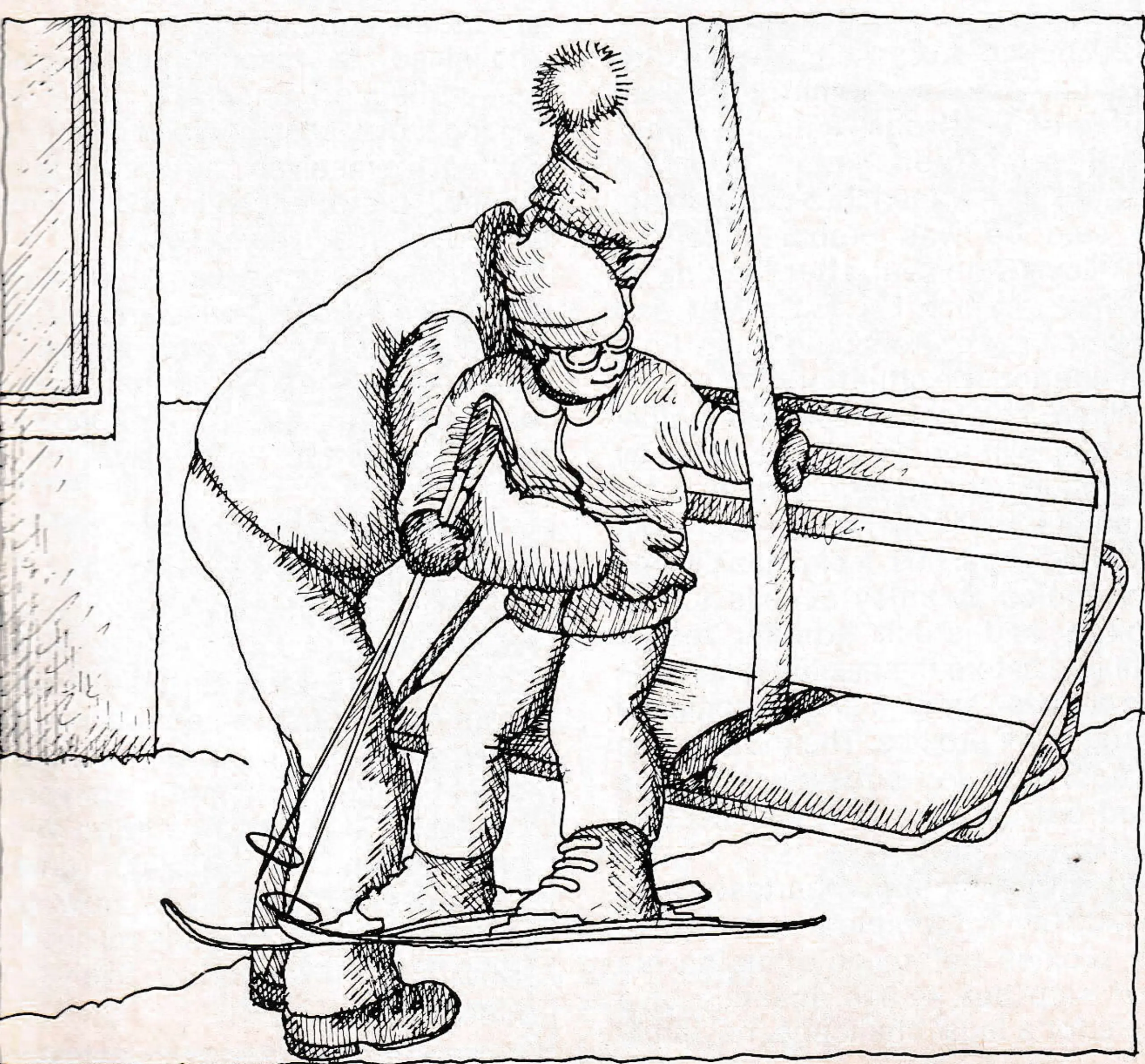
The demonstration is the basic method for introducing new skills to the learner. It consists of showing the learner how the task is to be performed and is accompanied by an explanation. It is far more effective to show a beginning ski lift attendant how to perform daily ski lift safety checks than to try to tell him or her in a classroom.

- Before starting a demonstration refresh yourself as to its objectives, and practice it so that you can run through it smoothly for your trainees.
- Be certain each person can see the demonstration.
- Explain what you are going to do, and why.
- Perfom the demonstration slowly, pausing to ask questions and to clear up misunderstandings.
- After the demonstration go over the key points with the group. Now let them try it, if possible, under supervision.
TRAINING AIDS YOU CAN MAKE OR BUY
Visual aids can be very effective tools in helping you to get your training message across. They can be expensive in time and effort to prepare or they can be costly if you purchase them from someone else, but their effect can be to reduce the amount of time you spend training and increase the effectiveness of your training program. No one responds well to someone standing in front of a group preaching. However, visual aids, demonstrations, practice sessions, and preparing the trainees to accept the program because they understand its importance are all effective devices to increase your effectiveness.
Some training aids you might wish to consider include:
- The NSAA film, “AUTHORIZED PERSONNEL ONLY” a good short introduction to the ski lift attendants’ and operators’ jobs. I use it both at the beginning and the end of my own training programs, as introduction and as conclusion.
- Mountain Management Services’ “Training Program For Ski Lift Operators” is a comprehensively designed materials package containing an instructor’s guide; selection and hiring tests and materials; the SKI LIFT OPERATOR’S GUIDE a text/workbook; and a slide program to accompany each chapter. Certificates of completion are included which you can award to your staff. This is my own program and I am, of course, biased to believe that it is an effective tool.
- Your own slides and/or graphics which you can make to illustrate your talks. Begin a season ahead, summer slides are minimally effective. Try to show people in action and demonstrating topics you want to cover.
- Your own handbook of ski lift operations which details your procedures, explains how each lift is operated, and sets out your ski area’s ground rules.
- Try making up a test to determine how much learning has taken place and which areas you want to cover again during your in-service training sessions.
This sounds like a lot of work to train a group of seasonal employees, but think what damage an untrained ski lift attendant can inflict on your guests, your reputation and your equipment. On the other side of the coin, the well trained ski lift attendant knows his/her job; works well with minimal supervision; and assists your ski area’s guests in a competent manner. It is worth the time and effort because the rewards are so great, and the negative side so terrible.
| When | Exposure Level* | Application Level + |
|---|---|---|
| day 1 morning | Introduction to course Describe job, explain how ski lifts work and importance of safety. | same |
| day 1 afternoon | Explain how to operate the different lifts & discuss your procedures. | On-site explanation of how ski lifts work, parts identification, and discussion of Operators role in this. |
| day 2 morning | On-site parts identification and operation instructions and demonstrations. | Explain how to operate the different lifts & discuss your procedures. Role play different typical situations. |
| day 2 afternoon | Discuss and demonstrate troubleshooting, accidents, and lift evacuation. | On-site training and practice in operational procedures. |
| day 3 morning | Continue on-site training of operational procedures and practice helping skiers, loading, unloading, accidents. | |
| day 3 afternoon | Discuss and demonstrate troubleshooting and maintenance procedures at the lifts. | |
| day 4 morning | Discuss and demonstrate lift evacuation techniques and procedures (use the Ski Patrol). | |
| day 4 afternoon | Follow up, work assignments, company policies, issue uniforms, etc. | |
| day 5 all day | Introduction to and practice at your lift. Housekeeping and ramp building. |
* The shorter Exposure Level training is designed to train relatively few experienced ski lift operators or new employees who will be integrated into an existing lift operations crew. This is not an in-depth training program because no time is given for practice.
The Application Level training program is designed for thorough training and can be used to instruct larger numbers of employees successfully.
These sample training programs are some that I have tried and found to be successful for my approach to training ski lift attendants and operators. You will of course, need to develop a program which fits the needs of your particular ski area and situation.