


The main function of a backboard or spineboard, as it is often called, is to immobilize and secure people with back and neck injuries to prevent movement. They are also helpful in treating patients with other injuries, such as fractures of the femur and pelvis, serious head injuries and multi-trauma patients. Spineboards can also be used as stretchers, to evacuate injured skiers from lifts or when performing CPR during cardiac arrest.
Spineboards come in two basic styles: wooden boards and aluminum “scoop” stretchers.
Scoop stretchers were originally designed as extrication devices for ambulance personnel to lift patients and quickly and easily transfer them to spineboards. Scoop stretchers are adjustable in length and can be applied to patients in many situations with little or no patient movement. This makes them convenient to use and sometimes preferable to wooden spineboards.
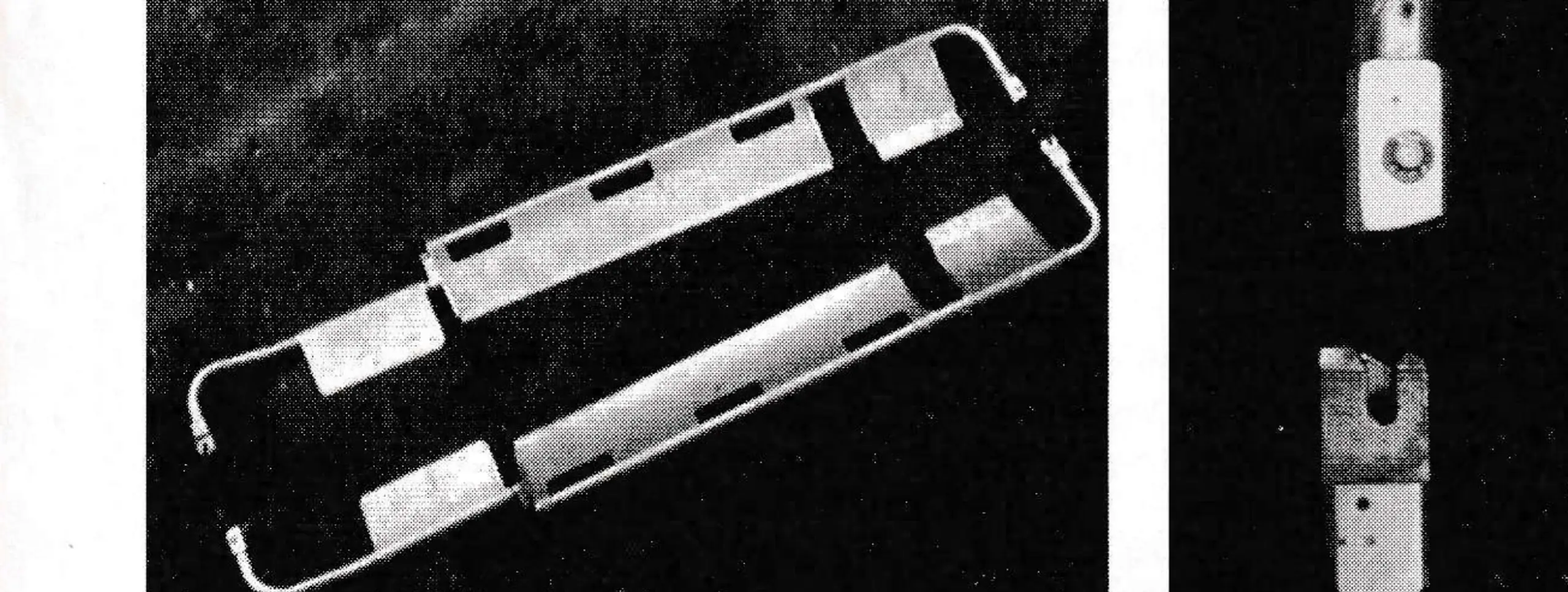
Although scoop stretchers are popular among ambulance services and urban rescue services, they may be less effective in ski area environments.
One major disadvantage is cost at approximately $500 per stretcher. Large ski areas may need a number of spinal immobilization devices, making numerous scoop stretchers the least cost-efficient method of managing skiers.
Another problem is that scoop stretchers are made of aluminum, which conducts heat and may cause patients to rapidly lose body heat and become cold, increasing discomfort and possibly worsening their condition. A very cold scoop is also uncomfortable for rescuers to handle and, in very cold weather, can become brittle and subject to breaking when picked up with a large patient in place.
The ability of a scoop stretcher to function depends on the proper operation of four spring-loaded aluminum latches and a number of moving parts. These latches and moving parts can become clogged with snow or have snow melt and freeze into them, especially if the scoop is stored inside to keep it warm. Even a small amount of snow or melted snow can render the scoop inoperable and useless at the scene of an accident.
Another problem with the scoop stretcher is that it is a concave, form-fitting shape with a number of edges and sharp corners. This shape and construction makes it impossible to slide the scoop underneath a patient or slide a patient onto the scoop.
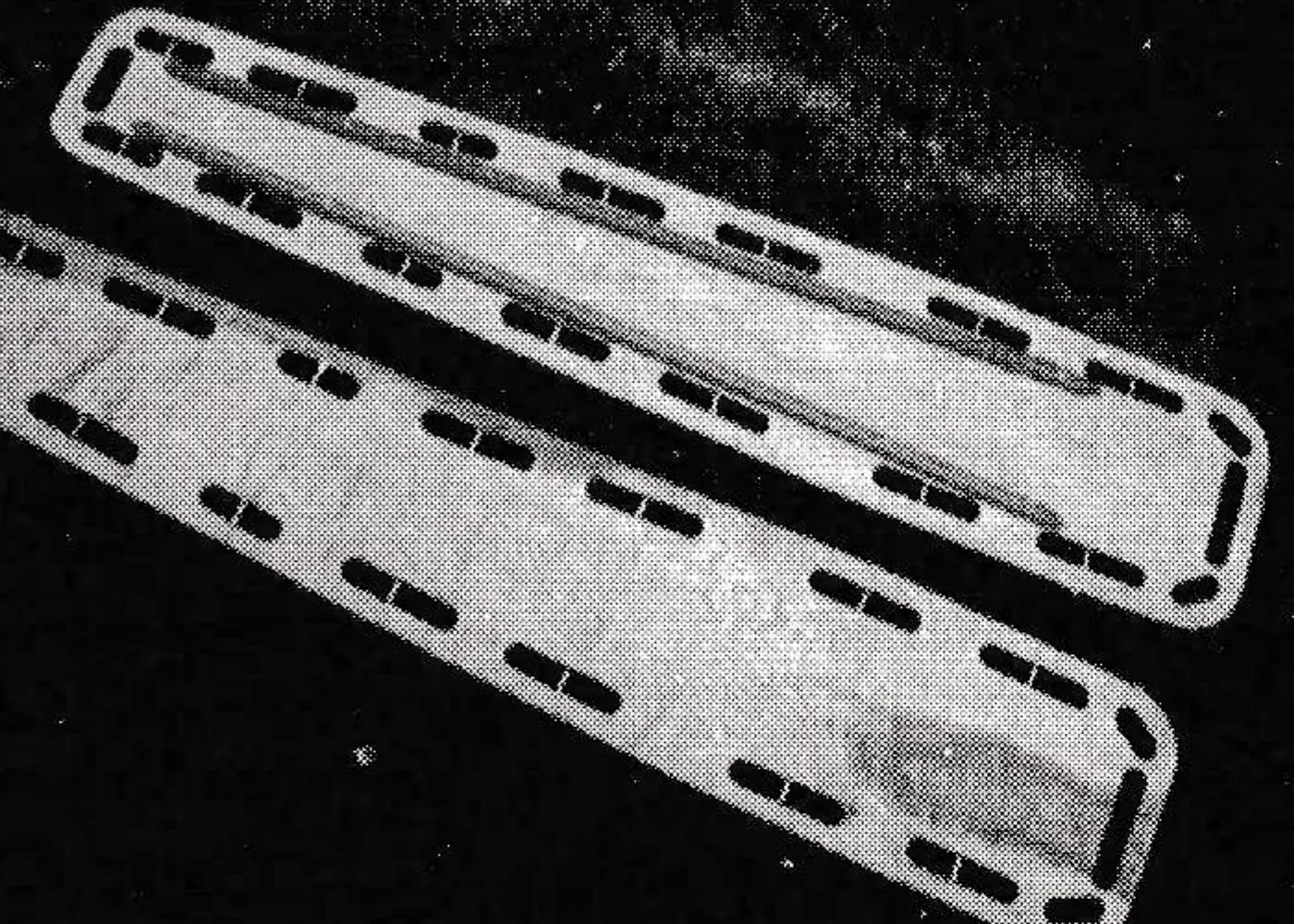
Wooden spineboards, on the other hand, have none of these problems. In fact, nothing functions better for spinal immobilization at ski areas than a simple wooden backboard.
Wooden backboards are made of a single piece of plywood, with no moving parts that can become clogged or frozen. Wood is also warmer underneath the patient, an important factor if the patient must remain on it for long periods of time, as is likely after skiing accidents. The surface of wooden backboards is smooth and flat, allowing them to function well in snow. Patients in ski clothing can easily be slid onto a wooden backboard and easily slid along a board once they are on it.

Wooden backboards can be purchased from first-aid supply stores for about $120 to $150 in either wood composite materials or molded plastic. Commercially produced backboards, however, may not give the best results in ski area situations. It may be more cost effective and productive for ski area personnel to construct their own wooden backboards.
One disadvantage of commercially-produced backboards is that they are only available in a maximum length of 72 inches, which is often too short to properly immobilize patients. Extricating a spinal patient after a ski accident may require a substantial amount of movement of the backboard once the patient is immobilized. The patient must be immobilized very securely to the backboard, which requires a backboard at least six inches longer than the patient.
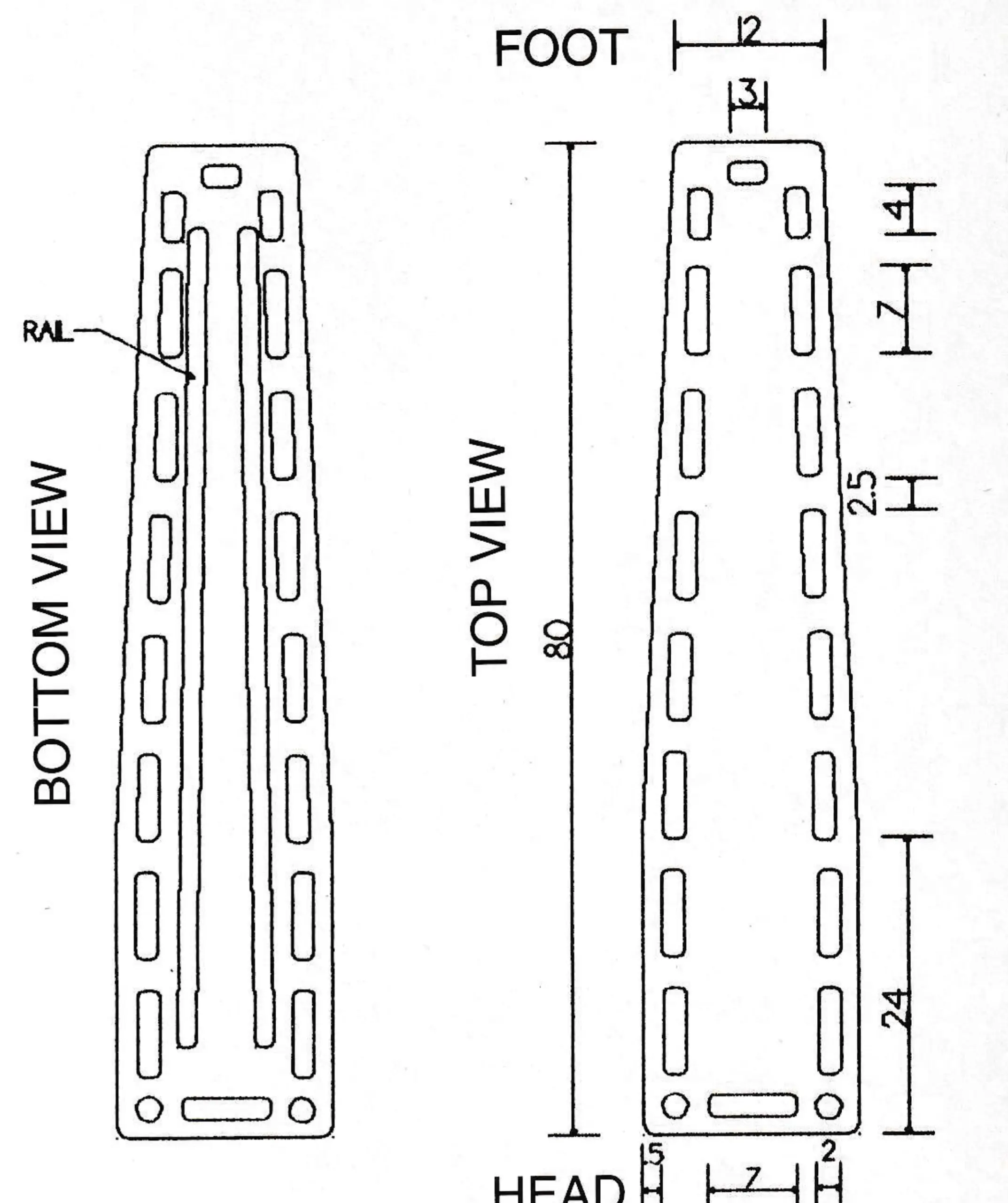
A ski-area-built backboard can be 80 inches long, a length that provides excellent immobilization space for the majority of patients. This size backboard will fit into a rescue toboggan, the back of an ambulance and most smaller helicopters used for medical evacuation.
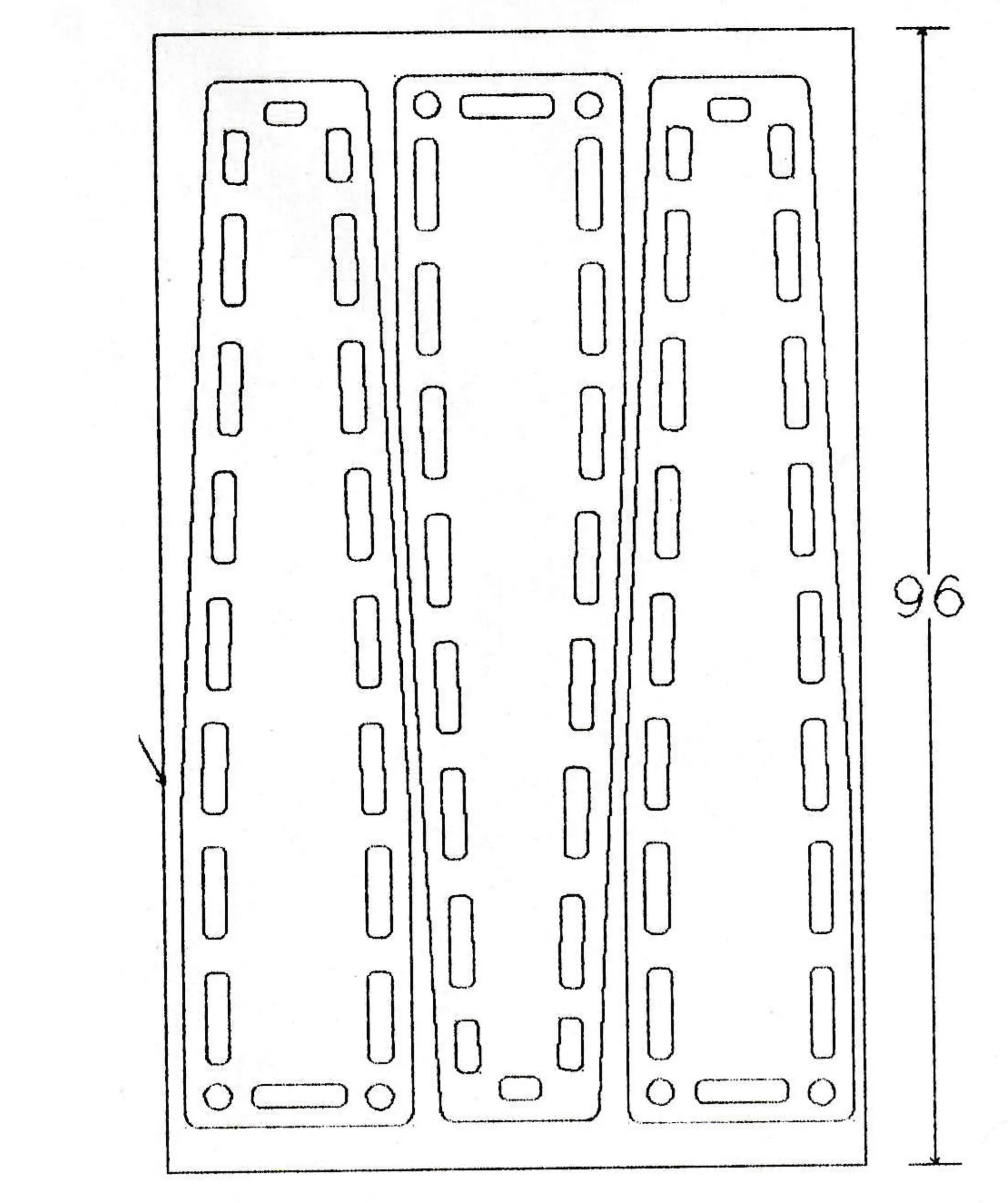
To build a wooden backboard, use high-grade 3/4-inch plywood that is smooth on both sides. Three backboards can be cut from one sheet of plywood. The head end of the backboard, for the first 24 inches of its length, should be 17 1/2 inches in width. The remaining length of the backboard can be tapered toward the foot end to a width of 12 inches. This allows the lower body to be more solidly secured and prevents body movement when the patient needs to be transported over rough terrain.
The handholds on wooden backboards can be cut slightly larger than are found on commercial backboards. This allows ski area personnel to keep gloves or mitts on while applying bandages and straps. These handholds should measure about 3 inches long by 1 1/2 to 1 3/4 inches wide. The distance between the edge of the backboard and the hand-hold openings, as well as between adjacent handholds, should be at least 1 1/2 inches to ensure that the handholds will be strong enough.
An additional modification that can be made to the handholds of spineboards is drilling through the center of the handholds and inserting a length of 5/16-inch hardwood dowel. These crosspins, commonly found on ambulance spineboards, permit a system of quick-snap straps to be used in immobilizing a patient to the board.
Backboards, especially extra long backboards, require rails mounted on the underside. These provide longitudinal stiffness to the plywood, preventing sag or breakage when treating extra large patients and they keep the backboard off ground surfaces, facilitating the application of bandages and straps and making it easier for rescuers to pickup the board off the ground. Rails can be constructed from 1 1/2-inch, half-round oak or other hardwood. Two rails should be mounted on the underside, as widely spaced as possible, to provide the maximum amount of stability and they should extend close to the ends of the backboard without interfering with the handholds. The ends of the rails should be smooth and rounded to allow the board to slide easily over rough surfaces.
Using good quality materials, backboards can be constructed for about $70 to $80 each. This is a substantial savings, especially when a large number of boards are required, as well as providing a more efficient device.