


Actually, these are all key words — and performance issues — in the grooming vehicle industry. But how exactly are such advances planned and engineered in these times of high R&D costs and corporate frugality?
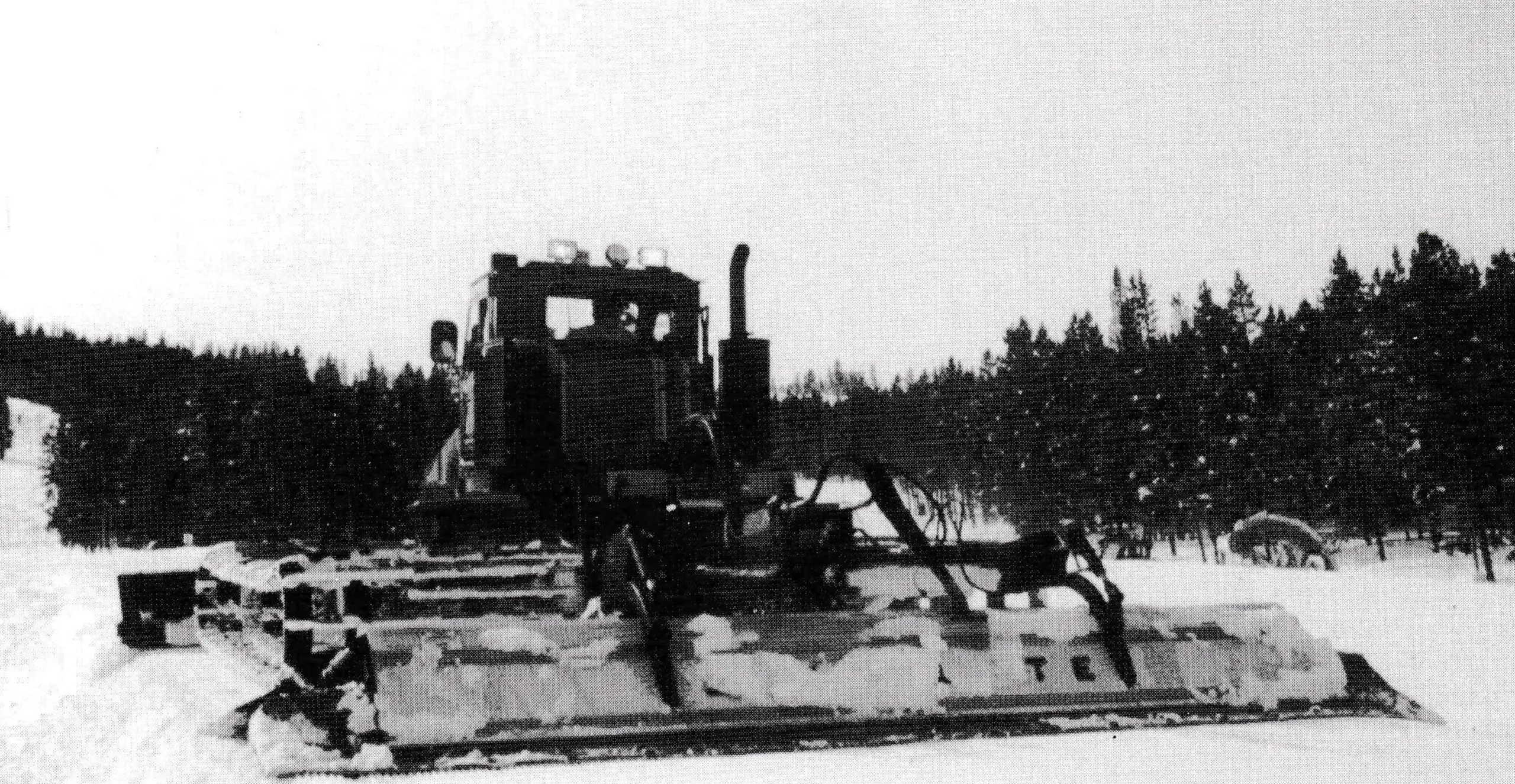
To shorten the distance between conception and actual service, the Breckenridge Ski Corporation recently teamed up with Logan Manufacturing Company to cooperatively engineer and test prototype snowcats. These machines were not just “demos” — early releases of next year’s production run. The prototype cats involved were unique and experimental — the equivalent of those hot new jets that Air Force test pilots fly.
Many groups, from area management to the engine manufacturer — to say nothing of LMC itself — identified results they wanted from the program well before the prototype cats arrived.
For Breckenridge GM, Bob Fries, “We were extremely interested in the final texture of our slopes and in the number of acres groomed per hour. Additional considerations were enhanced snowcat safety for operators and controlling overall cost.”
Somewhat different goals were stipulated by Ron Armstrong, vehicle maintenance manager: “In addition to better fuel economy, I wanted to see longer component life, more mechanic-friendly layouts and lighter machines.”
Trails manager, Gary Mays, had expectations of his own: “Essentials included better operator ergonomics, more visibility, more usable engine power and simpler controls.”
Caterpillar Engine Company, which provided the engines for the prototype cats, had goals as well, as expressed by the firm’s product service manager, Phil Hunt: “We were looking for data about engine reliability, performance at high altitude, horsepower requirements, fuel economy and emissions. All are factors in recommendations for engine modifications.”
Finally, LMC had their own different, and somewhat loftier, goals. Said Rocky Mountain regional manager, Roger Merrill, “Our goal was to come up with a perfect grooming vehicle for any part of the world, regardless of terrain and snow conditions.”
The first of two LMC prototypes, designated CFH (Cab Forward High Horsepower), arrived at the Breckenridge vehicle maintenance department on December 15. It contained many untested introductions.
Perhaps the most obvious new component — thanks to its distinctiveness — was the turbodiesel engine. The powerplant’s design was as unique as its voice (more like the high-pitched whine of an F-16 than the throatiness of your traditional groomer). The data tag showed a rated output of 325HP, which actually increases to 340HP at peak torque. The engine incorporated a totally computer-controlled fuel and timing management, rather than the more traditional mechanical fuel injection.
LMC’s proto-cat also sported an automobile-like steering wheel rather than a console-mounted “joystick,” and a myriad of electronic controls. The cat’s drive system also utilized cutting-edge technology: large pumps with electronic controllers to provide the drive and steering.
Front and rear implement functions were different, too. The implement control system was “electric-over-hydraulic,” meaning that electrical switches, rather than manual levers, controlled the hydraulic functions of the implements, making things easier for the operator and reducing the number of hydraulic hoses and connections. Finally, a cab-forward, two-seater cockpit covered all these new goodies.

LMC’s proto-cat Number 2, which arrived about eight weeks later, was a 270HP, in-line six-cylinder turbodiesel, with a conventional fuel management system. Also unchanged from earlier LMC models were the three-speed hydraulic drive system and cable steering and power control. The implement controls, however, were brand new, using both pilot-operated hydraulics and electric-over-hydraulic functions.
To produce valid evaluations, Breckenridge’s vehicle maintenance department created detailed logbooks, records and operator evaluation sheets in which operators, engineers and mechanics recorded, among other items, figures on fuel consumption, quality of final product, climbing ability, downhill control, sidehill control, hours used, type of work done and temperature readings from various parts of machine components.
The books, forms and records allowed plenty of room for comments and suggestions. Here, also, went honest and accurate commentary by operators on the effectiveness of the vehicles in different types of grooming, available power to tracks, temperature readings, ergonomic efficiency and other comments.
The evaluations were performed by the area’s most experienced operators. Chief operator, Larry Johnson explains, “We had very specific check-out procedures. Before taking the cats out, I examined the last log entry and then performed a detail walk-around and fluid check. I talked over any modifications with the mechanic doing the repairs or changes. Any problems I saw with modifications were discussed and remedied when possible. Also when possible, I tried to work with another operator and machine doing the same job so that I could truly gauge the performance of the prototypes.”
From the very first, Larry noticed a problem with the steering controls on the CFH. “Sometimes it would stop for no reason and then spin in circles. Often, when cold, the cat’s steering was very touchy,” he said. After many adjustments and attempts at change, LMC engineers replaced them with electronic stick steering. “The sticks felt very smooth and comfortable to operate,” reported Johnson.
Operator trainer Bob Evans was the first to notice an ergonomic design flaw in the other proto-cat. “The foot throttle location was really bad,” he said. “You had no place for your right foot.” The foot throttle idea gave way to a hand throttle only. “Foot room comfort back to normal,” reported Evans.
And so it went, function-by-function, component-by-component, on both prototypes. The Lite Triflex tiller was leaving visible windrows … LMC’s project engineer, Bill Smykin redesigned the wingflaps to eliminate the problem. Dipsticks were inconveniently located … no problem, they were rerouted and relocated. Mechanic Claude Meyers noted sluggish performance at higher altitudes … the solution was to fabricate a new throttle linkage which yielded the 2850 RPM stipulated for full throttle rather than the 2250 they had been getting. “Working at 12,000 feet, we need every single horsepower that’s there,” said Meyers.
Lead mechanic Erik Schlom identified and solved another problem: sluggish turning in mid and high ranges. There was so much torque in the engine it was more powerful than the track reliefs. The solutions: adjusting the high pressure forward reliefs from 6,000 to 7,000 PSI and lowering track tension from 500 to 300 PSI. Still another problem recalled by Schlom were the ice chunks forming and falling into the hydrostatic cooling fan, breaking the motor. The solution: making the fan a puller rather than a pusher, thereby drawing cool air in rather than pushing warm air out which was causing the ice chunks to form on the unit’s cage. As extra insurance, Schlom says, “We asked LMC to design a relief bypass so that if something does become stuck in the motor, the relief will prevent motor destruction.”
Both Breckenridge and LMC are enthusiastic about the real world R&D that was conducted. Said Ron Armstrong, vehicle maintenance manager at the resort, “This new program should help both companies achieve mutual goals.” While LMC president, Mike Beeley, called Breckenridge “an ideal place to uncover any problems,” pointing to the “broad operating and testing conditions” afforded by its “unique combination of natural and man-made snow, cold and warm temperatures from winter to spring, and elevations of 9,600 to 12,000 feet.”