

In recent years, several New England ski areas have been in court defending the training and judgment of their instructors against plaintiffs seeking damages. Although we had not experienced this at Suicide Six, I realized that if such a case were to occur, my recall or the recall of our ski school director, Charles Reeves, about a particular instructor’s training could be vital evidence.
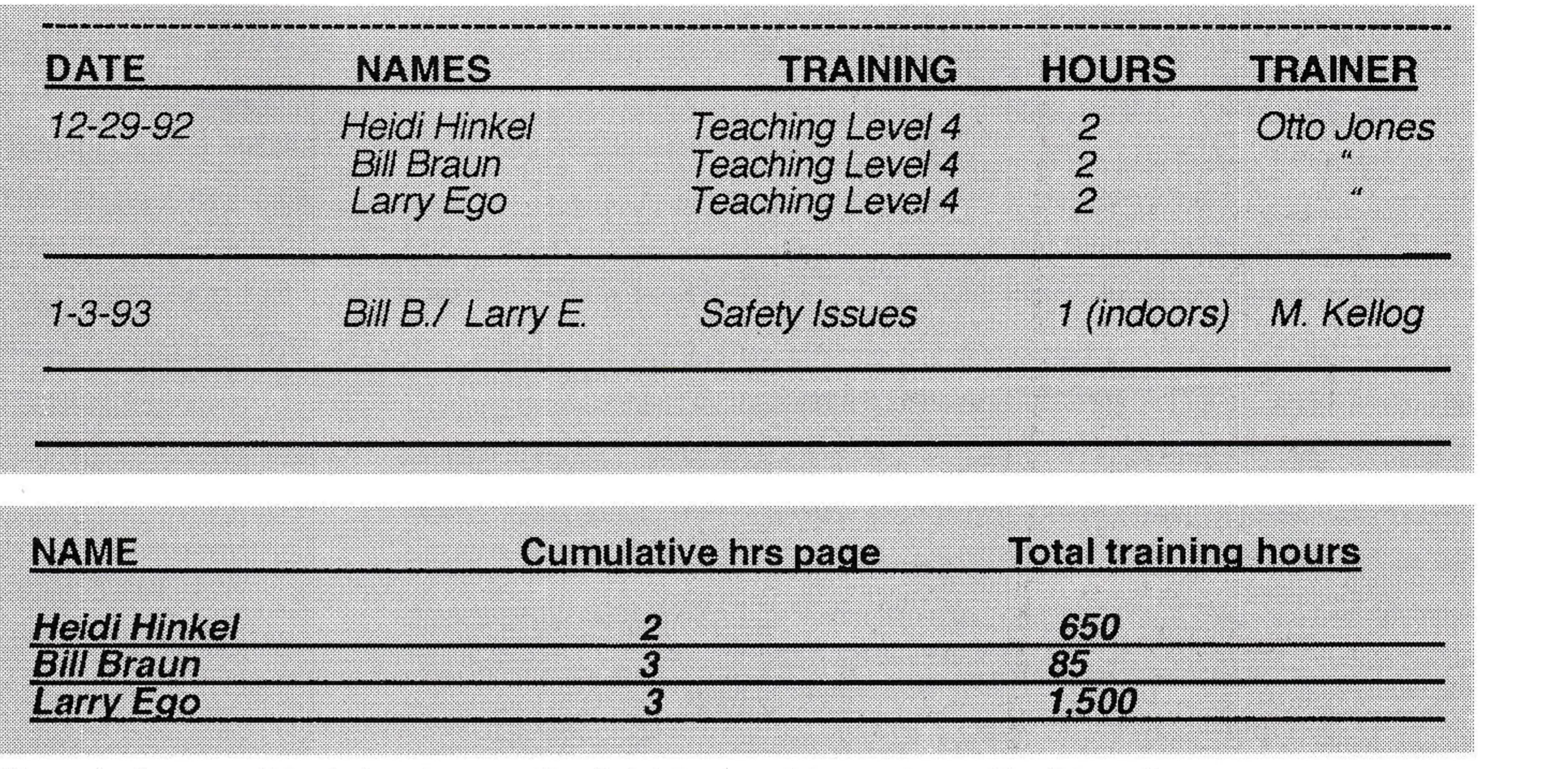
Two years ago I decided relying on memory wasn’t adequate; I should record our ski school staff’s training in case an instructor’s competence were ever questioned. A written log would show the topics covered in training sessions, the amount of time each instructor spent in clinics, who the trainer was and any special training received.
Besides being useful as a reference in case an instructor’s training were questioned, this log also aids in planning instructor clinics. The log gives an accurate picture of each instructor’s strengths and weaknesses so that specific training sessions can be implemented as needed, which is particularly valuable for part-time instructors.
The only drawback to keeping a log is the additional paperwork required. Each time instructors go out for training, the ski school director, assistant director or technical supervisor records the data about the clinic in the log book — a two to three minute task. We use a simple three-ring binder with standard format pages run off on a copier, but ski schools could keep such data on a computer as well. Whatever method is used, the important thing is to keep the system simple.
The headings needed are: date of the session, names of instructors, topics taught, amount of time and the name of the trainer. When instructors are asked to read magazine articles or book chapters, we require them to return a written self-study test concerning the material. These pages can also be kept in the log book for future reference in case training must be validated.
So far, we have not had to use the log book to answer questions about our instructor’s competence, but we’re ready. But as a reference tool in tracking training for individual instructors, it has come in handy.