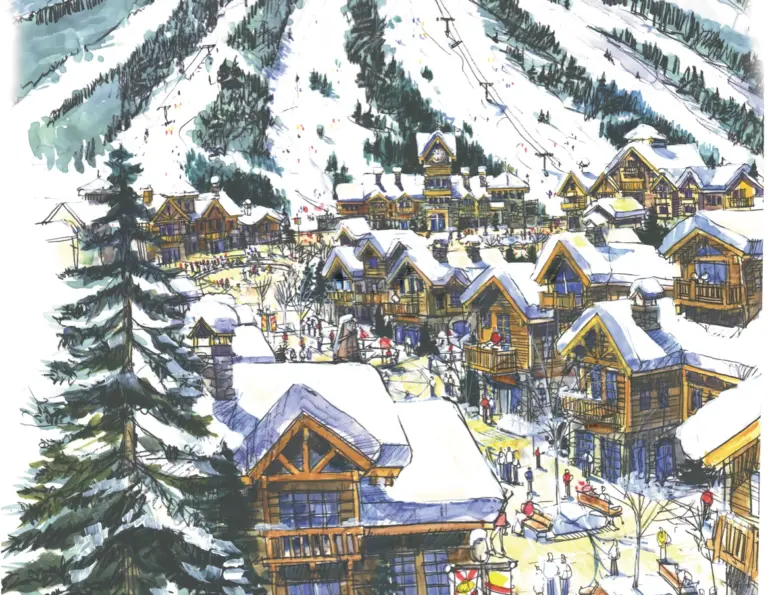
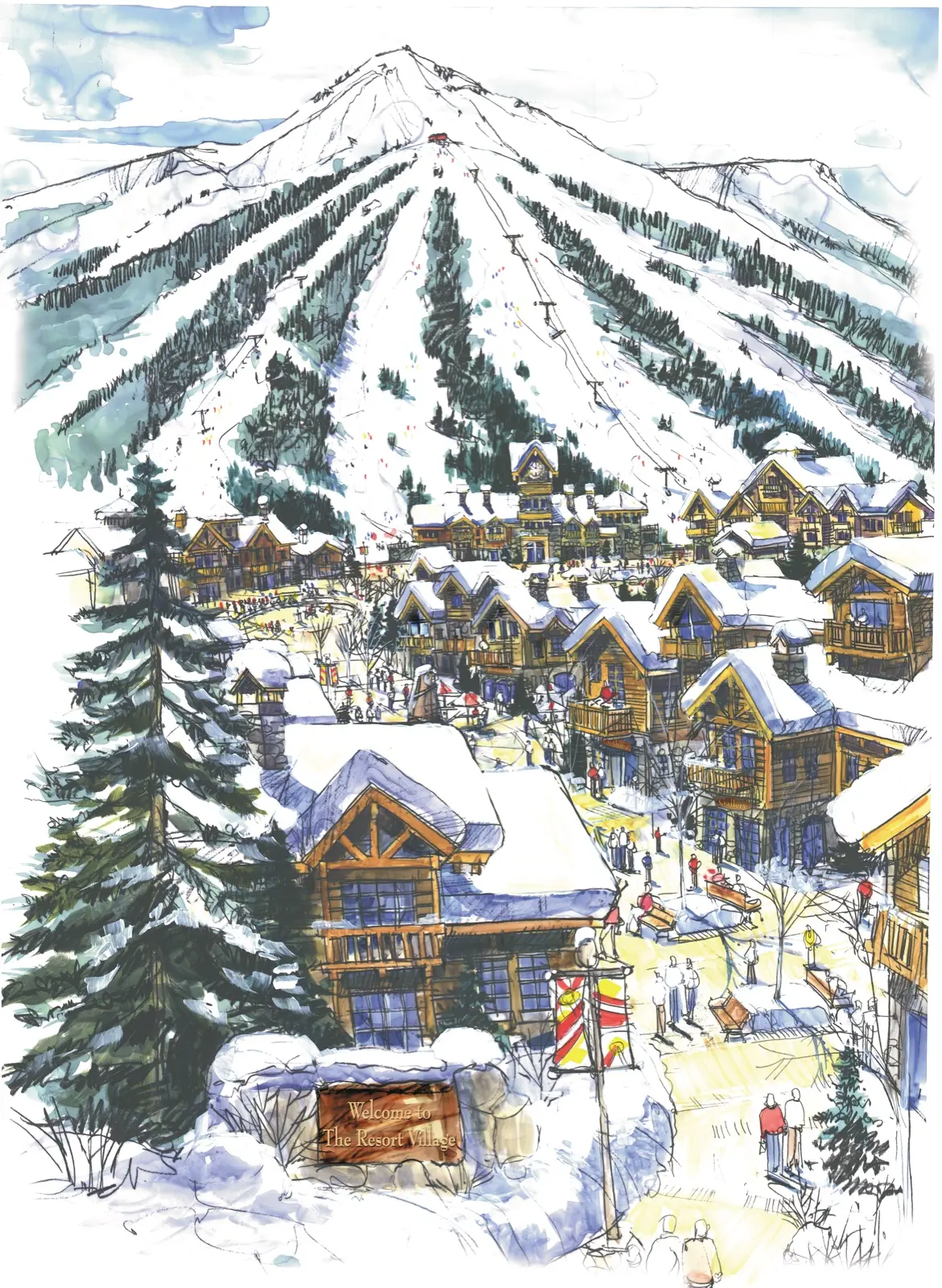
In the slow-growth ski market, one reassuring sign has always been the absence of new competition. The last major western resort (Beaver Creek) is past its 20th birthday and the West Coast and New England markets aren’t any fresher. We may not be adding skiers, but at least we’re not compounding the problem by building new ski areas. Well, maybe not ski areas, but there is an impressive pipeline of planned new ski villages with the tap wide open and a lot of marketing materials going to the same households. Somehow, we can sell a five-bedroom second home a few blocks from a gondola, but we can’t match last year’s skier counts without giving away the season pass.
By now we all know the diagnosis: fickle baby boomers have taken their sore knees, weighty mortgages and time-impoverished lifestyles and gone to the beach with a book. The industry’s response is well documented: snowmaking, grooming, high-speed lifts and comfortable new resort villages. A simple formula has emerged: Build or revitalize a base village, design a vibrant pedestrian downtown, sprinkle with on-mountain clubs, stimulate a host of recreational, cultural, retail and entertainment attractions, then sell the bed base to light-skiing baby boomers. If you can, hold onto the revenue-generating amenities. They don’t have to ski—it’s build it and they will spend.
For more than a decade, from Whistler to Sunday River, this formula in one form or another has supported every ski developer’s spreadsheet. But when all great minds begin to think alike, it’s usually time to get nervous.
While Intrawest Corporation recently announced a record quarter of sales for its diverse real estate offerings across North America, complete with an impressive roster of pre-sales lined up for the next two years, there remains unsettling evidence of softness in the western resort real estate market. Harry Frampton, president of East West Partners (the major force behind Beaver Creek and a host of other impressive resort projects), reported at the Colorado Ski Country annual meeting that his brokerage company has witnessed a near 40 percent decline in real estate closings during the first quarter of 2001. For the first five months of 2001, the value of real estate transactions in Colorado’s Summit County is down 20 percent—the first sustained decline there in 11 years. The baby boom cohort may have a full decade or more to go before reaching its second-home-buying apogee, but the past decade produced a lot of realtor mouths to feed and the summer buying season is slow.
Perhaps most puzzling, despite a full decade of extraordinary second-home development in the Rocky Mountain West, destination skier visits have remained flat. What do you do with a five-bedroom home in a ski area, if you don’t go skiing? A quick drive through the landscape of Colorado Ski Country, USA would indicate that one shops, golfs, complains about neighbors’ development plans and buys home furnishings. But if that is the case, what is the fundamental attraction of owning a home at a ski area?
The fact is, the relationship between skiing, community and real estate has always been a messy process of co-evolution and skiing’s 50-year journey from sport to amenity has continually redefined these relationships. But this last phase brought something new: no skiers.
Thirty years ago, when a skier’s goal of imitating the best of Jean Claude Killy was the single objective of his week-long vacation, mountain real estate was largely a place to rest up for the next day’s 8 a.m. assault on the mountain. Over time, ski towns have become resort communities, destinations in their own right and, buffeted by demographics, prosperity and rampant good taste, skiing became one of multiple attractions.
But the basic question still nags, particularly if you’re sitting on a little unsold resort inventory: If it’s not really about skiing, what is it that draws that second-home buyer and how deep is that market? Western resorts, communities of notoriously no-growth NIMBYs, have now permitted and approved over 16,000 units, the equivalent of eight new Beaver Creek Villages. And these are just the lead projects in new villages or community revitalization efforts. There is also a host of additional coattail projects and various forms of “downvalley” estates lots, all looking toward a market whose single communal element is a surprising, but seemingly resolute, disinterest in going skiing.

With the exception of the old school— Snowbird, Alta and Aspen—virtually every other resort in the American West is in the process of a major revamping, restructuring or revitalization effort. Whether it be new gondola connections (Breckenridge, Snowmass and Beaver Creek), pedestrian-oriented new resort villages (Northstar, Mammoth, Copper Mountain and, just-announced, Snowmass), brand name interval ownership projects (Teton Village, Telluride Mountain Village and the Canyons), or simply downtown revitalization efforts bearing remarkable resemblance to urban renewal projects of the early 1970’s (Vail, Heavenly and Crested Butte), everyone is building the better mousetrap.
But if we don’t go skiing, what will these new ski towns be? Are there enough mice out there to be trapped, and are stone-tiled bathrooms adequate cheese? What happens if skiing and ski community truly separate themselves? If a community no longer shares that unsettling November tension awaiting the first snowfall and the locals are no longer identifiable by an early March raccoon tan, will it matter? What defines these places and gives them depth, interest and character? Programmed main street vitality, attractive “streetscaping” and architectural controls are great, but is that really what makes these places special? Thinking back on your last resort stay, what are the memories that pull you back?
Noted Colorado “place designer,” Henry Beer, talks eloquently of the difference between experience and sensation. The first is something with complexity, connection, history and prophecy; the second, a pleasant simulation of experience that washes over you without any particular residue. If you have been to both Aspen and Epcot Center you know the difference. One you care about, one you don’t.
Since Hannes Schneider first stepped off the ski train in North Conway, N.H., skiing has been at the social, economic and, most importantly, the emotional heart of ski towns. Without the mountain experience as a common denominator, will the experience of Steamboat or Stowe give way to the superficiality of amenitized time-share projects? And if it does, will a fickle baby boomer notice—or more alarmingly, simply lose interest? Maybe the question is not, “If we build it, will they come,” but rather, “If we build it, will they care?”
Ford Frick is a managing director of BBC Research & Consulting, where he specializes in market economic and strategy issues of resort development. He can be reached at [email protected].