


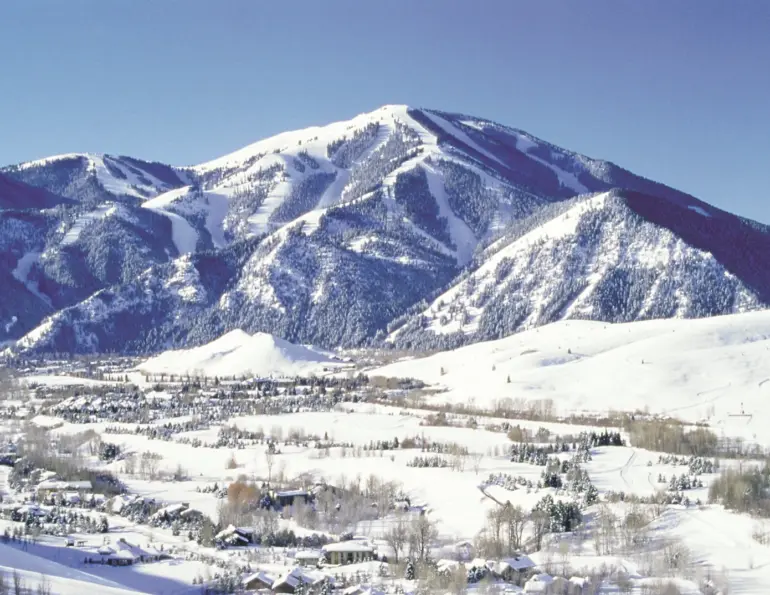
Ask about profit margin and you won’t get an answer. Sun Valley is a privately-held company owned by Earl Holding who also owns Sinclair Oil and a bunch of hotels under the label Little America. So maybe in this dot-com age Sun Valley isn’t a terrific example of how to run a business for big bucks.
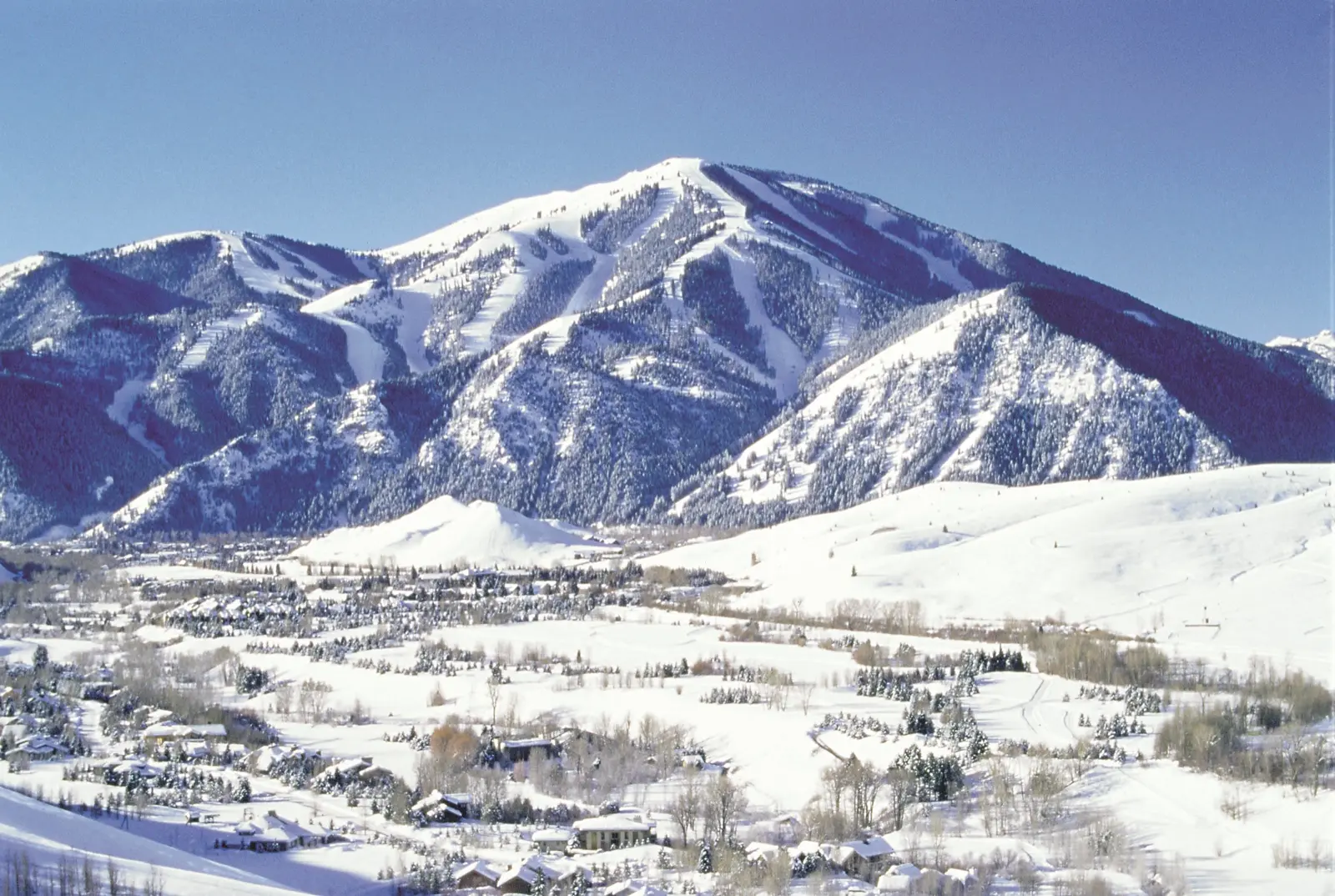
But Sun Valley does make money—more in summer than in winter—and it has a tradition and style that few other ski resorts could hope to emulate, but they might, at least, try. “Sun Valley is a unique place,” says Michael Berry, president of National Ski Areas Association. “It’s one of the most lovely spots on earth. It’s run very, very efficiently without a lot of upper and middle management. And, it’s infrastructure is superb.”
Berry, who once ran the lift department, might have added that Sun Valley has what is probably the most devoted following among skiers and snowboarders of any ski resort in the world. Families come to the resort generation after generation and some have booked the same room for 40 years. “Our guests develop deep loyalties and they come for many years,” says Jack Sibbach, director of marketing and public relations for Sun Valley. “The response of our guests does the marketing for us. And, frankly, we can’t fit more people here.”
At the moment, it looks as though Sun Valley is at its maximum, with an annual average of about 400,000 skier days. At the area, there are 148 rooms in the Lodge and 113 in the Inn, plus about 275 rentable condos and a couple of cottages. Nearby, the old western town of Ketchum has about 650 hotel rooms and 510 condos and homes. Elkhorn, which is adjacent to Sun Valley, has 132 hotel rooms and 100 condo units.
Sun Valley’s skier days have remained fairly constant in recent years, mainly because of accessibility. Some guests drive to the resort, but others who arrive via air through Hailey airport, 13 miles away, come in 30- or 40-passenger prop planes—in winter eight times a day from Salt Lake City and 24 times a week from Seattle. If the weather is bad, planes are diverted to Twin Falls or Boise and guests are bused in and, if the weather persists, they leave by the same route. While there is talk of expanding the airport to take jets and allow for instrument landings, many locals consider this an invasion of their lifestyle; they don’t want change.
The Skiing’s the Thing
The skiing on Bald Mountain—regarded by many skiers as the best in North America—is the main winter attraction, although snowshoeing, cross-country skiing, dog sledding, paragliding, ice skating, two heated pools, spa treatments and a bowling alley are also available. The vertical is 3,400 feet with seven Doppelmayr detachable quads, five triples, five doubles, two Magic Carpets and two portable rope tows, adding up to a capacity of 28,180 people per hour. A state-of-the-art York snowmaking system is used on practically all the 78 runs and, even during the most snowless winters, they are groomed nightly.
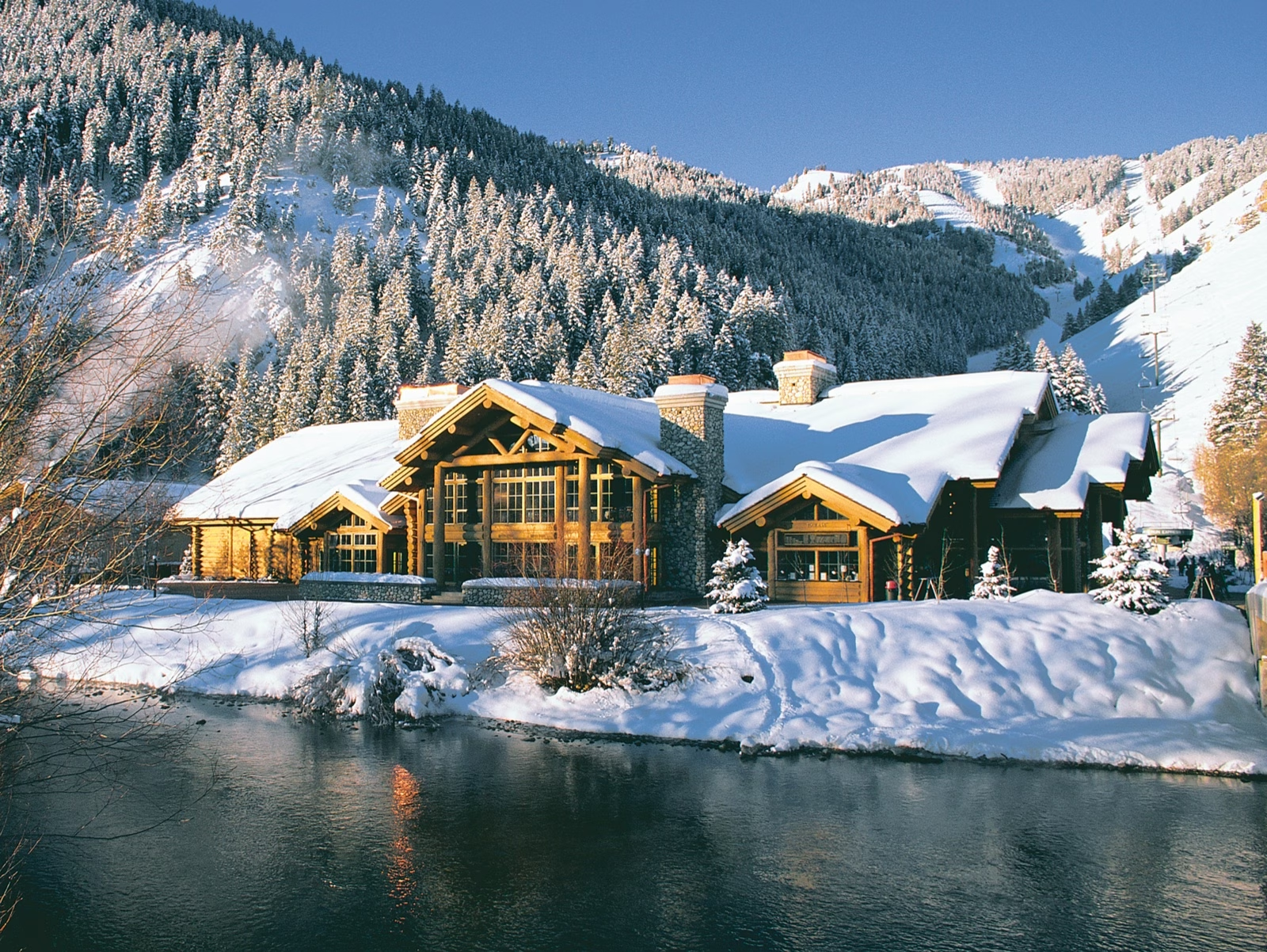
There are opulent buildings at each of the two entry points featuring spacious dining rooms, huge chandeliers and marble bathrooms, and two on-mountain restaurants with appurtenances of equal elegance. In addition, the old Round House restaurant has been spiffed up to feature white table clothes, waiters wearing bow-ties and black vests, and waitresses dressed in Tyrolean dirndls. Reservations for lunch are requested. These structures, as well as the refurbishing of the Lodge, have not won accolades from all who have experienced them, however. The mixing of styles and motifs—French carved furniture in the somewhat rugged Lodge and glitzy chandeliers in the restaurants, for instance—makes the interiors indistinguishable from many other expensive hotels and restaurants.
All of this infrastructure is new since Holding bought the resort from Bill Janss (a property developer) in 1977. Janss is said to have run the resort as a hobby while his stepdaughter, Christin Cooper, was ascending as a ski racer. His major addition was real estate in the form of a large condo development around the Lodge and Inn, most of which is privately owned.
Diversified Profit Centers
Janss also added to the Sun Valley village with stores and restaurants that are now owned and operated by the Sun Valley Company—hence the profit sectors in clothing, food and beverage, souvenirs, books and drugstore items. But, since Holding took over, real estate sales have ceased. “To make more money by selling real estate would change the flavor and experience,” says Sibbach. “I wouldn’t mind seeing a few townhouses added and, if the demand was there, another hotel could fit on the property.” But he insists these would not be for sale to make money. “Earl says he buys real estate, he doesn’t sell it,” says Berry.

Without real estate sales, but with huge outlays of money for infrastructure (Holding pays cash, because he doesn’t want to pay interest to banks), how can a ski resort like Sun Valley make money? It’s not through high prices for accommodations (a seven-night lodging with five days of skiing per person, double occupancy package starts at $561) and though lift tickets are high, they still remain within the normal range for large Western resorts ($59 a day without competition forcing bargain sell-offs). It may be as Berry suggests: Holding uses personnel efficiently.
“Mr. Holding is an operational person,” says Sibbach. “He keeps a close eye on labor costs and he uses people when and where he needs them.” Sibbach, for example, started with the Sun Valley Company in 1978 as a bartender. At the end of the ski season, he moved to the maintenance department, then to the grounds crew and, in summer, went back to tending bar. During very busy periods in the winter, employees in any level job might be moved to the mountain to load lifts, serve food in the restaurants or other jobs. Even Holding is known to bus tables, pick up trash and plant trees. Of course, during slow periods employees are likely to be laid off as well.
Loyalty Among Employees
Recruiting employees in this far away place has its hazards, however. For some it’s simply too remote and isolated and they end up leaving. But for others, a loyalty develops and there is a love of the environment, both of which transcend limited monetary rewards. Many management employees have worked at Sun Valley for 20 or 30 years and say they intend to stay on the job.
Employees in hourly jobs—housekeeping, food service, mountain crews—are usually recruited for the winter season from around the world. Guests hear a variety of accents from 350 part-time foreign employees, most of whom are college students in their home countries. They are part of a total workforce that expands to 1,400 in winter. About 900 people work at the resort in summer. There are about 300 full-time employees.
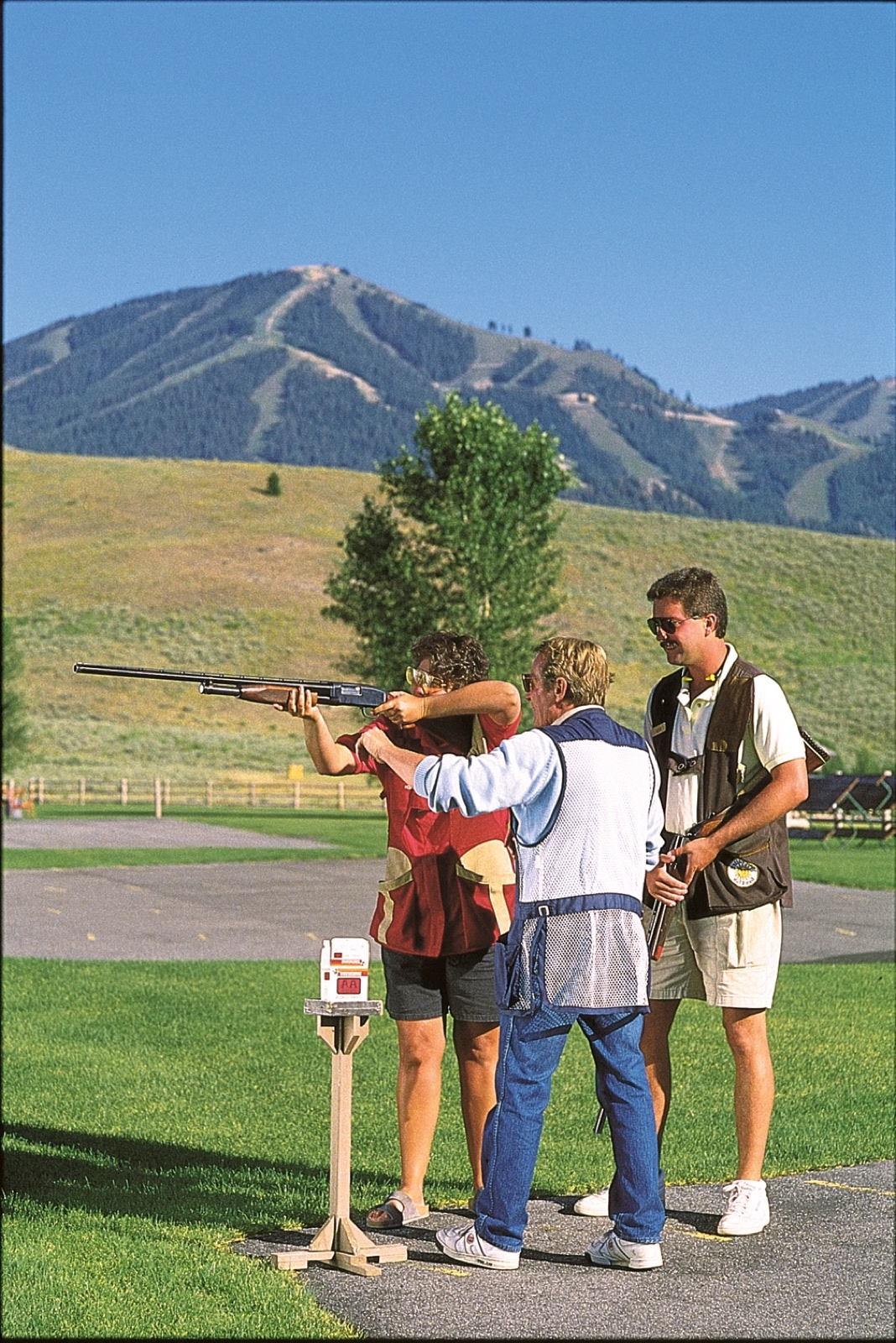
While the winter season is profitable, it’s summer where the lodging and food-and-beverage business bring in the most money because of higher rack rates and more guests. During this period, 65 percent of the business is in conventions and meetings, and the return rate is 75 percent.
Summer or winter, the profits are there, but is this any way to run a high-profile, destination ski resort? No neon, no real estate sales, buying with cash, controlling labor costs, grand-scale mountain construction and no crowds?
“The way we look at things,” says Sibbach, “is that we sell tradition, history and a quality experience.”

