

The result of three seasons of brainstorming, experimenting and cooperative effort between stockholders, management and employees is a unique cyclone fence. From that, skier injuries are down, Sundown’s insurance premium is down and labor costs to add layer after layer of wood-slat snow fence are also down.
The process began when Sundown stockholder Gene Gordon developed a lever fence using vertical fence posts with horizontal cross pieces hinged on top. Aircraft cable (carrier cable) was strung through the front side of the levers and fabric fence was hung from polypropylene ropes looped from the cable to the fence. The bottom of the fence was anchored by an old piece of haul-rope pinned to the ground and attached to the bottom of the fabric fence by loops of polypropylene rope. A rope from the back side of the lever to the post kept the fence at the desired height and allowed for adjustment.
The goal was to keep the posts a safe distance from crashing skiers, to provide a solid but forgiving barrier and to be able to raise the fence with increasing snow levels. The fence achieved the first two objectives, but couldn’t be raised when its bottom froze into a couple feet of compacted snow.
But from that beginning, the cantilevered fence evolved. General manager Tom Kutsch credits the idea to employees, but fence-builder Don Brooks says it was Kutsch’s idea. In any case, the first cantilevered fence was installed on Sundown’s Turkey Ridge to prevent errant skiers from flying off a 30-foot embankment and terrorizing cows in the neighboring pasture.
The cantilevered fence uses off-set steel poles made from old snowmaking pipe welded with gussets to 30 X 30 X 5/8-inch steel plates. Each plate is bolted on a three- to four-yard concrete foundation, using 3/4-inch threaded rods with nuts and washers above and below the plate, which allows the pole’s position to be fine-tuned. Only three of these poles are needed for a 300-foot fence. Two-by-four props help the poles hold the carrier cable up, thus economizing on poles and concrete and allowing for lower tension on the cable.
Eight-foot-high vinyl-coated cyclone fence was suspended by loops of polypropylene rope from the carrier cable. A winch, anchored on its own foundation at the top end of the fence, but off the run, pulls the carrier cable to raise the fence.
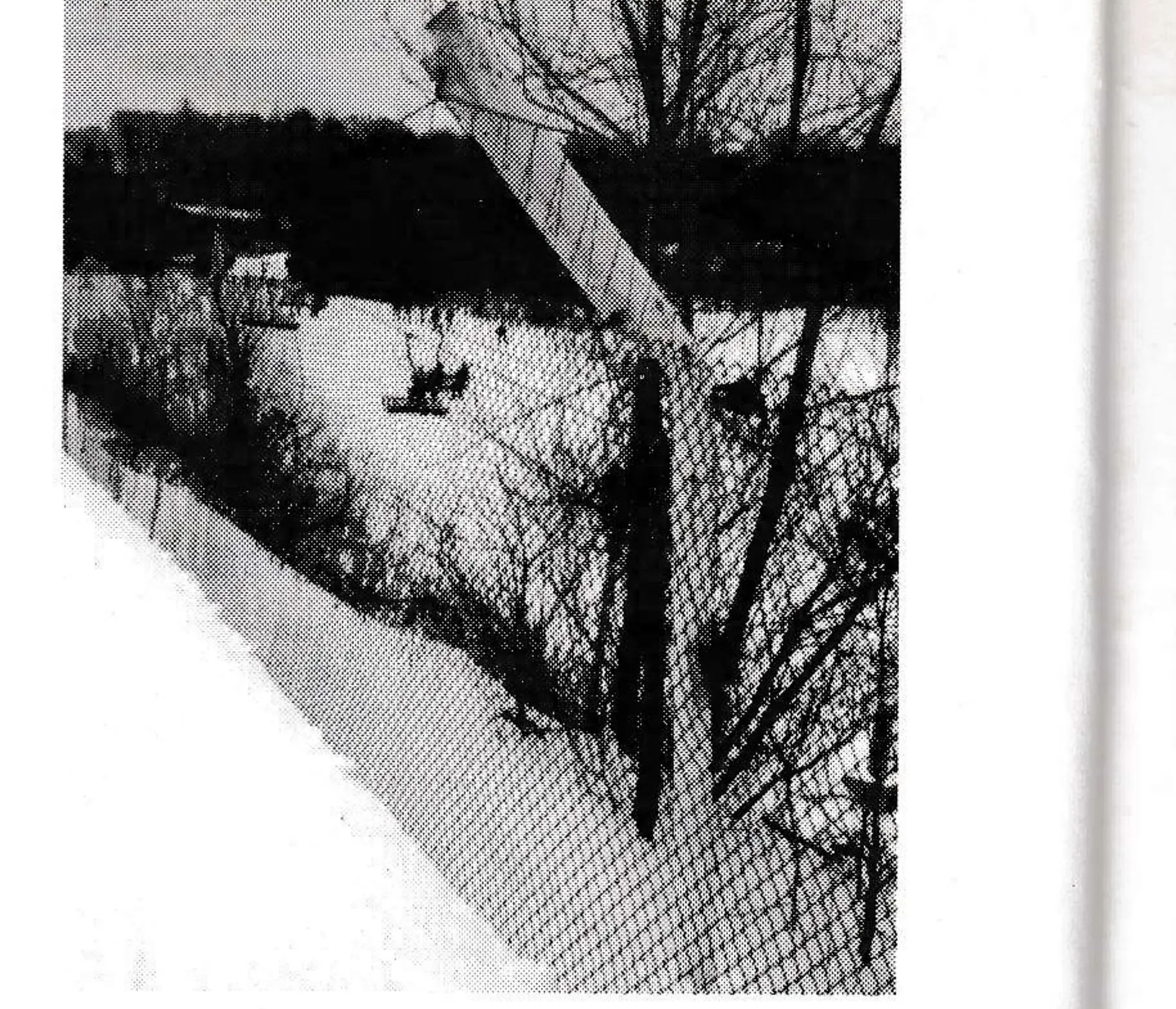
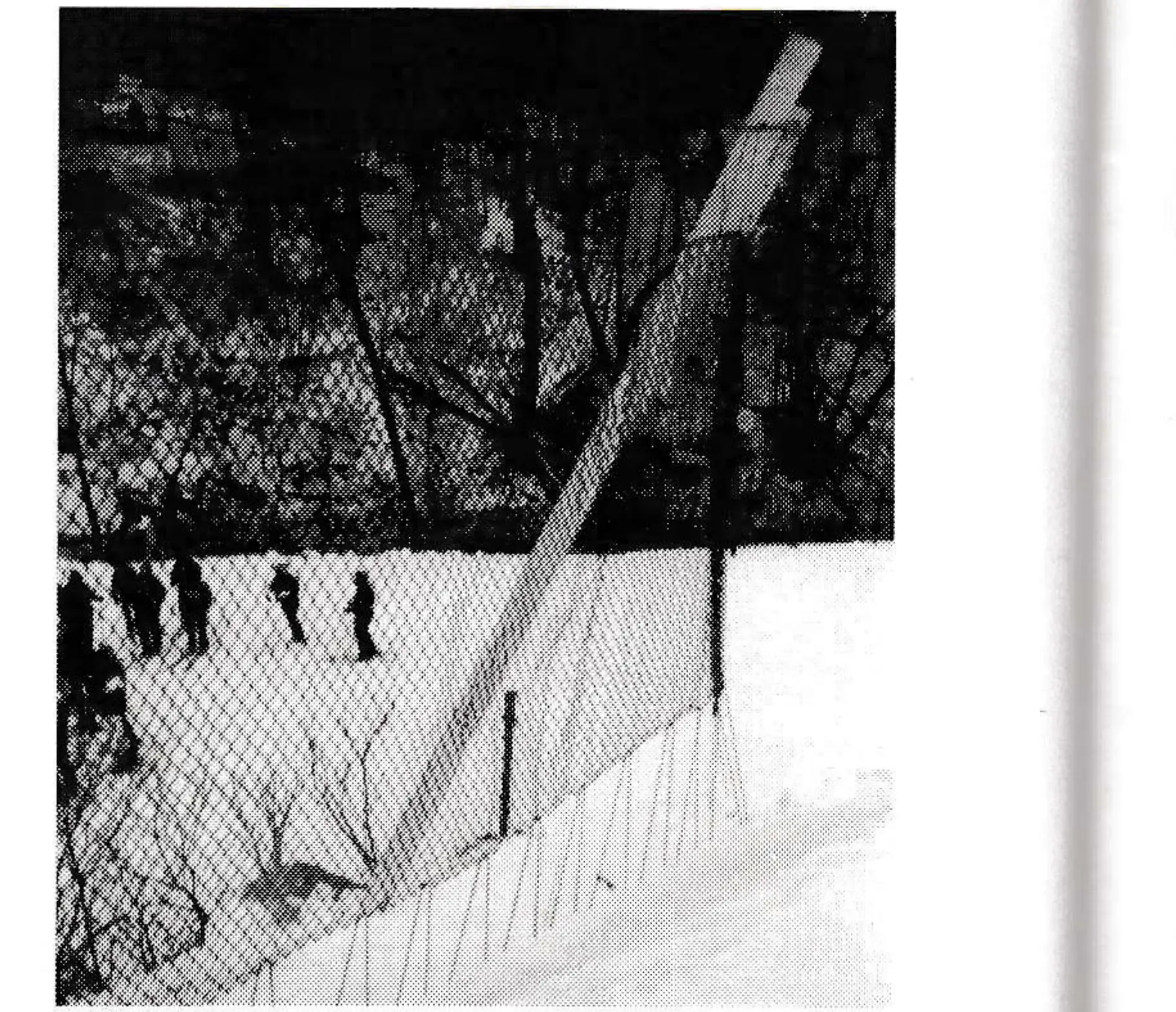
As ideas progress, they are usually improved and simplified, and a greater investment in materials is justified for something that works. A year after the Turkey Ridge fence, another cantilevered fence was built on a run called Roundup. Only the middle pole of this 300-foot fence is cantilevered, but this middle pole holds two winches, each of which can pick up 150 feet of the fence. The ends of the fence are held by straight steel poles bolted to off-set concrete foundations that hold the poles at 45-degree angles to the run and from dead level. The tops of these poles are high enough above the run so that skiers won’t hit them. One-eighth-inch aircraft cable is used to loop between the 5/16-inch carrier cable and the 1/8-inch cable that runs through the top loop of the cyclone fence. Again, the bottom was anchored by a piece of haul-rope pinned to the ground and woven to the fence by polypropylene ropes.
These fences are functional and rather elegant. Most important, they present a formidable, but forgiving, physical barrier to out-of-control skiers. Hitting one is like bouncing off a trampoline. The initial cost for the fences is high, but that is soon made up in labor costs for new fences every season and reduced insurance costs. Whatever the monetary cost, skier injuries are reduced.