Photo courtesy of Caltrans
Much of California’s ski industry was under siege for 30 days from Christmas to the end of January as a one-two punch of torrential rains and heavy snows caused massive flooding, giant mud slides, snow avalanches and economic losses in the millions. It was the largest and most widespread natural disaster in the history of American skiing.
The first climax came on New Year’s Day after six days of relentless downpour that swelled creeks, overloaded culverts and closed roads with oozing mud, boulders and tree limbs.
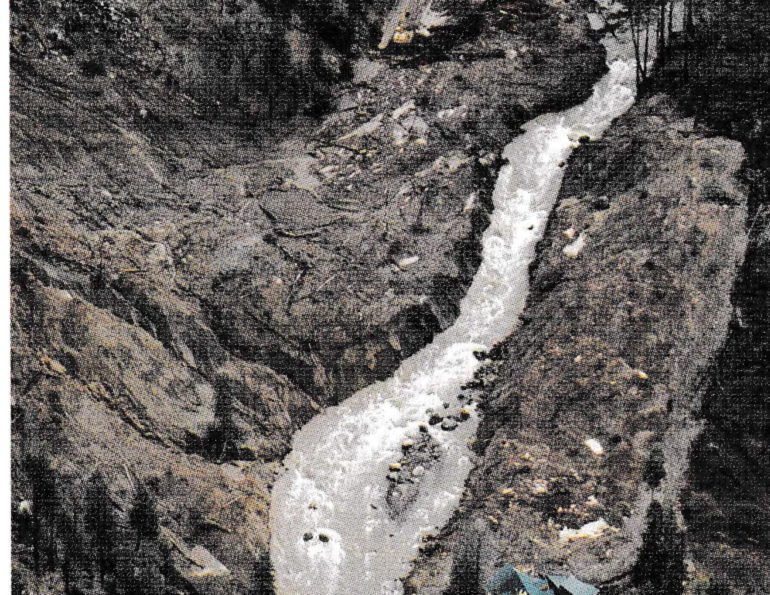
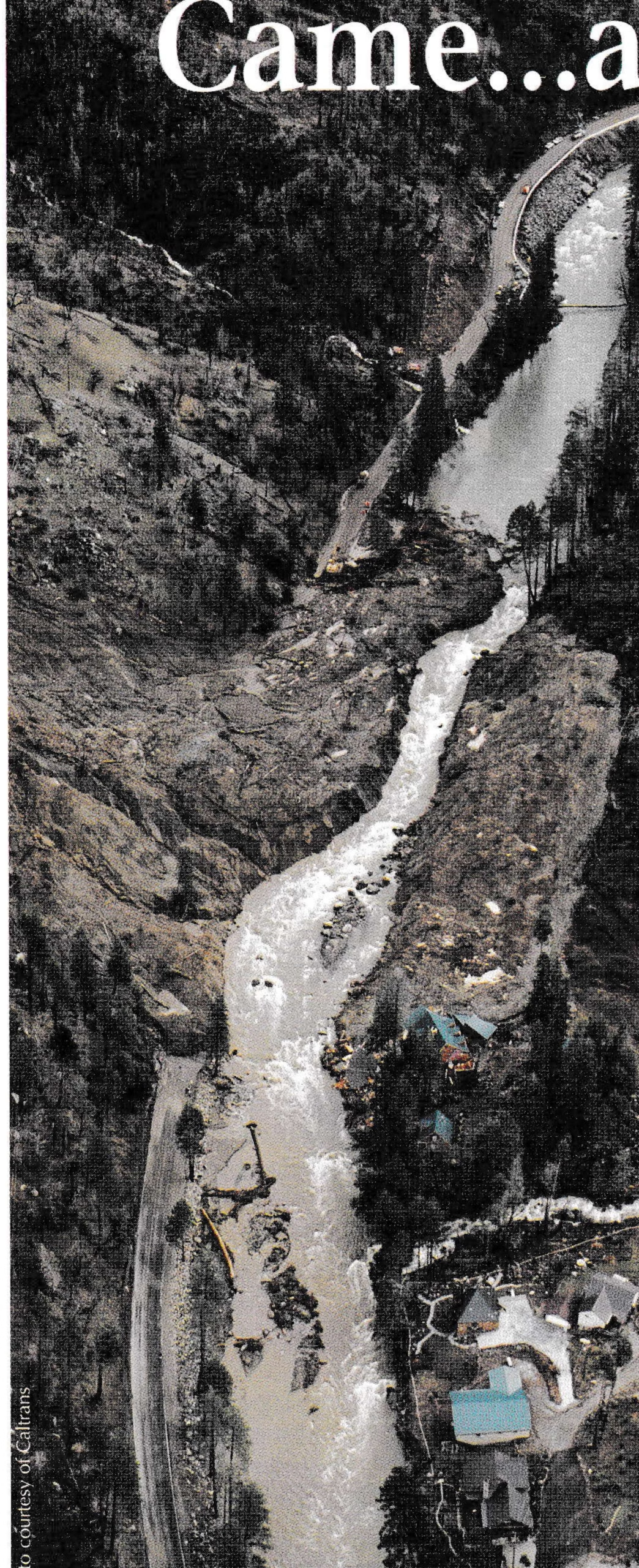
In the Lake Tahoe region, there were slides that, at various points, completely cut off the lake and its 17 alpine resorts from the outside world. Highway 50, the lifeline for Heavenly Ski Resort and Sierra-at-Tahoe on the south end of the lake, was severed entirely by a series of five mud slides that blocked access from San Francisco and Sacramento. Caltrans, the state’s Department of Transportation, worked feverishly around the clock with an army of workers and heavy equipment to get the highway open in two weeks, only to have it close 10 days later after an onslaught of four to six feet of snow in 32 hours which triggered a horrendous monster slide. There was even a second miracle from Caltrans which managed to reopen the highway more than a month ahead of schedule.
There were many tales of close calls and of heroic efforts to save life and property, but Squaw Valley’s co-founder, Alex Cushing and his wife, Nancy Wendt, had one of the most dramatic.
Granted, it had been raining for three days solid, but that didn’t keep Alex and Nancy from throwing a big party the night before New Year’s Eve. They packed their two-story home, located on the slopes above the Olympic House base lodge, with 36 guests—friends and relatives who enjoyed a lavish, catered affair. By the time everyone had left on December 31, the Cushings were exhausted and weren’t paying much attention to a stream behind the house, which they had been monitoring every four hours during the rain.
“We had an early dinner,” Nancy recalled, “and Alex said, ‘Why don’t you go out and check the stream now.’ He couldn’t do it himself because of an infected toe. When I went outside, the water had risen three feet in four hours.”
Racing back inside, she told her husband that it was time to get out—immediately. They stacked some belongings and furniture as high off the floor as they could, grabbed a few possessions and gingerly forded a two- to three-foot river of water that was rushing down the ski run next to their home. Water had also backed up from a bridge behind the adjacent Squaw Valley Lodge, a luxurious condo hotel. That building was the nearest point of safety for the Cushings, but it, too, was being assaulted by flood waters and a wall of raging water and mud was streaming through the hotel, most of it pouring through the lobby, the lower units and a center courtyard that contains a swimming pool. Employees had to open doors to a glass-enclosed walkway to let the water drain out to a parking lot on the other side. The Cushings spent a night on the third floor—”as high up as we could get,” said Nancy.
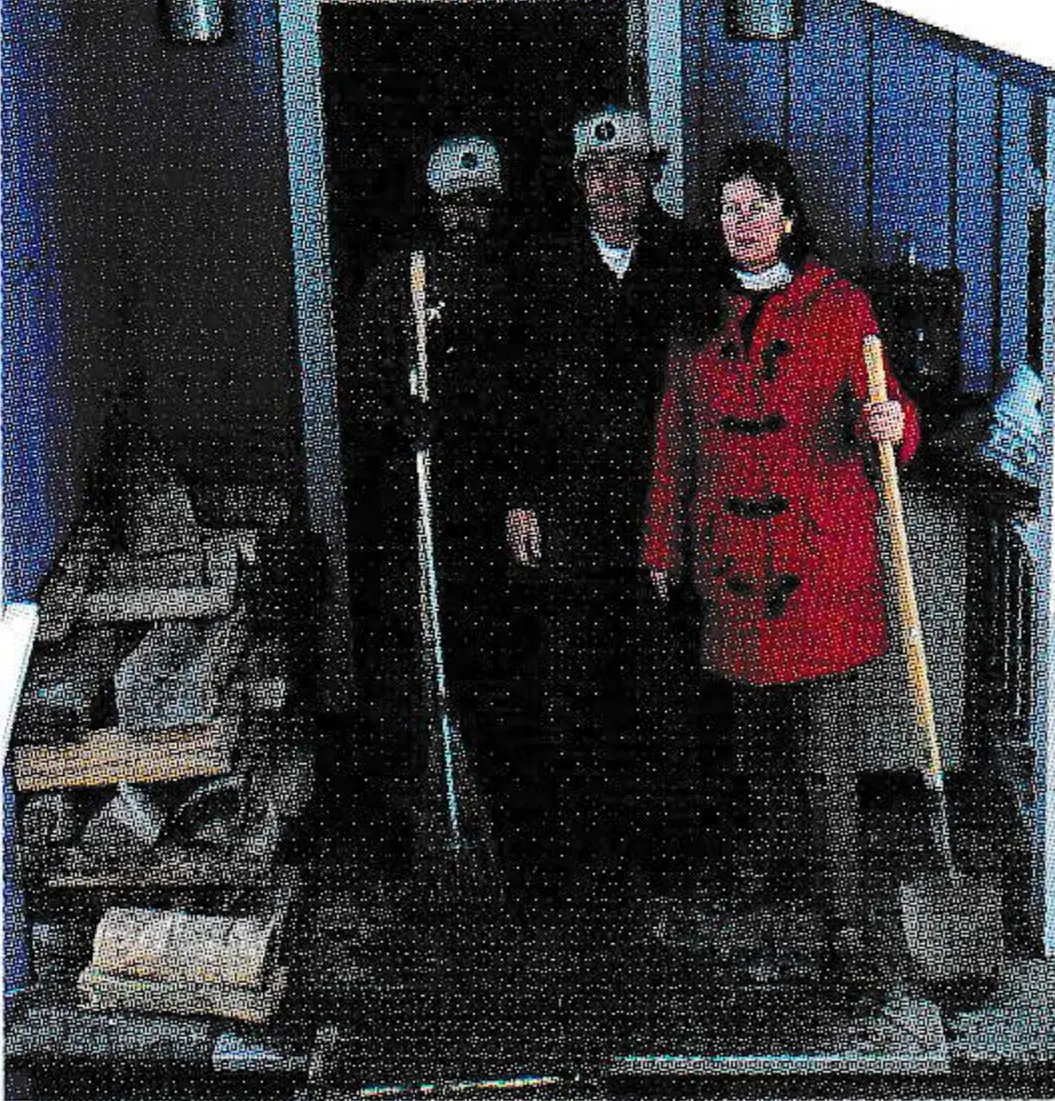
Photo by Ken Castle
Days later, when they could reach their house again, the Cushings found that the first floor was thoroughly trashed. Beyond the physical damage was one major casualty: an irreplaceable archive of historic photographs and documents that Cushing had been saving for the 50th anniversary of Squaw Valley in 1999. “This was very, very sad for him,” said Nancy. Cushing has lived in the house since 1949, when it was a snack stand.
Damages are still being assessed, but Bob Roberts, executive director of the California Ski Industry Association, estimates that a million skier days or roughly $40 million in lift ticket sales may be lost to the monster storms. Physical damage to ski lodges, hotels, shops, lifts and other facilities will certainly push the losses much higher. And California and Nevada highway agencies have yet to tally up their expenses, but they represent yet more mega millions.
From Disaster to Recovery
A journal tells how Mother Nature threw her best one-two punch at Squaw Valley, but an experienced and disciplined crew knew how to handle it.
by Jimmy King, Mountain Manager, Squaw Valley, California
December 20-23—Large snow storm shuts down most of the mountain, but we get over 10 feet of fabulous snow.
December 24-25—Full operations. Sunny Christmas. But clouds start to gather.
December 26-31—Steady rain and we have to close on the 31st because of extreme concern of avalanche danger.
January 1—Flooding started moderately, but by evening was a disaster. The highway to Truckee was closed from flooding and slides. In the other direction, a slide about 100 feet wide and 25 feet high meant we were cut off from the outside world. Caltrans arrived with a small loader and said it would take six to eight hours to clear. We brought down our 980 loaders and had the road open in two hours.

Meanwhile, water was running straight down the slopes at the lower mountain in just about all areas. We were trying to divert it, but the heavy flow made the effort useless.
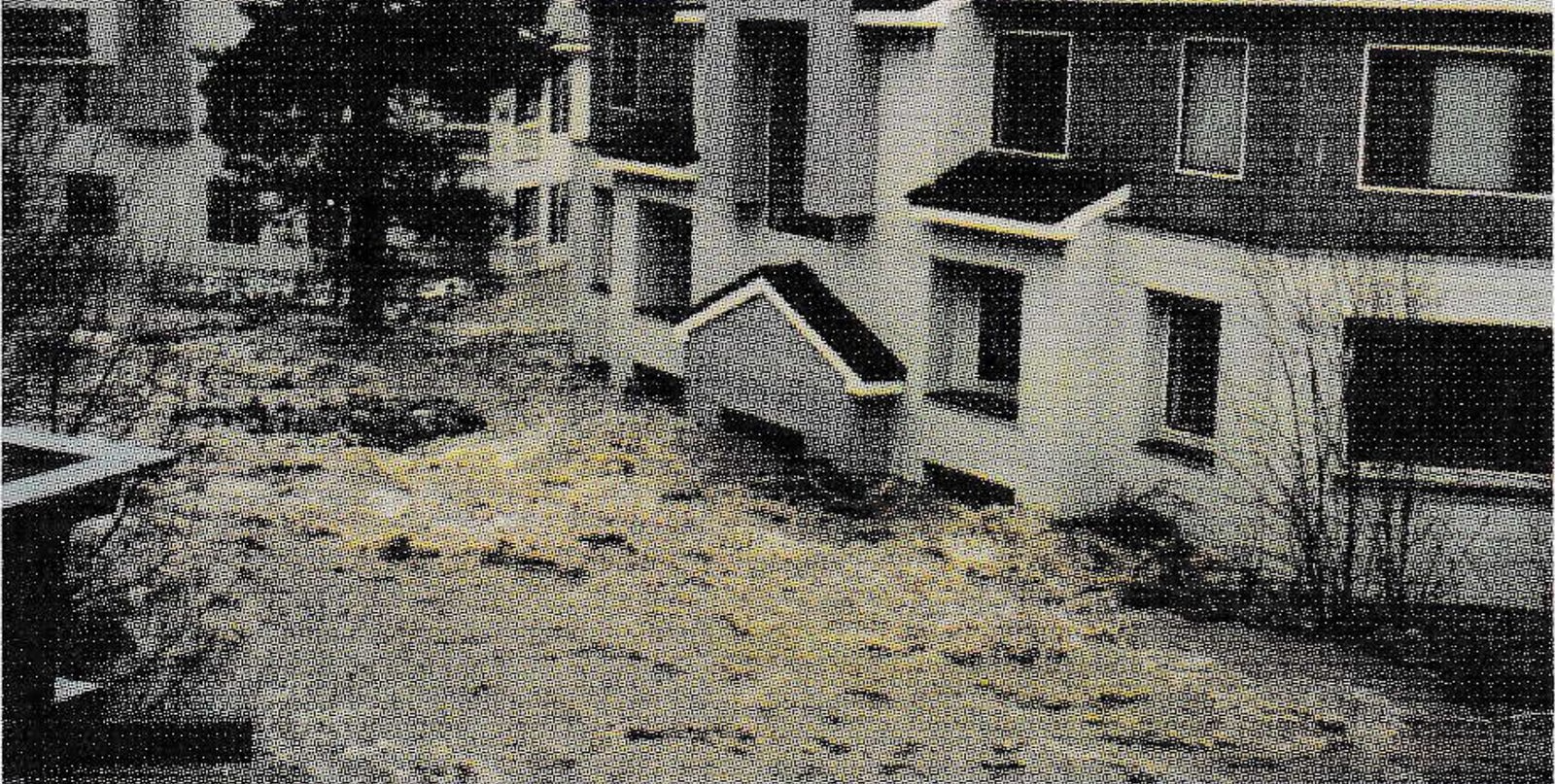
Water was running through our Olympic House Lodge to the point that the front doors were opened to let the water exit. As evening arrived, the main creek behind the Cushing house overflowed, taking mud and water about four feet deep directly into their house. The first floor of the lodge next door was evacuated, with everyone moving upstairs.
The water kept increasing and, at about midnight, the Tram building, where our corporate offices are located, was flooding. All available employees were mobilized and with the help of large 280 loaders, a dirt berm was built around the building to divert the water. Another crew set up pumps to remove water from inside. At the same time a small dam above Red Dog lift started to overflow, so a trench was dug directly below to get the flow—now large—to run directly into the parking lot.
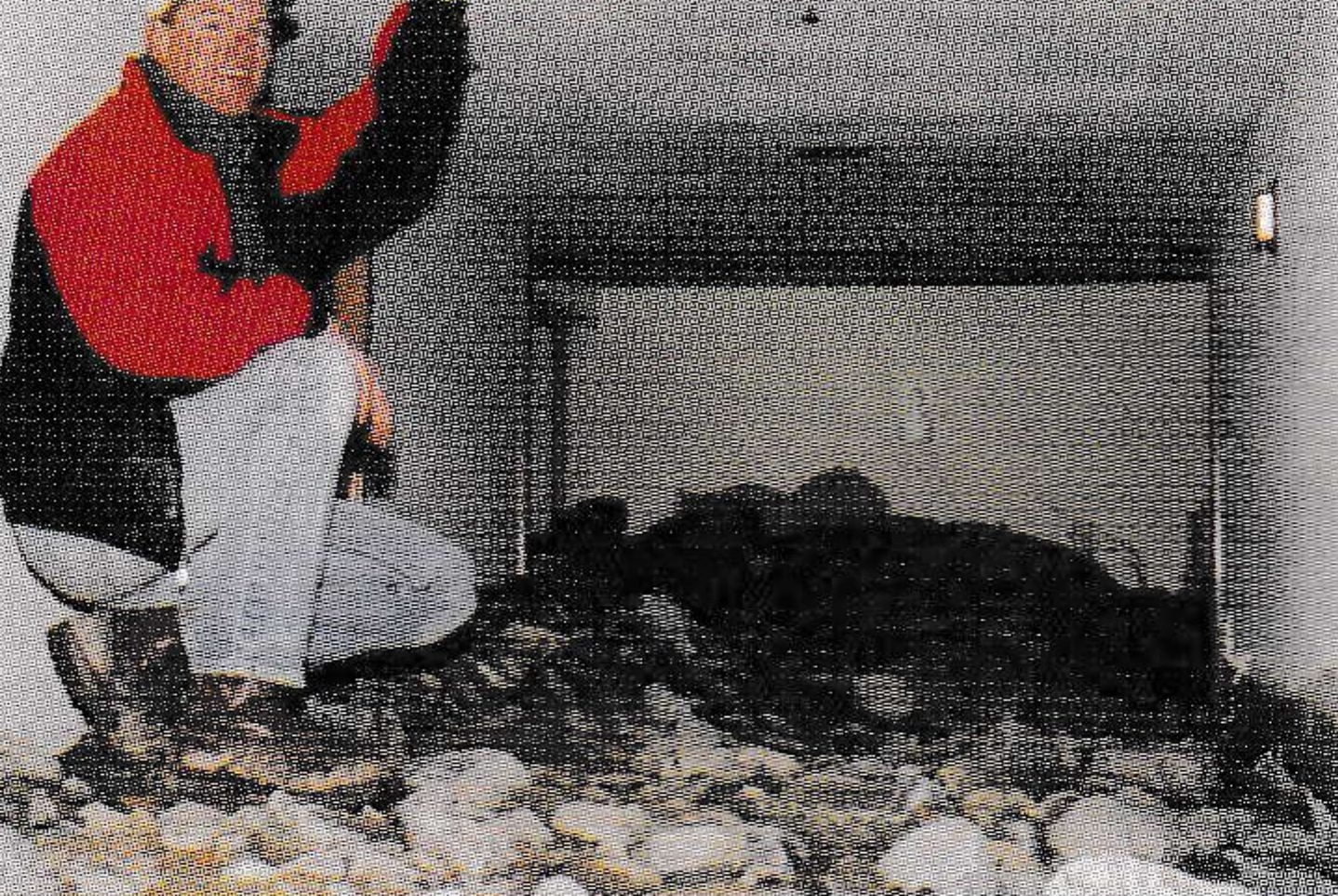
Photo by Tanya Branson
January 4—After nine days, rain had finally stopped on the 3rd and GM Hans Burkhart, Vehicle Foreman Joe Curletti and I were able to get around the mountain—a spooky trip—to assess damage and devise a game plan.
We found the power lines up the mountain, together with snowmaking and sewer lines, were totally washed out for about 300 feet. The game plan was first to get power, second to repair the sewer and water and third to repair slopes and get back to normal operation.
With the lifts running on auxiliary power, we opened parts of the upper mountain where skiing was great. No facilities were available.
The power company arrived with cable for a new 850-foot-long line. They were a great help, especially considering all the other problems they faced in the Tahoe area.
January 5—We brought in a helicopter from Oregon to fly all the equipment needed to pull the new power lines. By 5:30 p.m., the lines had been pulled, spliced, put underground and the power restored.
The sewer line took much longer due to all the testing that was required and the inability of the government agencies to make a decision on what they wanted. We finally opened up our upper mountain facilities on Friday the 10th.
The final project was to repair Squaw 1 Express, where water flowing next to towers 19 and 20 had eroded the dirt and exposed the concrete. We needed to pour about 20 yards of concrete around the footings, so once again, a 61 helicopter was brought in. Concrete was also needed to place around the new temporary sewer line. The lift was able to reopen on January 17.
The flood is going to be a part of our daily lives for a while, what with water stains, carpets to be replaced, bridges to be rebuilt. We were tested all right, but experience, equipment and management support made the difference.