


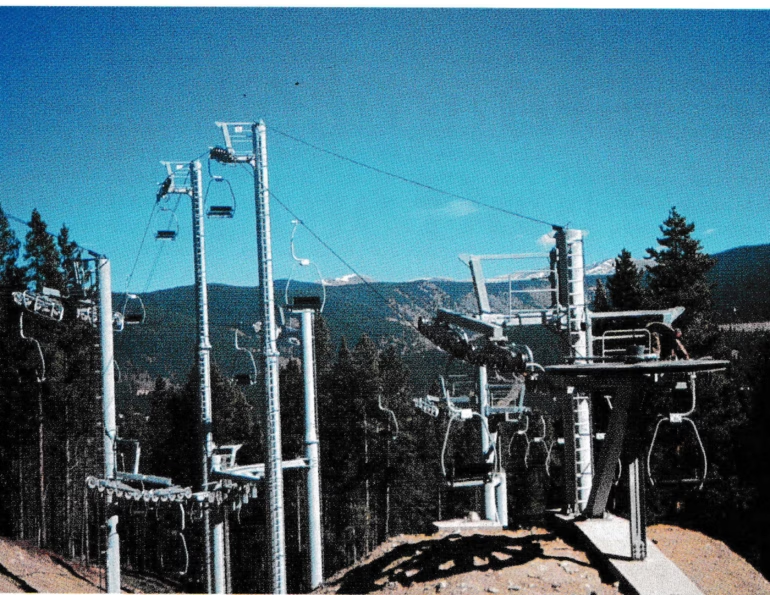
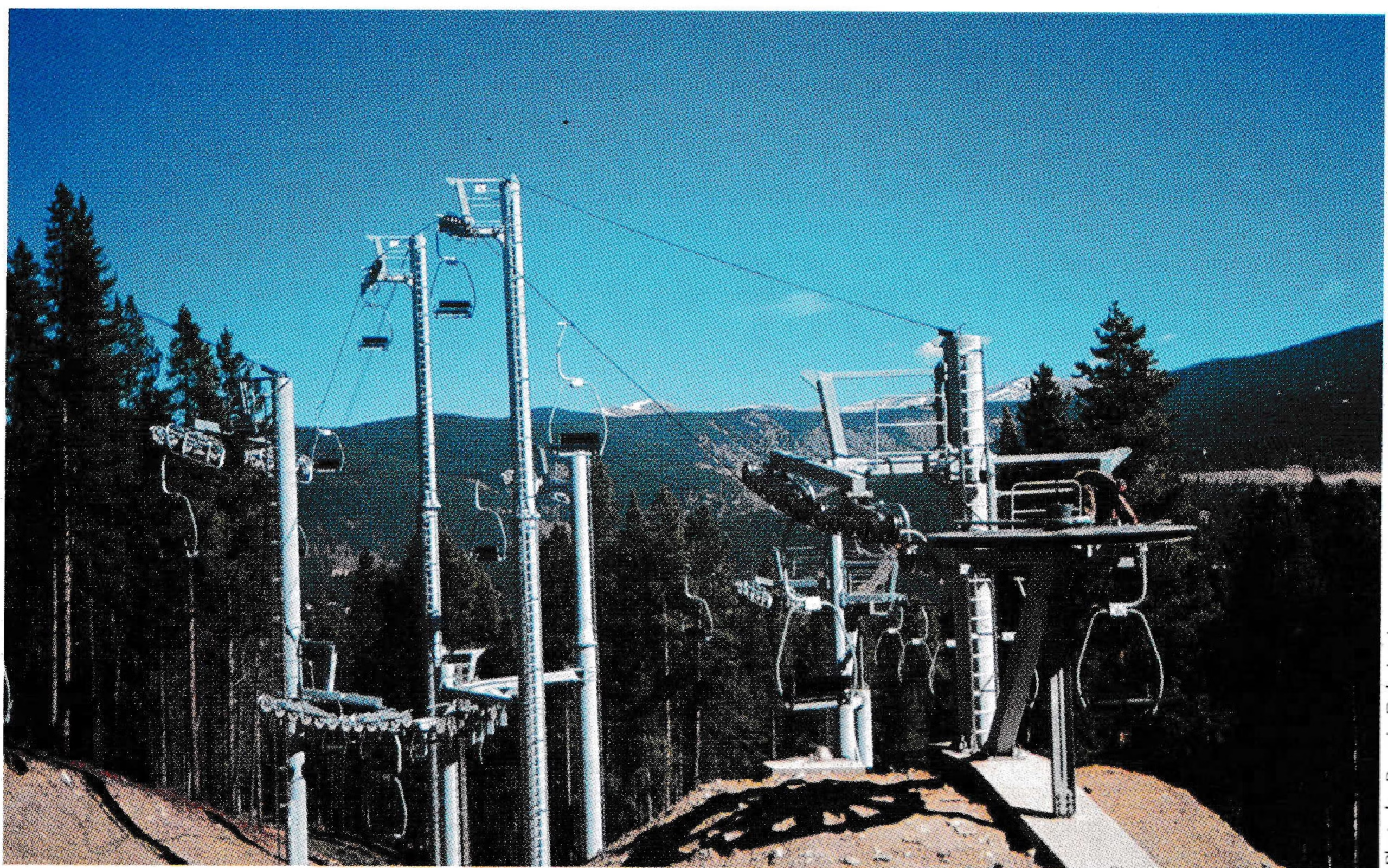
Photo by Ronnie Dale Louis
However, funding for the lift as conceived remained a low priority in ensuing years because, although the proposed lift would have reduced the need for those skiers to ride buses or drive their own vehicles to the resort’s base areas, it would service only limited ski terrain between its top terminal and the Base 9 base area.
When funding for the lift became available last year, the original concept of the lift came into question. The Peak 9 base area had become increasingly busy over the years, and it was seen that a new lift that provided access from the bed base to only one base area would surely result in longer lift lines. The only solution was to configure the new lift so that it would provide skiers access to both the Peak 9 and Peak 8 base areas.
Doing this turned out to be a more difficult task than anticipated. The alignment for the lift, which had been negotiated with great difficulty in 1983, takes it across three parcels of private property, wetlands and a municipal greenbelt, so moving it to serve both base areas was not an option. It seemed the only solution was to build two lifts.
While the two-lift option was being studied, the concept was introduced of making one lift turn a corner. The conventional answer would be no, but Breckenridge has a T-bar that turns a 17-degree corner that uses a triangular lift line frequently found in Europe on surface lifts as well as on a few chairlifts. We also found a couple of lifts in the U.S. that use a triangular lift line. However, preliminary design work revealed it wasn’t an option because an easement for the return line couldn’t be obtained. If we wanted an angled lift, it would have to be with the return line on the same alignment.
Reactions from several lift manufacturers ranged from long silences to cries of “You don’t want to do that!” It seems that while turning one side of the lift posed no problems, turning the other side into the fixed-grip side raised a difficult engineering issue. By then, the two-lift option began to look less expensive.
However, not one of these manufacturers said they couldn’t do it, and several different options for an angled lift were offered. Unfortunately, none was acceptable because they used unproven or prototype components used on surface lifts but not in chairlifts. The last thing we wanted was a lift with hybrid, complicated components we would hate to operate in the future.
Finally, between Breckenridge and Poma an idea emerged that would allow the lift to turn a corner using conventional and proven components in a simple, yet unconventional way. The angle for the lift needed to be almost 45 degrees. Such a thing had never been done before, but it appeared we had our solution. Since bending the downhill line into the grip wasn’t possible without complex machinery, the return rope passes around two bullwheels away from the grip, making a 315-degree deflection back to the proper alignment. While doing this, the downhill rope crosses itself twice, creating three levels. This would be a lift that could be operated at half the expense of the two-lift options and would not require special maintenance.

Now that the machine is nearly completed, we realize what a unique lift the Poma design team of J. F. Mugnier, Jeff Smith and Don Larson has developed.
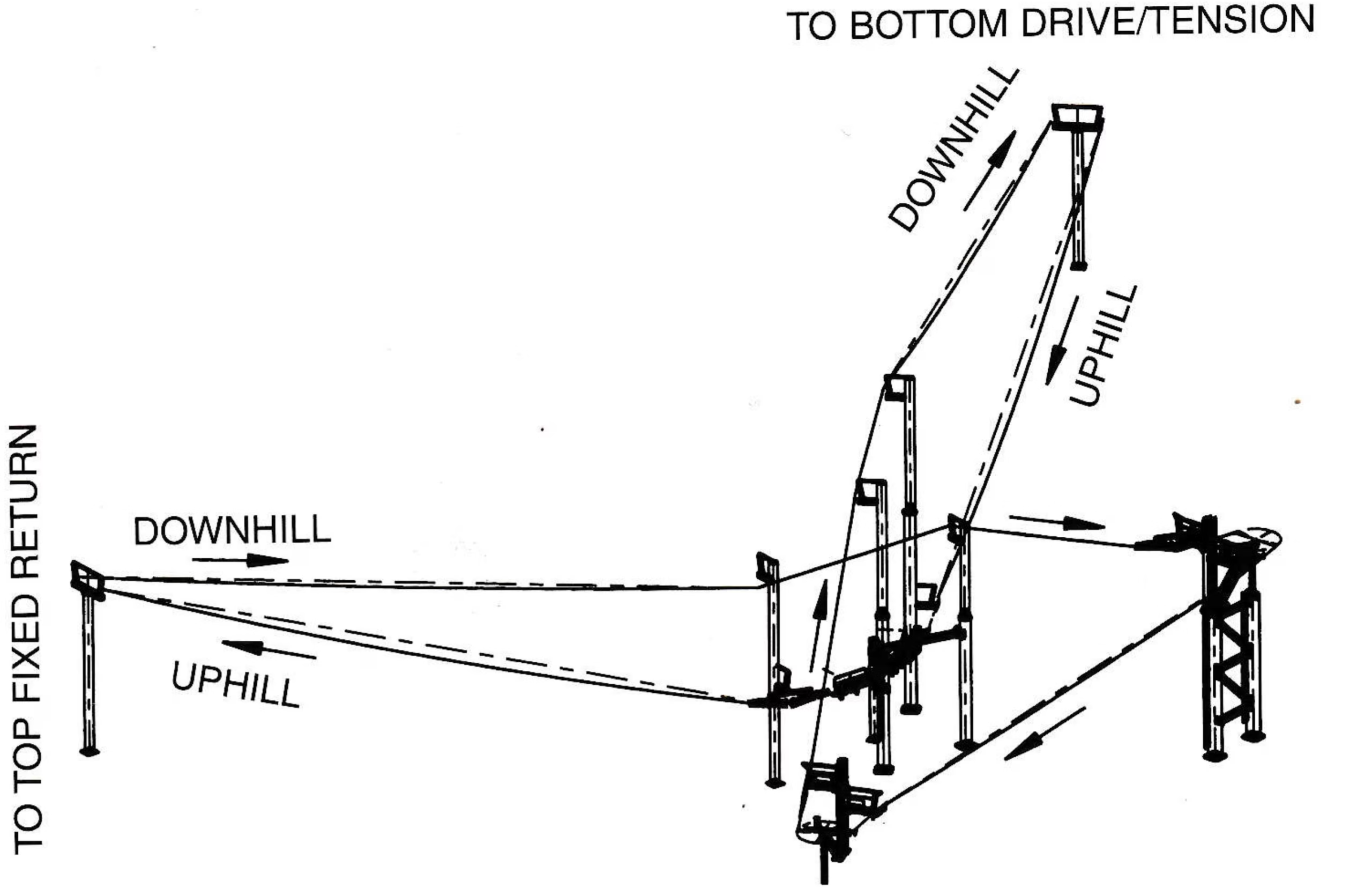
What a marvel of engineering it took to solve this problem. Though this may not be a trendsetting design because, after all, it does take an unusual set of circumstances to need a lift like this one. Nonetheless, as a laboratory of ideas and problem-solving, it is worthy of study.
Especially satisfying is that the Breckenridge maintenance staff helped develop the concept for Snowflake Lift, to use its proud new name. Too often, ski areas take the easy way out instead of working for the best solution. We may yet encounter some problems after operating the lift this season, but at this point the staff is excited and confident.
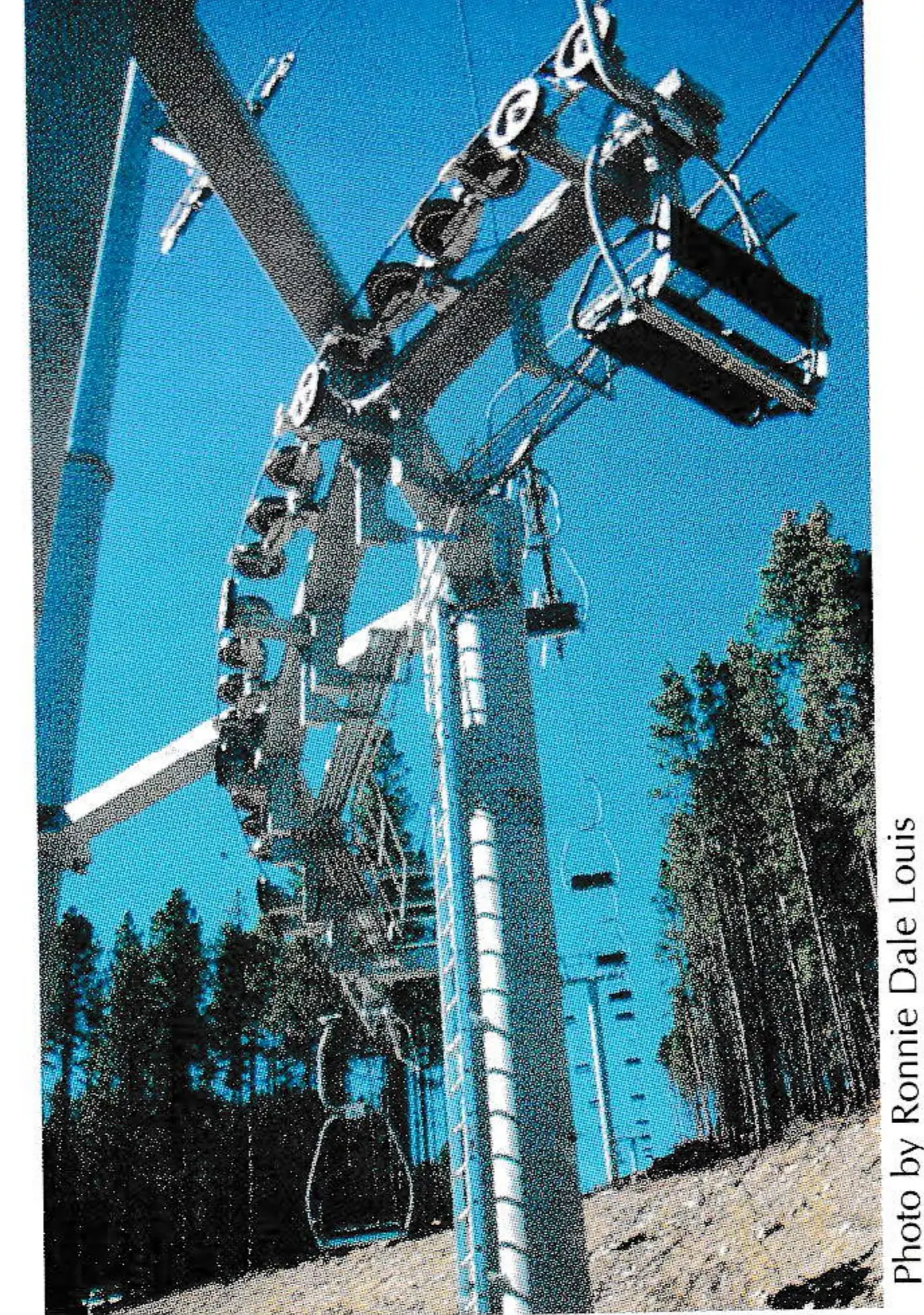
Photo by Ronnie Dale Louis
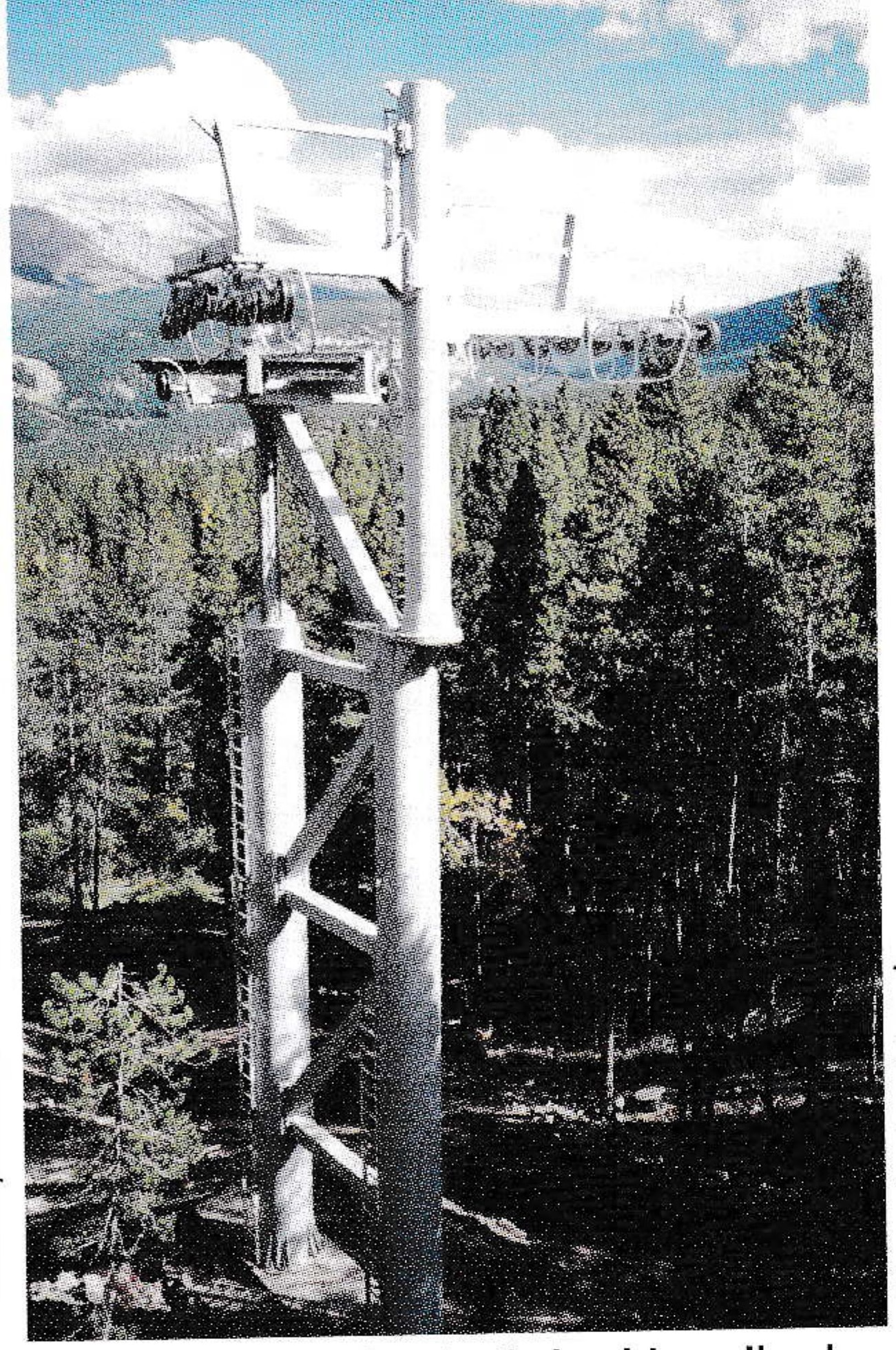
Photo by Jon Mauch
| Item | Specification |
|---|---|
| Manufacturer | Poma of America |
| Type | Fixed Grip 2 Chair |
| Slope rise | 5,322 feet |
| Vertical Rise | 630 feet |
| Speed | 500 ft/min. |
| Horsepower | 250 AC* |
| Capacity | 1,200 pph |
| Carriers | 209 |
| Degree of Angle | 44 |
| Drive Location | Bottom |
| Tension Location | Bottom |
*Poma used AC variable frequency drive instead of the DC drive system found in most of today’s new lifts because they felt the advantages of lower power consumption, minimal long-term electric motor maintenance and low initial electric motor cost (AC) made the AC-VFD a sensible option.

