


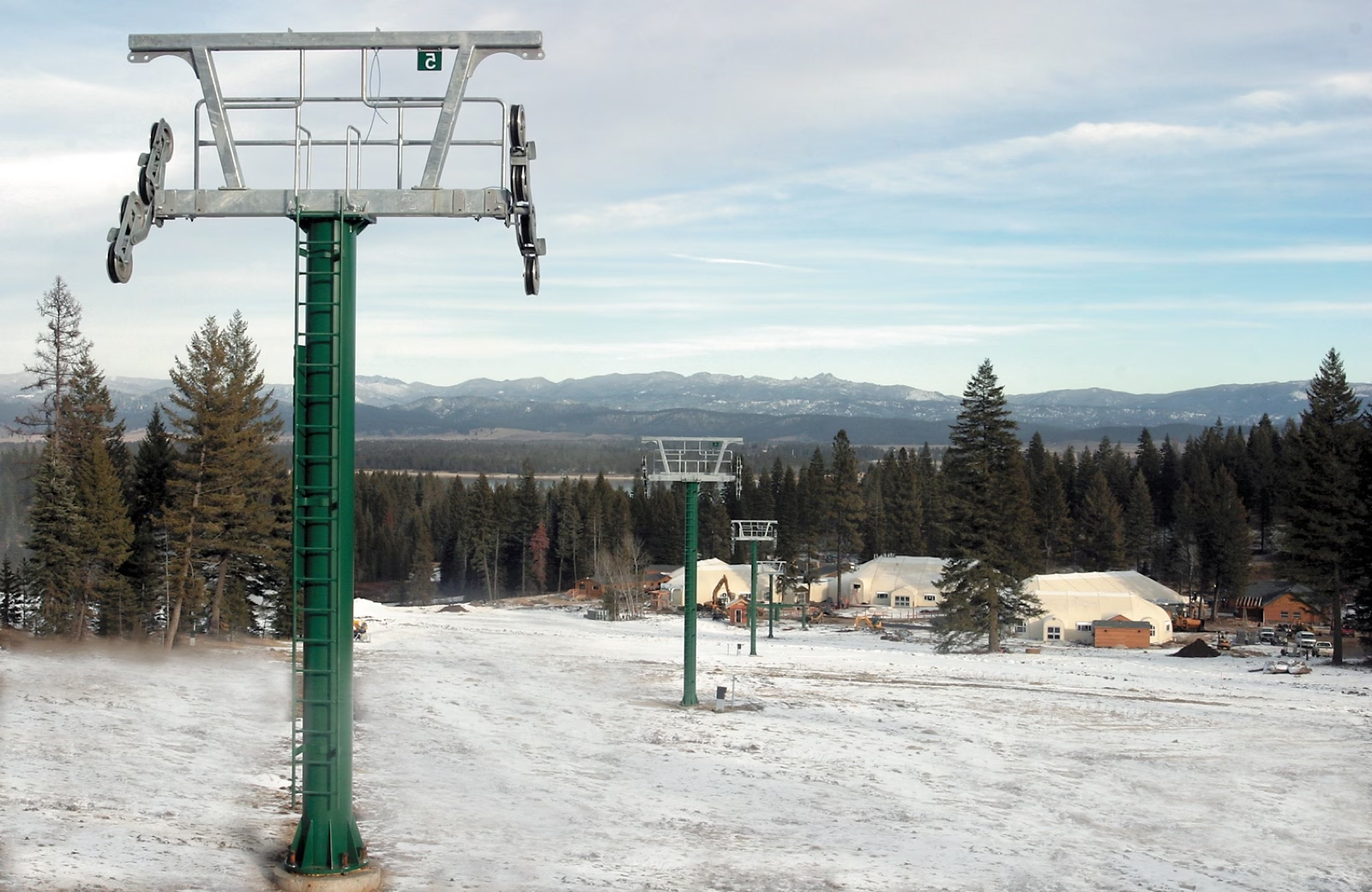
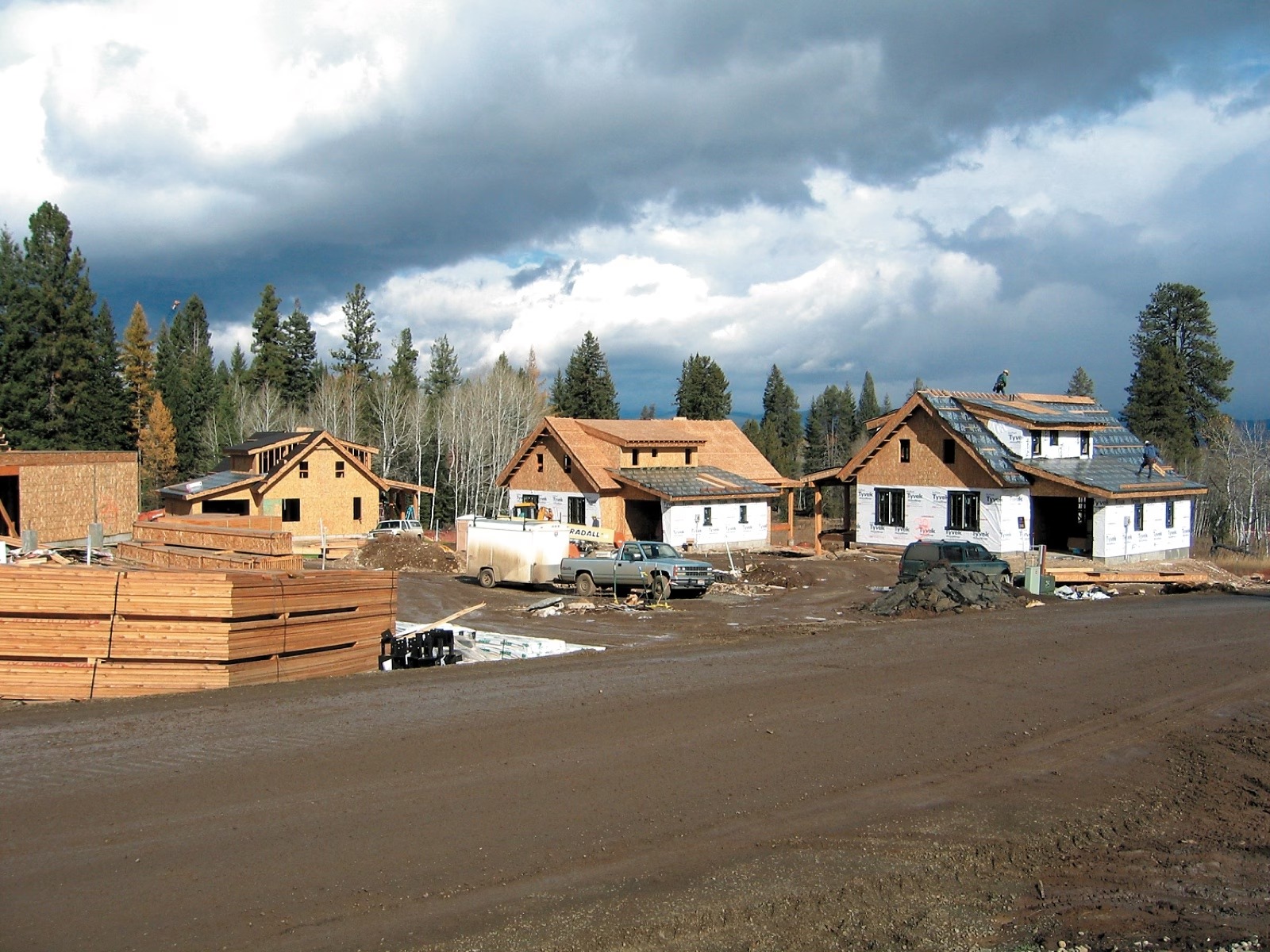
The area opens with five lifts, including two Leitner-Poma detachable quads that serve the main runs on a continuous 2,800 vertical; a high-tech Technoalpin snowmaking system on the lower two-thirds of the mountain; a collection of 62 smallish cottages and chalets, and base services housed in a cluster of Sprung Structures called Discovery Square. Eventually, this will be a sizable development, with plans for 2,000 residential homes, condos, and hotels. But for now, it’s a pioneer project, and it aims to maintain the pioneer spirit as it grows.
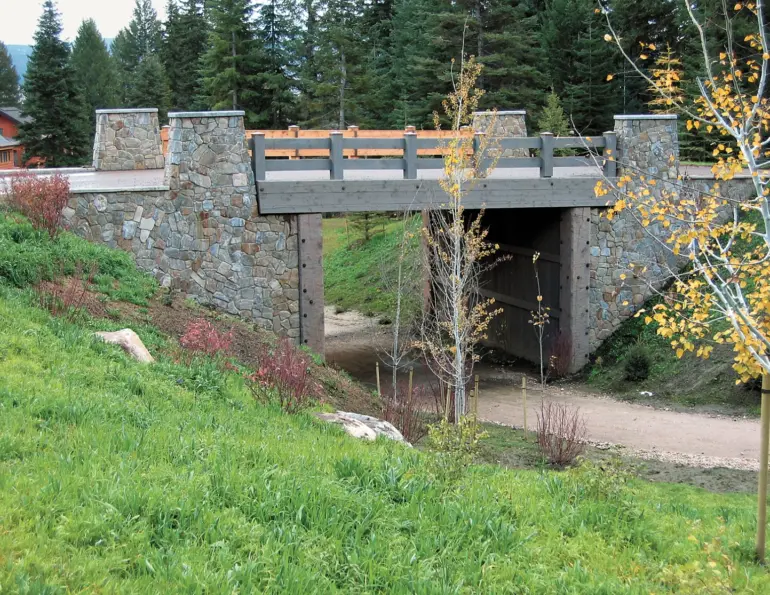
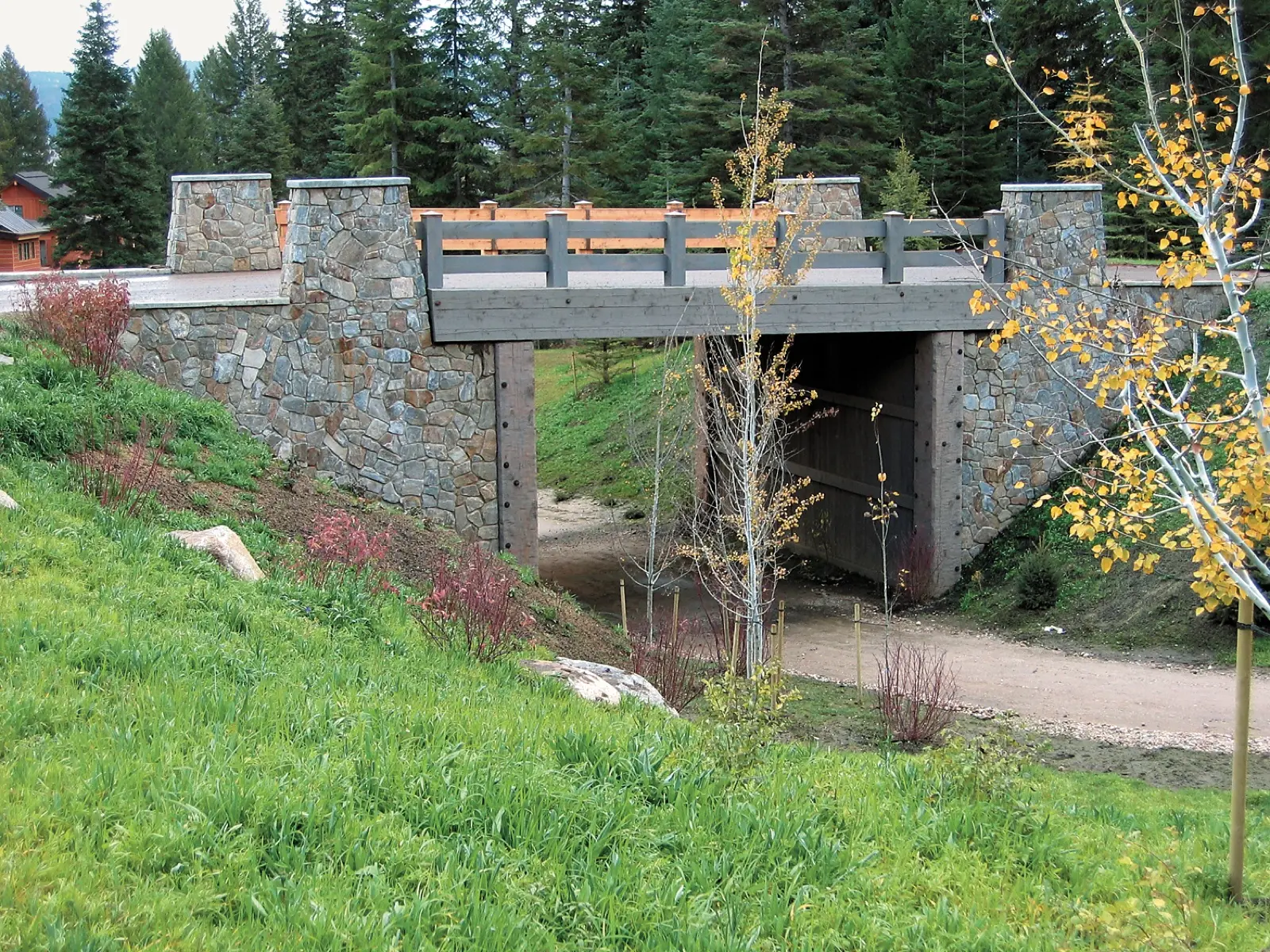
The cottages and chalets, ranging from 1,200 to 2,400 square feet, help establish the intimate atmosphere. These homes, which are all close to the Square, serve as “a horizontal hotel,” says village development director Mike Ferensowicz, former village manager for The Village at Squaw Valley. The reliance on small cottages and chalets, nestled in the forest, and connected to the village and the trails by ski-over and ski-under bridges is, as Ferensowicz says, “one of the most romantic concepts. People who ride the Poma [a platter lift from the cottage enclave] can ski to the express lift, and in the evenings can ski home. That’s sexy as hell. The bridges are out of control in terms of romance.”
The most novel aspect from an operations standpoint is Discovery Square, the base-area services village. It consists of seven Sprung Structures, from the grocery store and the main base facilities (kid’s center, retail and rental shop) to the cafeteria/restaurant and the administration building. The Square looks like an encampment more than a resort.
Intentionally or not, this makes a strong and clear statement: Tamarack is about outdoor adventure. French-born CEO Jean-Pierre “J.P.” Boespflug has envisioned a four-season resort that practically begs visitors to spend time in the meadows, forests, and waterways of west-central Idaho. More so than most resorts, Tamarack is confident that visitors come to recreate in the mountains, not to loll about in town.
While the long-term plan calls for a typically “vibrant base village,” the emphasis at Tamarack is clearly on outdoor activity. The village will always be a jumping off point, a base camp for skiing and riding, X-C, snowmobiling, snowshoeing, golf, mountain biking, sailing, paddling, and fishing. All are quite literally within steps of the resort. River rafting, kayaking, fishing and hunting adventures abound in the nearby Frank Church Wilderness, one of the most spectacular preserves in the lower 48, across the Long Valley from Tamarack. The resort’s concierge service is designed to encourage participation and make reservations easy.
This is, after all, one of the least developed regions in the U.S. One late-October morning, construction and visitor traffic was delayed for about 90 minutes as a local rancher drove 8,000 sheep down the access road. Happens every year when the ranch hands move the herd from its mountain grazing grounds south for the winter. Western Idaho is still rural enough for ranchers to drive their herds 100 miles in this way.
Adventure, in Comfort
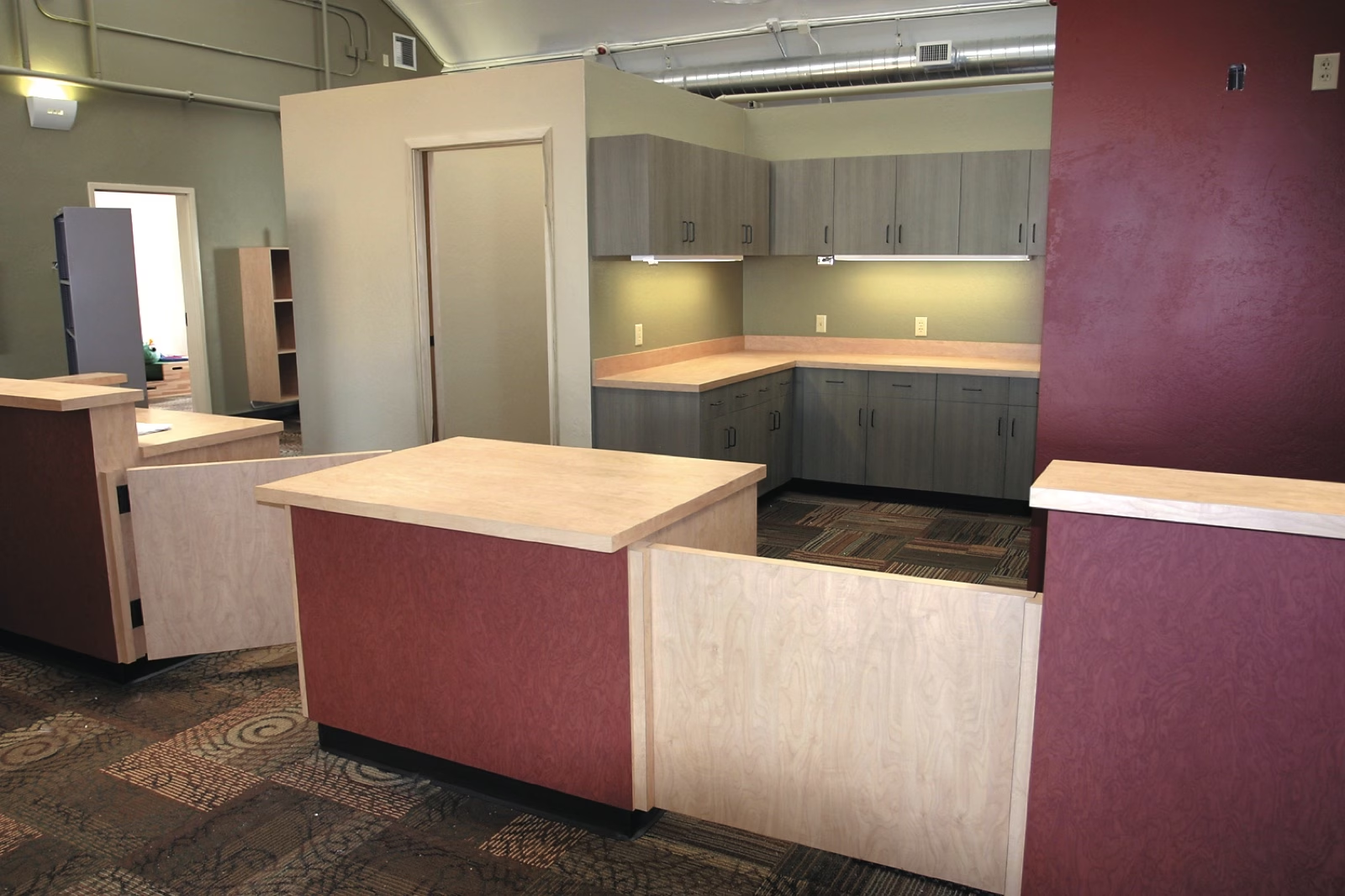
When visitors do head indoors, though, Tamarack plans to make them comfortable. The interiors in Discovery Square, even in its Sprung stage, are nicely finished. They don’t look at all temporary, and service levels will be high. “The Sprung structures were built to Tamarack’s specs, to provide the guest experience we want,” says Ferensowicz. The kids’ center is a full-service facility encompassing 3,600 square feet. The main skier-services building, housing the rental and retail shops, is 12,000 square feet. A separate building houses the dining options, from the Everyman’s cafeteria to the Member’s Club private dining room.
This is not a temporary solution. The entire Sprung village is intended to remain in place for at least three years; the building foundations are set in concrete. “This is as close to permanent as permanent can be,” says Ferensowicz. “The concrete foundation sort of solidifies your plan.” But ironically, the structures also provide a lot of flexibility.
The Sprung Square will provide a measure of demand for future services and guide development of the permanent village. “We can incubate these uses for future demand,” says Ferensowicz. “We will be able to quantify visitor levels, spending patterns and sales per square foot to potential operators in the permanent village. This is really brilliant—it’s going to allow the third-party operators to make a much more informed decision about business. This allows us to phase development of the village properly.
“We’ll begin the permanent village in ’06, and we’ll peel off certain uses from the Square into the village,” he adds. “Initially, we’ll keep rental in the Sprung, but peel off the little coffee shop and the soft offerings.” All this makes the Sprung village a pretty clever idea. It’s also the only way Tamarack could get so many buildings up in time for this season.
The Sprung village has another benefit. “J.P. knows that we have to prioritize the guest experience versus expedience [of building the village quickly to generate cash flow]. Discovery Square allows us to provide an exquisite experience in our first year, and to segregate the construction of the members’ lodge properly, so we don’t run into that conflict between the need to build and the need to provide a great guest experience,” says Ferensowicz.
Work has already begun on the 89,000-square-foot Member’s lodge, which sits on the south side of a small knoll that separates it visually from the Square. Its six stories will house 17 guest rooms and 27 condominium suites, three restaurants, a private dining room, conference room and board room, a spacious lobby and library, a full spa and exercise facility, two outdoor swimming pools and a Jacuzzi with a dedicated refreshment bar, lockers and steam rooms, a golf pro shop, Nordic center, plus valet and concierge services (for starters).
While the lodge is the ultimate perk for members, Tamarack will offer several member benefits from the get-go. For example, the main dining facility that houses a 300 seat grill and après ski bar also includes a separate lounge for Tamarack Club members with its own menu, reception area and concierge. The club’s white tablecloth dining and wood-framed windows will make members forget, at least for an instant, that this is the interior of a Sprung Structure.
Viral Marketing
With the facilities in place, the question now is—will anyone show up? Tamarack hopes to achieve 70,000 visits this first season, most of that coming from Idaho locals, real-estate owners, those who showed interest in real estate but didn’t buy, and friends of all the above.
Marketing VP Amy Reino Koenig did little traditional advertising until this fall, when everything was ready. Instead, she is marketing Tamarack much like an Internet start-up, that being her area of expertise. And that means viral marketing. She’s relying on direct mail to reach potential destination guests, and a variety of local efforts to reach Idahoans.

“The most difficult thing was that Tamarack had no data base,” she says. “We had to sell real estate first, so we went directly to people who would want a second home in the mountains. We went to the 17 cities with direct flights into Boise, and to residents in Boise.”
Now she’s marketing vacations to the same people. “If they didn’t buy, we hope they’ll be interested in skiing and lodging. We don’t need tons of people this year, so we’re relying on friends and family. The travel business is new to me, but the least-cost method of marketing is viral, referrals and word of mouth,” says Koenig, who has worked primarily with high-tech startups. “We will also do some advertising to reinforce messages we’ve sent through other channels.”
For Koenig, the local market plays an important viral role. “People who live closest to us will come up more frequently than destination visitors,” she says. “We want it to feel like home for them. Often, the reason people make a decision on a destination vacation is because they have friends and family there. We want the locals to feel good about Tamarack and invite their friends from out of state. If the people in Idaho don’t love us, we’re missing twice: the locals, and their friends.
“Plus, it takes time to change people’s travel patterns. The lowest hanging fruit are the people who know you.”
To entice locals, Idaho residents get 30 to 40 percent off the regular season’s pass price, and those who already have passes to Bogus Basin, Brundage and Sun Valley—Idaho’s three biggest, established areas—get 50 percent off. “We know people purchased those passes back in April, so it’s not easy to encourage them to buy another pass at an area that they don’t know, “ she adds. Pass buyers can also get a full refund if they decide they don’t like what Tamarack has to offer. “It’s all about trial at this point,” says Koenig. “We have to see what our demand is before we do anything else.”
As part of ramping up interest, Tamarack hosted a media day/open house during the flying of the lift towers in late October. Two busloads, about 100 people, made the 95-mile trip from Boise on a Friday, and many bought season’s passes. Some scouted the next real-estate release, which will take place in January. Their enthusiasm was palpable.
There are other signs that Tamarack is on the local radar. Real estate in the nearby town of Donnelly is beginning to explode. Prices from McCall to Cascade, 20 miles either side of Tamarack, are escalating as well.
Still, with just 62 cottages available on the mountain this year, 70,000 visits might seem optimistic. But the untold story of Tamarack, which sits on the shore of Lake Cascade, is that there are already hundreds of cabins and vacation homes all around the lake, which is a busy summer hot spot. Many folks use their cabins in winter already, for snowmobiling and the like. So Tamarack can draw on those homeowners and those beds to augment its own bed base. And there are plenty more accommodations in McCall, 17 miles north of the resort, ranging from frugal to first-class.
So Tamarack is ready, in its own way, and has set out on a distinctly different course. Is America ready for another ski resort? The indications are promising.
Concrete Plans
Adjacent to the golf course, on what will eventually be an area of condos and tennis courts, Tamarack has set up its own concrete batch plant to satisfy the company’s anticipated demand. “We’ll be using 10,000 yards each summer for years to come,” says village development director Mike Ferensowicz. “It will provide all of our concrete needs. We save hugely on the unit cost by mobilizing on site.”
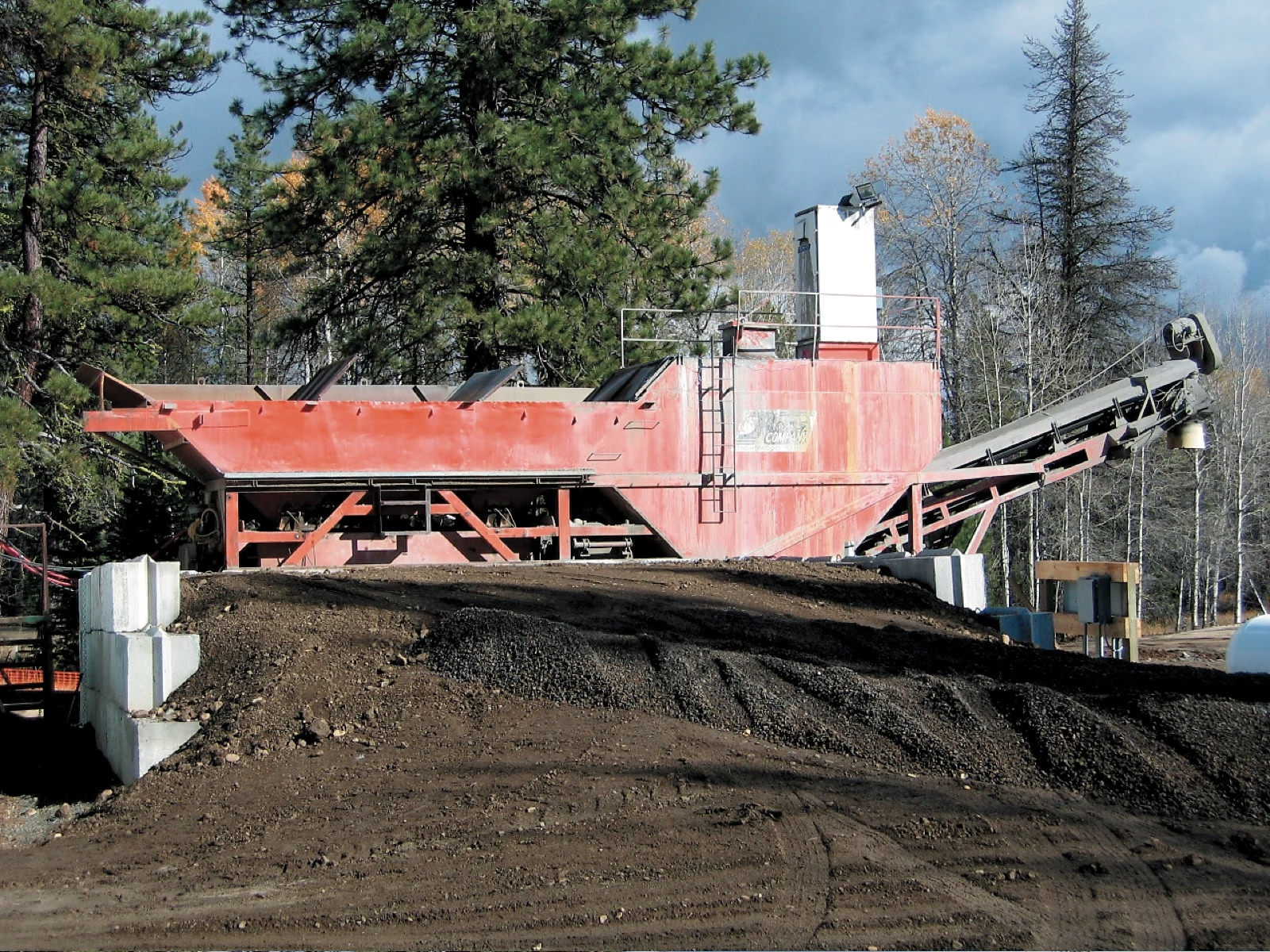
However, the plant was not completed in time to help form this summer’s biggest project. “We poured a 1.25 million gallon water tank up on mountain,” says Ferensowicz. “It took huge amounts of concrete to do that.” The well-fed tank will provide the potable water supply for the entire Tamarack community. In October, the tank, which is set below grade, still quite visibly bisected one of Tamarack’s trails; if a modern-day Noah’s ark were to be unearthed on the side of a mountain, this is what it would look like. The tank has since been buried, with nary a trace.

