


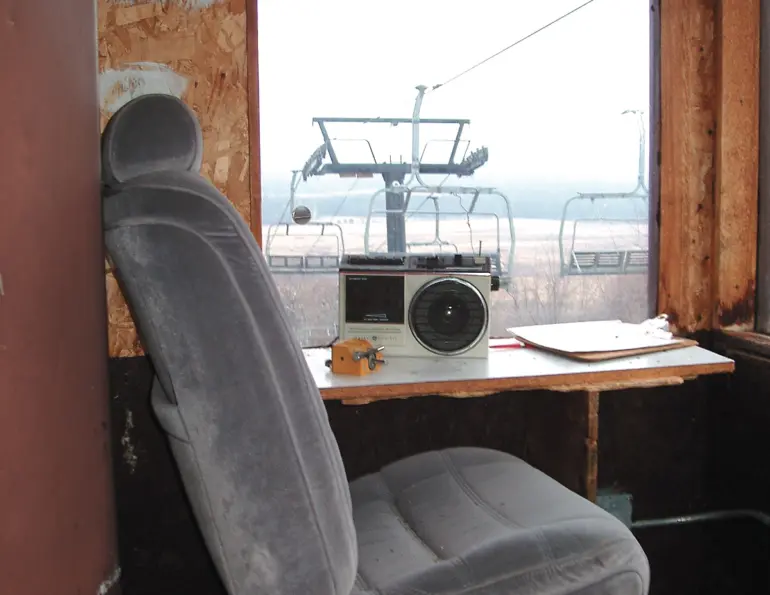
In the Driver’s Seat
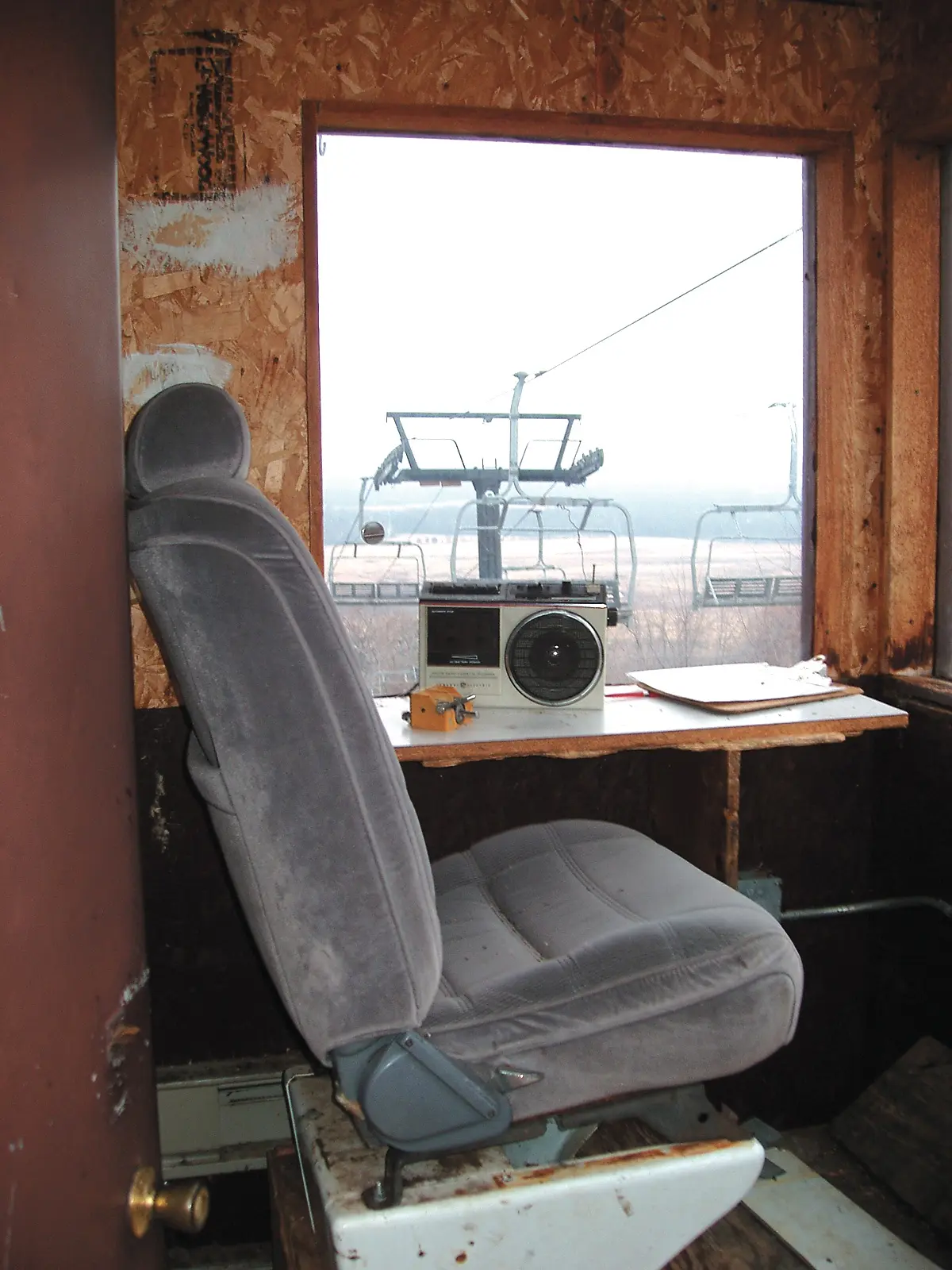
Finding and installing the auto seats is simple. According to John Pierce, lift supervisor at Cascade, employees are asked to save the seats from their old automobiles before junking them (and seats are also often available at yard sales for not much money, often under $5). The car seats are mounted to 2 x 4 wood supports with wood screws (plywood was tried but did not last), which also eliminates the original reclining feature of the seat. Recycled auto seats usually have life spans of about 5 to 6 years and cost far less than an over-priced office chair.
Extra Support
At Trollhaugen, Wisc., we use snowmaking stick guns to cover our slopes. The problem is that ski slopes need dozens of them for full coverage, and that also means dozens of stick gun foundations. In order to speed up and improve the installation process, we came up with the idea of using concrete storm sewer pipes as foundations. Each pipe measures 22 inches along the outside diameter and are 8 feet long. The prefab concrete culverts are buried 6 feet in the ground leaving a couple of feet above the surface. After being checked for proper alignment the sections are filled half full with sand before the tower bases are installed. Another benefit to using storm drains is the ledge on the inside that supports the re-bar before filling the culvert with concrete. Finally a 4′ x 4′ x 10″ footing is poured around the sewer drains for added stability.
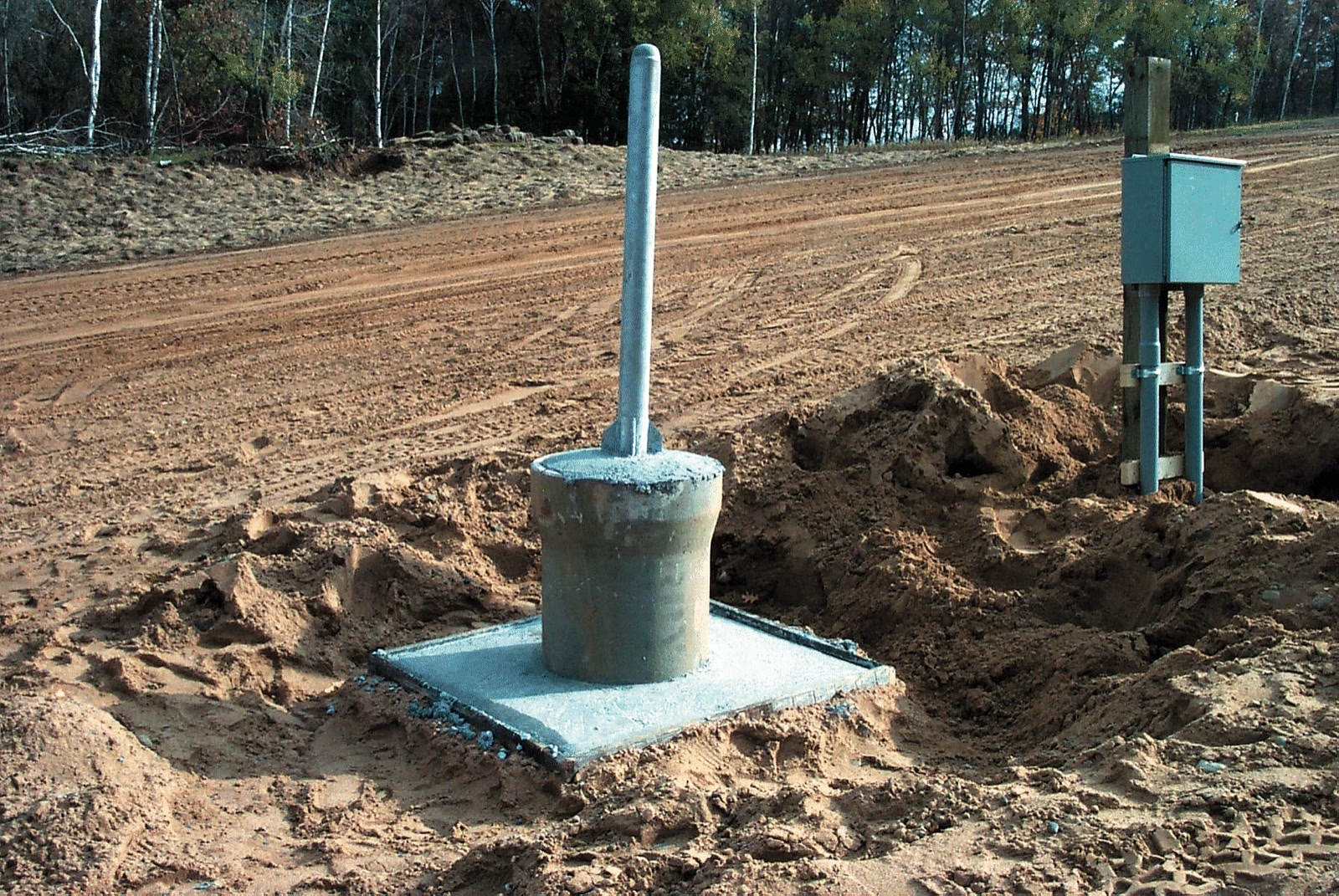
The culverts are available in many sizes. And, as we discovered, the plants that manufacture them often have damaged ones they want to discard—we didn’t even have to pay the shipping charge.
—Rusty Olsen, Assistant GM
Best Idea From 2004
Every year we bring you 18 great ideas from resorts across the country that make life a little easier and more efficient. This year we decided to choose the best one—not an easy task. Each innovation is worthy of an award, but this clever invention stood out above the rest.
Congratulations to Paul White and John Larsen of Bretton Woods, N.H., for their portable sheave press. Each win a SAM jacket. And to everyone else who submitted their great ideas, keep up the good work!
The idea: White and Larsen rigged a sheave liner press onto the back of a Jeep by replacing the old bottle jack with a hydraulic piston, a valve bank, a pump and an electric motor. To make the rig versatile, they created a secondary frame so that they would also be able to service CTEC sheaves and use the press for general pressing of bushings, bearings, etc. An Enerpac hand pump was added for delicate pressing jobs.
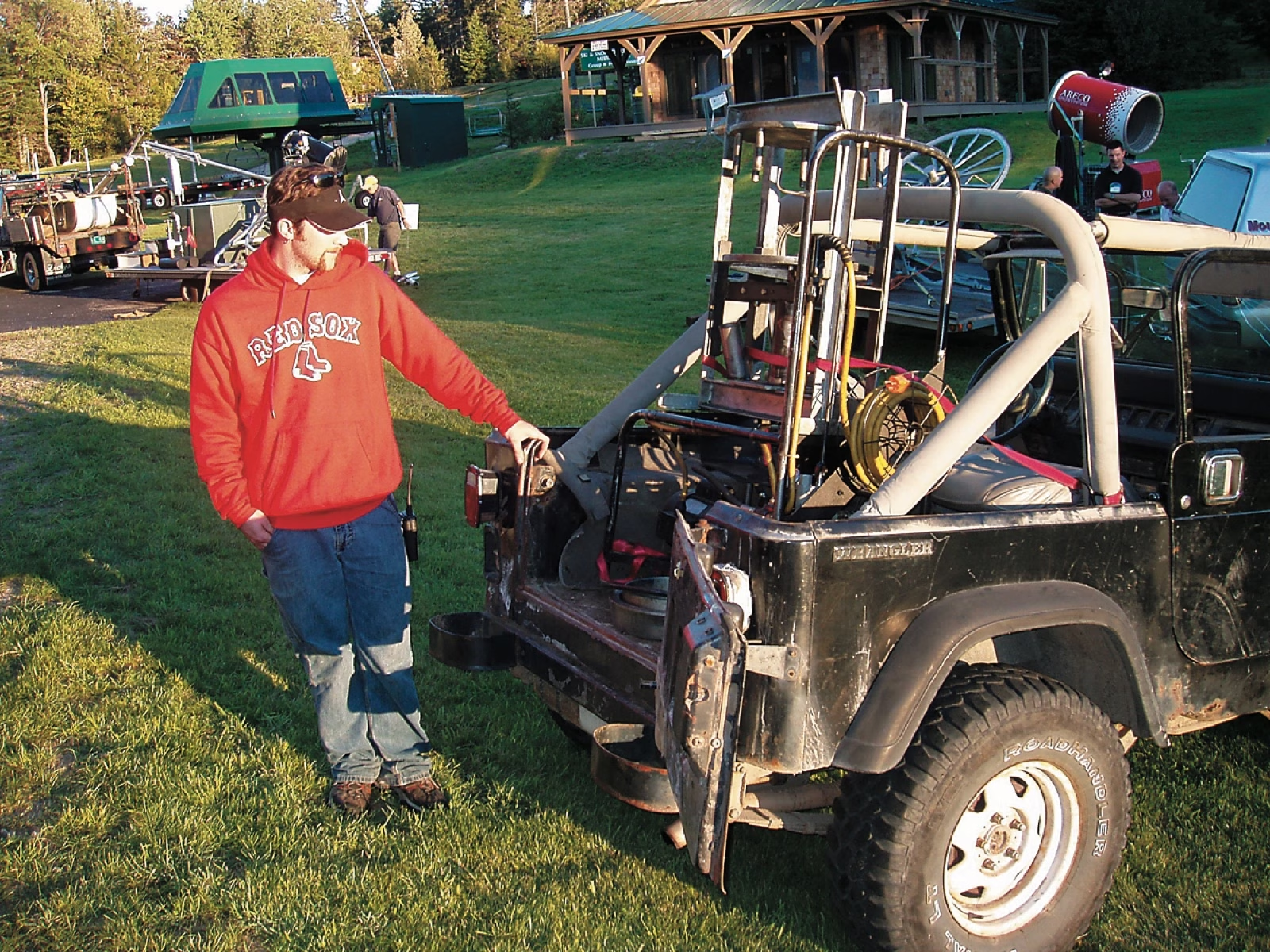
Now sheave wheels can be serviced directly on the chairlift, saving time and money. Note: Be sure to follow appropriate codes for electric specification and hydraulic pressure (for example, making sure to install the proper-sized relief valve). For more information, contact Paul White at (603)-278-3341.

