

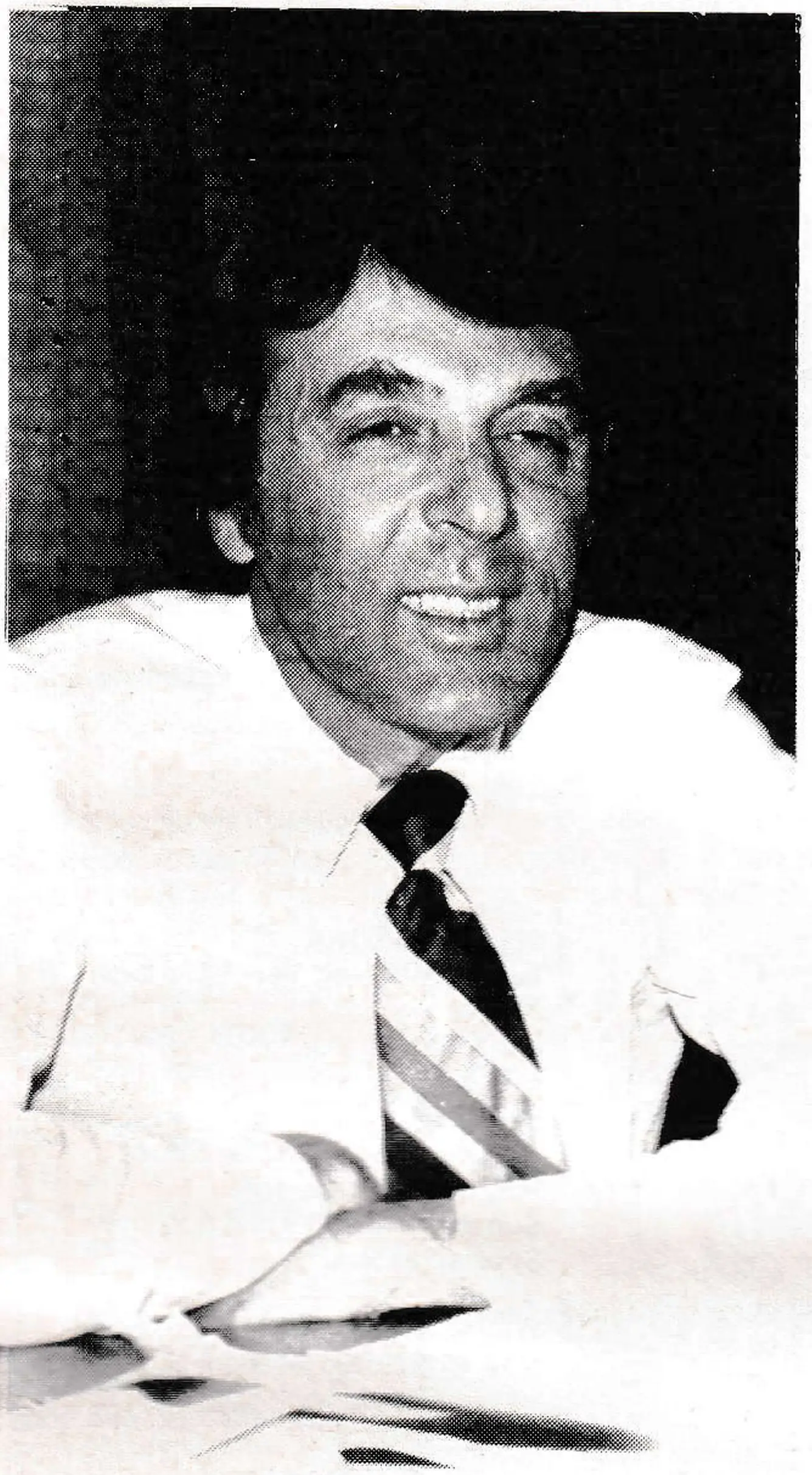
For starters, it failed to snow in the Colorado Mountains for the first time in recollection. Then, in rapid succession, one of his shops burned down and another was the victim of an armed robbery.
“I was beginning to wonder there for a bit, but I still believed I had purchased a good business,” Sapiro reflects. That belief has helped boost Sapiro’s Breeze Ski Rentals just 2½ years later to the enviable position of the largest such concern in the United States and very likely the world.
Breeze has 15 outlets—twice as many as when Sapiro took over—with 10,000 boots and poles and 7,000 pairs of skis. Plans are to add five more locations in this all-Colorado network with the next couple of years in addition to adding space to existing shops.
There is much to be learned in the marketing techniques and in the customer service involved that can be studied by ski resorts – not only for their own rental operations, if they have them, but for the whole game of getting skiers to come to their area.
Breeze (the name is derived from the last name of the founder) was begun in Denver in 1967 with a single shop on a main artery in the eastern part of the city—the side away from the mountains and skiing. Dealing chiefly in season rentals, it was almost instantly successful and growth came in dramatic fashion with its purchase by Dairy Queen International two years later.
Moving with all the force of its giant corporate resources, Dairy Queen immediately expanded to Sun Valley, Mammoth Mountain, South Tahoe and other points west, installed masses of sophisticated maintenance equipment, diversified with rental recreational vehicles in summer—and soon bombed.
“It was a classic study of a major company buying into something and not knowing what it was doing,” Sapiro observes. “It overexpanded, overspent and had all the management problems imaginable.”
After about three years, Dairy Queen sold out to its management group, which almost immediately consolidated the far-flung empire into eight outlets—all but one of them in Colorado.
With Sapiro has come another expansion, this one carefully calculated on a solid base of steady growth. It is what has stimulated that growth which provides the point of interest for rental operations everywhere.
It would be tempting to say that Breeze does such a good job with ski rentals because it is the only endeavor. It sells no products and has no counter-seasonal business in the summer. While there is more to it than this, it is true that this intensification of effort has permitted the firm to maximize its operation.
This isn’t quite as easy as it sounds, because Breeze isn’t just one rental business, but two. One-third of the shops are located in the Denver metro area, including the main shop on a major highway to the mountains. The rest are located in the resorts: Aspen, Vail, Steamboat, Winter Park, Copper Mountain, Keystone, Crested Butte and two in Breckenridge. Another is along Interstate 70 halfway between Denver and the ski areas just to catch anyone who might have been missed on the way out of town.
Sales and promotion for these two markets are completely different. In Denver, there is a direct media advertising campaign weighted toward radio. But it is in its mountain shops that the Breeze sales touch is at its best.
The key, according to Sapiro, is preselling—getting the tourist customer locked in to Breeze long before he ever arrives at the resort. While metro promotions are done chiefly during the season, mountain sales are handled well in advance, starting well back in the summer.
This entails direct contact with ski clubs, extensive utilization of mailing lists and close cooperation with travel agents. “We fit nicely with travel agents because they can do business with me everywhere they go rather than deal with six different shops,” Sapiro explains. “Also, we’re in our office 12 months out of the year. They can reach us anytime.”

To handle this, Breeze has a separate marketing director, Don Houston, who now finds himself in an acutely competitive situation for an increasingly sophisticated clientele.
“Trip chairmen for ski clubs no longer are the guys who got elected because they went to the bathroom at the wrong time. They’re doing their homework for the clubs, looking for the best deals,” Houston says.
To which Sapiro adds, “We don’t always get the business of those people looking for cheap equipment because we’re not the cheapest guys on the block. I believe in offering quality equipment at a price which will earn a fair profit. I feel there is a market for renting good quality equipment.”
To this end, Breeze does not deal in “makeup” skis. “Our skis turn over 50 to 70 times a season and if they’re not durable on the top as well as the bottom, they’ll fall apart before the season is over,” Sapiro says. “To the rental skier, the tops are even more important than the bottom. The renter seldom looks at the bottoms.”
Sapiro no longer deals in season rentals, feeling there isn’t enough profit in it and that the sort of customer contact involved in this is best suited for the retail shop.
He insists on testing equipment before he buys, a practice which doesn’t sit well with some manufacturers.
“Companies send us several sets of equipment and then get upset when we don’t buy, but those who have quality stuff understand,” he informs. “I’ve found that when we don’t do the testing, we almost immediately regret it. Last year we bought a line of cross-country boots and by mid-December, the soles came apart from the tops. The company made good, but we were without the units until the end of January. We find a lot of gear we test simply falls apart.”
Sapiro says that quality and safety are the hallmarks of his business and cites his exclusive use of Salomon bindings, with the exception of children’s units, as a key to both. “The customer acceptance and confidence in that product is extremely good and Salomon backs our liability policy with one of its own.”
Sapiro carries $1.5 million liability insurance, but never has had a claim against it. A key is the emphasis on accurate record keeping. “We spend a lot of time training employees to keep good records,” Sapiro says. “Sometimes this is a problem because we’re seasonal and our employee turnover is high. But we work hard through our managers on this. And we do a great deal of back checking on all our shops.”
Another thing Sapiro stresses is having enough staff to service customers efficiently. “This can be costly, but this service is what keeps customers coming back. Plus, it is important to our safety and liability to give employees time to do things right.”
Sapiro believes that many rental operations do not realize their potential because the proprietor feels rentals are easy to do. “The manufacturers make it very easy to get into the rental business and many people jump in who don’t belong. But it’s like any other business. You have to solicit, give good service and then do a strong follow-up. You have to work hard to make it go.”