In his articles on Yellow Flag Management (SAM Fall ’78, Winter ’79) Bob Saltonstall states this kind of information “can significantly reduce the risk of loss or increase the probability of gain.”
Gene McMasters, assistant secretary and general manager of Windham Mt. Club, N.Y. can be specific: “In the 1978-79 season, we had a food and beverage manager who held to high quality and service standards, and had the kind of personality people love. He did a fine job except for his payroll, which went out of control. Since we had a typical manual accounting system then, I didn’t find out about it until the end of the season. The food and beverage operation lost not just the profit we had budgeted, but net cash income as well.”
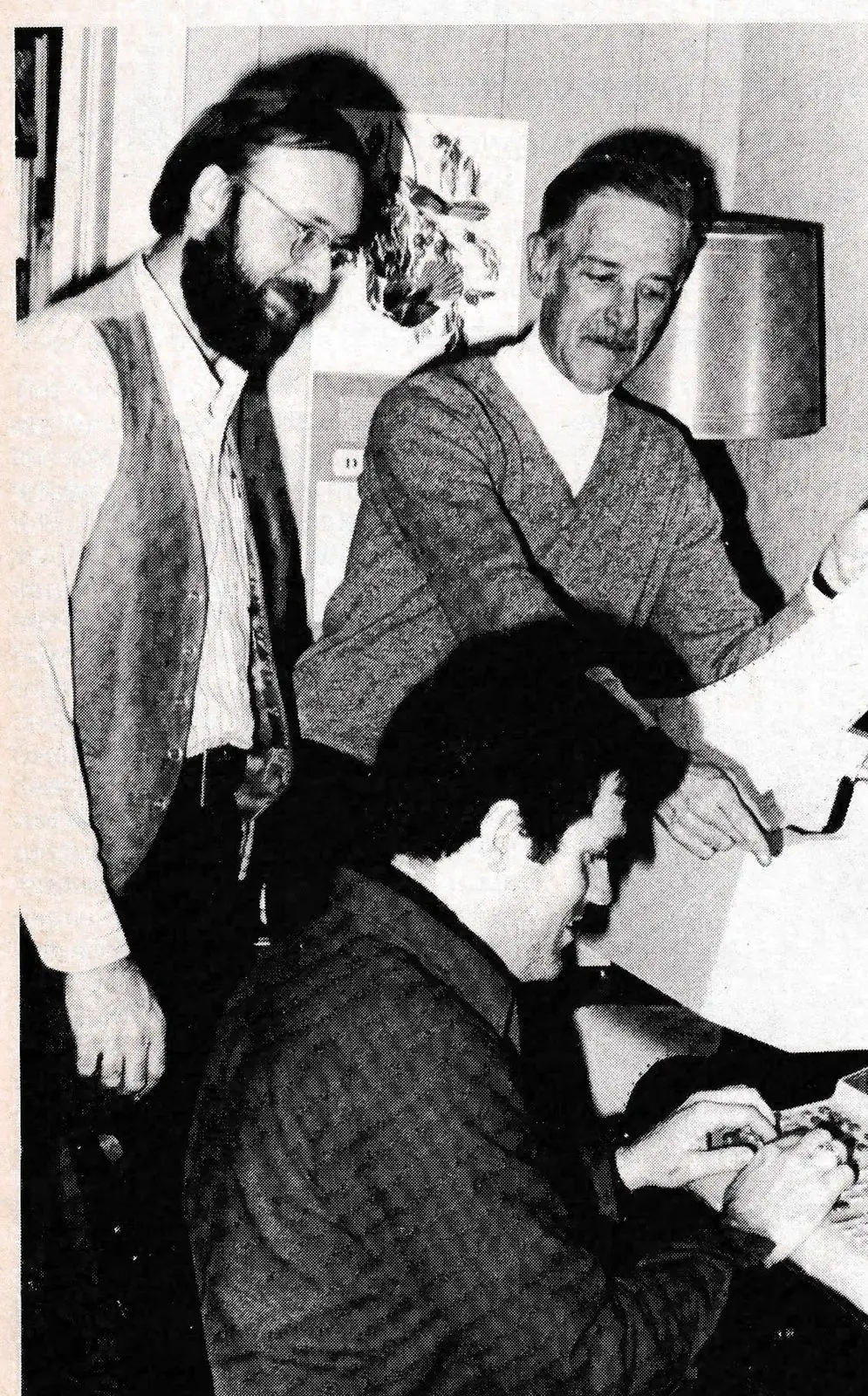
“That can’t happen now,” says Gene, “because a minicomputer system helps us run the business week by week. If anything’s going out of kilter, we know it soon enough to do something about it.”
The very word “computer” still has mystic and magical overtones for some people, even though millions interact with it today through different types of terminals. It is one of humanity’s greatest developments, and I could easily fill this space with quotations about its significance—but when you get right down to it, for the business executive it adds up to money saved, or money earned, or both.
The “electronic brain” as it was frequently called in its early years, was introduced commercially in 1951. Human brains trying to project demand figured there might be an ultimate market for about 50 of those techological wonders. Before the decade had ended, thousands were already in use. Today it’s estimated over 200,000 are at work in this country alone.
Why? Primarily because business people, with the assistance of newly-emerging computer professionals, discovered that with the computer paychecks could be calculated and printed at a much lower cost. Ditto accounts payable checks. And invoices. And up-to-date inventory listings. And on and on and on.
The “magic” is not unlike the machinery that’s under the hood of a car. The auto might as well have magical properties where I’m concerned, since my competence ends at driving it. But then again, that’s all that’s important—that the device gets me where I want to go.
That’s all that should concern the ski area operator. There’s nothing magical about an adding machine, calculator, or bookkeeping machine. The computer is a much more powerful and sophisticated cousin in this family group that takes in all computational devices—including the pencil and paper.
At this point I can hear all the usual “buts”:
“We’re too small for a computer.” Windham is a $2 million operation, hardly a giant. The Hewlett Packard (HP) mini they’re using costs some $18,000 complete; you can pay more for a bookkeeping machine. The Stratton Corporation, which runs Stratton Mountain and will soon add Bromley Mountain in Vermont, is close to an $8 million business without Bromley. They have an IBM System/34 which is bigger than the HP but still a small computer. Controller Dave Fielding reports they lease it for $2200 per month, or roughly $26,000 a year.
In both cases, if these systems do no more than prevent a potentially serious loss—or improve management capabilities by several percentage points—they will easily pay for themselves almost immediately.
“Just because computers work in other businesses doesn’t mean they’re good for ski area operations. We’re different.” Of course. Everybody’s different, yet very much the same. This statement is usually a cop-out, but to the extent it’s true it simply means the computer has to be adapted to the needs of this industry as was the case in the insurance industry, and banking, and the hotel field, and fast foods, and . . . you name it.
“I know this business, and it’s people that count—not machines. Give me poeple who know how to make customers happy—and enough snow—and I’ll give you a solid operation.” Maybe. Gene McMasters’ food and beverage manager knew how to make customers happy, but he wasn’t a good businessman in one key area: payroll costs. Besides, the computer’s true value does not lie in throwing people out of work—in fact, by supporting healthy company growth it generally helps create new jobs. The real “plus” is in helping people do more and better work. Dave Fielding states that was the essential basis of the financial justification for Stratton’s system, that it would help them handle a growing business volume without a corresponding growth in administrative costs.
Most important, the computer helps provide top management with more, timelier, and better information. By that I mean the figures on day-to-day sales, and expenses, and trends in the various departments, which the general manager or president uses to make the decisions that determine success or failure.
What’s it worth to support the top decision-maker in this fashion? Certainly $18,000 at Windham, and $26,000 at Stratton, in both cases less than one percent of yearly sales. Add the cost of the people who program and run the system, and the total expenditure is still small in terms of what’s at stake.

The eighties will see increasing use of the computer as a basic tool for the management and operation of ski areas
That rationale applies to any size ski area operation, since even a small plant represents a significant investment. From everything I’ve been able to learn, if you’re using manual accounting methods you’re at least 45 days behind what’s actually happening. In other words, if your ski school started out poorly in December and is running at a loss, your business reports won’t tell you until the middle of January at best, and more likely not until early February.
That’s a helluva way to run a business—actually, more like Russian roulette. The amazing thing is that more ski areas don’t go under—but then the same thing’s true of business in general, since businessmen simply are not good at developing the information flow that’s needed to run a company efficiently and profitably on a consistent basis.
Tom Waterhouse, assistant general manager, and controller, who created and runs Windham’s computer system, points out that since the typical ski area’s season runs about four months: “If you don’t find out until January that your ski school began operating in the red in November, you just have two months to correct that condition and make up for it. Very often, it will simply be impossible.”
If it ever made any sense to operate “blind” for 45 days, it certainly does not now in this age of high—and rising—costs. And it can’t be emphasized too strongly that you don’t have to. The technology is available, today, to set up and run your own “home” computer, for less than $1,000. People are doing it. You can certainly find the right capability for your needs, whether it’s a computer in your office or one of a number of computer services other ski area managers are using.
In future issues we’ll take a look at such service operations and what they can do for you, as well as a more in-depth look at Windham, Stratton and other ski resort operations. We will address the entire range of ski area applications, including ticket control, ski school scheduling, rental shop inventory control, lodging and so forth.
We’ll also discuss special-purpose systems such as those used to monitor and control energy consumption, and the ways in which the computer may be applied to the snow-making process to help control snowmaking costs and quality.
In the meantime, I leave you with this true story: The president of a small southern bank, sitting on a panel with other bankers, was asked what he considered the most important thing he had to do in preparation for installing a computer.
“Wait for my boss to resign,” he said promptly. “He had said, over and over again over the years, that so long as he was president he would never have a computer. He kept his word, so we had to wait for him to quit while our competition jumped out ahead of us. Then, finally, we had one heckuva job catching up.”
Attitude, more than anything else, determines the kind of assistance you get in running your business. That basic fact holds true for computers just like anything else.
Input Wanted
In anticipation of this series on computer use at ski areas I would welcome input (a computer word) from readers.
What computer experiences have you had in operating your area. What equipment do you use? What aspects of computer operation at ski areas would you like to see covered in this series?—A.N.B.
A.N. (Andy) Borno has been part of the computer scene since the earliest days, as editorial director, public relations/publicity manager, and over the past decade, consultant and writer. Prior to creating his own firm, Borno Associates Ltd., he worked at IBM, and the great bulk of his current work is still in the computer field.