
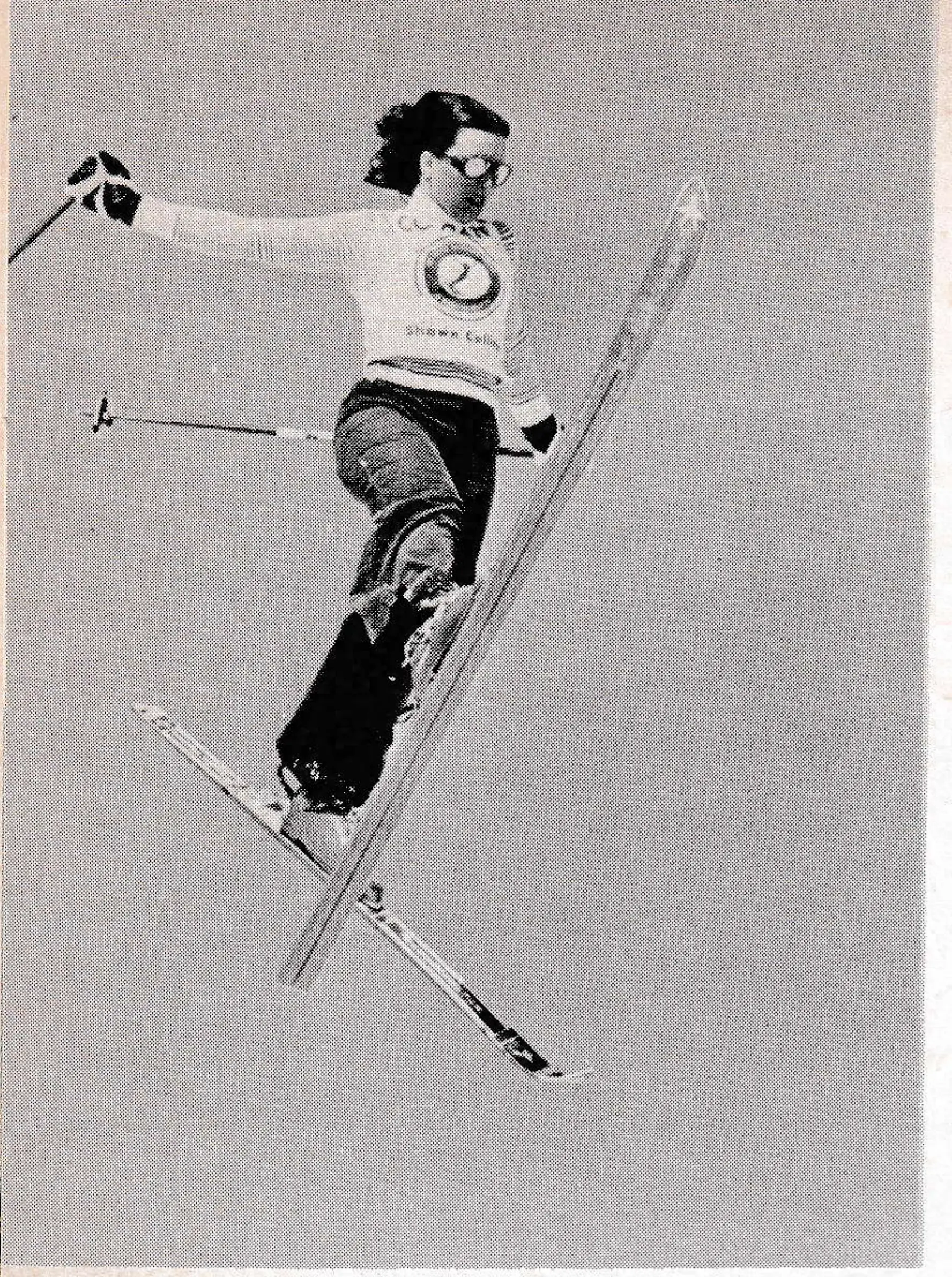
In the October 1973 issue of Ski, Scott Brooksbank is quoted as follows: “Freestyle skiing is a philosophy more than a sport, and I don’t want it to be flooded by commercialism.” Then Mike Lund was quoted: “There will be no freedom for exhibition skiing once it becomes commercial and gets exposure.”
Well, Scott and Mike, that free, Jonathan Livingston Seagull world of freestyle has gone commercial and capitalistic with a great big C, complete with all the trappings of litigation, showbiz contracts and executive suite ruthlessness. In its short life, which is better counted in months than years, the Professional Freestyle Association has even sued Chevrolet, and filed contempt proceedings against General Motors and NBC. That’s heady stuff.
But before the details, a little background is necessary. There are, right now, three completely different, but inter-related crossroads that the freestyle movement must cope with: 1) the future of inverted aerials, and the special liability problems connected with them; 2) the organizational disarray and in-fighting within the freestyle movement; and 3) the ambivalence of the ski area industry towards freestyle.
The Inverted Aerials
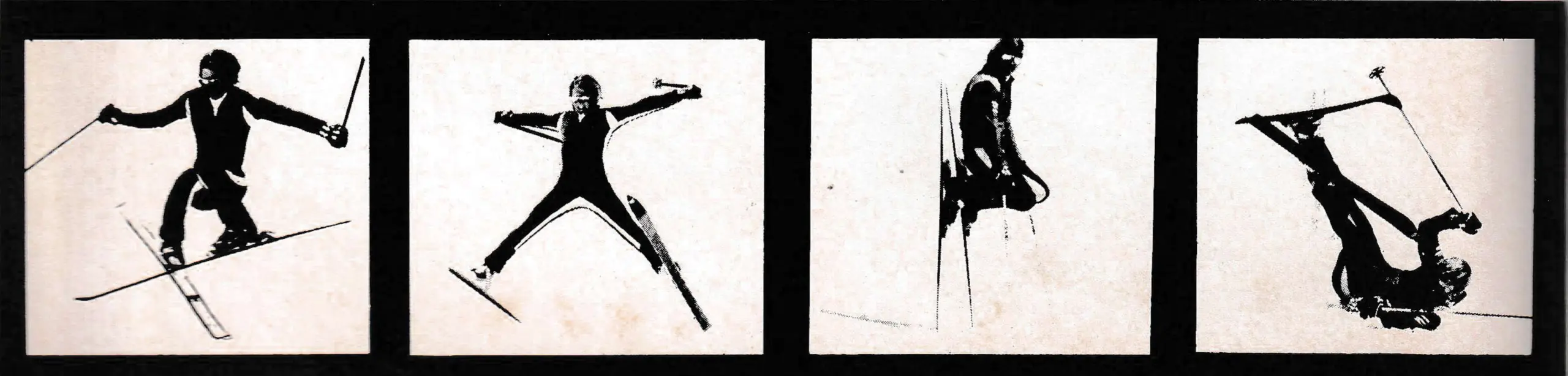
The inverteds are the mischief-makers as far as most critics are concerned. Injuries are likely to involve the spinal column, and that can mean tragic quadriplegia or paraplegia. Furthermore, the critics argue, the aerials have little or nothing to do with the sport of skiing—a criticism that is given weight by the fact that converted trampoline gymnasts with virtually no skiing skills quickly began to dominate the aerials in competition.
Proponents argue that the aerials are the most popular part of a freestyle competition, and the most dramatic for television coverage. To forbid them is to emasculate the whole freestyle movement, they say.
Everyone loudly agrees that the aerials should be extremely carefully supervised, and that only those who have “qualified” in “dryland” situations should be allowed to do inverted maneuvers on snow. Everyone also quietly agrees that it is not the qualified aerialist who is the problem, but the “turned-on” innocent who attempts to go upside down in imitation of what he has seen others do.
The amateurs are split, but the largest freestyle group, the eastern, is firm on banning inverted maneuvers. “We have absolutely no mandate to operate as the farm teams for the professionals,” said one official.
The professionals are, of course, in favor of inverteds—for themselves and for the kids who come to their summer training camps. They say they are for inverteds in amateur competitions, but the enthusiasm here is not that great among a number of those trying to hang on to their newly-acquired star status, and who are not really that keen on encouraging competition from below.
A great many ski areas have put an outright ban on all inverted maneuvers because of the murky insurance outlook. On the other hand, the insurance picture is not murky on a professional freestyle competition with inverted aerials because the pros insure and indemnify the host area. The problem lies with inverteds when the area does not have this coverage, such as in an amateur event, an area-sponsored freestyle program or in a totally unsupervised situation.
The Freestyle Infighting
The stakes are increasingly big in freestyle, which is why tempers are getting short. The scene this May at the NSAA convention in Colorado Springs pretty well captures the essence.
A meeting had been called which was to bring together the leaders of the professional freestyle movement, the ski area industry and the insurance industry to discuss the major—indeed, critical—problem caused by the inverted aerial manuevers. Trouble began from the start over exactly whose meeting it was. NSAA considered it theirs, and Chuck Lewis of Copper Mt., who also heads NSAA’s Insurance Committee, was delegated by NSAA to chair the meeting. PFA (Professional Freestyle Associates) thought otherwise, and had brought in Barry Hollister of Ski America to chair — though nobody knew just why.
Lewis by-passed the uncustomarily cowed Hollister and squared off with Bud Palmer, sports promotional entrepreneur and PFA backer, in a verbal dual that was as taut and tough as the confrontation in High Noon. The PFA group had come with an elaborate presentation designed to show how safe the PFA events were. Lewis wanted no part of it. He wanted to get right to the issue of the insurance problem.
Lewis prevailed. Just. With Hollister still in the Chair, Lewis called on Graham Anderson and Dick Williams, the two insurance figures present, to outline the problem. There were other speakers, notably Tom Corcoran of Waterville Valley, whose credentials as an early and staunch supporter of the freestyle movement could not be challenged, who spoke forcefully on the moral issue involved. (See Speak-out in this issue.)
Corcoran had previously described the bad accident at Park City, and also how Stu Campbell, of Buck Hill, Minn., “won’t sleep well for a long time” with the threat of the $2.4 million suit filed by a skier who had ended up a paraplegic after incorrectly executing a single helicopter turn off a bump. “Stu has a lot of problems he doesn’t need!” added Corcoran.
Some of the PFA presentation came out in bits and pieces. It missed the point completely in detailing all the safety features of the professional program—points that the areas were in complete agreement with. Lewis and others kept trying to hammer home that the insurance problem remained and that the freestylers had better address themselves to it because they might find areas excluding freestyle because insurance policies might be written with coverage exclusions that mandated this.
Then came the surprise presentation by J.D. Nelson, president of the American Freestyle Skiing Association, the “other” freestyle group bitterly resented by PFA. “J.D.” had done his homework and it was sprung with relish. He proposed that AFSA would be able to indemnify ski areas—”remove the burden of insurance and liability, resulting from freestyle accidents, from the ski areas.”
Essentially, anyone engaging in freestyle would join AFSA as an individual. A substantial part of his membership fee—tentatively costed at $100—would go to the purchase of large accident and liability policies. Ski areas wanting freestyle programs would pay a fee to AFSA ($1,000 was the talking figure). The area would require that any freestyle activities by skiers at their area be in one of the AFSA-supervised programs. AFSA would train and certify freestyle instructors, trainers and coaches, and would handle the qualifying and requalifying procedures that would permit individual skiers to perform the different aerial maneuvers.
And, the area would be fully insured and indemnified by AFSA.
The program outlined by Nelson was an ambitious one, but it was timely and it hit a responsive chord with the areas. At last someone in the freestyle movement was coming to grips with the core problem, just as sky-divers had with the Parachute Club of America.
The PFA spokesmen were taken by surprise and cried “Foul” (“How come when we met yesterday to prepare a cooperative and harmonious program you guys didn’t bring up this insurance scheme?” went the PFA challenge. “How harmonious can you be with an organization that is suing you and trying to put you out of business?” was the gist of the AFSA response.) But PFA quickly saw the merits in the AFSA approach, and NSAA, coolly ignoring the in-fighting between the rival groups, summarized that, “From this meeting it appears that all of the current professional freestyle organizations are willing to work together to try and find solutions to current areas of concern.”
Following the meeting, NSAA cautioned its members to set very conservative policies vis-a-vis freestyle. “We are well aware,” the widely-circulated draft report from the insurance committee said, “of the promotional benefits and advantages freestyle programs and activities may bring to each of us. However, we continue to believe that these advantages may be jeopardized by the potential financial loss to the ski area and could threaten the industry’s position in today’s liability insurance marketplaces.”
The report also made some specific recommendations which are summarized in the adjacent box.
Summary of Recommendations from NSAA Insurance Committee
A. Area-sponsored freestyle events: 1) Be conservative; recommend prohibiting inverteds. 2) control building of unauthorized and unsupervised jumps of any type.
B. Area hosting exhibitions and/or freestyle competitions: 1) Consider prohibiting inverteds; 2) demand evidence that sponsor carries minimum of $1 million in liability insurance with substantial carrier; that ski area be named as an ‘additional insured’ on sponsor’s policy; that participants provide evidence of ski accident hazard insurance of at least $100,000; completion of signed releases before the events by all participants or by parents if participant is under 21—release to hold ski area, sponsor and (where applicable) the Forest Service harmless in case of injury; 3) recommend preparation of courses, building of jumps and supervision of events be handled completely by the sponsor and not by area, and that grooming equipment be rented to the organization for that purpose.
C. Area procedure: recommend each area should consider formalizing procedures for area’s involvement in freestyle activities and that this procedure be written and distributed to key area personnel.
The report suggests that a beginning has been made, but makes it plain that no solution is at hand. And they are right.
A full month after the Colorado Springs meeting, PFA had done virtually nothing to advance any solutions to the problem. In fact, PFA seemed to walk away from it by saying that everything would be handled through the insurance committee of the World Freestyle Skiing Congress.
The WFSC was born on April 13, 1976, with the stated purpose of “international codification of rules, regulations and juding criteria.” Administrator is Curt Oberhansly, the man who heads PFA. According to him, the World Congress will be run by a board comprised of representatives from Professional Freestyle Competitors’ Association (the membership arm of PFA), AFSA and the Canadian and European groups.
J. D. Nelson is shown as chairman of the World Congress Insurance Committee. It’s news to “J.D.”
Oberhansly’s format seems to call for the World Congress to take over the AFSA insurance proposal lock, stock and barrel. Again, it’s news to “J.D.” who is proceeding full speed ahead to make the proposals operative as an AFSA program.
In point of fact, no matter how needed the World Congress may be for working out international freestyle problems, it is currently a paper organization with the ink barely dry on its papers of incorporation, and is patently unable to cope with the ski area industry’s problems. As a super freestyle organization capable of unifying the movement and bringing peace between the warring factions, the World Congress is also patently the wrong vehicle — at least as long as its administrator is Curt Oberhansly, who as head of PFA continues his legal battles to put AFSA out of business.
(“Off with their heads!” the Red Queen cried.)
For Nelson and his AFSA group there is a critical countdown until the Fall NSAA board meeting, by which time his massive organizational undertaking must have broad general support and be perceived as launched and under way. A small but important first step in this direction was made at the USSA convention in June when the AFSA program appeared to get some approval from key segments of the amateur freestyle movement.
But there is a long way to go for an organization that is barely six months old, has no full-time staff and more goodwill than cash in the bank, if AFSA is to administer a program this coming winter that will have to generate upwards of half a million dollars in revenue. Not the least of Nelson’s problems is how to make it all palatable to the PFA group who would much prefer to have AFSA roll over and die the way they are supposed to, rather than play a leadership role.
The ski area ambivalence
While the freestylers come to grips with their own organizational problems, and while the insurance industry sharpens its pencils on the inverteds, many areas have been trying to get a realistic handle on the real economics of freestyle. Is it something that must be accomodated, because if I don’t, my competitor across the valley will get my business? Or is it something on which I can make a decent return on my investment? What is my investment, and what are the real costs?
Corky Cayton, of New Hampshire’s Loon Mt., has been studying his area’s freestyle activities and probing for answers from other areas across the country.
“When it comes to using the area’s resources for the best return on investment,” Corky says, “our freestyle program has been very labor-intensive, and it clearly pulled down the net profits of the ski school. We are paying from $4 to $7 per teaching hour to the freestyle instructors for a program involving 100 young skiers who pay $135 for 160 hours of instruction.” Cayton points out that the average walk-in customer is paying $4 per hour, and that over the course of the season, this portion of the ski school business operates at roughly 60 per cent gross margin.
On the other hand, Loon has a strong family business and freestyle program is important in catering to this business. “We have a baby-sitter role,” says Cayton, “and we provide organized activity for over 100 young skiers who would normally spend 50-60 days at the area without any supervision.”
Cayton, though, still worries whether it is “necessary or proper to discriminate against the cost-conscious occasional skier, or would-be skier, in favor of those fully committed and — more often than not — well able to afford the full costs of the sport.”
Chuck Lewis, of Copper Mt., has no such doubts. “I get top dollar from them for my lifts and top dollar for the instruction. They make money for us.”
The state of the art today is that many more areas in the east have freestyle programs than in the west, and in many cases the old junior race program concept is being applied. Thus, Bousquet’s in Massachusetts has a program that is run through the local ski club. The club gives 95 per cent of the enrollment fees to the ski school, reserving the balance for payment to the area for any special maintenance and/or course preparation required. The club also conducts fund-raising projects for its treasury.
At Sugarloaf, Waterville and Mt. Snow, to name but three, there are active freestyle programs that are run by “clubs” or “foundations” which have “arrangements” with the respective areas. In each case the individual skier is probably being subsidized in some way; in no case is the freestyler seen as a primary profit generator.
In the west, though there are exceptions, most freestyle activity is on an individual basis. This was apparent at the Wildcat Nationals where the western youngsters were astounded — and some appalled — by the crowds of eastern coaches and “freestyle parents” who were as visible and vocal on behalf of their offsprings’ rights as are the notorious figure-skating mothers.
It is at the promotional level that freestyle is having its greatest impact on the ski world at large, and this worries some ski area operators. Although the number of active freestyle skiers is a minute part of the total skier population, media has made freestyle into the total image of the sport.
With freestyle, television has something that non-skiers will watch. It has color, perceived danger, speed, beauty, music and an attractive cast of characters, some of whom have developed star qualities. That it all bears little relationship to the millions of stem-christiers who really make up the sport and the ski business is a fact of profound unimportance. Because freestyle is the face of the sport, for better or worse — and for the time being. You can see it in the ski advertising, you can see it in the ski publications.
Those concerned with the growth of the sport may well ponder whether the image is helpful. Can potential skiers identify with the far-out maneuvers of the inverted aerialist?
Doug Pfeiffer thinks the image will help. “I’ve always thought that much of the attraction of skiing was that it appealed to a person’s longing for adventure and danger.” But others disagree and the industry’s promotional film, funded by NSAA and SIA, has tried to emphasize the more traditional appeals of the sport while soft-pedaling the far-out freestyle elements.
The future
Nobody knows what will happen next. The prediction here is that the people with the greatest at stake — the ski industry, meaning SIA and NSAA — will take strong steps to impose some order on the more chaotic aspects of the freestyle problems. Ski media would be cheering from the sidelines, as would the commercial sponsors like Midas and Colgate, who are pleased with their freestyle involvement, but dismayed by the “unbusinesslike” performances of the freestyle organizations.
The manufacturers who currently support the freestyle movement by sponsoring individual stars can exercise considerable leverage over the professional freestylers, and they are already showing signs of being fed to the teeth with the immature functioning of the pros. The areas, whose mountains constitute the ballparks needed by the pros for their programs, also can exercise considerable leverage.
If the AFSA program makes sense to SIA and NSAA — as well as to USSA — then it would be possible for them to make it happen in some form or other. The hard-nosed businessmen of the ski industry are not likely to allow the narrow interests of a few top freestyle professionals and their commercial managers to jeopardize the growth of the sport. They are not going to be put in the position where they lose business because they had to raise lift ticket prices in order to pay the increased insurance bills — and all because a handful of young freestyle competitors wouldn’t budge.
With the dollars and cents insurance problem caged, the freestyle movement could go its creative and unpredicatable way and be, as Tom Corcoran described it, “the element of adventure and excitement that has probably been the most important promotional factor in the sport of skiing in recent years.”
It’s going to be interesting to watch.
How About Holding a Freestyle Competition?
by Janet Nelson
What are the basic costs of putting on a major freestyle competition? In hard cash the calculation must begin with the up-front production fee required for some professional events. This can range from $3,000 to $10,000 — depending. For any event, even a local amateur kindergarten-level exhibition, the most essential outlay is hill preparation. Minimally this means smoothing a ballet course to velvet softness, building at least one jump (by piling snow or making it in one big bump), and encouraging mogul build-up or creating moguls with snowmaking or machines.
That’s just the beginning. Then, there are judges’ stands to build, fencing to protect the skier’s courses, a sound system, communication, people to do publicity, registration, judging, etc. Areas may pay for accommodations for key people in the sponsoring organization, offer discounted press rates on rooms and provide a cocktail party. Don’t forget the finishing touches like T-shirts, posters, banners, straw, a press room, security guards and extra janitorial services.
For professional events, the hard cash total for a freestyle competition runs from $6,000 to close to $30,000. Displaced or hidden costs covered by bookkeeping transfers may be $2,000 to $20,000. Amateur events are considerably less costly, but for a major show figure at least $2,000.
What do ski areas get for this kind of investment? Is it worth it?
“It’s a damn good deal,” says Jerry Jones, marketing director of Keystone, Colorado. “The expenses are minimal, we got local TV coverage and national print press.” Keystone jumped into the freestyle business last winter by holding one of the Chevrolet American Freestyle Skiing Tour’s events. Jones says the three-day meet brought spectators every day, but the aerials had between six and eight thousand watchers. The area also sold 4,700 lift tickets that day, which is relatively high. He contrasts this with a World Cup at Copper Mountain which had 500 spectators and instead of selling the normal 4,000 tickets, the area sold only 3,100.
At Killington, Vermont, the motive for holding the Eastern Amateur Freestyle Championships was definitely not to attract spectators. Marketing Director Foster Chandler says spectators take up valuable parking space. Killington’s reasons for taking on a freestyle event are to add to the integrity of their entire freestyle program, which includes winter-long tutorial instruction. The area also has a junior program that attracts mainly local kids and which costs money rather than brings in revenue. “Events like these create activity,” says Chandler, “and activity generates more activity. Skiers want to ski with other skiers.”
Chandler says he wouldn’t consider professional events because Killington has not allowed inverted aerials since the beginning of its participation in freestyle. “Inverteds don’t sell learning to ski or junior programs or anything else to skiers,” he says. Killington’s prime press from the event was through NBC television which took his edited 16mm. film and syndicated it to news affiliates.
Nearby Stratton, Vermont, began a deep involvement in freestyle this year with sponsorship of two competitors, a summer training camp, a junior program and highlighted by a Professional Freestyle Associates competition. “I don’t think these things are worth doing unless you get television exposure,” says Jeff Dickson, marketing director. Dickson hired a couple of local freelance TV cameramen and sent the raw, unedited film by bus to stations in Boston, Greenfield and New York City. CBS and ABC both said they sent edited versions to affiliated stations, and the local weatherman used it on the CBS news in New York.
Dickson says Stratton didn’t get into freestyle just to bring more skiers, but rather to enhance the area’s position as a major resort in the skier’s mind. He says they would be willing to pay the top production fee to get the Stratton event on World Wide Sports.
Last December the PFA finals at Snowbird, Utah, were on World Wide Sports for 22 minutes. “For what we spent, we couldn’t buy a fraction of that time,” says Randy Montgomery, marketing vice president. The area put up the big dollars again this past spring in expectation of receiving another big TV exposure. Does it bring more skiers? “I don’t know,” says Montgomery, “but it does gain us an impression in the public eye.”