


The heavy snows that blanketed many of the nation’s ski areas this winter—normally cause for celebration—have brought new anxieties to owners and managers. As the frigid weather intensified the country’s worsening energy situation, shortages of fuel and cutbacks of natural gas disrupted even “essential” businesses in many places. If ski areas are defined as “recreational” businesses, they may be on the “low-priority” list whenever it comes time to turn off the tap. The Carter Administration’s new energy policy won’t be unveiled until April 20, but two things are certain: It will emphasize austerity; and this President does not spend his holidays at Vail.
Along with millions of beleaguered homeowners, ski-area owners are looking to alternative sources of energy for sheer survival. Solar energy, wind power, geothermal—even old-fashioned wood heating—are being considered as solutions to the skyrocketing cost of fuel. This article will review some of the options available, concentrating on “domestic” fuel-saving methods; that is, conserving and/or creating energy for heating buildings and lodgings rather than for operating equipment.
There are two ways of approaching the energy situation: on the micro (short term) level and the macro (long term) level. Macro applications might include large-scale generation of electricity directly from solar (photovoltaic) cells or from giant windmills.
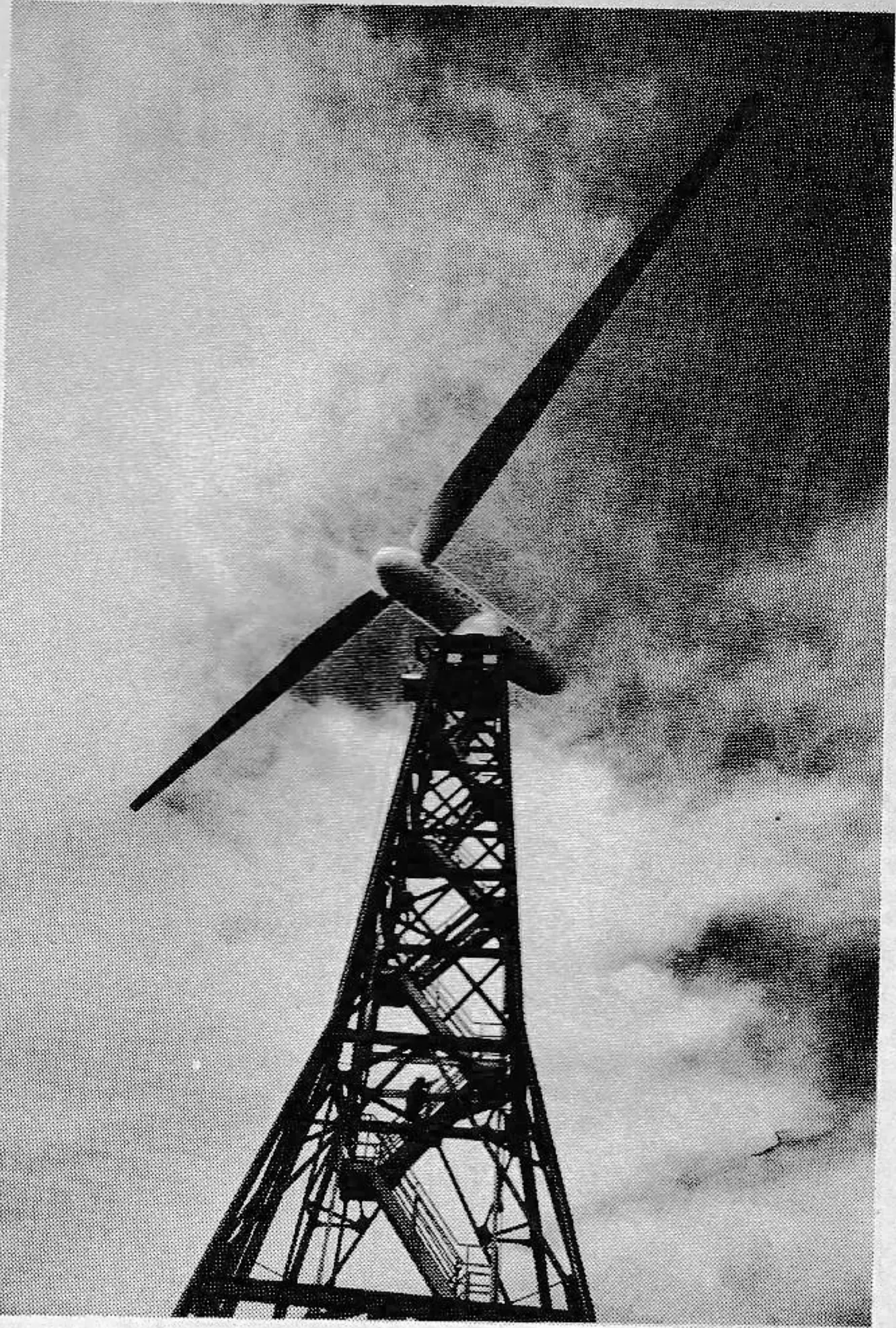
New methods of generating natural gas directly from garbage are being developed on the municipal level. A ski area might join with local groups in a lobbying effort for this kind of project in its immediate vicinity. But utilities may not be generating solar electricity on a wide scale until the end of the century. And ERDA’s (Energy Research & Development Administration) big windmill in Sandusky, Ohio is still undergoing testing and won’t be feeding significant amounts of power into the nation’s grid for some time. The fact remains: Fuel shortages and high prices are here now.
Energy from the sun and from wood provide the most immediate solutions for ski managers. The figures are coming in every day to indicate that both methods work—even in cold climates—to reduce bills for space heating and for hot water heating. Combined with conservation and improved insulation of existing structures, solar and wood should be an important part of any ski area’s energy budget.
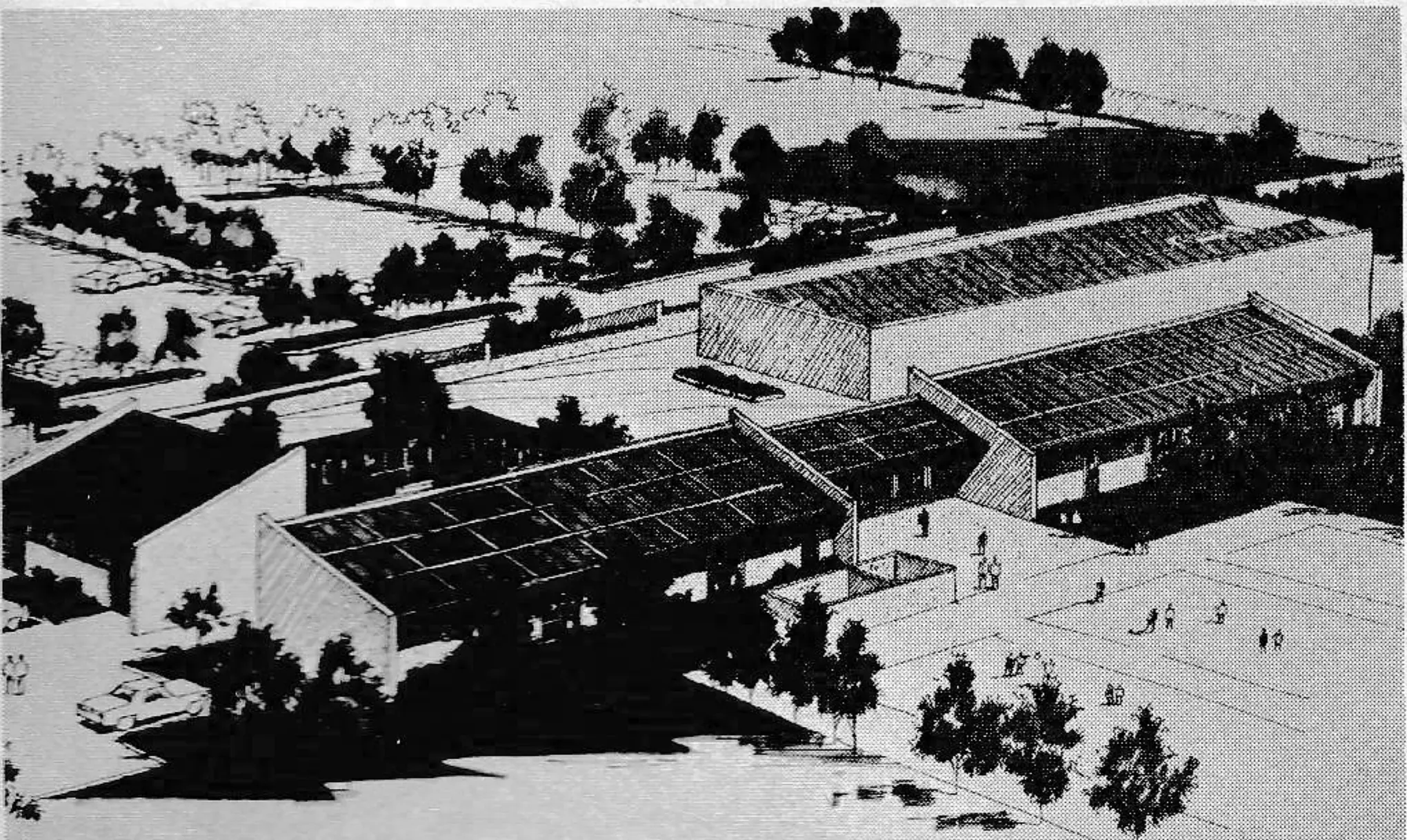
Residences are not the only structures for which solar energy is making measurable headway. Several large recreation centers are making use of solar; for example, the United Auto Workers members resort in northern Michigan and the community recreation center in Santa Clara, Cal. The new federal office building just opened in Manchester, N.H. will be an energy laboratory featuring solar heating, waste heat recovery systems, and beefed-up insulation. Data from all these installations will be helpful in engineering designs for commercial buildings such as ski areas.
An important fact to consider is that the sun pours out free Btu’s even in the coldest of climates. Solar energy works in New Hampshire and Colorado too. During January, for example, the sun dumps 790 Btu’s per square foot per day in Grand Lake, Colo.; 613 in Twin Falls, Id.; and 601 in Blue Hills, Mass. An efficient solar energy system captures as many of these Btu’s as necessary and as practical in order to turn them into workable heat and hot water.
Solar energy
Let’s talk about passive solar heating first. The sun can make a difference even if you don’t install extensive plumbing and ductwork, and pumps and blowers to circulate solar-heated water or air. New structures should be designed and built to trap heat and retard its loss. Chalets and lodges should have a minimum of windows on north-facting surfaces, and they should have a wide expanse of windows—preferably double-glazed—on southern exposures. Materials used for floors and ledges surrounding these windows should be of a heat-absorbing material—slate is an excellent choice—in order to create a natural “heat sink.” Esthetically, this design will permit the panoramic views that enhance the conviviality of apres-ski.
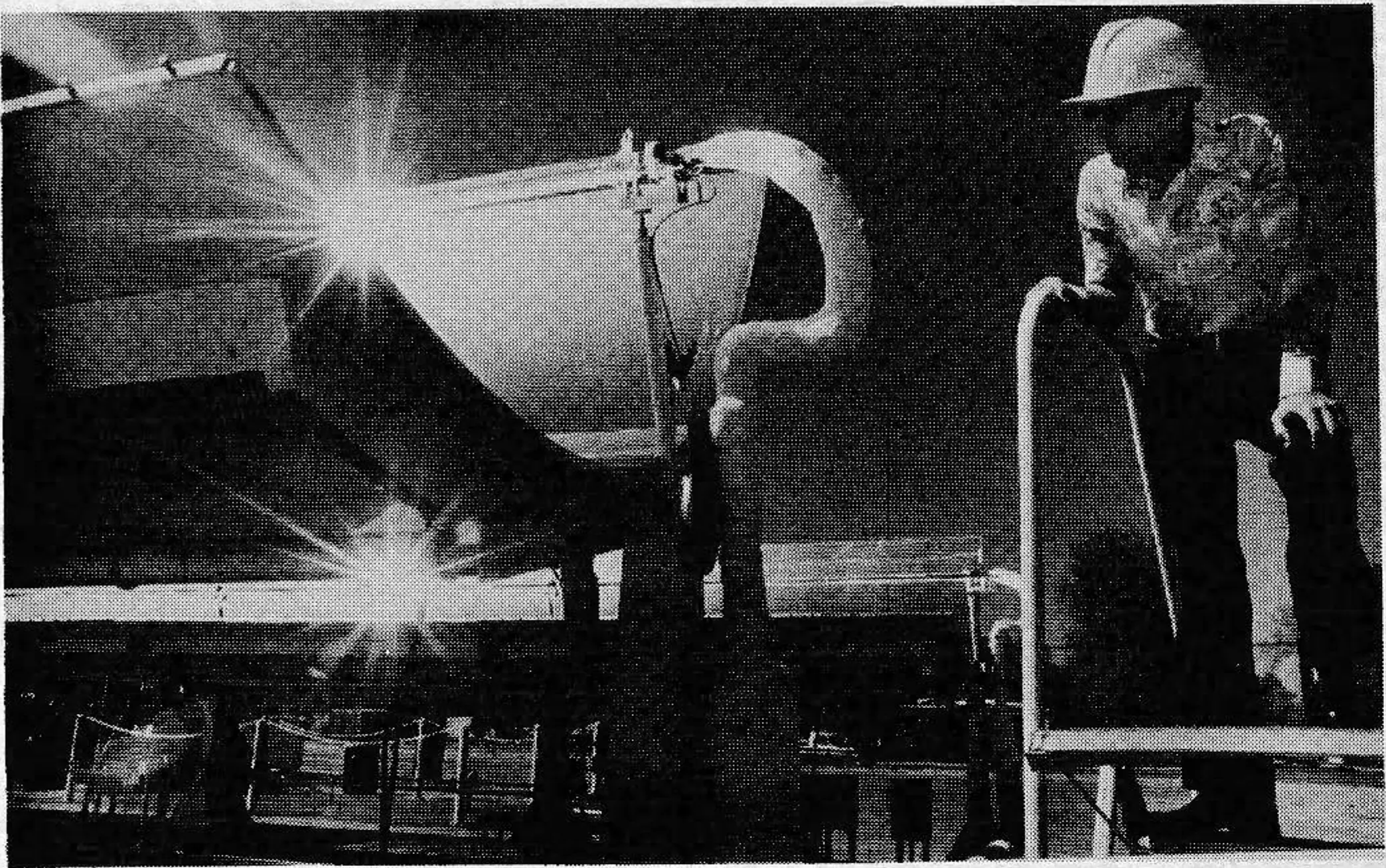
Of course, after sunset, the windows should be covered with heavy insulating curtains or shutters to prevent heat loss to the cold night air. Two systems now being used successfully in several areas are the Beadwall system and the Kalwall solar battery. The Beadwall, patented by Zomeworks in Albuquerque, N.M. is an ingenious double-glazed window. At night, thousands of tiny styrofoam pellets are blown into the space between the two layers of glass to seal off heat leakage. When the sun shines again, a vacuum-cleaner-type suction pump returns the pellets to a storage tank. Skiers who fly into Aspen will see Beadwall being used at the local airport.
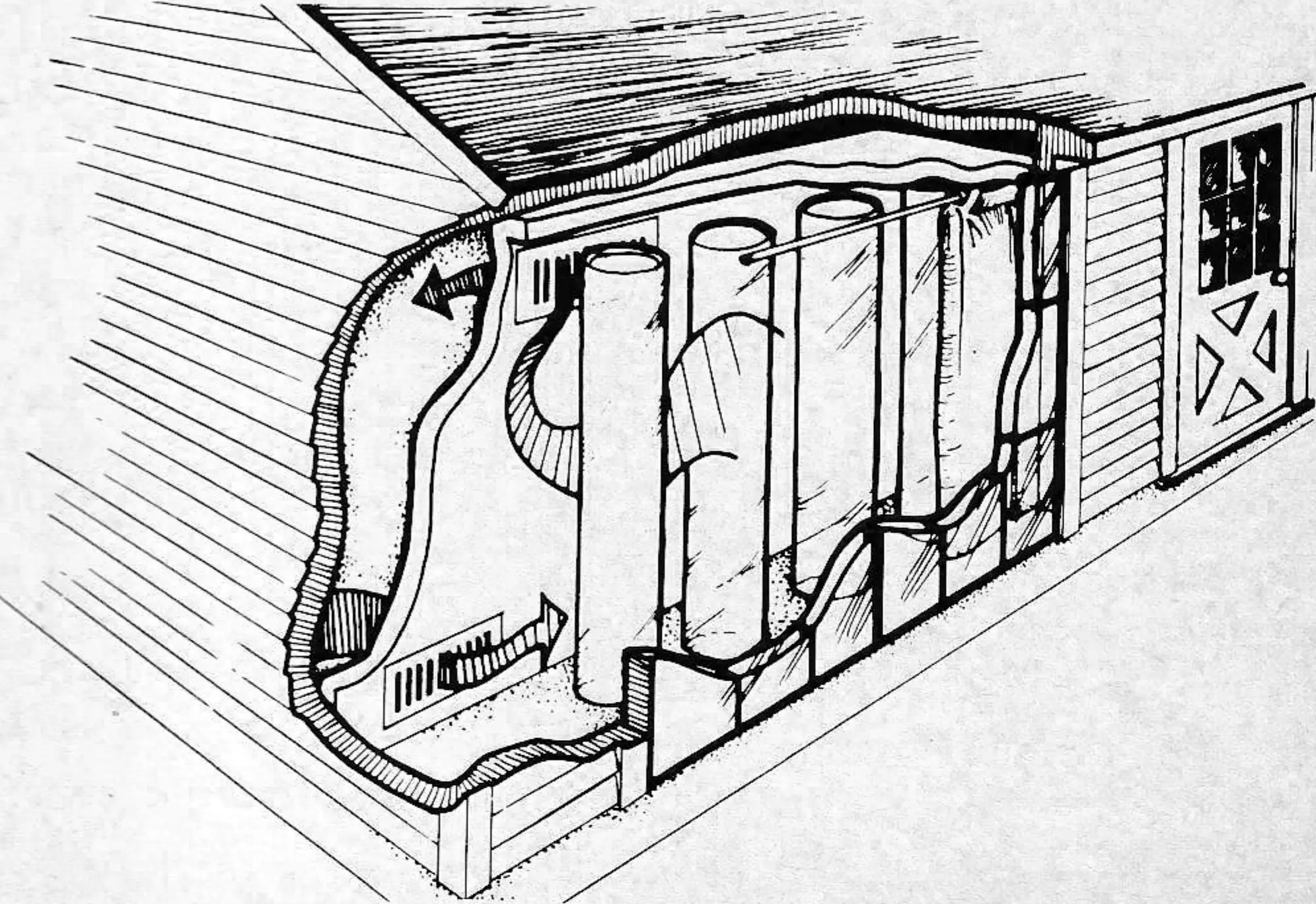
The solar battery was developed by the Solar Components Division of the Kalwall Corp. in Manchester, N.H. Basically, it consists of translucent fiberglass cylinders that are filled with water and placed in a space just inside the exterior, south-facing wall. Translucent panels built into that wall admit sunshine during the day. At night, an insulated “curtain” (manual or automatic) is placed between the panels and the cylinders, and the stored heat flows into the room.
New construction should therefore emphasize thermal mass: heavy materials such as concrete or masonry that absorb heat well during the day and release it slowly at night. The whole key to using solar energy effectively is “collecting when it’s there and using it when it’s not.” Many ski areas are subject to wind chill, which can significantly increase a building’s heating requirements, so it’s essential to minimize this factor through sensible design. Newer buildings might have their northern ends built right into the side of a hill, for example. Or, an existing building can be protected by a windbreak of evergreens (but not so close to the building that they will cast shadows.).
Research continues into better ways to trap and use solar energy. Water is one way, as mentioned in the Kalwall solar battery system. But for large space-heating requirements, rock storage is practical—an extension of the slate-slab concept described earlier. A large, well-insulated bin of crushed rock is placed in a basement or closet area. Solar-heated air is blown into this bin, and the heated air can be drawn upon later. A given volume of rocks can store about one-third more heat than the same volume of water. Two houses in Colorado designed by G. Lof use rock storage, as does the U.S. Forest Service building in Amada, Arizona. On the frontier of heat-storage research is the use of phase-change materials that store even more heat in a smaller volume. Heat may be stored in chemical reactions, such as in the melting and solidification of Glauber’s salt (sodium sulfate decahydrate). As temperatures change, heat is released from the salt to be used in domestic heating. The ski-area owner should consult a heating engineer who is aware of the latest developments in solar technology for information on the best system for his requirements.
For existing buildings that cannot be structurally modified to any great extent, it would still make sense to retrofit with solar collectors for either space or water heating. Water heating is less complicated and less expensive, of course. Indeed, some experts hesitate to recommend retrofits for solar space heating unless optimum design criteria are met: southward orientation of glass areas and adequate insulation being the most important.

A space-heating system, especially in the colder climates, should probably use air rather than water as the circulating heat-transfer medium, with storage in rock bins. Water-heating systems, on the other hand, work by circulating fluid through collectors mounted on a roof or on a structure that generally faces south. Ski areas experience subfreezing temperatures, so pure water should not be used—it will freeze on cloudy days or at night unless it is drained out completely from the collectors. The easiest solution to the freezing problem is to use an antifreeze/water solution in a closed loop. The “antifreeze loop” would be heated by the sun in the collectors, then flow to an insulated storage tank indoors, where it would transfer heat to the potable water used for showers and laundry.
Even on subfreezing days, collector temperatures can reach 120-140 dg F and more. Temperatures of water in collectors depend more on amount of sunshine and efficiency of materials than on outside air temperature. This is why solar heating is possible in Minnesota as well as in New Mexico. It is probably impossible to satisfy 100 per cent of a ski lodge’s water-heating requirements through solar, so a conventional backup will still be required—especially for a string of cloudy days. Solar is used most effectively to “preheat” water before it enters the conventional electric, gas, or oil heater. If your water heater thermostat is set at 130 deg., isn’t it far easier to heat water that enters it at 100 or 120 deg. than water that enters it at 55 deg.?
It is impossible in a general article such as this to give specific data on costs or savings or temperatures for a particular area. Many homes and commercial buildings have been able to reduce their water heating bills by half using solar energy, though. Choice of materials and design of a system will, of course, depend on individual requirements. Copper or aluminum are the most common choices for collector materials and for piping. Copper is more expensive (average now is about $15 per square foot of collector), but its heat-transfer abilities and resistance to corrosion may be worth the extra investment. How much collector area will be required? Again, a detailed survey of heating needs will have to be made to determine this. Here’s a general rule of thumb: A family of four that consumes 80-100 gallons of hot water a day can do nicely with three or four 4-by-8-foot collectors. Find out how many gallons-per-day your ski guests use on a per capital basis and figure accordingly, for a rough estimate.
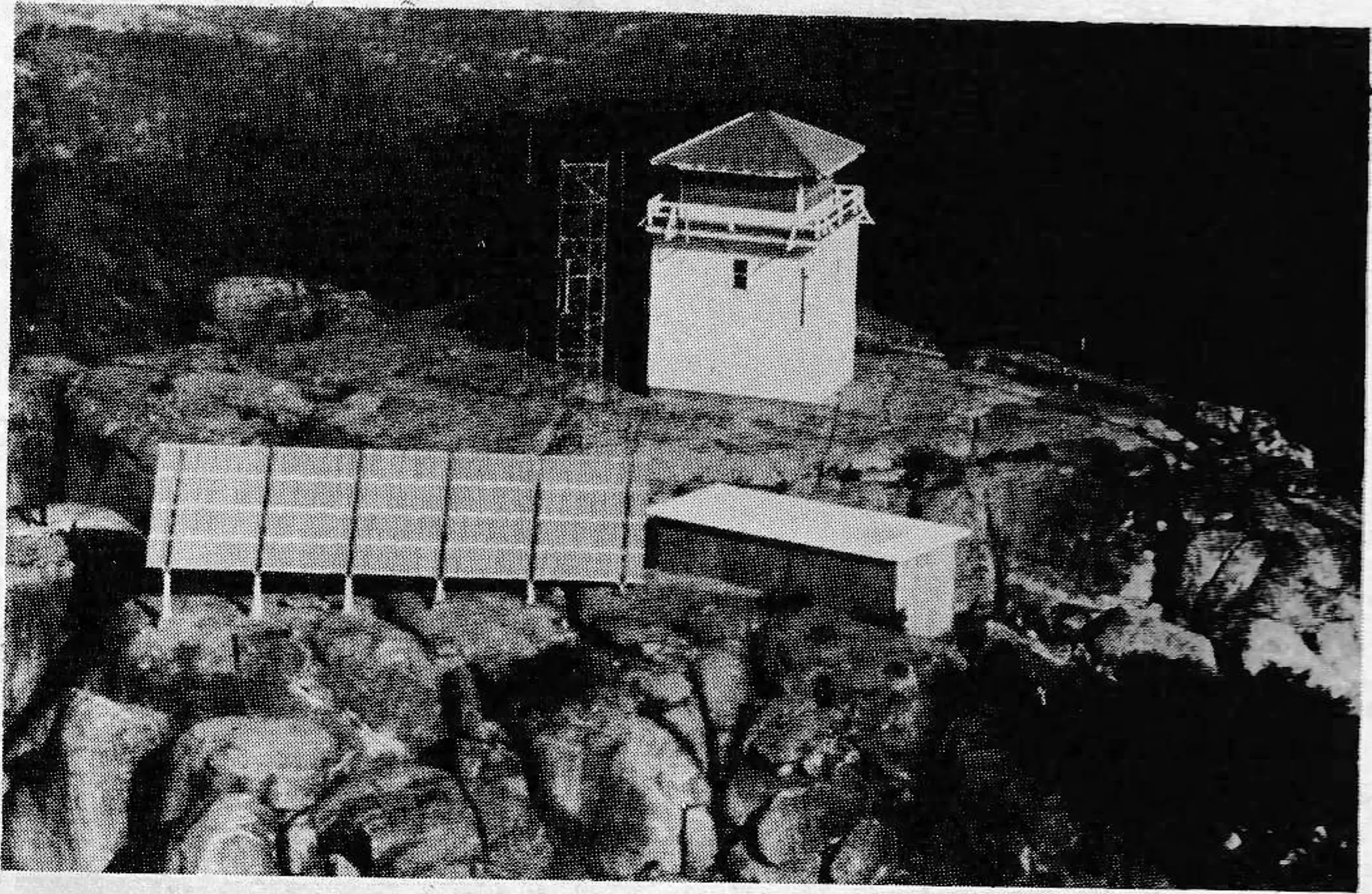
Water-heating systems in use today are automatic. A differential thermostat shuts down the pumps when collector temperatures fall below a presetn level, thus preventing excessive heat loss at night or on cloudy days. Your maintenance crew should have more than a conventional hot-water system.
Research is bringing solar technology down to earth in newer ways every miliarize himself with new developments that could be of value to him. Popular Science magazine features an ongoing coverage of all aspects of energy technology. An article in the January, 1976 issue, page 40, entitled “Alternate-energy bookshelf” lists many books, periodicals, and sources of information of value to the ski-area owner. Two groups in ski country that provide excellent information on energy are: Environmental Action of Colorado, 2239 E. Colfax Avenue, Denver, Colo. 80202, and the New England Solar Energy Association, PO. Box 121, Townshend, Vermont 05353.
Wood power
What’s a ski lodge without dozens of cheerful skiers gathered around a roaring fireplace? Most fireplaces are fine for decorative effect, but poorly designed for heating. Yet recent studies have shown that wood heat can be one of the most effective and inexpensive ways to cut back on oil, natural gas, and electricity. Moreover, many ski areas have plenty of available firewood in the immediate vicinity.
Existing fireplaces can be modified in a few ways to maximuze their heating efficiency. Outside venting is one way. It’s wasteful to feed combustion air to the fire if that air has been heated to 70 deg. by a gas, oil, or electric system. Combustion air can be brought from the outside to achieve the same ends. Furthermore, if combustion air is introduced under and around the fuel, glowing charcoal will use up all the oxygen, so there will be no more left to burn gases above the coals—which, if burned, could create more heat for the room. If a “secondary air” loop could be installed to bring air above the coals, some heat that would normally be lost up the chimney could be recovered. In a similar fashion, a heat-recovery device could be attached at the flue to recover more wasted heat. Check with your heating contractor for full details on these practices.
Many homeowners report spectacular success with some of the newer woodburning stoves, especially the ones that are especially designed to circulate combustion air efficiently as described above. In Europe, many ski lodges and hotels from Switzerland to Scandinavia have wood-burning stoves in every room as the only source of heat. (Central heating is considered a most inefficient luxury, as it should be.) When you consider that a cord of more than 20 million Btu’s, wood begins to look like a mighty good investment for ski areas. A good book to read is Heating with Wood by Larry Gay, (Garden Way Publishers, Charlotte, Vermont).
Other sources of power
Windmills have quite a romantic hold on the imagination of many Americans, and owners of ski lodges no doubt have visions of spinning turbines every time a howling gale sweeps down the mountain. But widespread use of wind power for producing electricity is a long way off. Unless you’re a real windmill buff, this source of power might be more trouble than it’s worth right now. And the amount of electricity generated per dollar of equipment probably won’t justify the investment for most people, since it would take several good-sized windmills to make a dent in the power bills for a fair-sized ski area. (A good-sized windmill is one that’s rated at more than 5 kw, and the vast majority of commercial models are that size or smaller.) Wind-generated power is DC, and it must be stored in relatively inefficient batteries and converted to AC for practical purposes. One of the most interesting developments lately has been the Gemini inverter, invented by Windworks in Mukwonago, Wis. This device, when installed between the windmill and power lines, will produce steady-state AC power and store it “in the utility grid.” That is, when the windmill is producing more power than is required at a given instant, the excess power will be fed into the utility lines, running the electric meter backwards. In effect, the windmill owner will be selling power to the utility at retail rates.
So the owner of a ski area has a lot to choose from when it comes to energy savings. A combination of solar, wood, improved insulation, plus good old conservation is is the key to survival as the nation faces an uncertain energy future.